
In the landscape of global software development, time is often treated as a universal constant, yet its representation is anything but uniform. While the Gregorian calendar dominates the international business world, several regions maintain distinct temporal systems that present unique challenges for technology stacks. Perhaps the most prominent example is Ethiopia, a nation that follows the Ge’ez (Ethiopian) calendar. As of the Gregorian year 2024, Ethiopia is currently in the year 2016 (moving into 2017 in September).
For tech leads, software engineers, and product managers targeting the East African market, understanding “what year is it in the Ethiopian calendar” is not a matter of historical curiosity—it is a critical requirement for localization, data integrity, and user experience. This article explores the technical architecture of the Ethiopian calendar and the sophisticated engineering required to integrate this 13-month system into modern digital ecosystems.
The Algorithmic Architecture of the Ethiopian Calendar
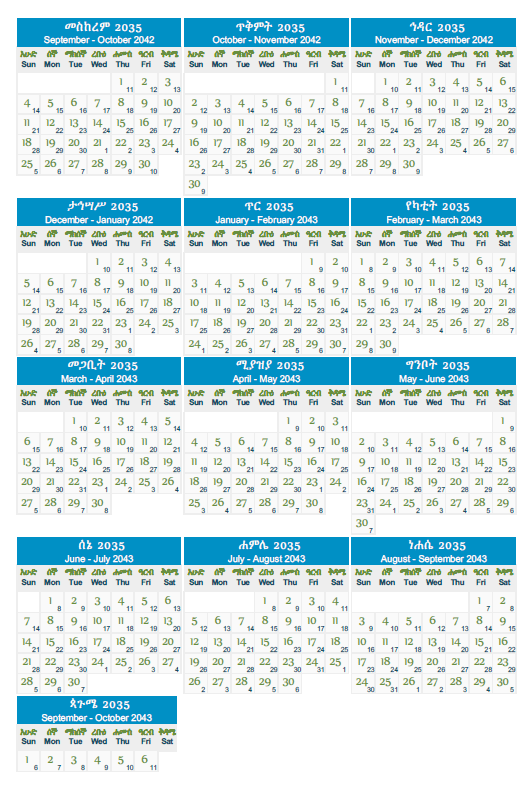
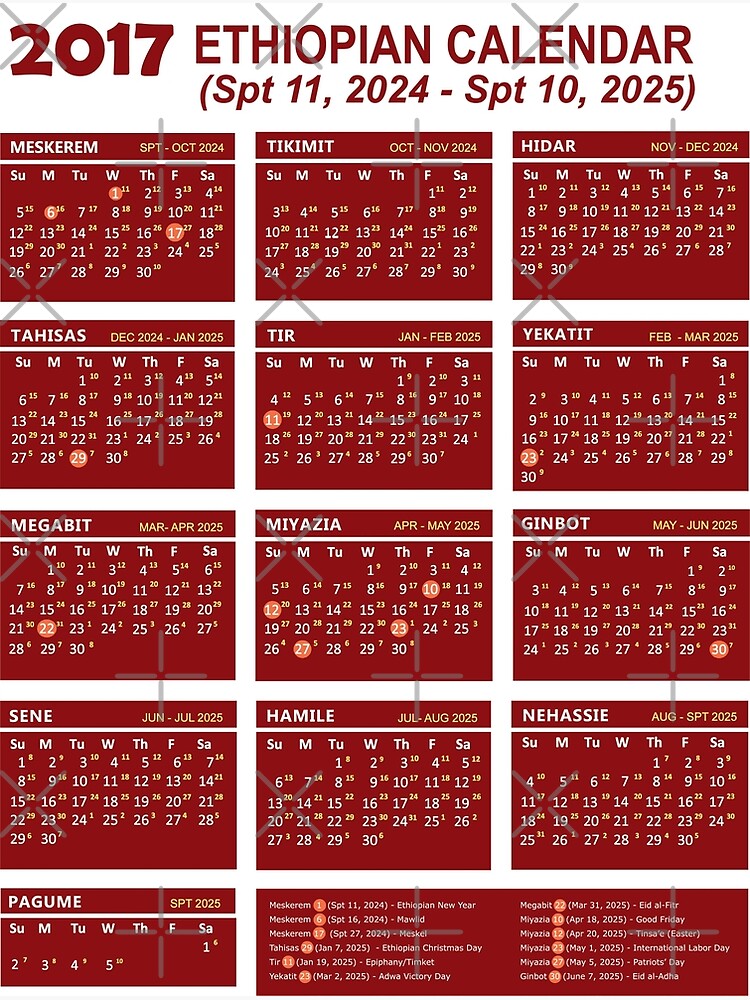
To build software that supports the Ethiopian calendar, developers must first understand its mathematical divergence from the ISO 8601 standard. The Ethiopian calendar is a solar calendar that originates from the Alexandrian or Coptic calendar. Its most striking feature for a developer is its structure: twelve months of 30 days each, followed by a thirteenth month (Pagumē) of five or six days depending on the leap year.
Understanding the 13-Month System and Ge’ez Logic
In a standard Gregorian-based database, months vary from 28 to 31 days. In contrast, the Ethiopian system provides a degree of regularity in its first twelve months, which simplifies some aspects of arithmetic but complicates others. The 13th month, Pagumē, acts as a “buffer” month to align the calendar with the solar year. When designing database schemas or time-series data visualizations for Ethiopian users, engineers cannot rely on standard MONTH(date) functions. They must instead utilize libraries that recognize the 13th index, or risk “out of bounds” errors during the final days of the Ethiopian year.
The Seven-Year Gap: Logic Behind the Offset
The Ethiopian calendar is approximately seven years and eight months behind the Gregorian calendar. This discrepancy arises from a different calculation of the Annunciation (the birth of Jesus). For a tech professional, this offset is a constant that must be accounted for in every timestamp conversion. Hard-coding a “minus seven” logic is a dangerous practice, as the offset shifts on September 11th (or 12th in leap years) of the Gregorian calendar. Accurate synchronization requires a deep understanding of the “Eras” used in the Ethiopian system, specifically the Amete Mihret (Year of Mercy).
Technical Hurdles in Software Localization (L10n)
Localization (L10n) and Internationalization (i18n) go far beyond translating text; they involve adapting the very logic of how data is processed. When a global app launches in Ethiopia, the backend must handle dual-calendar support without breaking legacy data.
Date-Time Libraries and API Compatibility
Most modern programming languages rely on the Unicode Common Locale Data Repository (CLDR) and the International Components for Unicode (ICU) library. For example, in JavaScript, the Intl.DateTimeFormat object allows developers to specify ethiopian as the calendar system.
However, many third-party APIs and legacy systems are strictly ISO-compliant. If a mobile app sends a date string like 2016-13-05 (the 5th day of the 13th month of the Ethiopian year 2016) to a REST API that expects Gregorian format, the system will crash or default to an error. This necessitates a “Middleware Translation Layer” where incoming Ethiopian dates are normalized to UTC/Gregorian for storage and then re-converted for the front-end display.
Handling Edge Cases: The Leap Year Discrepancy
The leap year cycle in the Ethiopian calendar follows a four-year rhythm without the “century rule” (where years divisible by 100 but not 400 are not leap years) found in the Gregorian system. This leads to a gradual drift over centuries. For software involving long-term financial forecasting or historical record-keeping, developers must implement specific algorithmic checks. A failure to account for this can lead to “off-by-one” errors in date calculations, which are notoriously difficult to debug in large-scale distributed systems.
User Interface and Experience (UI/UX) Design for Multi-Calendar Support
From a UI/UX perspective, displaying the Ethiopian calendar is about building trust and accessibility. A banking app in Addis Ababa that only displays Gregorian dates may feel “foreign” or confusing to a user who conducts their daily business in the local calendar.
The Complexity of Calendar Pickers and Date Formatters
The standard HTML5 <input type="date"> is often insufficient for Ethiopian users. Tech teams must develop custom components—Calendar Pickers—that allow users to toggle between “Gregorian” and “Ethiopic.” These components must be responsive to the unique month lengths.
Furthermore, the Ethiopian day traditionally starts at dawn (6:00 AM Gregorian), not midnight. While most digital systems in Ethiopia have adopted the midnight start for technical synchronization, some local applications still need to provide a “Local Time” toggle that accounts for this six-hour shift. If your “Tech” stack doesn’t account for this, your timestamps for ride-sharing or food delivery could be six hours off, leading to significant logistical failures.
Cultural Sensitivity and Digital Inclusivity
Inclusive design means recognizing that “Western-centric” defaults are not universal. By integrating the Ethiopian calendar natively, tech companies demonstrate a commitment to the market. This involves more than just the year; it includes supporting Ge’ez numerals and local month names (e.g., Mäskäräm, Tikimt). When these are rendered correctly using high-quality typography and UTF-8 encoding, the “perceived performance” and user satisfaction of the app increase exponentially.
The Role of AI and Machine Learning in Synchronizing Temporal Data
As we move further into the era of AI, the complexity of managing multiple calendars is being mitigated by smarter algorithms. Machine learning models are now being trained to handle “Temporal Entity Recognition” across different cultural contexts.
Automated Conversion Tools and Historical Data Mapping
For companies migrating massive datasets from Ethiopian governmental archives into cloud-based systems (like AWS or Azure), AI-driven tools are essential. These tools can scan hand-written or legacy digital documents, identify dates in the Ethiopian format, and automatically map them to a unified UTC timeline. This “Temporal Normalization” is a burgeoning field in data engineering, ensuring that historical data remains searchable and analytically viable in a globalized tech ecosystem.
Predictive Analytics Across Different Fiscal Cycles
In Ethiopia, the fiscal year typically begins on July 8th (Gregorian). For a SaaS company providing ERP (Enterprise Resource Planning) software, the AI must be configured to run reports based on this specific fiscal window rather than the standard January-December cycle. Predictive analytics models for sales or inventory must be “calendar-aware.” For instance, an AI predicting consumer behavior must know that the Ethiopian New Year (Enkutatash) in September is a major shopping period, which would not be flagged by a Gregorian-only holiday algorithm.
Conclusion: The Future of Inclusive Tech
Understanding what year it is in Ethiopia is a gateway to mastering the broader challenge of globalized software engineering. As the tech industry continues to expand into emerging markets, the “one-size-fits-all” approach to time and date is becoming obsolete.
Building systems that respect and integrate the Ethiopian calendar is a testament to the maturity of a tech organization’s localization strategy. It requires a robust combination of precise algorithmic logic, sophisticated middleware, and empathetic UI/UX design. By treating the Ethiopian calendar not as a “coding quirk” but as a first-class citizen in the data schema, developers can build more resilient, inclusive, and globally competitive technology. In the digital world, time is relative—but for your software, it must be perfectly translated.
aViewFromTheCave is a participant in the Amazon Services LLC Associates Program, an affiliate advertising program designed to provide a means for sites to earn advertising fees by advertising and linking to Amazon.com. Amazon, the Amazon logo, AmazonSupply, and the AmazonSupply logo are trademarks of Amazon.com, Inc. or its affiliates. As an Amazon Associate we earn affiliate commissions from qualifying purchases.