
The question of what year Grand Theft Auto: San Andreas takes place is fundamental to understanding its narrative, yet for the technologist, the answer—1992—serves as a blueprint for one of the most ambitious software engineering feats in gaming history. While players remember the cultural zeitgeist of the early 90s, the underlying technology required to simulate that era on hardware released in 2004 represents a masterclass in optimization, engine architecture, and digital asset management.
To understand the “year” of San Andreas is to understand the intersection of historical simulation and technical constraints. In 1992, the world was transitioning from analog to digital; in 2004, Rockstar North was attempting to push the PlayStation 2’s Emotion Engine to its absolute limit to render that world.
Chronology Meets Code: Why 1992 Defined the Game’s Technical Scope
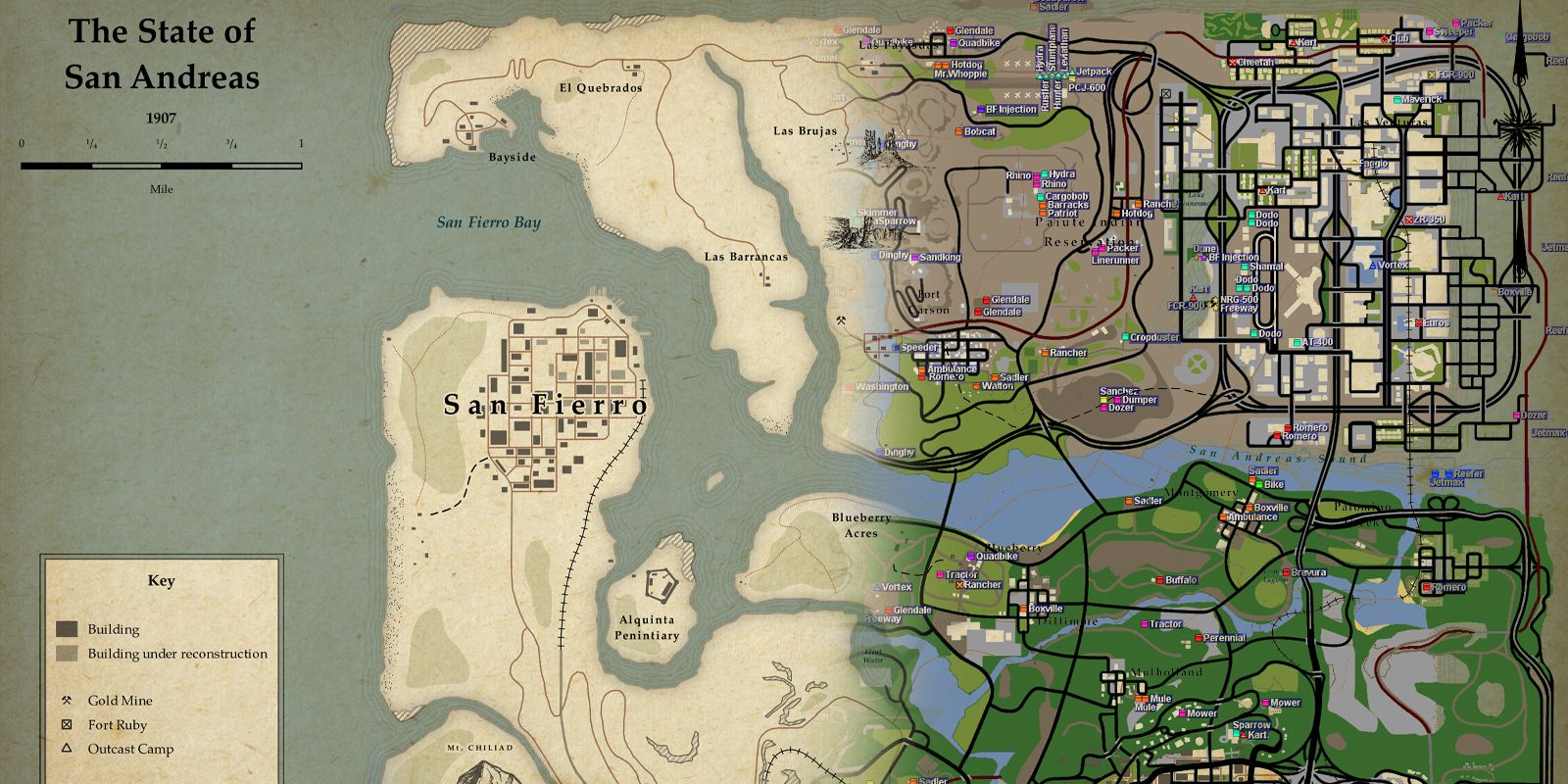
Setting the game in 1992 wasn’t just a stylistic choice; it dictated the technical requirements for the environment, vehicle physics, and sound engineering. To recreate the early 90s, developers had to build a digital ecosystem that could handle diverse topographical data—from the dense urban sprawl of Los Santos to the rolling hills of Bone County.
Simulating a Decade through Software
Recreating 1992 required a specific approach to asset libraries. Unlike its predecessor, Vice City, which leaned into the neon aesthetics of the 80s, San Andreas required a more muted, realistic palette. Technically, this meant a complete overhaul of the lighting engine. The “Timecycle” system—a configuration file that dictates the color of the sky, the intensity of the sun, and fog density—was expanded significantly. By 1992 standards, the atmosphere was thick with smog and haze, requiring the engine to use “Distance Fog” to mask the limited draw distance of the PS2 hardware while simultaneously enhancing the aesthetic realism of the period.
The Constraints of 2004 Hardware vs. 1992 Ambition
The PlayStation 2 possessed only 32MB of System RAM and 4MB of Video RAM. To render a map that spanned three distinct cities and the vast countryside of 1992, Rockstar North had to employ aggressive memory management. This led to the refinement of “Level of Detail” (LOD) systems. The technical year of 1992 was essentially broken down into thousands of small, streamable chunks. As the player moved through the world, the software would dynamically load and unload assets from the disc, a process that required precise timing to avoid the “blue-sky” effect where the world fails to render in time.
The RenderWare Engine: Powering a Seamless Open-World Simulation
At the heart of San Andreas lies the RenderWare engine, a versatile 3D API developed by Criterion Software. While many games used RenderWare, the way Rockstar modified it to handle the scale of 1992’s California and Nevada equivalents was revolutionary.
Streaming Logic and Memory Management
The most significant technical hurdle for San Andreas was the sheer size of the world. In previous iterations, the game world was relatively flat. The 1992 setting introduced verticality—Mount Chiliad and the skyscrapers of San Fierro. This required the engine to calculate Z-axis data more efficiently. The “streaming logic” was rewritten to prioritize objects based on the player’s velocity. If you were flying a Hydra jet, the engine shifted resources to load distant low-poly models; if you were walking in Ganton, it focused on high-resolution textures for the immediate surroundings. This binary prioritization is a precursor to the sophisticated asset streaming seen in modern SSD-based gaming.
AI Pathfinding and NPC Behavioral Systems
To make 1992 feel alive, the technical team implemented a more complex “PopCycle” system. This determined which types of NPCs (Non-Player Characters) and vehicles would spawn based on the neighborhood and the time of day. From a software perspective, this was a massive database management task. The game had to track the “pedestrian density” and “vehicle variety” in real-time without overflowing the 32MB of RAM. The AI pathfinding (Nodes) also saw an upgrade, allowing for more complex highway traffic and the simulation of gang territories, which functioned as a dynamic layer of code over the base map.

From CRT to 4K: The Evolution of San Andreas Across Modern Platforms
The question of what year the game takes place has taken on new technical meaning as the title has been ported to mobile devices, modern consoles, and PCs. Each port represents a leap in software translation and hardware utilization.
Mobile Porting and Touch-Interface Optimization
When San Andreas was ported to iOS and Android, it marked a significant milestone in mobile tech. The game that once required a dedicated console was now running on ARM-based processors. This transition required a complete rewrite of the input-handling code to accommodate touchscreens. Furthermore, the technical team had to implement “Dynamic Shadows” and “Real-time Reflections”—features that the original 2004 hardware couldn’t handle—using the power of modern mobile GPUs.
The Role of AI Upscaling in the Definitive Edition
The release of the Grand Theft Auto: The Trilogy – The Definitive Edition brought the 1992 setting into the era of Unreal Engine 4. This transition was controversial but technically fascinating. The developers used AI-assisted upscaling to increase the resolution of textures that were originally designed for 480i CRT televisions. While the “automated” nature of this upscaling led to some technical glitches, it highlighted the challenges of using modern AI tools to interpret low-fidelity assets from a bygone era of software development.
Cybersecurity and Modding: The Technical Subculture of the San Andreas Community
Beyond the official releases, the technical life of San Andreas has been extended by a massive modding community. Because the game takes place in the iconic year of 1992, players have spent decades refining the software to make it look even more “period-accurate” or to add features the original developers never dreamed of.
Reverse Engineering the Source Code
One of the most impressive technical feats in the “San Andreas” ecosystem was the “re3” and “reVC” projects, which eventually paved the way for the reverse engineering of San Andreas. By decompiling the original machine code back into readable C++, developers were able to fix “legacy bugs” that had existed since 2004. This technical transparency allowed for the game to be ported to unconventional hardware, such as the Nintendo Switch (via homebrew) and even older versions of Linux, ensuring the simulation of 1992 remains accessible on any architecture.
Multi-player Frameworks (SAMP and MTA)
Perhaps the greatest technical achievement of the community is San Andreas Multiplayer (SAMP) and Multi Theft Auto (MTA). The original game was strictly single-player. However, through “memory hacking” and “packet injection,” modders created a networking layer that synchronized the 1992 world across thousands of players. This involved creating a custom server-client architecture that could track player positions, vehicle synchronization, and custom scripts, all while running on an engine that was never intended to connect to the internet.
Future-Proofing the Past: What Modern Developers Can Learn from 1992
As we look back at the technical year of 1992 through the lens of San Andreas, there are critical lessons for modern software developers and game architects. The game is a testament to the idea that technical constraints can breed immense creativity.
- Optimization is King: San Andreas proves that clever code can overcome hardware limitations. The way it manages its “Garbage Collection” of assets remains a study for developers working on mobile or IoT devices with limited memory.
- Modular Design: The way the three cities were built as separate but interconnected modules allowed for a massive world that felt cohesive. Modern microservices in cloud computing follow a similar logic—breaking a massive system into smaller, manageable, and streamable parts.
- Legacy Maintenance: The fact that a game from 2004, simulating 1992, is still played and modded today highlights the importance of “clean code” and the value of community-driven technical support.
In conclusion, while Grand Theft Auto: San Andreas takes place in 1992, its technical footprint spans decades. From its origins on the PlayStation 2’s MIPS-based architecture to its modern incarnations in Unreal Engine and community-driven multiplayer frameworks, the game remains a pinnacle of technical achievement. It serves as a digital time capsule, not just of the early 90s culture, but of the evolution of software engineering in the 21st century.
aViewFromTheCave is a participant in the Amazon Services LLC Associates Program, an affiliate advertising program designed to provide a means for sites to earn advertising fees by advertising and linking to Amazon.com. Amazon, the Amazon logo, AmazonSupply, and the AmazonSupply logo are trademarks of Amazon.com, Inc. or its affiliates. As an Amazon Associate we earn affiliate commissions from qualifying purchases.