
The medieval period in Europe, spanning roughly from the 5th to the 15th century, was profoundly shaped by the pervasive influence of Christianity. Far beyond a mere religious doctrine, the Christian Church functioned as the continent’s preeminent institution, crafting an unparalleled “corporate identity” and executing a masterclass in “brand strategy” that permeated every facet of life – from governance and law to art, education, and social structure. In an era predating modern media and centralized states, the Church effectively established and managed the dominant “brand” of medieval European civilization.
Establishing a Dominant Corporate Identity: The Church as a Unifying Brand
In the vacuum left by the collapse of the Western Roman Empire, the Christian Church emerged as the most consistent and geographically extensive organization. It wasn’t merely a collection of local parishes but a burgeoning multinational entity, developing a cohesive “corporate identity” that offered stability, meaning, and a shared worldview across diverse cultures and nascent kingdoms.

From Fragmented Beliefs to Centralized Authority: Crafting the Core Message
The early medieval period saw the consolidation of Christian doctrine, particularly through ecumenical councils and the growing authority of the Papacy. This process was akin to a modern corporation defining its core values, mission statement, and unique selling proposition. The Latin language, standardized liturgy, and unified theological framework served as the universal “brand guidelines” for the entire continent. This common language and ritual provided a consistent experience for adherents, regardless of their local dialect or political allegiance, fostering a sense of belonging to a singular, overarching spiritual enterprise. The “message” of salvation, redemption, and a structured moral universe offered a compelling narrative that resonated deeply in a chaotic world, providing both comfort and a clear path for living. The consistent articulation of this message, through sermons, scriptures, and sacred art, built immense “brand equity” over centuries, making Christianity synonymous with moral authority and cosmic order.
Visual & Architectural Design as Brand Manifestation: Cathedrals and Iconography
The Church understood the power of visual communication and environmental design long before modern marketing agencies. The construction of cathedrals, monasteries, and churches was not merely an act of piety but a deliberate “brand strategy” to manifest its power, grandeur, and divine connection. These monumental structures, often the largest and most intricate buildings in any given town, served as physical embodiments of the Christian “brand.” Their soaring spires, intricate stained glass, and detailed sculptures told biblical stories to an largely illiterate populace, acting as powerful “advertisements” for the faith.
Iconography, from frescos to illuminated manuscripts, provided a standardized visual language. The depictions of Christ, the Virgin Mary, saints, and biblical scenes were carefully curated to convey specific theological messages and emotional responses. This consistent visual “design language” ensured that, whether in Ireland or Italy, the symbols and stories of Christianity were immediately recognizable, reinforcing the universal identity of the Church and its message. Each artistic choice contributed to the overarching “brand experience,” creating awe, reverence, and a deep sense of shared identity among believers.
Rituals and Liturgy: Experiential Marketing and Community Building
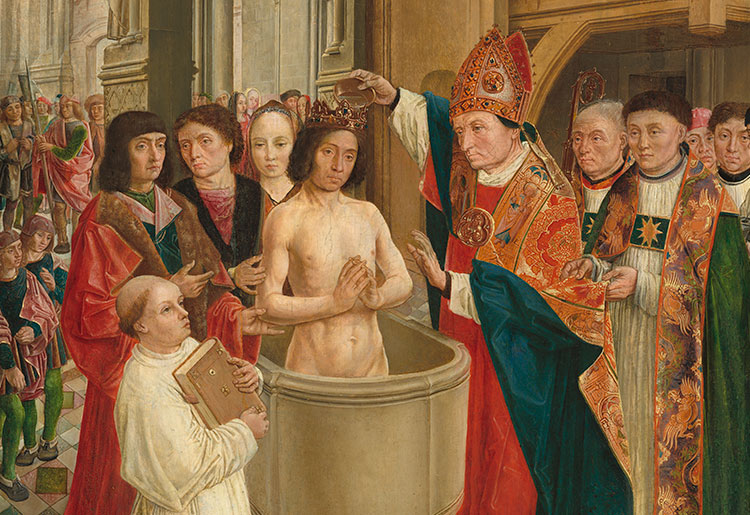
Medieval Christianity was an intensely experiential “brand.” The daily, weekly, and annual cycle of rituals and liturgy formed the bedrock of its “marketing strategy” and “community engagement.” Mass, sacraments (baptism, communion, confession, marriage, last rites), and feast days were not passive observations but active participations that deeply embedded individuals within the Church’s framework. These rituals provided a predictable structure to life, marking passages and offering solace. The sensory experience – incense, chanting, elaborate vestments, and sacred music – created an immersive environment that fostered emotional connection and reinforced the spiritual “product.”
Confession, in particular, acted as a direct, personalized “customer service” interaction, providing guidance and accountability. Pilgrimages, meanwhile, were medieval “loyalty programs,” offering spiritual rewards for arduous journeys to sacred sites. Through these consistent, engaging, and deeply personal experiences, the Church effectively built a loyal “customer base” and cemented its “brand loyalty” across generations. These communal practices transformed individual belief into a collective identity, strengthening the overall Christian “brand.”
Brand Strategy and Market Penetration: Spreading the Christian Narrative
The Church’s success in medieval Europe was also a testament to its effective “market penetration” and communication strategy. It actively worked to disseminate its message, convert new “audiences,” and ensure the widespread adoption of its “brand values.”
Education and Literacy: Controlling the Narrative and Training Brand Ambassadors
Monasteries and cathedrals were the primary centers of learning in medieval Europe. While literacy rates were low among the general population, the Church actively fostered education, primarily to train its own clergy – the “brand ambassadors” who would preach, administer sacraments, and interpret scripture. By controlling the means of education, the Church controlled the narrative. Monastic scriptoria diligently copied religious texts, ensuring the preservation and dissemination of core doctrines.
Furthermore, the Church shaped the intellectual landscape, providing a framework for understanding the world, history, and morality. Scholars like Thomas Aquinas integrated classical philosophy with Christian theology, strengthening the intellectual “product” and making it more appealing to the educated elite. This intellectual dominance ensured that the Christian worldview was not only widely preached but also deeply reasoned and systematically explored, giving the “brand” intellectual credibility and authority.
Missionary Expansion: Reaching New Markets and Converting Audiences
The medieval period was characterized by significant missionary efforts aimed at expanding the Christian “market.” From the conversion of Anglo-Saxons by figures like Augustine of Canterbury to the eastward expansion into Scandinavia and Slavic lands, the Church consistently sought new “audiences.” These efforts involved strategic engagement with local rulers, often converting them first to secure top-down adoption.
Missionaries often adapted Christian practices to existing pagan traditions where possible, a subtle “localization strategy” that made the new faith more palatable. The establishment of new bishoprics and monasteries in newly converted territories served as “franchise outlets,” solidifying the Church’s presence and allowing for continued “customer engagement” and growth. This persistent and adaptable missionary work was crucial for the long-term “market share” and influence of the Christian brand across Europe.
The Role of Saints and Relics: Personal Branding and Loyalty Programs
Saints played a critical role in the Church’s “personal branding” strategy. They were celebrated figures who embodied Christian virtues, offering relatable examples of faith and devotion. Each saint developed a distinct “brand identity” often associated with specific miracles, patronage (e.g., St. Christopher for travelers), or regions. This diversification allowed for a broader appeal and deeper connection with local communities.
Relics, physical objects associated with saints, were powerful “marketing tools” and focal points for devotion. They drew pilgrims, generated revenue, and reinforced the tangible connection between the earthly and divine. The veneration of saints and relics provided a spiritual “loyalty program,” encouraging consistent engagement and offering hope for intercession and divine favor. This strategy effectively leveraged individual “sub-brands” to strengthen the overarching Christian “master brand.”
Brand Management and Influence: Shaping Society and Governance
The pervasive influence of Christianity meant the Church was not just a religious body but a powerful political and social actor, constantly engaged in “brand management” and leveraging its “brand equity” to shape laws, ethics, and power dynamics.
Moral Authority as Brand Equity: Guiding Ethical and Legal Frameworks
The Church possessed immense “brand equity” in the form of moral authority. It was seen as the ultimate arbiter of right and wrong, guiding personal conduct and influencing secular law. Concepts like the “Peace of God” and the “Truce of God” were Church initiatives aimed at limiting warfare, demonstrating its power to impose ethical standards on a violent society.
Canon law, the Church’s own legal system, evolved alongside secular law, addressing matters from marriage and divorce to contracts and inheritance. This dual legal framework ensured that the Church’s moral and ethical “brand values” were not only preached but also legally enforced, reinforcing its role as a fundamental pillar of societal order. The Church’s ability to excommunicate individuals or place entire regions under interdict represented potent tools of “brand control,” compelling rulers and commoners alike to conform to its dictates.
Political Alliances and Endorsements: Strategic Partnerships for Brand Power
From the crowning of emperors by popes to the Church’s involvement in royal successions, Christianity forged deep and often complex “strategic partnerships” with secular rulers. These alliances were mutually beneficial: monarchs gained legitimacy and divine endorsement for their rule, while the Church secured protection, resources, and widespread adherence to its doctrines. The Crusades, though complex in their motivations, were a monumental example of the Church leveraging its “brand power” to mobilize vast armies and direct European geopolitical strategy. By issuing calls to arms and granting spiritual rewards, the Church demonstrated its capacity to initiate and lead large-scale, transnational endeavors, showcasing the immense power of its “brand.”

Adapting the Brand: Navigating Heresy and Maintaining Cohesion
Throughout the medieval period, the Church faced challenges to its “brand integrity” in the form of heresies. Groups like the Cathars presented alternative interpretations of Christian doctrine, threatening the unity and authority of the established “brand.” The Church responded decisively, through theological arguments, educational campaigns, and, when deemed necessary, through the use of force via institutions like the Inquisition. This was a sophisticated “brand protection” strategy, aimed at preserving doctrinal purity and maintaining the centralized authority of the Papacy. By clearly defining orthodoxy and swiftly suppressing perceived threats, the Church managed to largely preserve its monolithic identity and ensure a consistent “brand experience” across its vast domain, illustrating effective “crisis management” in an era without modern communication tools.
In essence, Christianity was more than a religion in medieval Europe; it was the foundational operating system, the overarching corporate entity, and the master brand that defined the era. Its strategic development of a unified identity, effective dissemination of its message, and astute management of its moral and political capital shaped a continent for a thousand years.
aViewFromTheCave is a participant in the Amazon Services LLC Associates Program, an affiliate advertising program designed to provide a means for sites to earn advertising fees by advertising and linking to Amazon.com. Amazon, the Amazon logo, AmazonSupply, and the AmazonSupply logo are trademarks of Amazon.com, Inc. or its affiliates. As an Amazon Associate we earn affiliate commissions from qualifying purchases.