
In the lexicon of science fiction technology, few vessels command as much respect and scrutiny as the Millennium Falcon. To the casual observer, it is often dismissed as a “hunk of junk,” a patchwork of rusted plates and exposed wiring. However, from a technical and engineering perspective, the Millennium Falcon represents the pinnacle of modular design and high-performance modification. It is not merely a “ship”; it is a highly customized Corellian Engineering Corporation (CEC) YT-1300 light freighter that has been pushed far beyond its original factory parameters.
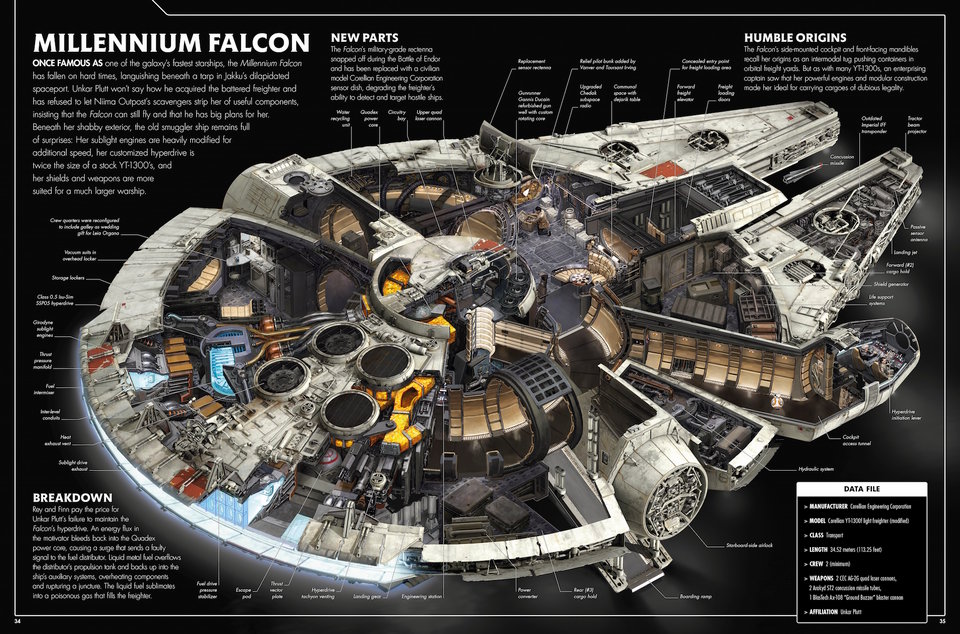
To understand what type of ship the Falcon is, one must look past its weathered exterior and analyze the sophisticated hardware, propulsion systems, and digital infrastructure that make it the fastest ship in its class.
1. The Core Architecture: The YT-1300 Light Freighter Platform
At its foundation, the Millennium Falcon is a YT-1300 light freighter, specifically the YT-1300p (passenger) model. Manufactured by the Corellian Engineering Corporation, this line was designed with a philosophy that mirrors modern open-source hardware: modularity, accessibility, and ease of modification.
The Modular Design Philosophy
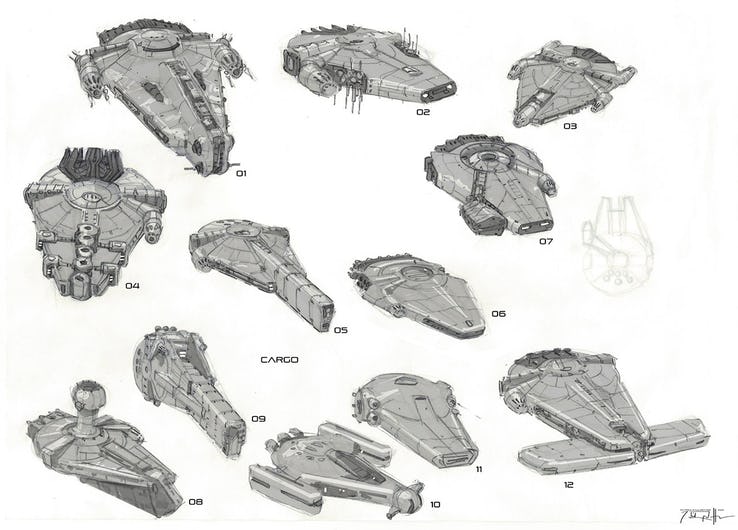
The brilliance of the YT series lies in its “building block” approach to interstellar travel. The saucer-shaped hull was designed to be a versatile shell that could be configured for freight, passenger transport, or liquid storage. For tech enthusiasts, the YT-1300 is the equivalent of a high-end desktop PC tower from the late 90s—not necessarily beautiful, but immensely spacious and designed for “hot-swapping” components. This modularity allowed the ship’s owners to install upgraded power cores and oversized engines that the original frame was never intended to house.
Stock Specifications vs. High-Performance Overclocking
In its stock form, a YT-1300 is a reliable, mid-range transport vessel. It features a standard sublight speed and a Class 2 hyperdrive, sufficient for legal shipping routes. However, the Falcon is a prime example of “technological overclocking.” By stripping away non-essential comforts and rerouting power through a customized S-floader, the ship’s performance metrics were boosted by nearly 300%. This transformation turned a civilian cargo ship into a high-speed blockade runner, capable of outmaneuvering dedicated military interceptors.
2. Propulsion Systems: Redefining Faster-Than-Light Travel
The most famous claim regarding the Millennium Falcon is its ability to make “point five past lightspeed.” In technical terms, this refers to its Class 0.5 hyperdrive rating. To achieve this, the ship’s propulsion systems underwent a series of radical upgrades that blend experimental physics with aggressive engineering.
The Class 0.5 Hyperdrive Optimization
Most military-grade capital ships in the Star Wars universe utilize a Class 1 or Class 2 hyperdrive. The lower the number, the faster the ship. Achieving a Class 0.5 rating is an extraordinary feat of engineering that requires a massive Isu-Sim SSP05 hyperdrive generator. To prevent the ship from tearing itself apart under the stress of such high-velocity jumps, the Falcon utilizes a series of reinforced structural braces and custom-tuned inertial dampeners. This allows the vessel to navigate hyperspace with a precision that cuts travel time significantly, effectively “shortening” the distance of standard routes like the Kessel Run.
Isu-Sim SS-54 Sublight Engines
For sub-orbital and deep-space maneuvering, the Falcon relies on heavily modified Isu-Sim SS-54 sublight engines. These engines were originally designed for much larger bulk cruisers. By integrating them into the compact frame of a light freighter, the Falcon achieved a thrust-to-weight ratio that is virtually unmatched in its size class. The iconic blue glow of the engine bank is a result of a custom fuel-injection system that uses a high-density reactant, providing the sudden bursts of acceleration necessary for dogfighting and rapid atmospheric exits.
3. Defense, Offense, and Electronic Warfare Suites
A freighter of the Falcon’s reputation cannot survive on speed alone. Its technical profile includes a sophisticated array of offensive and defensive systems that transition it from a cargo vessel to a legitimate tactical asset.
Military-Grade Shielding on a Civilian Frame
The Millennium Falcon utilizes a triple-layered shield configuration, a rarity for civilian craft. It features a combination of Chempat “Defender” deflector shield generators and specialized localized projectors. This setup allows the pilot to divert all power to specific quadrants—front, rear, or sides—depending on the direction of incoming fire. Furthermore, the hull is reinforced with high-grade Duralloy plating, salvaged from decommissioned Imperial warships, providing a layer of physical protection that complements its energy-based defenses.
Custom Weaponry and Turret Systems
The ship’s primary armament consists of two modified Corellian Engineering Corporation AG-2G quad laser cannons. These are mounted on specialized high-speed traversals, allowing for 360-degree coverage. Unlike standard automated turrets, these are manually operated from a central gunnery well, which provides a direct link to the ship’s targeting computer. For “silent” operations, the Falcon also features a concealed underside anti-personnel repeating laser, which can be deployed via remote link to clear landing zones without the pilot ever leaving the cockpit.
Electronic Countermeasures (ECM)
Perhaps the ship’s most underrated technical feature is its electronic warfare suite. The Falcon is equipped with a Carbanti signal augmentor and a sophisticated sensor-jamming array. These tools allow the ship to “ghost” Imperial sensors, making it appear as a much smaller vessel, or in some cases, a piece of space debris. This suite of digital security and obfuscation tools is what truly classifies the Falcon as a “smuggler’s ship,” where the goal is to avoid detection entirely rather than win every firefight.
4. The Navicomputer and System Integration
The “brain” of the Millennium Falcon is a complex, often temperamental network of interconnected computers. Because the ship is a blend of parts from different manufacturers and eras, the software integration is a masterclass in legacy system management.
The Three-Brain Architecture
To handle the immense data processing required for Class 0.5 hyperspace calculations, the Falcon utilizes three distinct droid brains linked in a parallel processing network. This “tri-core” architecture allows for lightning-fast pathfinding, enabling the ship to calculate jumps through highly volatile regions of space (like the Maw Cluster) that would crash a standard navicomputer. However, this custom setup requires constant maintenance, as the three personalities often conflict, leading to the ship’s famous reputation for technical glitches.
Integration of Contradictory Hardware
One of the greatest challenges in the Falcon’s design is the “handshake” between different tech generations. The ship contains components from Sienar Fleet Systems, Incom Corporation, and various black-market manufacturers. Managing these disparate APIs requires a custom-built central interface. Han Solo and Chewbacca effectively created a proprietary operating system for the ship, utilizing physical toggle switches and analog overrides to bypass software locks. This “hands-on” approach to tech management ensures that even when the main computer fails, the pilot can manually engage critical systems.
Conclusion: The Ultimate Legacy System
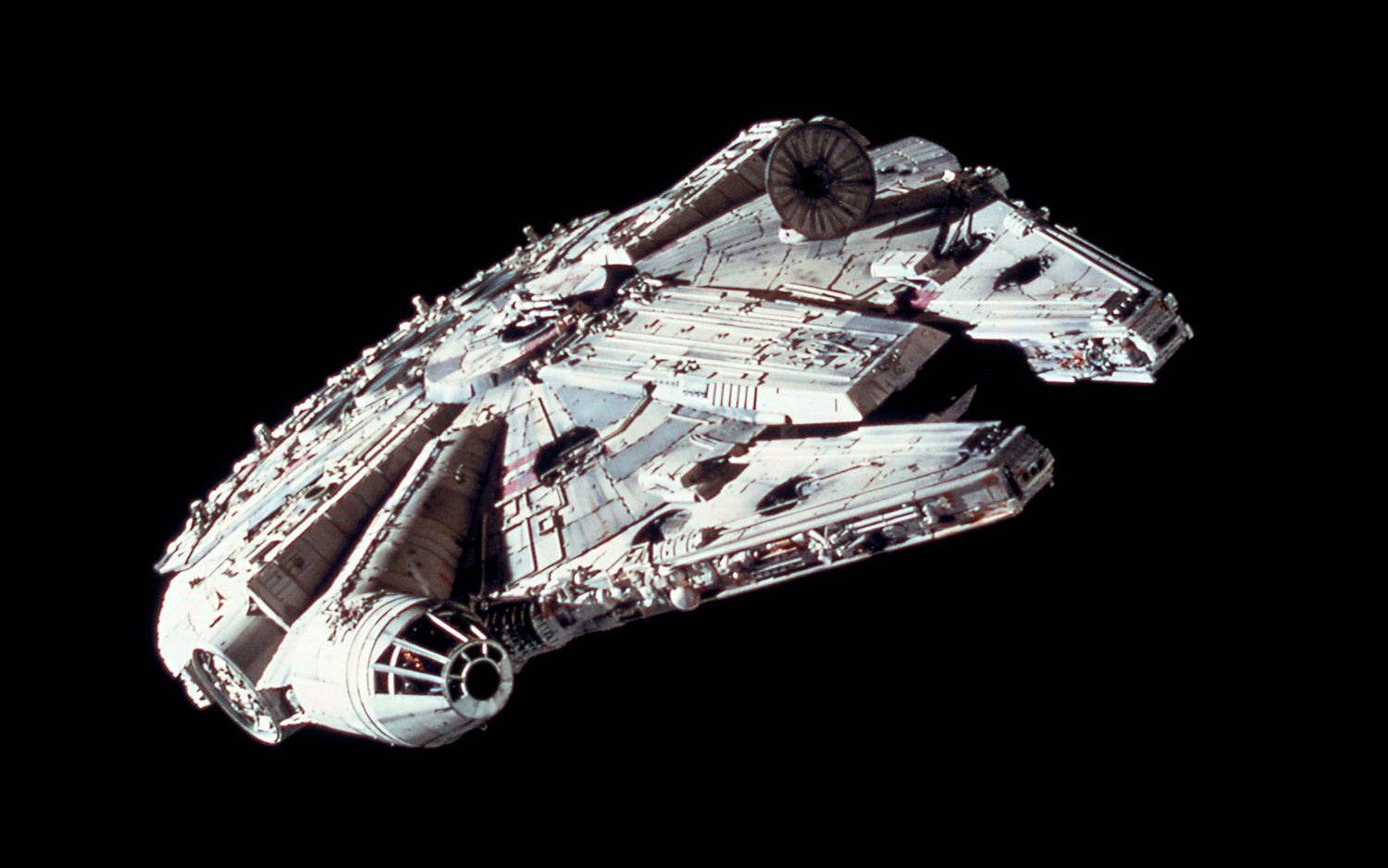
So, what type of ship is the Millennium Falcon? Technically, it is a highly-modified CEC YT-1300 light freighter optimized for high-velocity transit and tactical evasion.
In the world of technology, it serves as a powerful metaphor for the “right to repair” and the power of user-end modification. The Falcon proves that with the right engineering expertise, a legacy platform can be updated, overclocked, and reinforced to outperform even the most expensive modern “out-of-the-box” solutions. It is a masterpiece of technical ingenuity, a vessel where every bolt and every line of code has been scrutinized and improved to create something far greater than the sum of its parts. For the tech-minded, the Falcon isn’t just a ship; it is the ultimate expression of engineering potential.
aViewFromTheCave is a participant in the Amazon Services LLC Associates Program, an affiliate advertising program designed to provide a means for sites to earn advertising fees by advertising and linking to Amazon.com. Amazon, the Amazon logo, AmazonSupply, and the AmazonSupply logo are trademarks of Amazon.com, Inc. or its affiliates. As an Amazon Associate we earn affiliate commissions from qualifying purchases.