
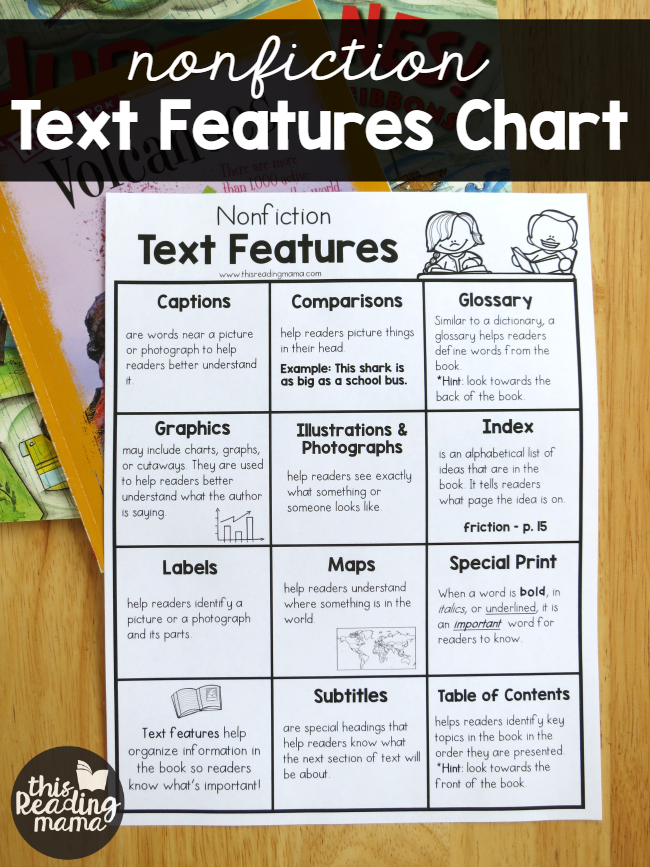
In the rapidly evolving landscape of technology, terms that once belonged to the realm of linguistics have found a new, high-stakes home in data science, software development, and artificial intelligence. When we ask, “What does a text feature mean?” we are no longer merely discussing the bold headings of a textbook or the index of a manual. In the contemporary tech ecosystem, a text feature is a measurable property or characteristic derived from textual data that allows software—specifically machine learning models and NLP (Natural Language Processing) systems—to understand, categorize, and generate human language.

As we transition further into an era dominated by Large Language Models (LLMs) and sophisticated digital interfaces, understanding text features becomes essential for developers, tech enthusiasts, and digital architects. It is the bridge between raw, unstructured human speech and the structured, binary logic of computing.
Understanding the Technical Core: Defining Text Features in Data Science
At its most fundamental level in technology, a text feature is a piece of information extracted from a body of text that serves as an input for an algorithm. Because computers cannot “read” in the way humans do—perceiving meaning through culture and context—they require text to be broken down into discrete, quantifiable units.
Tokens and Strings: The Building Blocks
The first step in creating a text feature is tokenization. In software development, a token is the smallest unit of text—often a word, a part of a word, or even a punctuation mark. When a developer builds a search engine or a chatbot, the software views a sentence not as a fluid thought, but as a sequence of strings. These strings are then transformed into features. For example, the frequency of a specific word (term frequency) is a classic text feature used to determine the relevance of a document in a database.
Semantic vs. Syntactic Features
In the tech world, we categorize text features into two primary types: syntactic and semantic. Syntactic features focus on the structure and grammar. This includes “part-of-speech” tagging—identifying whether a word is a noun, verb, or adjective. This is crucial for software like grammar checkers or automated translation tools.
Semantic features, however, are where modern AI truly shines. These features represent the meaning behind the words. Through a process called word embedding, technology can represent words as vectors in a multi-dimensional space. In this space, the “feature” for the word “apple” is mathematically closer to “fruit” than it is to “airplane.” This allows software to understand context, enabling the sophisticated responses we see in modern AI tools.
Natural Language Processing: How AI Tools Interpret Human Language
Natural Language Processing (NLP) is perhaps the most significant application of text features in the tech industry today. Every time you interact with a virtual assistant or use a real-time translation app, you are utilizing a complex array of text features working in the background.
Vectorization and Embeddings
For an AI tool to process a text feature, it must undergo vectorization. This is the process of converting text into numerical values. In high-level AI development, “word embeddings” (such as those used by Word2Vec or GloVe) create dense vectors where the features capture nuances like gender, tense, and even sentiment. When an AI analyzes a text feature, it is essentially performing high-speed calculus to determine the probability of the next word or the intent of a user’s query.
Named Entity Recognition (NER)
Another critical text feature in the software world is the “Named Entity.” Named Entity Recognition (NER) is a feature of NLP software that identifies and categorizes key information in a text—such as names of people, organizations, locations, dates, and quantities. For a tech company building an automated billing system, the ability to extract a “date” or an “amount” as a specific text feature from a PDF invoice is the difference between a manual process and a fully automated, scalable digital solution.
User Experience and Software Interface: Text Features in Digital Design
Beyond the “under-the-hood” data science, the term “text feature” also applies to how software displays information to the user. In the context of UI/UX (User Interface and User Experience) and digital accessibility, text features are the components that make software navigable and inclusive.
Alt-Text and Metadata
In the tech industry, accessibility is a priority. “Alt-text” (alternative text) is a specific type of text feature embedded in the metadata of a digital image. This feature is read by screen readers to describe the image to visually impaired users. Furthermore, metadata itself—the data about the data—contains text features that allow operating systems to index files, software to sort content, and web browsers to display the correct titles and descriptions in search results.
Interactive Text Elements in Modern Apps
Modern application design utilizes text as a functional feature rather than just static information. Think of “hypertext”—text that acts as a bridge to another digital location. In modern software suites, we see the rise of “smart chips” or “mention” features where typing a specific character (like the ‘@’ symbol) triggers a text feature that pulls data from a directory. Here, the text feature is an interactive component of the software’s architecture, enabling seamless integration between different digital tools and databases.
Security and Verification: The Role of Text Features in Digital Safety
The importance of text features extends deep into the realm of digital security and cybersecurity. As threats become more sophisticated, tech experts rely on the analysis of textual patterns to protect data and verify identities.
Pattern Recognition for Fraud Detection
In cybersecurity software, text features are used to identify phishing attempts. An algorithm might look for specific “features” within an email, such as a high frequency of “urgency” words, suspicious links disguised as text, or slight misspellings of brand names. By analyzing these features across millions of data points, security software can automatically flag and quarantine malicious communications before they reach a user’s inbox.
Sentiment Analysis in Cybersecurity Monitoring
Large-scale tech platforms use sentiment analysis—a high-level text feature—to monitor the “health” of their digital ecosystems. By analyzing the sentiment features of billions of posts or comments, companies can identify bot attacks, coordinated disinformation campaigns, or spikes in toxic behavior. The “sentiment score” is a quantified text feature that allows automated moderation systems to prioritize content for human review, maintaining the safety and integrity of the digital space.
The Future Trend: The Evolution of Generative Text Features
As we look toward the future of technology, the definition of a text feature is shifting from something we analyze to something we generate. Generative AI models like GPT-4 are essentially “feature-prediction” engines.
The future of software will likely involve “prompt engineering,” where the primary text feature is the input provided by the human user. This input acts as a high-level instruction set that the AI deconstructs into thousands of latent features to produce code, creative writing, or data analysis. We are moving toward a “Natural Language UI,” where the text feature is the primary way we interact with all software, replacing traditional buttons and menus with conversational commands.
Furthermore, as we integrate AI more deeply into our professional tools, we will see the rise of “Contextual Text Features.” This refers to software that can look at the text of an ongoing meeting (via real-time transcription) and automatically generate “action item” features in a project management app. The text feature is no longer a passive element; it is an active driver of cross-platform automation.

Conclusion
To answer the question “What does a text feature mean?” in a tech context is to acknowledge the incredible complexity behind the digital world. Whether it is a vector in a machine learning model, a metadata tag in an accessible website, or a pattern-recognition trigger in a security firewall, text features are the vital signals that allow our technology to interact with the human experience.
As technology continues to advance, the gap between human language and machine code will continue to shrink. By understanding and optimizing text features, developers and tech innovators are not just building better software—they are creating a world where technology can finally understand us on our own terms. In this digital transformation, the humble “text feature” is perhaps the most powerful tool we have for building a smarter, more connected, and more accessible future.
aViewFromTheCave is a participant in the Amazon Services LLC Associates Program, an affiliate advertising program designed to provide a means for sites to earn advertising fees by advertising and linking to Amazon.com. Amazon, the Amazon logo, AmazonSupply, and the AmazonSupply logo are trademarks of Amazon.com, Inc. or its affiliates. As an Amazon Associate we earn affiliate commissions from qualifying purchases.