
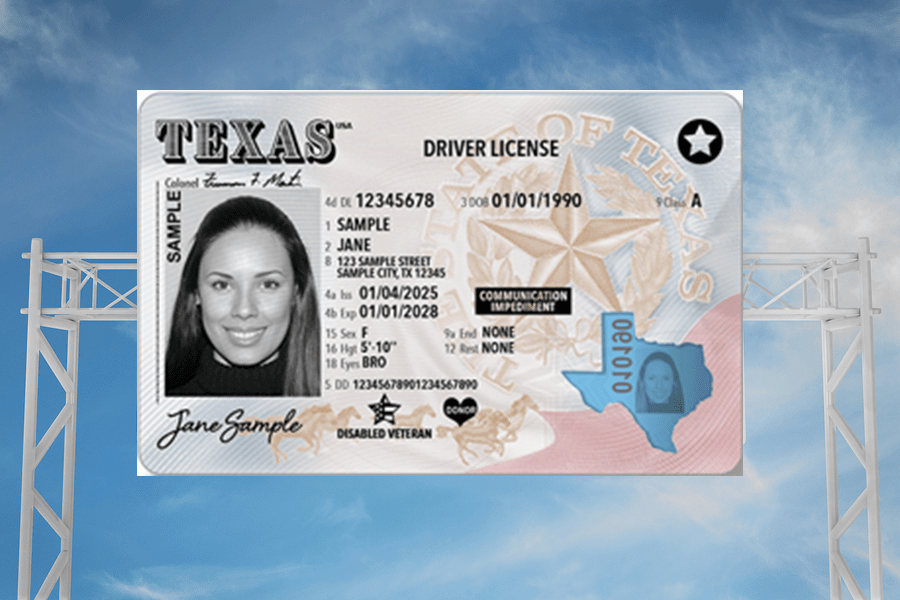
In an era defined by rapid technological advancement, the humble identification card has evolved from a simple laminated piece of paper into a sophisticated piece of hardware. For residents of the Lone Star State, the question “what does a Texas ID card look like” encompasses far more than just the color of the background or the placement of a headshot. Today’s Texas ID is a masterclass in digital security, materials science, and data encryption.
Understanding the visual and technical layout of a Texas ID is essential for developers building verification software, security professionals safeguarding sensitive environments, and citizens curious about the technology they carry in their wallets. This guide explores the intricate layers of the Texas ID, from its physical composition to the cutting-edge digital infrastructure that supports it.

Visual and Tactile Security Features: The Hardware of Identity
The physical appearance of a Texas ID is dictated by the need to thwart sophisticated counterfeiting efforts. When you look at a Texas ID, you aren’t just looking at a printed surface; you are looking at a multi-layered composite designed to be tamper-evident.
Laser Engraving and Polycarbonate Construction
Modern Texas IDs have transitioned from traditional PVC to high-grade polycarbonate. Unlike PVC cards, which are printed using dye-sublimation ribbons, polycarbonate cards are constructed of multiple layers that are fused together under heat and pressure. The personal data—including the holder’s name, birthdate, and signature—is laser-engraved into the inner layers of the card.
This technological approach means the information is not “on” the card but “in” the card. If a malicious actor attempts to scrape or alter the text, the card structure is destroyed. To the touch, this creates a tactile “raised” feel on certain elements, such as the date of birth, providing a physical verification layer that software and human inspectors alike can utilize.
Ghost Images and Holographic Overlays
A prominent visual feature of the Texas ID is the “ghost image.” This is a secondary, semi-transparent version of the holder’s portrait located on the right side of the card. From a technical perspective, this image is laser-ablated at a different depth and resolution than the primary photo.
Furthermore, the card features an Optical Variable Device (OVD) or a holographic overlay. When tilted, the Texas state seal and other intricate patterns appear to shimmer and change color. These holograms are created using advanced nanolithography, making them nearly impossible to replicate with standard commercial printers. The “look” of the card is therefore dynamic, reacting to light sources to prove its authenticity.
Variable Ink and Microprinting
Texas utilizes Optically Variable Ink (OVI) for specific icons on the card. Depending on the angle of observation, the ink shifts from one color to another (typically gold to green). Additionally, if you were to view a Texas ID under a microscope, you would see “microprinting”—text so small that it appears as a solid line to the naked eye. This text often outlines the borders of the card or specific graphic elements, serving as a high-tech deterrent against high-resolution scanning and re-printing.
Data Encoding and the Backend Technology
Beyond the visible graphics, the “look” of a Texas ID includes machine-readable zones that interface with global security databases. This is where the physical card meets digital software.
2D Barcodes and the PDF417 Standard
On the reverse side of a Texas ID, the most prominent feature is the PDF417 2D barcode. While it may look like a chaotic arrangement of black dots, it is a highly structured data storage format. This barcode contains all the information printed on the front of the card in a format that can be instantly ingested by scanners at airports, banks, and government offices.
The integration of this barcode allows for “data cross-referencing.” If the information scanned from the barcode does not perfectly match the text laser-engraved on the front, the ID is flagged as a fraudulent document. This technological redundancy is a cornerstone of modern identity verification.
The Role of AAMVA Standards
The layout and data structure of Texas IDs are not arbitrary; they follow the standards set by the American Association of Motor Vehicle Administrators (AAMVA). This ensures interoperability. When a Texas ID is scanned in New York or California, the local software knows exactly where to look for the cardholder’s “Class,” “Restrictions,” and “Endorsements.” This standardization is what allows for the seamless digital “handshake” between state databases and federal systems like the TSA’s Secure Flight program.
Real ID Compliance and Verification Systems
A crucial visual marker on modern Texas IDs is the gold star in the upper right-hand corner. This indicates “REAL ID” compliance. From a tech standpoint, this star signifies that the cardholder has undergone a rigorous identity verification process that meets federal security standards. The backend infrastructure required to support REAL ID involves secure cloud storage and encrypted communication channels between the Texas Department of Public Safety (DPS) and federal agencies, ensuring that the physical card is backed by a verified digital “source of truth.”
The Shift to Mobile: Texas Digital Driver’s Licenses (mDL)
As we move toward a “mobile-first” society, the look of a Texas ID is shifting from physical plastic to pixels on a smartphone screen. Texas has been at the forefront of piloting Mobile Driver’s Licenses (mDL), which represent a massive leap in digital security.
ISO 18013-5 Standards and Interoperability
The digital version of a Texas ID follows the ISO 18013-5 standard. This is the global benchmark for mobile IDs, ensuring that a digital Texas ID can be read by any compliant reader worldwide. Unlike a static photo of an ID card, an mDL is a dynamic, cryptographically signed data packet. When a user presents their mDL, the phone establishes a secure connection (via NFC or Bluetooth Low Energy) with the verifying device to transfer data.
Cryptographic Privacy: Selective Disclosure
One of the most revolutionary tech features of the digital Texas ID is “Selective Disclosure.” In a traditional scenario, if you show your ID to prove you are over 21, the viewer sees your home address, exact birthdate, and height. With a digital Texas ID, the software allows you to share only the necessary “token.” The screen can display a simple “18+ Verified” or “21+ Verified” badge without revealing any other personal data. This enhances digital privacy and minimizes the risk of identity theft.
Biometric Authentication for Mobile ID Access
While a physical card can be stolen and used by a lookalike, a digital Texas ID is locked behind the smartphone’s biometric security layers. To “show” the ID, the user must authenticate via FaceID, TouchID, or a secure PIN. This adds a layer of Multi-Factor Authentication (MFA) to the concept of identity, making the digital ID significantly more secure than its plastic predecessor.
Digital Security and Fraud Prevention
The evolution of what a Texas ID looks like is ultimately a response to the evolution of digital fraud. As hackers and counterfeiters gain access to better technology, the state must stay one step ahead using advanced computational security.
Protecting Personal Data in the Cloud
The visual information on a Texas ID is merely the “front end.” The “back end” consists of massive, highly secure databases managed by the Texas DPS. These databases utilize advanced encryption-at-rest and encryption-in-transit protocols. When a new ID is issued, the digital record is hashed and stored, providing a permanent reference point that can be used to verify the physical card during high-stakes transactions, such as opening a bank account or purchasing a firearm.
The Future of Blockchain in State Identification
Looking forward, there is significant discussion within the tech community about moving state IDs toward a decentralized identity (DID) model using blockchain technology. In this scenario, the Texas ID would exist as a “verifiable credential” on a ledger. This would eliminate the need for a central database that serves as a single point of failure. While not yet fully implemented, the current trajectory of Texas ID technology—with its focus on unique identifiers and cryptographic signatures—is a clear precursor to a decentralized future.

AI and Machine Learning in ID Verification
Finally, the way we “look” at IDs is being transformed by Artificial Intelligence (AI). Modern verification software uses machine learning algorithms to analyze scans of Texas IDs. These AI tools can detect microscopic inconsistencies in the microprinting or the font spacing that a human eye would miss. By training models on thousands of legitimate and fraudulent IDs, technology has created a digital “gatekeeper” that ensures the person holding the Texas ID is exactly who they claim to be.
In conclusion, a Texas ID card is far more than a simple identification document. It is a sophisticated technological tool, blending physical materials science with complex digital security protocols. Whether it is the laser-etched polycarbonate of the physical card or the encrypted tokens of a mobile ID, Texas continues to push the boundaries of how we define and secure identity in the 21st century.
aViewFromTheCave is a participant in the Amazon Services LLC Associates Program, an affiliate advertising program designed to provide a means for sites to earn advertising fees by advertising and linking to Amazon.com. Amazon, the Amazon logo, AmazonSupply, and the AmazonSupply logo are trademarks of Amazon.com, Inc. or its affiliates. As an Amazon Associate we earn affiliate commissions from qualifying purchases.