
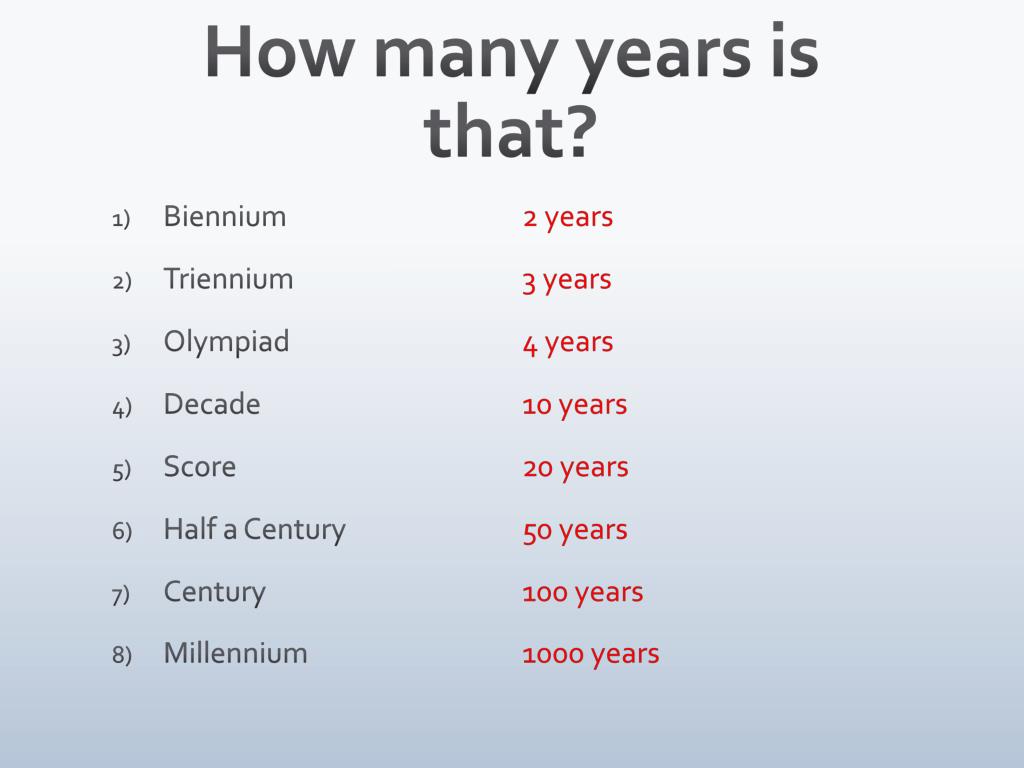
In the lexicon of the English language, the word “score” holds a dual significance. To the mathematician or the historian, it is a unit of time—specifically, twenty years. To the modern consumer and investor, it represents a metric of credibility, most notably the credit score. When we ask, “What does a score mean in years?” in a financial context, we are exploring the intersection of time and value.
In the world of money, twenty years is perhaps the most critical unit of measurement. It is long enough to see the full fruition of compound interest, yet short enough to be within the grasp of active professional planning. Understanding the weight of a “score” of years allows individuals to move beyond short-term market volatility and embrace the structural wealth-building that only two decades of consistency can provide.

Decoding the Numerical Value of Time in Finance
The term “score” was immortalized by Abraham Lincoln’s Gettysburg Address, but its utility in financial planning remains undervalued. In modern economics, a twenty-year horizon is often viewed as the “sweet spot” for strategic asset allocation. It represents a full generation of economic cycles, typically encompassing at least one major bull market and one significant recessionary period.
The Linguistic Root: Why 20 Years Matters
The use of “score” to denote twenty years likely stems from vigesimal counting systems. In finance, this twenty-year block is significant because it represents the peak earning years for most professionals. From age 35 to 55, or 45 to 65, an individual’s “score” of peak productivity determines the quality of their eventual retirement. By viewing one’s career in blocks of scores, the daunting task of lifelong financial security becomes a manageable, two-part series of strategic maneuvers.
The Power of Two Decades in Wealth Building
In the realm of personal finance, twenty years is the threshold where the “Time Value of Money” ceases to be a theoretical concept and becomes a physical reality. History shows that the probability of a negative return in the broad stock market drops to near zero when the holding period extends to twenty years. For an investor, a “score” means the difference between gambling on price fluctuations and participating in the systemic growth of the global economy.
The Credit Score Lifecycle: Impacts Over a Score of Years
While we define a score as twenty years, we cannot ignore the numerical “score” that governs our access to capital. Your credit score is not a static number; it is a living reflection of your financial behavior over time. However, the true impact of a credit score is best measured over a “score” of years.
How Long-Term Credit Health Dictates Lifestyle
A high credit score is often viewed as a tool for a singular purchase, such as a car or a home. However, when viewed through a twenty-year lens, the cumulative effect of a high score is staggering. Over two decades, an individual with an “Excellent” credit score will save hundreds of thousands of dollars in interest compared to an individual with “Fair” credit. This delta is not just “saved money”; it is capital that could have been invested, further widening the wealth gap between the two individuals.
The Cost of a Poor Score Over 20 Years
If we analyze a standard 30-year mortgage, the first “score” (20 years) is where the majority of interest is paid. An interest rate difference of just 1.5%—the difference often dictated by a credit score—can result in an additional $100,000 to $200,000 in interest payments over twenty years on a mid-sized loan. Therefore, “what a score means in years” is essentially the liberation of twenty years’ worth of income that would otherwise be surrendered to lending institutions.
Strategic Investing: What You Can Achieve in One Score
When an investor commits to a “score” of years, they are essentially hiring time to do the heavy lifting for them. The volatility that scares off the retail investor becomes “noise” to the twenty-year strategist.
The Magic of Compound Interest over 20 Years
Compound interest is often called the eighth wonder of the world, but it requires a specific catalyst to work: duration. In the first ten years of an investment, the growth feels linear. It is in the second decade—the completion of the “score”—that the curve turns exponential. For example, $10,000 invested at a 7% annual return grows to roughly $19,600 in ten years. However, in twenty years, that same $10,000 becomes nearly $39,000. The growth in the second decade is double the growth of the first, despite no additional capital being added.
Asset Allocation Transitions: From Growth to Preservation
A twenty-year horizon allows for a robust “Growth” phase. In the first half of a score (years 1-10), an investor can afford to be aggressive, utilizing high-equity allocations to capture market premiums. As they enter the second half of the score (years 11-20), the strategy shifts toward preservation and “Locking in” gains. This twenty-year arc is the standard timeframe for many target-date funds and education savings accounts, proving that a “score” is the fundamental unit of a successful investment lifecycle.
Retirement and Legacy: Planning for Your Next “Score”
Modern medicine has extended life expectancy to the point where many retirees must plan for a “score” or even two “scores” of life after they stop working. This change in human biology has forced a change in financial methodology.
Bridging the Gap: The Mid-Career Pivot
For many, the realization of financial inadequacy hits around age 45. At this juncture, they have exactly one “score” left before the traditional retirement age of 65. This twenty-year window is the “Final Score,” a period of aggressive catch-up contributions and debt elimination. Understanding that twenty years is enough time to completely transform a financial profile provides hope and a clear roadmap for those who started late.
Inflation and Purchasing Power over Two Decades
To understand what a score means, one must also understand what it loses. Historically, inflation averages around 2% to 3% per year. Over a “score” of years, the purchasing power of a dollar is roughly halved. This means that a financial plan that looks “safe” today must account for the fact that in twenty years, the “score” of time will have eroded 50% of the currency’s value. Successful money management over twenty years isn’t just about growth; it’s about outrunning the silent theft of inflation.
Practical Steps to Optimize Your Financial Score
To maximize the value of the next twenty years, one must move from passive observation to active optimization. High-net-worth individuals do not view time as a passing sequence of days, but as a resource to be allocated.
Automating Wealth Longevity
The greatest enemy of a twenty-year plan is human intervention. Behavioral finance teaches us that we are prone to panic during market downturns. To survive a “score” of years in the market, one must automate their investments. By removing the “decision” element, you ensure that you are buying during the lows and the highs, benefiting from dollar-cost averaging over the full twenty-year cycle.

Risk Management and Insurance: The 20-Year Safety Net
A “score” is a long time for “black swan” events to occur. Disability, illness, or premature death can derail a twenty-year wealth-building plan in an instant. Therefore, a true financial score includes a robust defensive strategy. Term life insurance policies are frequently sold in twenty-year increments for this exact reason; they cover the “score” of years where your liabilities (mortgages, child-rearing) are at their highest and your assets are still maturing.
In conclusion, “what a score means in years” is far more than a linguistic curiosity. In the world of money, it represents the definitive timeframe for transformation. Whether it is the twenty years of discipline required to let compound interest explode, the twenty years of interest savings gained from a high credit score, or the twenty-year horizon of a retirement plan, the “score” is the ultimate measure of financial success. By focusing on this twenty-year horizon, investors can ignore the daily noise of the news cycle and focus on the structural growth that builds true, multi-generational wealth.
aViewFromTheCave is a participant in the Amazon Services LLC Associates Program, an affiliate advertising program designed to provide a means for sites to earn advertising fees by advertising and linking to Amazon.com. Amazon, the Amazon logo, AmazonSupply, and the AmazonSupply logo are trademarks of Amazon.com, Inc. or its affiliates. As an Amazon Associate we earn affiliate commissions from qualifying purchases.