
The phrase “a million dollars” conjures vivid images for many: a briefcase overflowing with crisp bills, Scrooge McDuck diving into a vault of gold coins, or perhaps a gleaming sports car. It’s a benchmark of success, a symbol of financial achievement that has captivated imaginations for generations. But beyond the cinematic portrayals and abstract figures, what does a million dollars actually look like, especially in its rawest form: physical cash? And more importantly, what does that visual representation tell us about wealth, finance, and the practicalities of managing significant sums of money in the modern world?
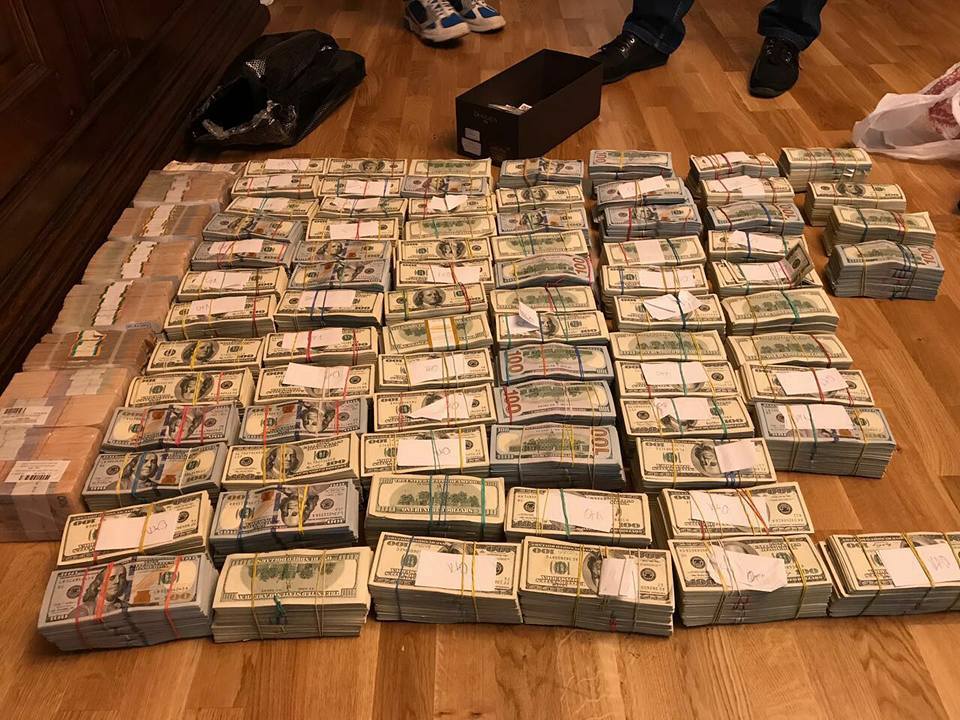
This exploration delves into the tangible reality of a million dollars in currency, peeling back the layers to reveal not just its physical dimensions but also its profound implications for personal finance, investment strategy, and the very definition of wealth. We’ll move beyond the superficial image to understand why the true value of a million dollars extends far beyond a stack of bills, encompassing financial principles, strategic planning, and a deep understanding of economic realities.
The Physical Manifestation of Wealth: Visualizing a Million Dollars
To truly grasp “what a million dollars cash looks like,” one must first contend with the sheer physicality of it. It’s an exercise that quickly disabuses notions of easy portability and discreet storage.
Stacks, Straps, and Denominations
Let’s break down the most common scenario: a million dollars in hundred-dollar bills, the largest denomination widely circulated in the United States. A single hundred-dollar bill is quite thin, weighing approximately one gram. A standard strap of currency contains 100 bills, totaling $10,000.
To reach a million dollars, you would need 100 such straps. That’s 100 individual bundles, each containing 100 bills. When stacked, a single strap of $10,000 is roughly 0.43 inches thick. Consequently, a million dollars in $100 bills would create a stack approximately 43 inches tall – nearly four feet high! This isn’t a single, neat column, but rather 100 separate stacks, or more practically, a series of smaller stacks organized into a larger block.
Consider the visual impact: a substantial cube of currency, far larger and more imposing than what typically fits into a standard briefcase, which might hold perhaps $100,000 to $200,000 comfortably. If we were to use smaller denominations, say $20 bills, the volume and weight would increase fivefold. A million dollars in $20 bills would be a truly colossal sum of paper, impractical for almost any real-world transaction or storage.
Weight and Volume: Beyond the Abstract
The physical weight of this sum is equally surprising to many. Since each bill weighs approximately one gram, 10,000 bills (for $1,000,000 in $100 denominations) would weigh 10,000 grams, or 10 kilograms. That’s roughly 22 pounds. While 22 pounds might not sound like an insurmountable weight for a person to carry, imagine trying to carry 22 pounds of loose paper, or even 100 bundles, each slightly larger than a deck of cards. It’s bulky, cumbersome, and incredibly obvious.
For comparison, a typical backpack full of books might weigh 15-20 pounds. Carrying a million dollars in cash would be like lugging around a hefty backpack, except it’s filled with something infinitely more valuable and vulnerable. The sheer volume and weight immediately highlight the logistical challenges and inherent impracticality of dealing with such a large amount of wealth in its physical form.
Security and Risk: The Impracticality of Pure Cash
The direct visualization of a million dollars in physical currency immediately brings to light a crucial point: it is highly impractical and insecure to hold such an amount in cash. The risks are manifold:
- Theft and Loss: A large sum of cash is an irresistible target for criminals. It offers no protection, no traceability, and once gone, it’s incredibly difficult to recover. Fires, floods, or other disasters can also wipe out physical cash instantly.
- Damage and Deterioration: Paper money can be damaged, torn, or simply wear out over time. While banks can exchange damaged currency, the process can be cumbersome, and severely damaged bills may lose their value.
- Inflation Erosion: Perhaps the most insidious risk is inflation. Physical cash sitting idly loses purchasing power over time. A million dollars today will buy less in 10 or 20 years, making it a poor store of long-term value compared to appreciating assets.
- Legal Scrutiny: Holding vast sums of physical cash can attract unwanted attention from financial authorities, potentially raising suspicions of illicit activities, money laundering, or tax evasion, even if perfectly legitimate.
These factors underscore why true wealth management rarely involves large quantities of physical currency. The visual impact of a million dollars in cash serves as a powerful reminder of its limitations rather than its utility.
A Million Dollars: More Than Just a Pile of Bills
While the physical appearance of a million dollars in cash is intriguing, its true significance lies in its financial implications and the opportunities it represents, rather than its material form.
The Illusion of Immediate Liquidity
Cash is the ultimate liquid asset, instantly convertible into goods and services. However, having a million dollars in physical cash doesn’t necessarily equate to the best financial strategy. For substantial wealth, immediate liquidity in physical form is often detrimental. It provides no return, offers no protection against inflation, and carries significant security risks. The financial world operates on principles of investment and growth, where cash is merely a starting point, not the destination.
The Power of Financial Assets
For most millionaires, their net worth is not represented by a vault of currency, but by a diversified portfolio of financial assets. This is “what a million dollars actually looks like” in the context of genuine wealth:

- Stocks and Bonds: Ownership stakes in companies or loans to corporations and governments that generate returns through dividends, interest, and capital appreciation. These are digitally represented, not physically held.
- Real Estate: Properties that can generate rental income or appreciate in value over time.
- Business Equity: Ownership in successful businesses that produce profit and grow.
- Investment Funds: Mutual funds, ETFs, hedge funds, and private equity investments that pool money to invest in various assets, professionally managed.
- Commodities and Alternative Investments: Gold, silver, art, or other less conventional assets that serve as stores of value or offer unique return profiles.
These assets exist primarily as digital entries, legal documents, or physical properties, not as paper currency. Their value is dynamic, growing and adapting to market conditions, far surpassing the stagnant nature of physical cash. A millionaire’s portfolio is a complex tapestry of these instruments, designed for growth, diversification, and long-term wealth preservation.
Understanding Purchasing Power and Inflation
The “look” of a million dollars also changes over time due to inflation. A million dollars in 1950 had significantly more purchasing power than a million dollars today. For instance, according to the CPI inflation calculator, $1,000,000 in 1950 is equivalent to over $12,700,000 today. This stark difference highlights that wealth isn’t just a number; it’s about what that number can buy.
A truly insightful view of “what a million dollars looks like” must therefore include an understanding of its relative value. A financial planner or investor would view a static $1,000,000 in cash as a declining asset, its real value constantly eroded by rising costs of living. True wealth management focuses on growing assets at a rate that outpaces inflation, preserving and enhancing purchasing power over time.
The Journey to Accumulating a Million Dollars
The fascination with what a million dollars looks like often stems from the aspiration of achieving it. The journey to accumulating such a sum is rarely about simply gathering cash; it’s a strategic process underpinned by discipline, knowledge, and foresight.
Strategic Saving and Budgeting
The foundation of wealth accumulation is consistent saving. This involves diligently tracking income and expenses, creating a budget, and consciously living below one’s means. For many, the early stages of building wealth are characterized by prioritizing saving a significant portion of income, even if it feels like a small percentage initially. This disciplined approach creates the capital base necessary for investment. It’s about making smart choices today to benefit tomorrow.
The Engine of Investment: Compounding Returns
Saving alone, however, is often insufficient to reach a million dollars within a reasonable timeframe, especially considering inflation. The true engine of wealth creation is investment, particularly the power of compounding returns. Investing saved money in assets like stocks, bonds, or real estate allows that money to earn returns, and those returns then earn their own returns. This exponential growth is what transforms modest savings into substantial wealth over decades.
For example, consistent investments in a diversified portfolio with an average annual return of 7-10% can make a significant difference. Starting early, even with smaller amounts, allows the magic of compounding to work over longer periods, illustrating that time in the market is often more important than timing the market. This is where a financial advisor’s guidance becomes invaluable, helping individuals navigate complex markets and construct a portfolio aligned with their risk tolerance and goals.
Diverse Income Streams and Entrepreneurship
While traditional employment is a common path, many individuals who reach millionaire status do so by diversifying their income streams or venturing into entrepreneurship. Side hustles, rental properties, royalties, dividends from investments, or building and selling a successful business can significantly accelerate wealth accumulation. These avenues provide additional capital for investment and often offer greater control over one’s financial destiny, moving beyond the limitations of a single salary. It’s about creating multiple faucets of income rather than relying on just one.
Beyond the Million: What True Financial Security Entails
While a million dollars is a significant milestone, it’s crucial to understand that it’s often a stepping stone, not the ultimate destination for true financial security and independence.
Financial Independence vs. Raw Net Worth
True financial independence is often defined not just by a high net worth, but by having sufficient passive income to cover one’s living expenses indefinitely without needing to work. A million dollars might achieve this for some with modest lifestyles or very efficient investments, but for many, particularly in high-cost-of-living areas, it may not be enough to retire comfortably for several decades. The focus shifts from the raw number to the sustainable cash flow that assets generate. This perspective understands that “what a million dollars looks like” is deeply personal and dependent on individual financial goals and lifestyle aspirations.
Wealth Preservation and Legacy Planning
Once wealth is accumulated, the focus shifts to preserving it, managing risk, and planning for its legacy. This involves sophisticated financial strategies such as estate planning, tax optimization, philanthropic giving, and ensuring the wealth can benefit future generations. It’s about building a robust financial fortress that can withstand economic downturns and provide lasting security. This stage of wealth management requires expert advice on trusts, wills, insurance, and long-term investment strategies designed to protect capital while still allowing for growth.

The Intangible Value of Financial Education
Ultimately, “what a million dollars looks like” is less about its physical appearance and more about the knowledge and discipline required to earn, manage, and grow it. Financial education—understanding market dynamics, investment principles, risk management, and tax implications—is arguably the most valuable asset one can possess. This intangible wealth allows individuals to make informed decisions, avoid costly mistakes, and adapt to changing economic landscapes, ensuring that their money works for them, rather than the other way around.
In conclusion, while a million dollars in physical cash presents an intriguing and bulky visual, it is largely an impractical and insecure way to hold significant wealth. The true “look” of a million dollars, for those who accumulate it, is a digital dashboard of diversified investments, a robust financial plan, and the profound freedom and security that intelligent financial stewardship provides. It’s a testament to strategic saving, astute investing, and a continuous commitment to financial literacy—a far more valuable picture than any stack of bills.
aViewFromTheCave is a participant in the Amazon Services LLC Associates Program, an affiliate advertising program designed to provide a means for sites to earn advertising fees by advertising and linking to Amazon.com. Amazon, the Amazon logo, AmazonSupply, and the AmazonSupply logo are trademarks of Amazon.com, Inc. or its affiliates. As an Amazon Associate we earn affiliate commissions from qualifying purchases.