
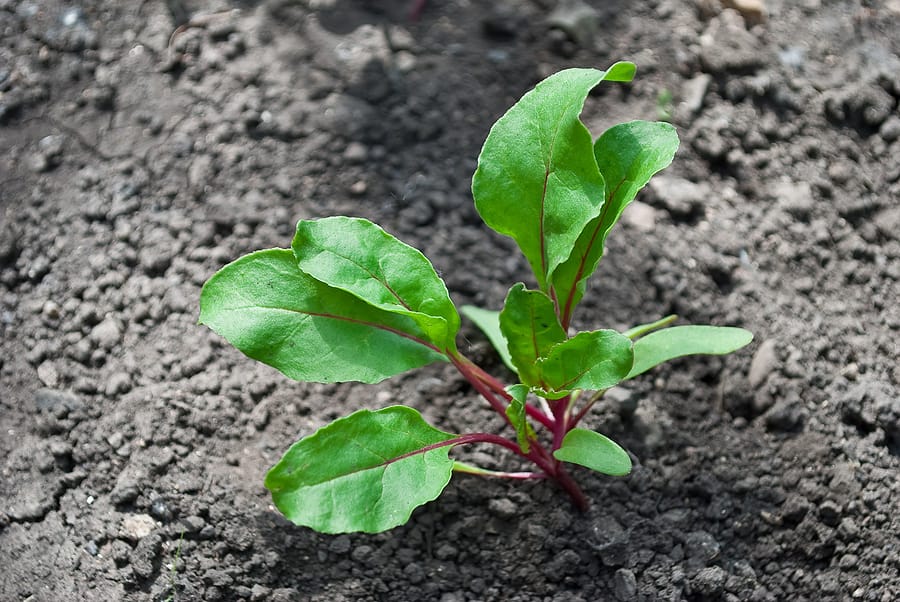
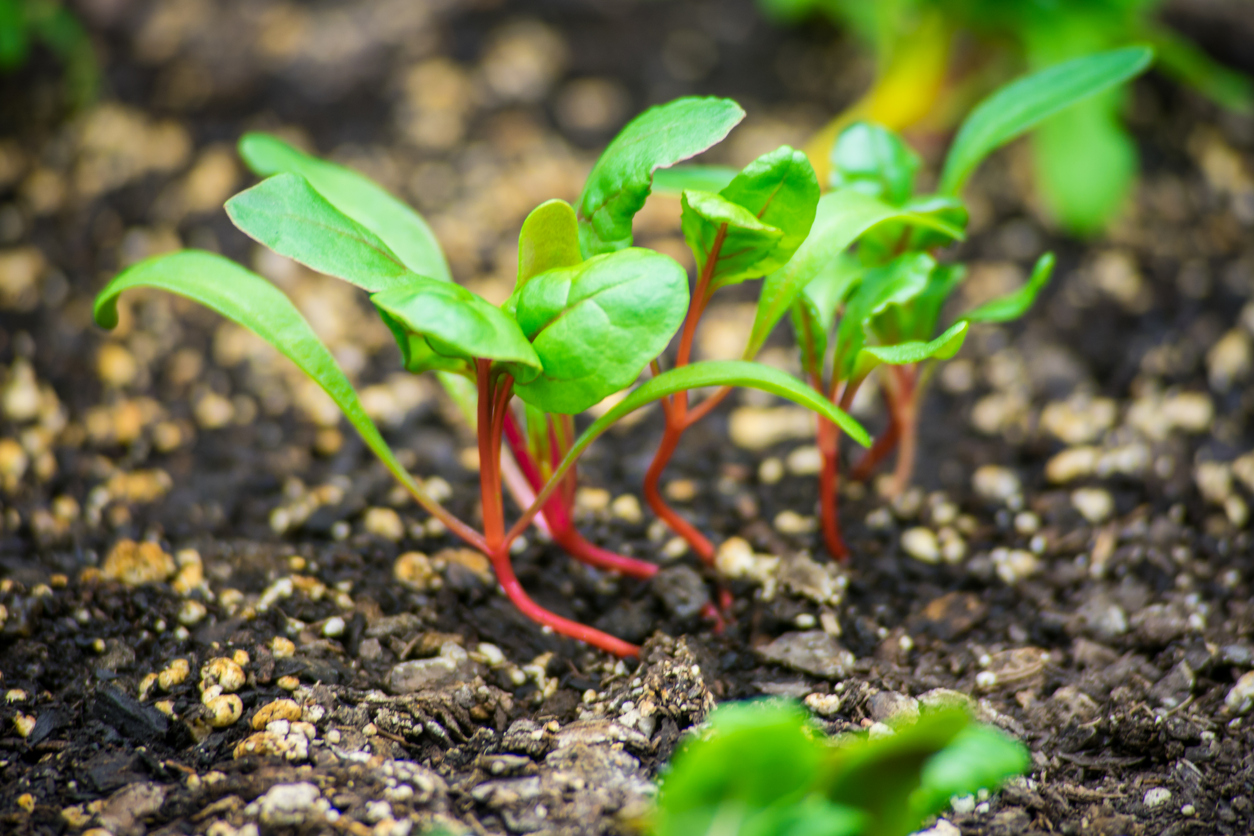
In the rapidly evolving landscape of agricultural technology (AgTech), the question “What does a beet sprout look like?” has migrated from the dirt of the traditional farm to the high-resolution displays of precision agriculture software. While a botanist might describe a beet sprout by its distinct crimson stem and pair of elongated green cotyledons, a data scientist sees it as a complex arrangement of pixels, spectral signatures, and growth vectors.
Today, the “look” of a beet sprout is defined by the sophisticated AI tools and computer vision algorithms that identify, monitor, and optimize its growth from the moment it breaks the soil. This intersection of biology and digital innovation represents a multi-billion dollar shift toward smart farming, where software is as essential as the sun.

The Digital Evolution of Agricultural Monitoring: From Sight to Insight
For decades, the identification of early-stage seedlings was a manual task, prone to human error and limited by the physical scale of the field. However, the integration of Artificial Intelligence (AI) into the agricultural sector has transformed the visual identification of crops into a high-stakes tech endeavor.
Computer Vision and Seedling Recognition
At the heart of modern AgTech is computer vision. When we ask what a beet sprout looks like through the lens of a drone or an autonomous tractor, we are discussing pattern recognition. AI models are trained on hundreds of thousands of images to distinguish a Beta vulgaris (beet) sprout from common weeds like pigweed or lambsquarters.
These models use “Deep Learning” to analyze the specific morphology of the sprout. A beet sprout typically emerges with a vibrant, pinkish-red hypocotyl (the stem below the seed leaves). Computer vision software identifies this specific RGB value and cross-references it with the shape of the cotyledons—the first leaves—which are typically strap-shaped and smooth. The tech doesn’t just “see” the sprout; it categorizes it based on health metrics, vigor, and probability of survival.
The Role of Neural Networks in Early Growth Stages
Neural networks have revolutionized the way software interprets the early growth stages of root vegetables. In the “Beet Sprout” phase, the plant is at its most vulnerable. AgTech platforms like John Deere’s “See & Spray” or specialized startups use Convolutional Neural Networks (CNNs) to process visual data in real-time.
By breaking down the image of a sprout into various layers—edges, textures, and colors—the software can determine if a sprout is showing signs of nutrient deficiency or moisture stress. For a tech-forward grower, a beet sprout “looks like” a data point on a graph indicating a 98% germination rate across a 500-acre plot, all visualized through a tablet interface.
UI/UX Design: Visualizing “Growth” in the Beet Sprout Dashboard
The “look” of a beet sprout in a modern software ecosystem isn’t just about the plant itself; it’s about how that data is presented to the user. User Interface (UI) and User Experience (UX) design play a critical role in translating complex biological data into actionable insights.
From Raw Data to High-Fidelity Renderings
When a developer designs an AgTech application, the beet sprout is often represented by a high-fidelity digital twin. Instead of looking at a blurry photo from a field camera, the user interacts with a 3D model or a heat map. This graphical representation allows farmers to see a “sprout’s eye view” of the field.
The UI typically uses color-coded overlays. A “healthy” beet sprout might appear as a bright green icon on a digital map, while a struggling sprout is flagged in amber. This visual shorthand is essential for managing large-scale operations where checking every individual plant is impossible. The software transforms the physical appearance of the sprout into a simplified, digital signal.
Real-Time Predictive Modeling for Beet Cultivation
Modern AgTech tools do more than just show what a sprout looks like now; they show what it will look like in three weeks. Through predictive modeling and generative AI, software can simulate growth trajectories based on current weather patterns, soil sensors, and historical data.
This “future-look” is a cornerstone of the modern tech stack. By analyzing the current pixel density of a sprout’s leaves, the software can estimate the eventual sugar content of the beet root. This allows for precision harvesting and resource allocation, making the “look” of the sprout a direct precursor to the economic success of the crop.
The Tech Stack Behind the Sprout: Sensors, Cloud, and Edge Computing
The visual identification of a beet sprout is supported by a robust infrastructure of hardware and software. To understand what the sprout looks like to a modern system, one must look at the “stack” that facilitates this vision.
Edge Computing in the Field
Processing high-resolution imagery of millions of sprouts requires immense computational power. However, sending all that data to the cloud in real-time is often prohibited by rural internet speeds. This is where “Edge Computing” comes in.
Smart cameras mounted on drones or automated weeders process the image of the beet sprout locally—on the “edge” of the network. The device identifies the sprout, distinguishes it from a weed, and makes an instantaneous decision (such as whether to apply a micro-dose of fertilizer) without needing a constant connection to a central server. In this context, the sprout’s appearance is a trigger for an automated edge-level script.
Cloud Integration for Scalable Yield Analysis
Once the immediate field-level actions are taken, the data regarding the beet sprout’s appearance is uploaded to a cloud-based platform (like AWS or Google Cloud). Here, Big Data analytics take over.
The software compares the visual data of millions of sprouts across different geographic regions. This allows AgTech companies to provide “benchmarking” services. A farmer can see how their sprouts’ development “looks” compared to the regional average. This level of insight is only possible through the seamless integration of IoT (Internet of Things) sensors and cloud computing.
Future Trends: The Intersection of Bio-Tech and Digital Twin Technology
As we look toward the future of AgTech, the “look” of a beet sprout will become even more integrated with biotechnology and virtual environments. We are entering an era where the line between the physical plant and its digital representation is increasingly blurred.
Creating Digital Twins of Root Vegetables
One of the most exciting trends in software today is the “Digital Twin.” This involves creating a perfect digital replica of a physical object—in this case, a beet sprout. By utilizing LiDAR (Light Detection and Ranging) and hyperspectral imaging, tech platforms can create a 3D model of a sprout that includes its internal vascular structure.
This allows researchers to test the effects of different chemical treatments or environmental changes in a virtual sandbox before applying them in the real world. To a scientist using this technology, a beet sprout looks like a complex geometric mesh, reactive to every variable in its digital environment.
Automation and the Future of Precision Farming
The ultimate goal of visualizing the beet sprout through technology is full automation. We are moving toward “autonomous agronomy,” where AI-driven robots handle the entire lifecycle of the crop. In this scenario, the “look” of the sprout is interpreted by a machine-learning algorithm that directs a robotic arm to thin the crop or a drone to target a specific pest.
The visual data is no longer for human consumption but for machine action. This shift represents the pinnacle of digital security and reliability in AgTech; the software must be 100% accurate in its identification, as an error could lead to the destruction of the crop.
Conclusion: The New Visual Standard
What does a beet sprout look like? In the modern era, it looks like the future of technology. It is a fusion of red pigments and digital pixels, of soil-bound roots and cloud-based data. As AI, IoT, and edge computing continue to advance, our ability to visualize, understand, and optimize the growth of even the simplest sprout will only increase.
For the technologist, the beet sprout is a testament to the power of computer vision and the potential of smart farming. For the developer, it is a UI challenge and a data modeling opportunity. And for the world, it is a symbol of how technology can be harnessed to ensure food security and sustainable growth in an increasingly digital world. The sprout is no longer just a plant; it is a masterpiece of the modern tech stack.
aViewFromTheCave is a participant in the Amazon Services LLC Associates Program, an affiliate advertising program designed to provide a means for sites to earn advertising fees by advertising and linking to Amazon.com. Amazon, the Amazon logo, AmazonSupply, and the AmazonSupply logo are trademarks of Amazon.com, Inc. or its affiliates. As an Amazon Associate we earn affiliate commissions from qualifying purchases.