
The bandsaw is often regarded as the “workhorse” of the modern workshop, but to classify it simply as a cutting tool is to overlook the sophisticated mechanical engineering and technological evolution that defines it. Unlike a circular saw that relies on a rotating disc or a jigsaw that uses a reciprocating up-and-down motion, the bandsaw utilizes a continuous loop of toothed metal—the “band”—stretched between two or more wheels.
This unique technological architecture allows for a level of versatility and precision that other cutting instruments cannot replicate. From the aerospace industry cutting through high-grade titanium to luthier shops slicing thin veneers for world-class violins, the bandsaw is an essential piece of hardware. In this exploration, we delve into the technical mechanisms, material science, and digital advancements that define what a bandsaw does in the modern age.
The Anatomy of Motion: Understanding the Mechanical Interface
At its core, the bandsaw is a study in tension and kinetic energy. The fundamental “job” of a bandsaw is to provide a continuous, unidirectional cutting action. This distinguishes it from tools that suffer from “dwell time” or vibration caused by reciprocating motions.
The Continuous Loop System
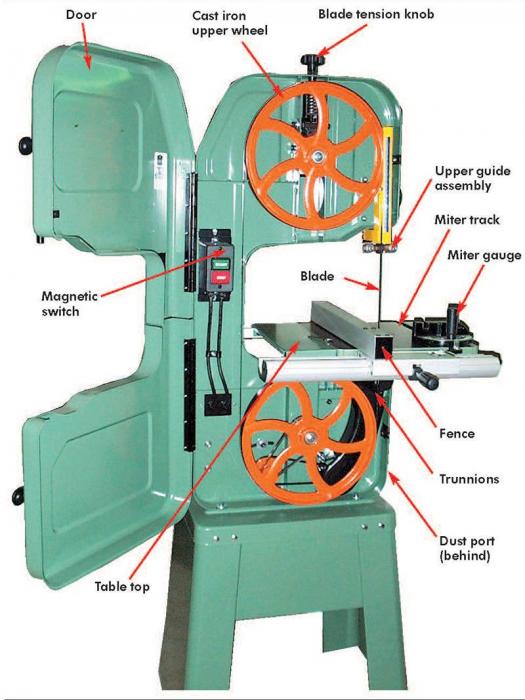
The primary technological advantage of a bandsaw is its blade. The blade is a long, thin weldment of steel that forms a continuous loop. This loop runs over two wheels—a drive wheel (connected to the motor) and an idler wheel. Because the blade moves in one downward direction, it provides a stable cutting force that pulls the workpiece toward the table, increasing safety and precision. This continuous motion also prevents the “kickback” common in circular saw technology.
Precision Tensioning and Tracking Technology
For a bandsaw to function, the blade must be under immense tension—often measured in thousands of pounds per square inch (PSI). Modern bandsaws utilize sophisticated tensioning gauges and tracking mechanisms to ensure the blade remains centered on the wheels. If the tracking is off by even a fraction of a millimeter, the friction could snap the blade or cause “drift,” where the cut wanders away from the intended line. High-tech bandsaws now incorporate spring-loaded tensioning systems that compensate for the heat expansion of the metal during heavy-use cycles.
Guide System Engineering
What allows a bandsaw to cut straight lines or complex curves is its guide system. Positioned above and below the worktable, these guides (often made of ceramic or ball-bearing rollers) stabilize the blade. The technology here is critical: the guides must be close enough to the blade to prevent twisting but far enough apart to avoid friction-induced heat. In industrial tech applications, these guides are often micro-adjustable, allowing for tolerances that rival CNC machining.
Materials Science: The Technology of the Blade
What a bandsaw “does” is largely determined by the metallurgy of the blade itself. A bandsaw is a modular platform; by changing the blade tech, you change the tool’s entire purpose.
TPI and Gullet Geometry
The “Tech” of a bandsaw blade is defined by its Teeth Per Inch (TPI) and gullet design. The gullet is the space between the teeth that carries the “swarf” (dust or metal shavings) out of the cut. Engineering a blade for thick timber requires a low TPI with deep gullets to prevent clogging, while cutting thin sheet metal requires a high TPI to ensure at least three teeth are always in contact with the material. This mathematical balance is what allows the tool to achieve clean, burr-free edges.
Bi-Metal and Carbide-Tipped Innovations
Modern blade technology has moved far beyond simple carbon steel. We now see “Bi-Metal” blades, where the tooth tips are made of High-Speed Steel (HSS) electron-beam welded to a flexible spring-steel backing. This allows the blade to withstand the heat of high-speed friction while maintaining the flexibility needed to wrap around the wheels. Furthermore, carbide-tipped blades represent the pinnacle of industrial tech in this space, allowing bandsaws to cut through hardened alloys, composites, and extremely abrasive exotic woods that would dull a standard blade in seconds.
Heat Dissipation and Coating Tech
In high-volume manufacturing, heat is the enemy of precision. Advanced bandsaw blades now feature specialized coatings—such as Titanium Nitride (TiN)—to reduce friction. Additionally, many industrial bandsaws utilize mist-coolant systems that use compressed air to deliver a microscopic amount of lubricant directly to the kerf (the cut line). This technological integration extends blade life by up to 300% and ensures the material being cut does not suffer from thermal deformation.
Versatility in Application: Resawing and Curvilinear Precision
The primary functional output of a bandsaw can be categorized into two main technological feats: the ability to “resaw” and the ability to execute complex, non-linear geometry.
The Art of Resawing
Resawing is the process of cutting a thick piece of material into thinner slices. This is perhaps the most demanding task a bandsaw performs. It requires a high-torque motor and a wide, stable blade. The technology involved here is about maintaining “parallelism.” When a bandsaw resaws a 12-inch wide plank into two 1/16-inch veneers, the margin for error is non-existent. This capability is vital in industries ranging from furniture manufacturing to the production of high-tech acoustic panels.
Complex Geometry and Scrolling
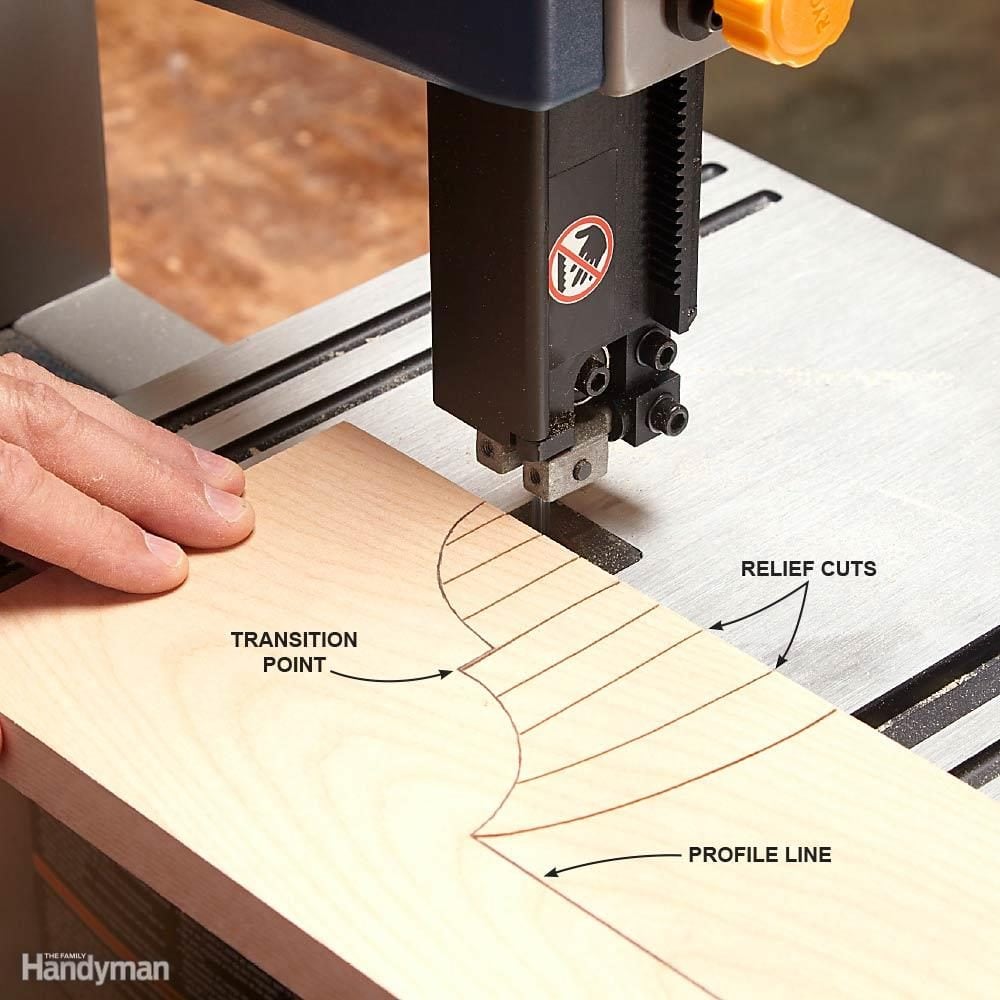
Unlike almost any other power saw, the bandsaw can navigate tight radii. By using a very narrow blade (sometimes as thin as 1/8 inch), the user can “scroll” through material to create intricate shapes. This is used extensively in prototyping, where engineers need to create physical models of ergonomic grips, automotive parts, or architectural components. The stability of the vertical blade ensures that the cut remains perfectly square to the table, even when navigating a 360-degree turn.
Uniformity in Large-Scale Production
In industrial settings, “horizontal” bandsaws are used for “cutoff” work. These machines use gravity or hydraulic feed systems to slice through thick metal bars or pipes. The technology here focuses on repeatability. Once the feed rate and blade speed are calibrated, the bandsaw can execute hundreds of identical cuts with a precision that manual methods could never achieve.
The Digital Shift: CNC and Automated Bandsaw Systems
As we move further into the era of Industry 4.0, the bandsaw is being integrated with digital technology to move beyond manual operation.
CNC Integration
Computer Numerical Control (CNC) has transformed the bandsaw from a hand-guided tool into a precision robotic instrument. Modern CNC bandsaws use programmable logic controllers (PLCs) to manage feed rates, blade speed, and material positioning. This tech allows for “lights-out” manufacturing, where the machine can process entire bundles of raw material without human intervention. The software calculates the most efficient way to cut the material to minimize waste, directly impacting the efficiency of the production cycle.
Real-time Sensor Monitoring
High-end industrial bandsaws are now equipped with an array of sensors. These include vibration sensors that can predict a blade failure before it happens, and optical sensors that monitor the straightness of the cut in real-time. If the blade begins to deflect due to heat or dullness, the machine’s onboard computer can automatically adjust the feed rate or pause the operation, saving thousands of dollars in ruined material.
Digital User Interfaces (UI)
Even at the prosumer level, digital tech is appearing on bandsaws. Touchscreen interfaces allow users to select the material type (e.g., “Oak” or “Stainless Steel”), and the machine automatically suggests the optimal blade speed and tension. This “smart” integration lowers the barrier to entry for high-precision work and ensures that the hardware is always running within its optimal parameters.
Safety Tech and Maintenance Algorithms
What a bandsaw does is inherently dangerous, as it involves a high-speed metal ribbon. Consequently, some of the most impressive technology in this field is dedicated to safety and maintenance.
Advanced Braking Systems
While “SawStop” technology is famous in the world of table saws, bandsaws have their own version of rapid-stop tech. Industrial models feature electromagnetic brakes that can bring a high-speed blade to a complete standstill in less than a second. This tech is often triggered by infrared sensors that detect when a foreign object (or a hand) is too close to the blade guard.
Vibration Control and Balancing
A bandsaw that vibrates is a bandsaw that produces poor results. Tech companies now use computer-balanced wheels made of cast iron or heavy-duty alloys to ensure the smoothest possible rotation. Sophisticated dampening systems—often involving rubber or urethane “tires” on the wheels—are engineered to absorb the high-frequency harmonics generated by the motor and the blade’s teeth.
Blade Tracking Algorithms
For automated systems, the tracking of the blade is monitored by laser sensors. If the blade moves a fraction of a millimeter off-center, small servo motors adjust the tilt of the upper wheel. This ensures that the tool is always calibrated for the “perfect cut,” regardless of how long it has been running. This level of automation turns a traditional mechanical tool into a high-precision digital asset.

Conclusion
So, what does a bandsaw do? It serves as a master of material transformation through the marriage of mechanical stability and cutting-edge technology. Whether it is performing the delicate resawing of rare woods, the heavy-duty slicing of aerospace alloys, or the automated production of industrial components, the bandsaw is a testament to the power of continuous-motion engineering. By integrating CNC controls, advanced metallurgy, and real-time sensor data, the modern bandsaw has evolved from a simple workshop tool into a sophisticated piece of industrial technology, capable of meeting the most rigorous demands of 21st-century manufacturing.
aViewFromTheCave is a participant in the Amazon Services LLC Associates Program, an affiliate advertising program designed to provide a means for sites to earn advertising fees by advertising and linking to Amazon.com. Amazon, the Amazon logo, AmazonSupply, and the AmazonSupply logo are trademarks of Amazon.com, Inc. or its affiliates. As an Amazon Associate we earn affiliate commissions from qualifying purchases.