
In the rapidly evolving landscape of digital entertainment, few pieces of software have managed to bridge the gap between high-end computing and mobile accessibility as effectively as Genshin Impact. Developed by HoYoverse, this title is often categorized simply as an “open-world RPG,” but from a technical and software engineering perspective, it represents a masterclass in cross-platform synchronization, live-service architecture, and complex algorithmic design. To answer the question of “what do you do” in this environment is to explore the interaction between a user and a sophisticated, multi-layered software ecosystem.

The experience is defined by a series of interconnected technical loops—ranging from the physics of elemental interactions to the backend logic of global server synchronization. This article explores the technical frameworks that define the user experience within Genshin Impact, focusing on the software’s core systems, platform architecture, and the data-driven infrastructure that sustains its massive digital world.
The Core Software Loop: Elemental Logic and World-Building Algorithms
At its most fundamental level, what a user “does” in the software is interact with a highly reactive environment governed by a proprietary combat and exploration engine. Unlike traditional static RPGs, the software utilizes a complex “Elemental Reaction” system that functions as a logic-based layer on top of standard combat mechanics.
Elemental Reaction Systems: A Study in Complex Logic
The core of the gameplay involves the interaction of seven distinct elements: Anemo, Geo, Electro, Dendro, Hydro, Pyro, and Cryo. From a technical standpoint, this is managed through a sophisticated state-machine. When a player applies an element to an object or NPC, the software assigns a “status” or “aura” to that entity’s data profile.
If a second element is applied, the backend executes a specific logic gate—for example, combining Hydro and Cryo triggers a “Freeze” state, which temporarily halts the target’s animation frame updates. This requires the engine to constantly calculate “Internal Cooldowns” (ICD) and “Gauge Theory,” a hidden numerical value that determines how long an element persists and how much of it is consumed by a reaction. For the user, this transforms simple button presses into a high-level technical exercise in data management and sequence optimization.
Open-World Rendering and Procedural Elements
Exploration in the software is supported by advanced level-of-detail (LOD) management and seamless world-streaming technology. As the user traverses the map of Teyvat, the software utilizes a “chunk-based” loading system. This ensures that only the immediate environment is rendered in high fidelity, while distant landscapes are represented by low-poly proxies. This technical optimization is what allows the software to maintain a consistent frame rate across diverse hardware configurations, from high-end NVIDIA RTX-powered PCs to mid-range ARM-based mobile devices.
Cross-Platform Synergy: The Tech Behind the Seamless Experience
One of the most significant technical achievements of the software is its “write-once, play-anywhere” philosophy. What a user does in the software is rarely confined to a single device; the experience is designed to be fluid across PC, iOS, Android, and PlayStation ecosystems.
Unified Account Management and Cloud Syncing
The backbone of this experience is a robust, centralized account system. When a player completes a task or acquires an item on a mobile device, that transaction is sent to a central server via an encrypted API call. The server validates the action and updates the user’s JSON-based profile in real-time.
When the user later logs in via a PC or console, the software performs a handshake with the server to pull the most recent state of the account. This synchronization requires high-level database management to prevent “rollbacks” or data corruption, ensuring that the user’s progress is persistent and immutable regardless of the hardware interface.
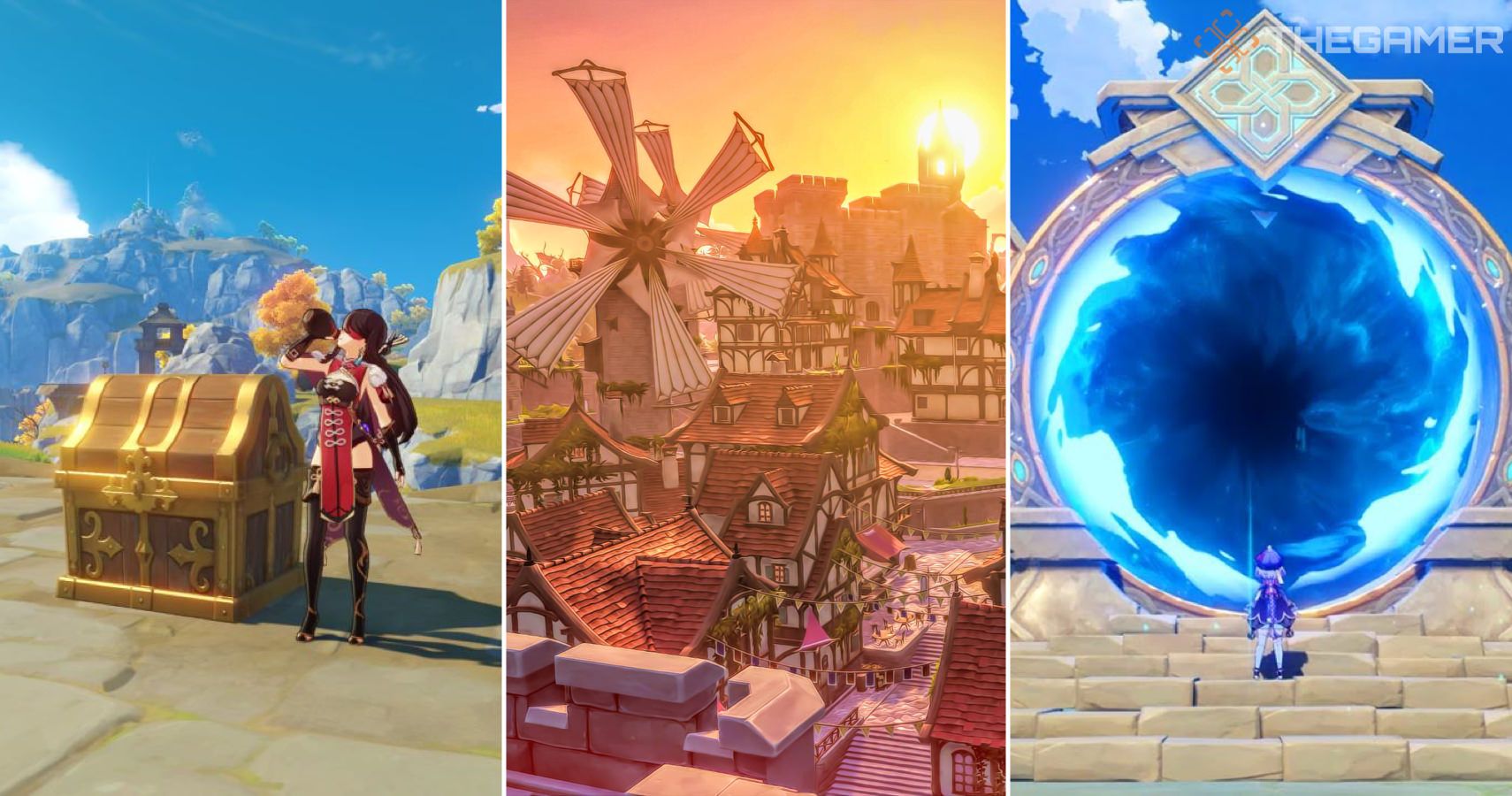
Hardware Optimization and UI/UX Adaptability
From a technical design perspective, the user interface (UI) is highly adaptive. The software detects the input method—whether it be a touchscreen, a mouse and keyboard, or a controller—and reconfigures the UI overlay dynamically. On mobile, the software utilizes a virtual joystick and touch-sensitive hitboxes, while on PC, it shifts to a traditional key-mapped layout. This adaptability is handled through a responsive design framework within the Unity engine, which HoYoverse has heavily customized to optimize memory usage and thermal management on portable devices.
Live-Service Infrastructure: The Continuous Deployment Model
In Genshin Impact, the user is part of a “Live Service” model, which means the software is never “finished.” Instead, it exists in a state of continuous deployment. What you do in the game is dictated by a rigid, six-week update cycle that introduces new modules of content without requiring a complete reinstallation of the core software.
Version Control and Modular Content Updates
The software’s architecture is modular, allowing developers to push “Hotfixes” and “Version Updates” that integrate seamlessly with the existing world. When a new region is added, it is essentially a new data pack that the client downloads and integrates into the main world-map hierarchy. This requires advanced version control systems to ensure that new assets do not conflict with old ones. For the user, this results in a digital environment that feels “living,” as new features, characters, and geographical data are injected into the software on a predictable schedule.
Data-Driven Event Management
Much of the user’s time is spent participating in time-limited “events.” Technically, these are server-side triggers that activate specific scripts within the client. This allows the developers to change the “behavior” of the world (e.g., adding a mini-game to a specific location) without changing the underlying game code. This data-driven approach allows for high flexibility in content delivery, keeping the software engaging through a constant stream of new technical challenges and rewards.
The Gacha Algorithm: Probability, Security, and Backend Logic
A significant portion of the user interaction involves the “Wish” system, which is essentially a randomized digital distribution model. Understanding what you do in Genshin Impact requires looking at the technical implementation of these “Gacha” mechanics, which are governed by rigorous algorithms and security protocols.
RNG Architecture and Pity Systems
The “Wish” system relies on a Pseudo-Random Number Generator (PRNG). To ensure a fair user experience, the software implements what is known as a “Pity System.” This is a backend counter that tracks the number of unsuccessful attempts to obtain a high-rarity item. Once the counter reaches a specific threshold (e.g., 90 attempts), the algorithm forces a successful outcome. This logic is calculated server-side to prevent client-side manipulation, ensuring the integrity of the software’s economy.
Security Protocols and Anti-Cheat Mechanisms
Because the software involves a digital economy and real-world transactions, security is paramount. The software employs kernel-level anti-cheat drivers (on PC) and constant server-side validation to prevent the injection of malicious code or the unauthorized modification of character data. Users interacting with the software are operating within a highly secure environment where every significant action—from leveling up a character to spending “Primogems”—is verified by an encrypted transaction log.

Conclusion: The Software as a Service (SaaS) Evolution
Ultimately, Genshin Impact is more than just a game; it is a sophisticated piece of interactive software that demonstrates the future of the “Software as a Service” (SaaS) model in the gaming industry. What you do in the software is a blend of exploring a procedurally-optimized world, engaging with a complex elemental logic engine, and participating in a secure, cross-platform digital economy.
By leveraging advanced cloud synchronization, modular updates, and a highly reactive combat system, HoYoverse has created a technical benchmark for what mobile and desktop integration can achieve. As hardware continues to evolve, the technical foundations laid by Genshin Impact—from its elemental state-machine to its seamless cross-play infrastructure—will likely serve as a blueprint for the next generation of global, multi-platform software. For the user, every action taken within the game is a testament to the invisible, high-performance architecture running beneath the surface.
aViewFromTheCave is a participant in the Amazon Services LLC Associates Program, an affiliate advertising program designed to provide a means for sites to earn advertising fees by advertising and linking to Amazon.com. Amazon, the Amazon logo, AmazonSupply, and the AmazonSupply logo are trademarks of Amazon.com, Inc. or its affiliates. As an Amazon Associate we earn affiliate commissions from qualifying purchases.