
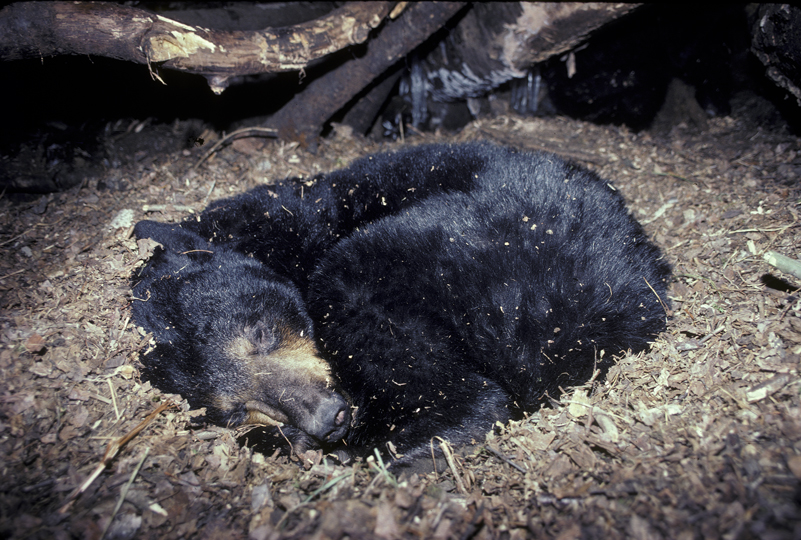
In the world of finance, the term “bear” carries a weight that can send shivers through even the most seasoned investors. Just as biological bears retreat during the harsh conditions of winter to conserve energy and survive until the bounty of spring, financial “bears” and the markets they inhabit undergo a period of contraction, consolidation, and strategic stillness. Understanding what happens during a financial winter is not merely a matter of curiosity; it is a fundamental requirement for anyone looking to build long-term wealth.
When the “market winter” arrives—characterized by a 20% or more decline from recent highs—the landscape of personal finance and investing shifts dramatically. Growth slows, sentiment turns icy, and the strategies that worked during the lush “summer” of a bull market often become liabilities. To navigate this period, one must look at the specific behaviors, strategies, and psychological shifts that define how savvy investors and institutions operate when the market goes cold.
The Anatomy of the Market Winter: Understanding the Bear Cycle
Before diving into specific survival strategies, it is essential to define what a financial winter actually looks like. In the niche of personal finance and investing, a bear market is often feared, yet it is a natural and necessary part of the economic cycle. It serves as a period of correction, where overvalued assets are re-priced and speculative bubbles are deflated.
Defining the Bear: More Than Just a Downturn
A bear market is technically defined as a sustained period of falling stock prices, typically marked by a decline of 20% or more from a peak. However, for the individual investor, it represents a shift in the “climate” of money. During this time, the optimism of the bull market is replaced by widespread pessimism. Interest rates may rise to combat inflation, consumer spending often dips, and corporate earnings may stagnate. Like a physical winter, a bear market tests the structural integrity of one’s financial house.
The Psychology of Market Winters
The most significant activity during a financial winter doesn’t happen on a spreadsheet; it happens in the mind. The “bears” of the financial world—those who are pessimistic about market growth—often drive the narrative during these times. Investor psychology shifts from “Fear Of Missing Out” (FOMO) to “Fear Of Losing Everything.” This psychological shift leads to a flight to safety, where capital moves out of “risk-on” assets like tech startups and cryptocurrencies and into “risk-off” assets like government bonds and gold. Understanding this collective mindset is the first step toward making rational decisions when others are panicking.
Strategic Hibernation: Protecting Capital and Minimizing Losses
When the financial environment becomes hostile, the primary goal of any investor is the preservation of capital. In the same way a bear hibernates to survive on stored fat, an investor during a market winter must rely on their “financial reserves” and defensive positioning to ensure they emerge intact on the other side.
De-risking the Portfolio
One of the first actions taken during a financial winter is de-risking. This involves a meticulous review of one’s portfolio to identify assets that are overly sensitive to economic downturns. For many, this means reducing exposure to high-growth, non-profitable companies that rely on cheap debt. In a high-interest-rate winter, the “cost of carry” for these companies becomes unsustainable. Investors move their capital into companies with strong balance sheets, consistent cash flows, and manageable debt levels.
The Role of Defensive Stocks and Bonds
During a bear market, certain sectors act as “thermal insulation” for a portfolio. These are often referred to as defensive sectors.
- Utilities and Consumer Staples: Regardless of how bad the economy is, people still need electricity, water, and basic groceries. Companies in these sectors tend to hold their value better than discretionary luxury brands.
- Government Bonds: Treasuries are often viewed as the ultimate “winter shelter.” While they may not offer explosive growth, they provide a guaranteed return of principal, which becomes highly attractive when the stock market is shedding value.

Hedging Strategies for the Experienced Investor
For those with a deeper understanding of financial tools, a bear market is a time to employ hedging. This might include purchasing “put options” which increase in value as a stock’s price falls, or investing in inverse ETFs that are designed to profit from a market decline. While these tools carry their own risks, they function like an insurance policy for a portfolio, offsetting losses in long-term holdings with gains from short-term bearish bets.
Hunting in the Cold: Finding Value When Others Retreat
While “hibernation” is about protection, the most successful investors know that winter is also a season of opportunity. When asset prices are suppressed and panic is high, the “bears” who have kept their “powder dry” (cash reserves) begin to look for bargains. This is where the foundation for future wealth is often laid.
Fundamental Analysis: Finding “Undervalued” Gems
In a bull market, a rising tide lifts all boats, including the leaky ones. In a bear market, the tide goes out, revealing which companies are actually seaworthy. Savvy investors use this time to perform deep fundamental analysis. They look for “Quality at a Reasonable Price” (QARP). They analyze price-to-earnings ratios, dividend yields, and free cash flow. When a high-quality company’s stock price is dragged down by general market malaise rather than its own performance, it represents a “generational buying opportunity.”
Dollar-Cost Averaging (DCA) as a Winter Survival Tool
One of the most effective ways to “hunt” during a financial winter is through Dollar-Cost Averaging. Instead of trying to time the “bottom” of the market—which is notoriously difficult even for professionals—investors commit to buying a fixed dollar amount of an asset at regular intervals. When prices are low, your fixed dollar amount buys more shares. When the market eventually turns “springtime” again, those extra shares acquired during the winter become the primary drivers of portfolio growth.
Tax-Loss Harvesting: Turning Losses into Advantages
A bear market offers a unique opportunity for “tax-loss harvesting.” This is a strategy where an investor sells a security that has experienced a loss to offset taxes on any capital gains they have realized elsewhere. After selling the losing position, they can then reinvest the proceeds into a similar (but not identical) asset to maintain their market exposure. This allows the investor to “clean up” their portfolio while simultaneously reducing their bill to the government—essentially finding a silver lining in the cold market clouds.
Maintaining the Long-Term Perspective: The Cycle of Seasons
The most important thing a bear does during the winter is wait. They do not fight the weather; they adapt to it and wait for the inevitable change in season. In the world of money, the same patience is required.
History as a Guide: Spring Always Follows Winter
Since the early 20th century, the average bear market has lasted about 289 days, or roughly 10 months. In contrast, the average bull market lasts significantly longer—often several years. Every single bear market in the history of the S&P 500 has eventually been followed by a recovery that reached new all-time highs. Knowing this historical context allows an investor to view the “winter” not as a permanent state of ruin, but as a temporary phase of the cycle.
Avoiding Panic: The Importance of Emotional Intelligence
The greatest threat to a personal finance strategy during a bear market is not the falling stock prices, but the investor’s own emotions. “Panic selling” is the financial equivalent of a bear leaving its den in the middle of a blizzard; it leads to exhaustion and, eventually, failure. Professional investors focus on their “Investment Policy Statement” (IPS)—a pre-written plan created during a calm period that dictates how they will behave during a crisis. By sticking to the plan and ignoring the daily “noise” of financial news, they ensure they are still in the game when the market finally thaws.

Strengthening the Financial Foundation
Finally, during a market winter, many focus on non-investment financial health. This includes paying down high-interest debt, building an emergency fund that can cover 6-12 months of expenses, and diversifying income streams through side hustles or online business ventures. By strengthening the “base” of their financial life, they become less dependent on the immediate performance of the stock market, giving them the “fat reserves” necessary to outlast even the longest winter.
In conclusion, what “bears” do during the winter is a masterclass in discipline, protection, and opportunistic strategy. They de-risk, they find value where others see fear, and they maintain a unwavering focus on the future. By adopting this “bearish” wisdom during market downturns, you can transform a period of economic hardship into a strategic advantage, ensuring that when the financial spring inevitably arrives, you are positioned to thrive.
aViewFromTheCave is a participant in the Amazon Services LLC Associates Program, an affiliate advertising program designed to provide a means for sites to earn advertising fees by advertising and linking to Amazon.com. Amazon, the Amazon logo, AmazonSupply, and the AmazonSupply logo are trademarks of Amazon.com, Inc. or its affiliates. As an Amazon Associate we earn affiliate commissions from qualifying purchases.