
The landscape of competitive hero shooters is defined by the constant evolution of software balance and player-driven meta-strategies. In Marvel Rivals, the highly anticipated 6v6 team-based shooter from NetEase, character interactions are governed by complex mechanical systems that dictate the flow of combat. Among the roster, Wolverine stands out as a high-intensity “Duelist” or “Vanguard” hybrid, characterized by exceptional sustain, aggressive mobility, and devastating close-quarters damage.
To effectively counter Logan, players must look beyond simple “hero versus hero” matchups and analyze the technical architecture of his kit. Understanding the logic of his healing algorithms, the trajectory of his movement abilities, and the hitboxes of his Adamantium claws is essential for any high-level competitive play. This guide provides a deep dive into the technical counters and strategic frameworks required to neutralize Wolverine on the digital battlefield.

Decoding Wolverine’s Kit: The Technical Architecture of a Berserker
Before identifying counters, we must first analyze the software-driven mechanics that make Wolverine a threat. His gameplay loop is built on three pillars: aggressive closing speed, health regeneration (sustain), and high-burst melee damage.
Passive Regeneration and HP Thresholds
Wolverine’s most significant technical advantage is his passive healing. Unlike many other heroes who rely solely on dedicated “Strategist” (Support) characters, Wolverine’s kit includes self-repair logic. When he isn’t taking damage, his health begins to replenish at an accelerated rate. Furthermore, his “Berserker” state often rewards aggressive play with lifestyle or temporary invulnerability frames (i-frames).
To counter this, players must employ “Burst Logic.” Slow, chip-damage strategies are ineffective against Wolverine because he can retreat and reset his HP in seconds. The technical counter is to apply damage that exceeds his healing-per-second (HPS) threshold within a narrow window, forcing a “Downed” state before his passive can trigger.
Mobility Mechanics: The Leap and Lunge
Wolverine’s mobility is primarily horizontal and linear. His “Leap” allows him to close gaps quickly, but it follows a predictable parabolic arc. From a technical standpoint, this makes him vulnerable to “intercept commands”—abilities that can knock a character out of their animation. Because his movement is grounded or semi-airborne but not true flight, he is susceptible to environmental traps and ground-based crowd control (CC).
Hard Counters: Software Archetypes that Neutralize the Threat
In the ecosystem of Marvel Rivals, certain hero archetypes serve as a direct “hard counter” to Wolverine’s melee-centric design. These counters function by exploiting the fundamental limitations of his code: his lack of range and his reliance on continuous physical contact.
Crowd Control (CC) as the Primary Logic Override
The most effective way to stop a Wolverine player is to remove their ability to input commands. In technical terms, Crowd Control acts as a temporary lockout of the player’s control scheme.
- Magneto: Not only is it thematically appropriate, but Magneto’s mechanical kit is built to disrupt melee attackers. His ability to generate shields and use metallic shrapnel to push enemies back provides a physical barrier that Wolverine’s claws cannot easily bypass. Magneto can “tether” Wolverine, slowing his movement speed and rendering his high-speed lunges useless.
- Spider-Man and Venom: These characters utilize “Web” mechanics. Webbing an opponent acts as a “Root” or “Stun,” which is the ultimate counter to a hero who needs to stay in motion to survive. By freezing Wolverine’s animation frames, these heroes allow their team to focus-fire the target before he can trigger his healing.
Range and Verticality: Exploiting the Z-Axis
Wolverine is a “2D-dominant” fighter in a 3D space. While he can jump, he lacks the sustained verticality of the game’s aerial specialists. This creates a technical “blind spot” in his offensive capabilities.
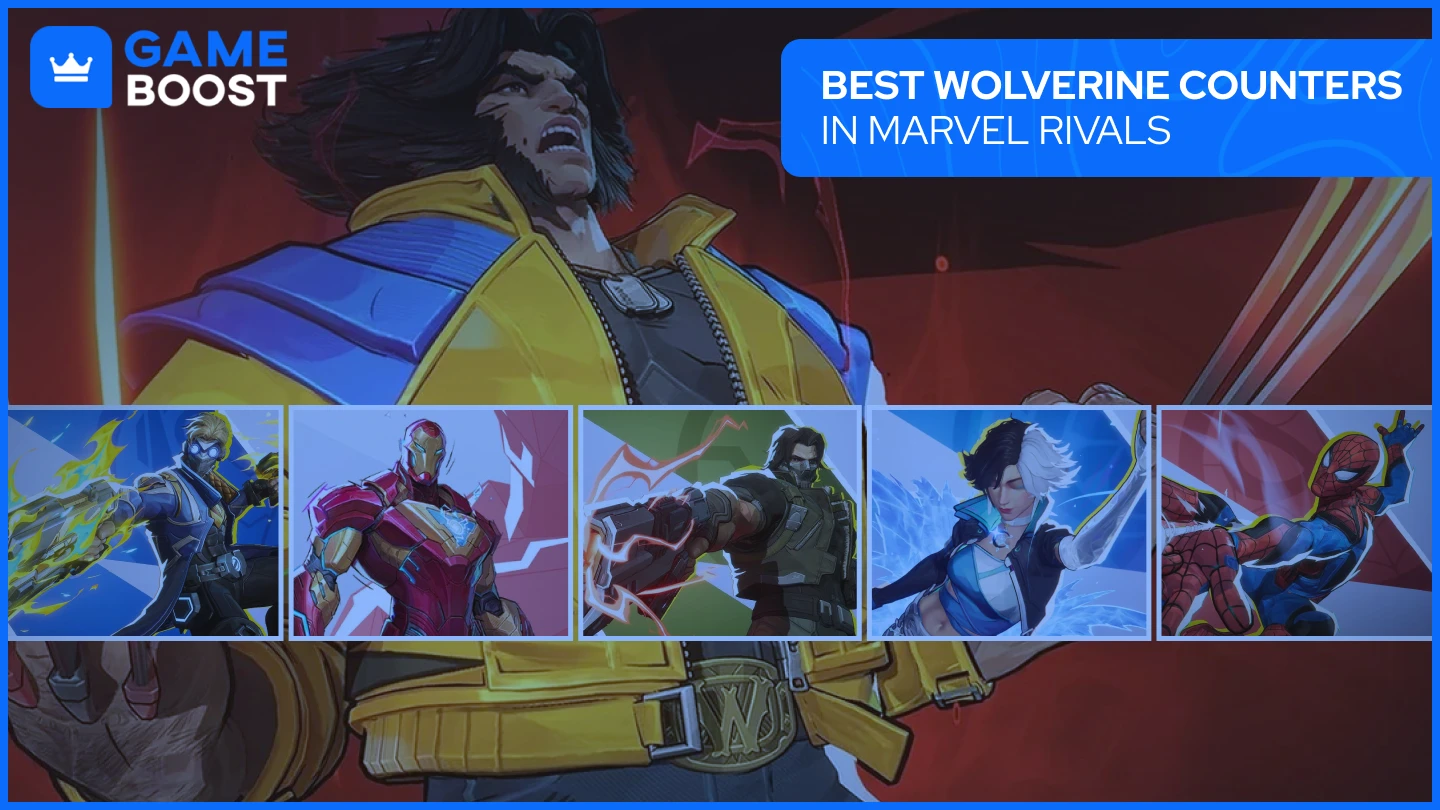
- Iron Man and Star-Lord: These heroes can maintain a high altitude, effectively removing themselves from Wolverine’s effective range (hitbox). From the air, Iron Man can rain down high-yield energy blasts that force Wolverine to play defensively. Since Wolverine has no meaningful ranged response, he is forced to retreat or seek cover, effectively neutralizing his presence in a team fight.
- The Punisher: Frank Castle serves as a “Zone Denial” counter. His turret and heavy ordnance create a “kill zone” that Wolverine must cross to be effective. By using high-DPS (Damage Per Second) ballistic software, The Punisher can deplete Wolverine’s HP pool before the latter ever reaches melee distance.
Strategic Counter-Play and Team Composition
Countering Wolverine isn’t just about picking the right hero; it’s about the technical execution of team-based strategies. In Marvel Rivals, the synergy between “Vanguards,” “Duelists,” and “Strategists” creates a layer of complexity that can be optimized to shut down divers.
The Vanguard Wall: Heroes that Tank the Shred
Vanguards are the tanks of Marvel Rivals, and their primary technical role is “Damage Absorption.” To counter Wolverine, a Vanguard must use “Body Blocking.” Since Wolverine’s attacks are melee-based, they have short hit-collision detection.
- Peni Parker: Her ability to deploy spider-bots and traps creates a “noisy” environment for Wolverine. The technical clutter of her deployables can confuse the auto-targeting or aim-assist of a Wolverine player, making it difficult for them to lock onto high-value, low-health targets like Strategists.
- Groot: Groot can create physical walls. In the game’s code, these walls are indestructible for a set duration or until a damage threshold is met. By placing a wall between Wolverine and his target, Groot resets the engagement, forcing Wolverine to expend his mobility cooldowns just to get back into the fight.
Support Synergy: Denying the Finisher
Wolverine excels at “execution”—finishing off enemies with low health. Strategists (Supports) counter this by using “Invulnerability Windows” or “Burst Healing.”
- Luna Snow: Her ability to freeze enemies in place serves as a defensive CC. If Wolverine dives onto a backline teammate, Luna can apply a “Stun” effect, reversing the pressure.
- Mantis: Through her sleep mechanics and damage-boosted heals, Mantis can keep a target alive just long enough for the rest of the team to collapse on the Wolverine player. The technical goal here is “Time-to-Kill (TTK) Extension.” By extending the time it takes for Wolverine to get a kill, the Strategist increases the likelihood that Wolverine will be punished for his deep dive.
Optimization and Technical Execution
To master the art of countering Wolverine, players must refine their technical execution, focusing on map awareness and the management of “invisible” resources like cooldowns and frame data.
Map Awareness and Environmental Logic
Wolverine thrives in “tight” geometry—corridors, small rooms, and areas with high cover. To counter him, a team should force engagements in “open” geometry. In wide-open spaces, Wolverine’s linear movement becomes easy to track and punish.
- Kiting: This is the technical act of moving backward while maintaining an attack. Because Wolverine must move toward you to deal damage, “Kiting” effectively increases his “Travel Time” while decreasing your “Damage Exposure.”
Ability Cooldown Management
Every ability in Marvel Rivals is on a timer. Wolverine is particularly vulnerable when his mobility skill (the Leap) is on cooldown.
- The Cooldown Window: Competitive players track the “Internal Cooldown” (ICD) of their opponents. Once Wolverine has used his leap to enter a fight, he has no reliable “Out” for the next 6 to 10 seconds (depending on the specific game balance). This is the “Technical Vulnerability Window.” Teams should coordinate their high-damage abilities to hit exactly when his mobility is unavailable.

Conclusion: The Evolving Meta of Digital Combat
In the high-speed software environment of Marvel Rivals, Wolverine represents a classic “check” on poorly coordinated teams. He punishes lack of focus and poor positioning with his high-sustain, high-damage kit. However, through the lens of technical analysis, his weaknesses are clear.
By utilizing heroes with superior verticality, employing hard-CC logic to interrupt his animations, and maintaining a disciplined approach to cooldown management, players can effectively “debug” the Wolverine threat. As the game continues to receive patches and balance updates, the specific numbers—HP values, damage coefficients, and cooldown seconds—may shift, but the fundamental logic of the counter-play will remain: distance, disruption, and disciplined focus-fire are the ultimate tools for taking down the best there is at what he does.
aViewFromTheCave is a participant in the Amazon Services LLC Associates Program, an affiliate advertising program designed to provide a means for sites to earn advertising fees by advertising and linking to Amazon.com. Amazon, the Amazon logo, AmazonSupply, and the AmazonSupply logo are trademarks of Amazon.com, Inc. or its affiliates. As an Amazon Associate we earn affiliate commissions from qualifying purchases.