
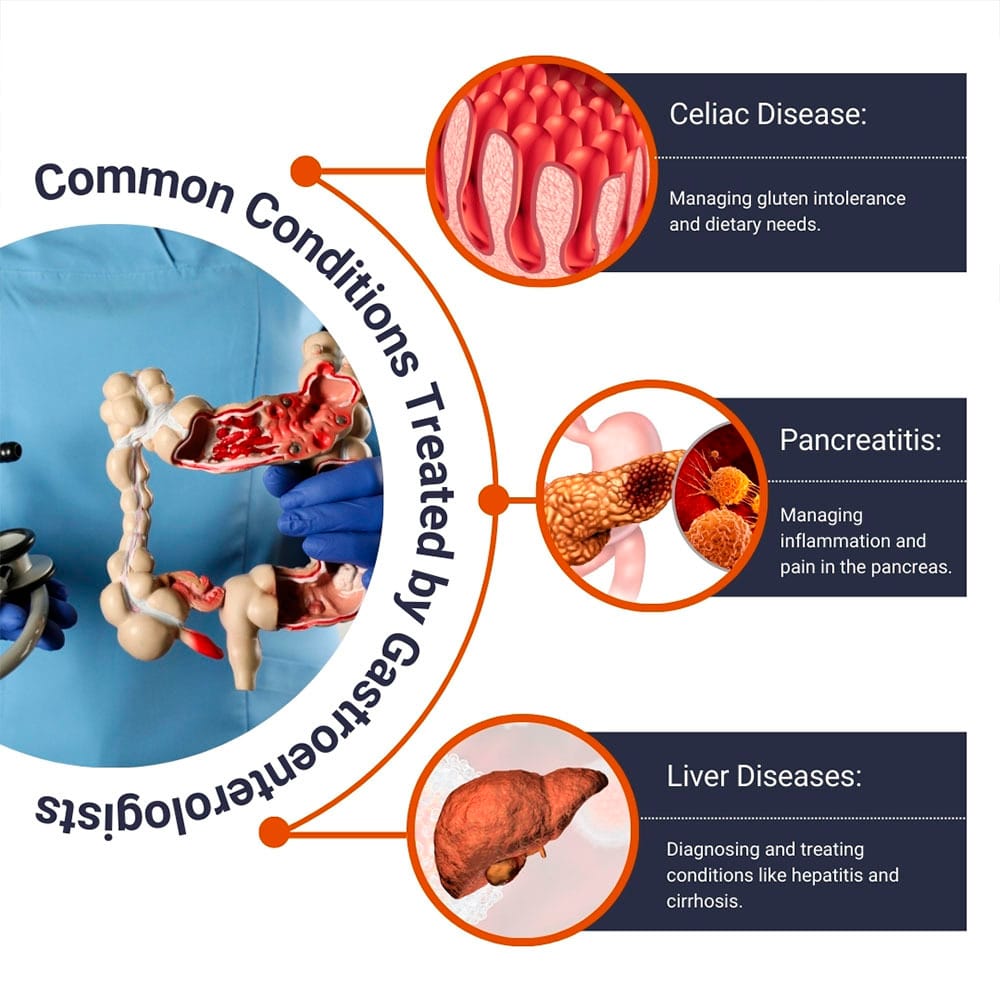
The field of gastroenterology has long been defined by its reliance on direct visualization—the ability of a physician to look inside the human body to diagnose and treat ailments of the digestive tract. However, we are currently witnessing a seismic shift in the specialty. No longer limited by the naked eye or manual dexterity alone, the modern gastroenterologist has transitioned into a high-tech specialist.
Through the integration of Artificial Intelligence (AI), robotic-assisted precision, and advanced digital health tools, the scope of what a gastroenterologist can do has expanded from simple observation to complex, data-driven intervention. This article explores the technological frontier of digestive health and how these innovations are transforming patient outcomes.
AI-Powered Diagnostics and Enhanced Imaging
The most significant tech-driven evolution in gastroenterology is the integration of Artificial Intelligence into diagnostic procedures. Historically, the success of a colonoscopy or endoscopy was highly dependent on the “adenoma detection rate” (ADR) of the individual physician. Today, technology is closing the gap between human capability and clinical perfection.
Computer-Aided Detection (CADe) and Diagnosis (CADx)
AI algorithms are now being integrated directly into the endoscopic processor. As a gastroenterologist moves the scope through the colon, AI software analyzes the video feed in real-time. These systems, often referred to as “Computer-Aided Detection” (CADe), use deep learning to identify polyps or lesions that might be obscured by folds in the tissue or missed due to human fatigue.
Beyond just finding lesions, “Computer-Aided Diagnosis” (CADx) helps the gastroenterologist characterize what they see. By analyzing the vascular patterns and surface morphology of a polyp, the AI can predict with high accuracy whether a growth is benign or precancerous. This allows for “resect and discard” strategies, where low-risk polyps are removed without the need for expensive and time-consuming pathology lab analysis, significantly reducing healthcare costs.
The Rise of Capsule Endoscopy and Wireless Imaging
For years, the small intestine was a “black box” for gastroenterologists because traditional scopes could not reach its entire length. Tech has solved this through capsule endoscopy. A patient swallows a pill-sized camera equipped with a light source, battery, and transmitter.
The modern iteration of this technology is vastly improved by software that can automatically filter out thousands of redundant images (such as clear fluid or debris), highlighting only the frames that show potential bleeding or Crohn’s disease lesions. Newer “smart capsules” are even being developed with internal motors, allowing the gastroenterologist to navigate the camera remotely using a magnetic controller, effectively turning a passive pill into a steerable drone inside the body.
Minimally Invasive Robotic Surgery and Precision Interventions
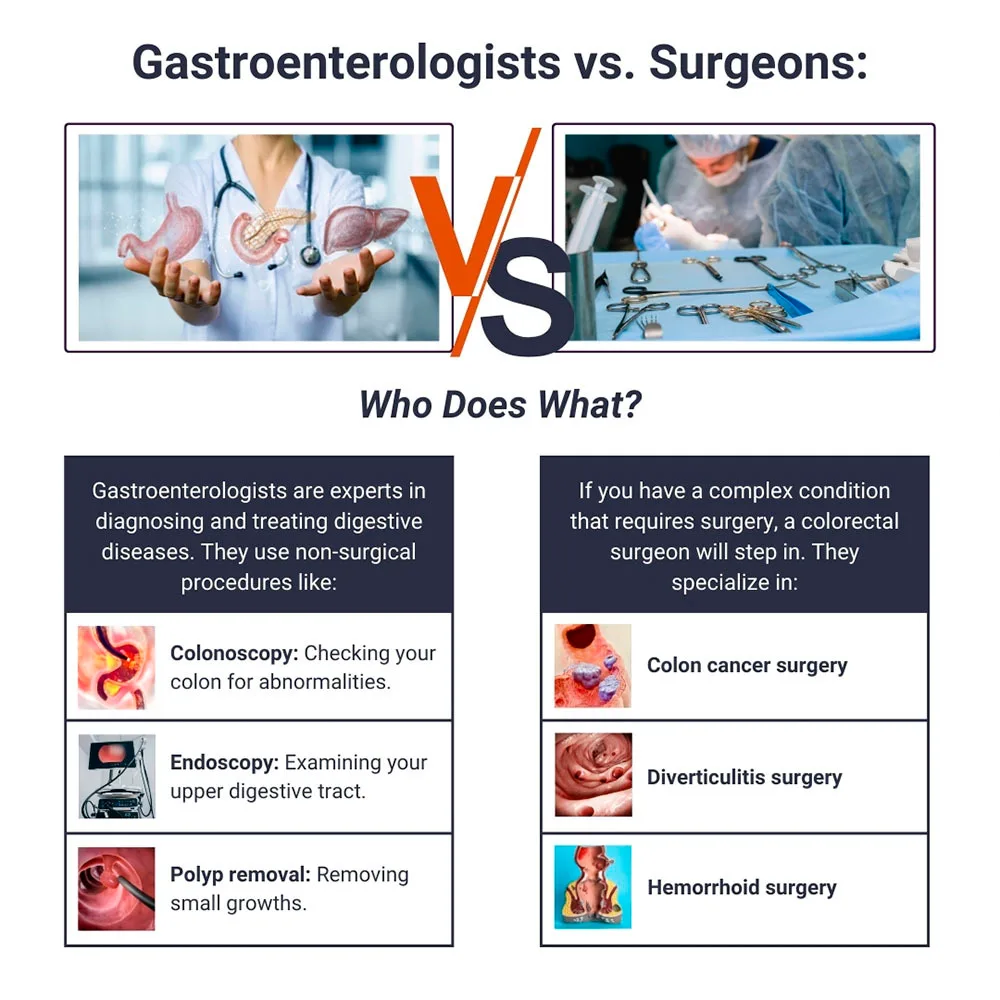
The line between a gastroenterologist and a surgeon is blurring, thanks to the advent of therapeutic endoscopy and robotic assistance. What once required a large abdominal incision and a week-long hospital stay can now be performed from the inside out.
Robotic-Assisted Surgery in Complex GI Procedures
While robotic platforms like the Da Vinci system have been staples in urology and general surgery, they are now becoming vital in complex gastrointestinal work. Robotic systems provide the gastroenterologist with 3D high-definition visualization and “wristed” instruments that have a greater range of motion than the human hand.
In procedures such as the removal of deep-seated tumors in the esophagus or stomach, the robot filters out hand tremors and allows for microscopic precision. This technological leap means gastroenterologists can perform “organ-sparing” surgeries, removing only the diseased tissue while leaving the digestive function completely intact.
Third-Space Endoscopy and Advanced Therapeutic Techniques
Technological advancements in electrosurgical units and specialized endoscopic tools have birthed the field of “Third-Space Endoscopy.” This involves creating a tunnel within the layers of the gut wall to treat conditions like Achalasia (a swallowing disorder) or to remove deep tumors without ever entering the abdominal cavity.
Tools like the “Ovesco Clip” (a “bear-claw” like device) and advanced suturing systems (such as the OverStitch) allow gastroenterologists to close perforations or perform endoscopic sleeve gastroplasties (non-surgical weight loss procedures). These technologies have effectively turned the endoscope from a diagnostic camera into a sophisticated surgical workstation.

The Digital Patient Journey: Telehealth and Remote Monitoring
What a gastroenterologist can do is no longer confined to the four walls of a clinic. The “Digital Front Door” and remote monitoring technologies have enabled a continuous loop of care for patients with chronic conditions like Inflammatory Bowel Disease (IBD) or Irritable Bowel Syndrome (IBS).
Digital Therapeutics (DTx) for Chronic Conditions
We are seeing the rise of “Software as a Drug.” Digital Therapeutics (DTx) are FDA-cleared apps that gastroenterologists prescribe to help manage conditions. For example, some platforms use cognitive behavioral therapy (CBT) algorithms to help IBS patients manage the gut-brain axis, significantly reducing symptoms through tech-guided intervention.
These apps collect patient-reported outcomes (PROs) and sync them directly with the gastroenterologist’s Electronic Health Record (EHR). If a patient’s symptoms spike, the system alerts the clinical team, allowing for proactive medication adjustments before a full-blown flare-up occurs, potentially avoiding a trip to the emergency room.
Smart Pills and Wearables for Real-Time Gut Health Tracking
Beyond the pill-camera, new “Smart Pills” are being utilized to measure physiological data. The “SmartPill” motility capsule, for instance, measures pH, pressure, and temperature as it passes through the entire GI tract. This provides a comprehensive map of how food moves through a patient’s system, helping to diagnose gastroparesis or chronic constipation with data points that a standard physical exam could never provide.
Additionally, wearable tech is entering the GI space. New sensors can now detect bowel sounds and “acoustic signatures” of digestion, providing non-invasive data on gut motility. For a gastroenterologist, this means the ability to monitor a patient’s recovery after surgery or the effectiveness of a new medication in real-time, from the patient’s home.
Data Analytics, Genomics, and Personalized Medicine
The future of gastroenterology lies in the move from reactive treatment to predictive prevention, fueled by big data and genomic sequencing.
Genomic Sequencing and Microbiome Analysis
Every patient has a unique gut microbiome—a complex ecosystem of trillions of bacteria. Gastroenterologists are now using high-throughput sequencing technology to analyze a patient’s “microbial fingerprint.” This tech-driven insight allows doctors to move away from “one-size-fits-all” diets and toward precision nutrition.
By sequencing the gut microbiome, a gastroenterologist can identify specific bacterial imbalances linked to metabolic syndrome or inflammation. Furthermore, pharmacogenomics allows the physician to test a patient’s DNA to see how they will metabolize certain biologics used for Crohn’s or Colitis. This ensures the “right drug for the right patient” on the first try, avoiding the grueling trial-and-error process that has historically plagued GI treatment.
Predictive Analytics for Early Cancer Detection
Early detection is the holy grail of gastroenterology, particularly regarding esophageal and pancreatic cancers, which are often caught too late. Tech is changing this through “Liquid Biopsies”—highly sensitive blood tests that use AI to detect circulating tumor DNA (ctDNA) shed by GI cancers.
When these liquid biopsies are combined with predictive analytics—which scan millions of patient records to identify subtle patterns in weight loss, lab results, and family history—the gastroenterologist can identify “high-risk” individuals years before symptoms appear. By leveraging this data, the physician can schedule targeted interventions, effectively using technology to stop cancer before it starts.
Conclusion
The modern gastroenterologist is as much a technologist as they are a clinician. By leveraging Artificial Intelligence for diagnostic accuracy, utilizing robotic systems for surgical precision, and employing digital therapeutics for chronic disease management, they are redefining the boundaries of digestive health.
As we look forward, the integration of 5G-enabled remote procedures, advanced microbiome engineering, and even more sophisticated AI models will continue to expand what a gastroenterologist can do. For the patient, this means faster diagnoses, less invasive treatments, and a healthcare experience that is increasingly personalized, proactive, and precise. The digital transformation of the gut is not just a trend; it is the new standard of care.
aViewFromTheCave is a participant in the Amazon Services LLC Associates Program, an affiliate advertising program designed to provide a means for sites to earn advertising fees by advertising and linking to Amazon.com. Amazon, the Amazon logo, AmazonSupply, and the AmazonSupply logo are trademarks of Amazon.com, Inc. or its affiliates. As an Amazon Associate we earn affiliate commissions from qualifying purchases.