
The modern battlefield is no longer defined solely by physical grit and traditional maneuvers; it is an environment dominated by data, electronic warfare, and sophisticated digital infrastructure. As the United States Marine Corps (USMC) evolves to meet the challenges of the 21st century, the process of selecting and placing personnel has become increasingly technical. At the heart of this selection process is the Armed Services Vocational Aptitude Battery (ASVAB). While many view the ASVAB as a simple entrance exam, it is, in reality, a sophisticated data-driven tool designed to predict success in specialized technological fields. Understanding what ASVAB score is required for the Marine Corps is the first step in a journey toward some of the most advanced technical training available in the world today.
The Engineering of Aptitude: Understanding CAT-ASVAB Technology
The transition from the traditional paper-and-pencil tests of the mid-20th century to today’s digital environment has fundamentally changed how the military assesses potential. The Marine Corps primarily utilizes the CAT-ASVAB—a Computerized Adaptive Testing version of the battery. This is not a static exam; it is a piece of responsive software that adjusts its difficulty based on the examinee’s performance in real-time.
From Paper to Pixels: The Evolution of Computerized Adaptive Testing
The CAT-ASVAB represents a significant milestone in educational technology. Unlike linear tests where every student answers the same questions, the CAT-ASVAB uses an algorithm to estimate the examinee’s ability level after every response. If a candidate answers a question correctly, the next question is more difficult; if they answer incorrectly, the next is easier. This technical approach allows the software to pinpoint a candidate’s “true score” with much greater precision and in far less time than a traditional test. For the Marine Corps, this efficiency is vital for identifying “digital natives” who possess the cognitive flexibility required for high-stakes tech environments.
The Algorithms Behind the Score: How the Marines Quantify Intelligence
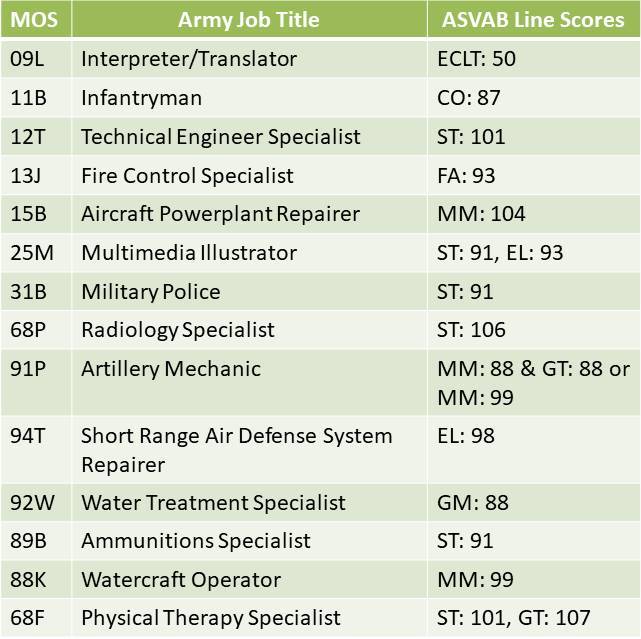
The scoring system of the ASVAB is a complex matrix of data points. The most cited number is the AFQT (Armed Forces Qualification Test) score, which is a percentile ranking ranging from 1 to 99. To enlist in the Marine Corps, a high school graduate typically needs a minimum AFQT of 31. However, in the realm of technology and specialized software roles, the AFQT is merely the baseline. The real “tech data” lies in the “Line Scores.” These are composites of specific subtests: General Science (GS), Arithmetic Reasoning (AR), Word Knowledge (WK), Paragraph Comprehension (PC), Mathematics Knowledge (MK), Electronics Information (EI), Auto and Shop Information (AS), and Mechanical Comprehension (MC). By analyzing these specific data sets, the Marine Corps can determine if a recruit has the logical foundations for coding, the mathematical aptitude for cryptography, or the spatial reasoning required for advanced drone piloting.
Decoding the Score: Requirements for High-Tech MOS Tracks
In the Marine Corps, your career path is defined by your Military Occupational Specialty (MOS). For those interested in technology, software, and digital systems, the “Line Scores” are more important than the overall AFQT. The Corps looks for specific aptitudes in areas like General Technical (GT), Electronics (EL), and Clerical (CL) to fill its technical pipelines.
The General Technical (GT) Threshold for Innovation
The GT score is a composite of Word Knowledge, Paragraph Comprehension, and Arithmetic Reasoning. In many ways, it serves as the “IQ” of the ASVAB. For Marines looking to enter fields related to systems analysis, data management, or technical leadership, a GT score of 110 or higher is often the gold standard. This score indicates a high level of cognitive adaptability—the ability to ingest complex technical manuals and apply that information to solve novel problems in the field. As software becomes more integrated into every piece of Marine gear, from smart optics to digital radio arrays, the demand for high GT scores continues to climb.
Electronics and Intelligence: The Technical Score Components
For careers in avionics, signals intelligence, or telecommunications, the Electronics (EL) line score is the critical metric. This score is derived from General Science, Arithmetic Reasoning, Mathematics Knowledge, and Electronics Information. A high EL score (typically 105 to 115+) signals to recruiters that a candidate understands the fundamental physics of technology. In an era where the “Internet of Things” (IoT) has reached the front lines, Marines must be able to troubleshoot complex hardware-software interfaces. Whether it is maintaining the sensory suite of an F-35 Lightning II or managing a mobile mesh network in a remote environment, the EL score is the technical gatekeeper.

Digital Frontiers: Technology-Centric Roles for High Scorers
When a recruit secures a high ASVAB score, they unlock access to some of the most advanced technical training programs in the Department of Defense. These roles are not just about operating machinery; they are about managing the digital architecture of modern warfare.
17xx and 06xx: The Rise of Cyber and Network Operations
The 17xx Occupational Field (Cyberspace Operations) is one of the most intellectually demanding paths in the Corps. Roles like the 1721 Cyberspace Operator require exceptionally high scores in both GT and EL. These Marines are the “white hat hackers” of the military, responsible for both defensive and offensive cyber operations. Similarly, the 06xx field (Communications) focuses on network architecture and data systems. These Marines build the cloud environments and secure servers that allow for real-time intelligence sharing. For a tech-savvy recruit, these MOS codes represent a career at the cutting edge of digital security and systems administration.
Aviation and Robotics: Precision Tech in the Air and on the Ground
The Marine Corps’ commitment to technology is perhaps most visible in its aviation and burgeoning robotics programs. Aviation Electronic Technicians (64xx) utilize sophisticated diagnostic software to maintain aircraft that are essentially flying supercomputers. Furthermore, as the Corps integrates more Unmanned Aerial Systems (UAS) and ground-based robotics, the need for Marines who can understand “logic gates” as well as they understand “riflery” is paramount. Achieving a high score in Mechanical Comprehension (MC) and Electronics Information (EI) is the prerequisite for entering these fields, where one works daily with AI-assisted flight controls and remote sensing technology.
Leveraging Digital Tools for ASVAB Preparation
Given the high stakes of these technical scores, many prospective Marines are turning to the very technology they hope to master as a means of preparation. The days of solely relying on bulky printed study guides are over; the modern approach to the ASVAB is digital, personalized, and data-driven.
AI-Driven Study Platforms and Simulators
Newer study platforms utilize Artificial Intelligence to mimic the CAT-ASVAB’s adaptive nature. These tools analyze a user’s weaknesses—perhaps in Mathematics Knowledge or Electronics Information—and curate a custom learning path to bridge those gaps. By using machine learning to track progress, these apps can predict a user’s eventual ASVAB score with surprising accuracy. For the tech-focused recruit, using an AI tutor is not just a way to study; it is an early immersion into the type of algorithmic environments they will encounter throughout their military career.
Mobile Applications for On-the-Go Readiness
The democratization of ASVAB prep through mobile apps has allowed a wider range of candidates to achieve the scores necessary for technical MOS placements. These apps offer gamified modules for “Auto and Shop” or “Mechanical Comprehension,” subjects that many digital-native recruits may not have encountered in a standard high school curriculum. By leveraging mobile tech, candidates can ensure they are maximizing their “Line Scores,” thereby expanding their career options within the Marine Corps’ high-tech ecosystem.

The Future of Military Aptitude: AI and the Next-Gen ASVAB
As the Marine Corps moves toward “Force Design 2030,” its reliance on technology will only increase. This shift is already prompting discussions about the next generation of the ASVAB. We are moving toward a future where the test might measure more than just “aptitude” in the traditional sense; it may begin to measure “digital fluency” and “algorithmic thinking.”
Future iterations of military entrance testing may include simulations of coding environments or cybersecurity “capture the flag” scenarios to better identify talent for the Cyber Command. The ASVAB is evolving from a general test of “can you learn” to a specific filter for “can you innovate.” For those asking “what ASVAB score for the Marine Corps,” the answer is no longer just a number—it is a digital passport. The higher the score, the more access a Marine has to the software, hardware, and networks that will define the future of global security. In the Marine Corps, technology is a force multiplier, and the ASVAB is the tool that ensures the right minds are behind the most powerful systems on earth.
aViewFromTheCave is a participant in the Amazon Services LLC Associates Program, an affiliate advertising program designed to provide a means for sites to earn advertising fees by advertising and linking to Amazon.com. Amazon, the Amazon logo, AmazonSupply, and the AmazonSupply logo are trademarks of Amazon.com, Inc. or its affiliates. As an Amazon Associate we earn affiliate commissions from qualifying purchases.