
In the rapidly evolving landscape of software engineering, the ability to deliver high-quality code at high velocity is no longer a luxury—it is a competitive necessity. At the heart of this transformation lies CI/CD, a combination of practices that serves as the backbone of the DevOps methodology. By automating the transition of code from a developer’s workstation to a production environment, CI/CD minimizes human error, accelerates feedback loops, and ensures that software remains in a deployable state at all times.
To understand CI/CD, one must view it as the bridge between development and operations. Historically, these two departments functioned in silos, leading to “integration hell” where merging code from different teams resulted in catastrophic conflicts. CI/CD solves this by creating a streamlined, automated pipeline that validates every change in real-time.

1. Understanding Continuous Integration (CI): The Foundation of Quality
Continuous Integration (CI) is the practice of frequently merging code changes into a central repository, followed by automated builds and tests. Instead of waiting for the end of a development cycle to integrate code, developers commit their work daily, or even several times a day.
The Core Principles of Continuous Integration
The primary goal of CI is to identify and address bugs as early as possible. When a developer pushes code to a shared repository (like GitHub or GitLab), a CI server automatically triggers a build. This process involves compiling the code and running a suite of automated tests. If the build or any test fails, the team is notified immediately. This “fail fast” mentality prevents broken code from accumulating and makes it significantly easier to pinpoint the source of an error.
Automated Testing: The Safety Net
A robust CI process is heavily reliant on automated testing. This includes:
- Unit Tests: Validating individual functions or components in isolation.
- Linting: Checking the code for stylistic errors and adherence to best practices.
- Integration Tests: Ensuring that different modules of the application work together correctly.
By automating these checks, organizations ensure that the “main” branch of their code is always stable and functional, reducing the technical debt that usually accumulates during manual testing phases.
Essential CI Tools in the Modern Tech Stack
Selecting the right toolchain is critical for successful CI implementation. Popular tools like Jenkins offer extensive plugin ecosystems for complex workflows, while cloud-native options like GitHub Actions, CircleCI, and GitLab CI/CD provide seamless integration with version control systems. These tools allow developers to define their “pipeline as code,” meaning the instructions for building and testing the application are stored and versioned alongside the application itself.
2. Bridging the Gap: Continuous Delivery vs. Continuous Deployment
While CI focuses on the beginning of the pipeline, CD (Continuous Delivery and Continuous Deployment) focuses on the latter half. Although the acronyms are often used interchangeably, they represent two different levels of automation in the release process.
Continuous Delivery: The Semi-Automated Path
Continuous Delivery is a practice where code changes are automatically built, tested, and prepared for a release to production. However, in a Continuous Delivery model, the final “push to production” requires a manual trigger. This is often the preferred approach for enterprise software or regulated industries where a human stakeholder must provide final approval before an update goes live to customers. The key takeaway is that with Continuous Delivery, the code is always ready to be deployed, even if it hasn’t been deployed yet.
Continuous Deployment: Achieving Full Automation
Continuous Deployment takes automation one step further. In this model, every change that passes through all stages of the automated pipeline is released directly to the production environment without human intervention. This approach requires a high level of confidence in the automated testing suite and sophisticated monitoring tools. Continuous Deployment is common in SaaS (Software as a Service) companies, where features and fixes are rolled out multiple times a day to maintain a rapid pace of innovation.
Choosing the Right Approach for Your Tech Infrastructure
The choice between Delivery and Deployment often depends on the complexity of the application and the risk tolerance of the organization. For high-stakes environments—such as banking software or medical systems—Continuous Delivery provides a necessary layer of governance. Conversely, for web applications where speed is the primary driver, Continuous Deployment offers a significant edge by reducing the “time to market” for every new feature.

3. The Anatomy of a CI/CD Pipeline
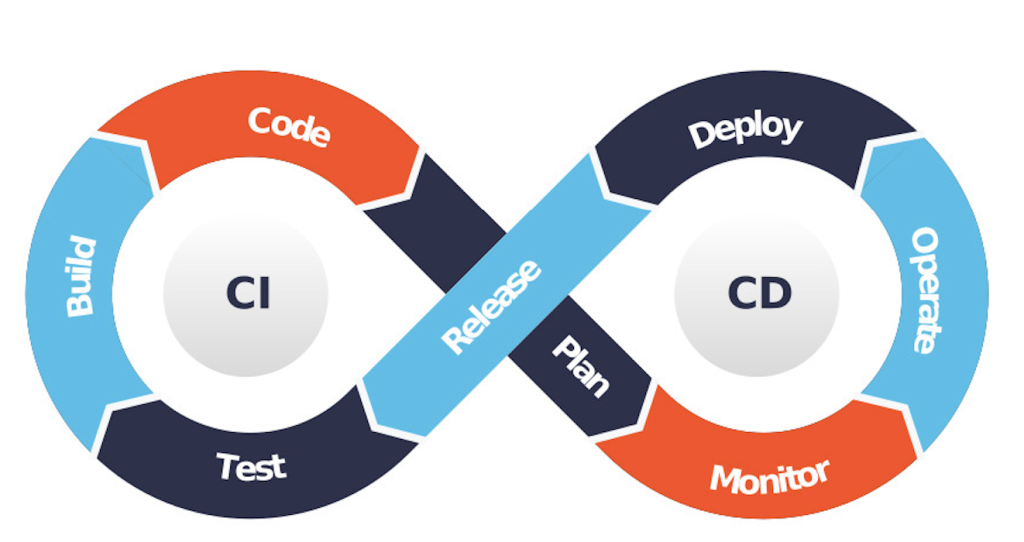
A CI/CD pipeline is a series of automated steps that a software change must pass through to reach production. Understanding the structure of this pipeline is essential for optimizing performance and ensuring security.
Source Stage: Version Control and Triggers
The pipeline begins at the source stage. Whenever a developer checks in code to a version control system (VCS) like Git, it acts as a trigger. Modern pipelines use “webhooks” to notify the CI/CD tool that a change has occurred. This stage is also where branching strategies, such as GitFlow or Trunk-Based Development, are enforced to manage how code enters the pipeline.
Build and Test: Ensuring Code Integrity
Once triggered, the pipeline moves to the build stage. Here, the source code is converted into a runnable artifact—such as a Docker image or a compiled binary. Once the build is successful, the testing phase begins. This is not limited to unit tests; it can include “smoke tests” to check basic functionality and “regression tests” to ensure new changes haven’t broken existing features. If any stage fails, the pipeline stops, preventing faulty code from progressing further.
Deployment and Monitoring: Closing the Feedback Loop
In the final stage, the artifact is deployed to various environments (Development, Staging, and finally Production). Sophisticated deployment strategies are often used here to minimize downtime:
- Blue-Green Deployment: Running two identical production environments; traffic is switched from the old (Blue) to the new (Green) once the new version is verified.
- Canary Releases: Rolling out the change to a small subset of users before deploying it to the entire user base.
Post-deployment, monitoring tools (like Prometheus or New Relic) track the performance of the new code, completing the loop by providing data that informs the next development cycle.
4. Security and AI in Modern CI/CD (DevSecOps)
As cyber threats become more sophisticated, the “DevOps” model has evolved into “DevSecOps,” where security is integrated directly into the CI/CD pipeline. Furthermore, Artificial Intelligence is beginning to play a transformative role in how pipelines are managed.
Integrating Security: The Shift-Left Approach
“Shift-Left” refers to the practice of moving security testing to the earliest possible point in the software development lifecycle. Instead of waiting for a security audit at the end of the project, CI/CD pipelines now include:
- SAST (Static Application Security Testing): Analyzing the source code for vulnerabilities during the build phase.
- SCA (Software Composition Analysis): Checking third-party libraries and dependencies for known security flaws.
- DAST (Dynamic Application Security Testing): Testing the running application for vulnerabilities like SQL injection or Cross-Site Scripting (XSS).
The Role of AI and Machine Learning in Pipeline Optimization
The next frontier for CI/CD is AI-driven automation. AI can be used to analyze historical build data to predict which tests are most likely to fail, allowing the pipeline to run those tests first and save time. Additionally, AI-powered monitoring can detect anomalies in production logs that a human might miss, automatically triggering a “roll-back” if a new deployment causes latency spikes or increased error rates. This “AIOps” approach makes CI/CD pipelines more resilient and self-healing.
5. Best Practices for Implementing CI/CD
Transitioning to a CI/CD model is as much a cultural shift as it is a technical one. Success requires more than just installing Jenkins or GitLab; it requires a commitment to excellence across the entire engineering team.
Cultural Shifts: Collaboration Over Silos
For CI/CD to work, developers must take ownership of the deployment process, and operations teams must treat infrastructure as code (IaC). This collaboration ensures that the environments where the code is tested are identical to the environments where it will be deployed. Communication is key; when a build fails, it is not a “dev problem” or an “ops problem”—it is a team priority to fix it.
Measuring Success: Key DevOps Metrics
To gauge the effectiveness of a CI/CD pipeline, organizations track specific metrics, often referred to as DORA metrics:
- Deployment Frequency: How often code is successfully deployed to production.
- Lead Time for Changes: The amount of time it takes for a commit to reach production.
- Change Failure Rate: The percentage of deployments that cause a failure in production.
- Mean Time to Recovery (MTTR): How quickly the team can recover from a production failure.
By monitoring these technical KPIs, teams can identify bottlenecks in their pipeline and continuously iterate on their processes.
In conclusion, CI/CD is the engine that powers modern software development. By automating the mundane and error-prone tasks of building, testing, and deploying code, it allows engineers to focus on what they do best: creating innovative solutions. Whether through the integration of AI or the rigorous application of DevSecOps, the CI/CD pipeline will continue to be the most vital component of the technology stack for years to come.
aViewFromTheCave is a participant in the Amazon Services LLC Associates Program, an affiliate advertising program designed to provide a means for sites to earn advertising fees by advertising and linking to Amazon.com. Amazon, the Amazon logo, AmazonSupply, and the AmazonSupply logo are trademarks of Amazon.com, Inc. or its affiliates. As an Amazon Associate we earn affiliate commissions from qualifying purchases.