
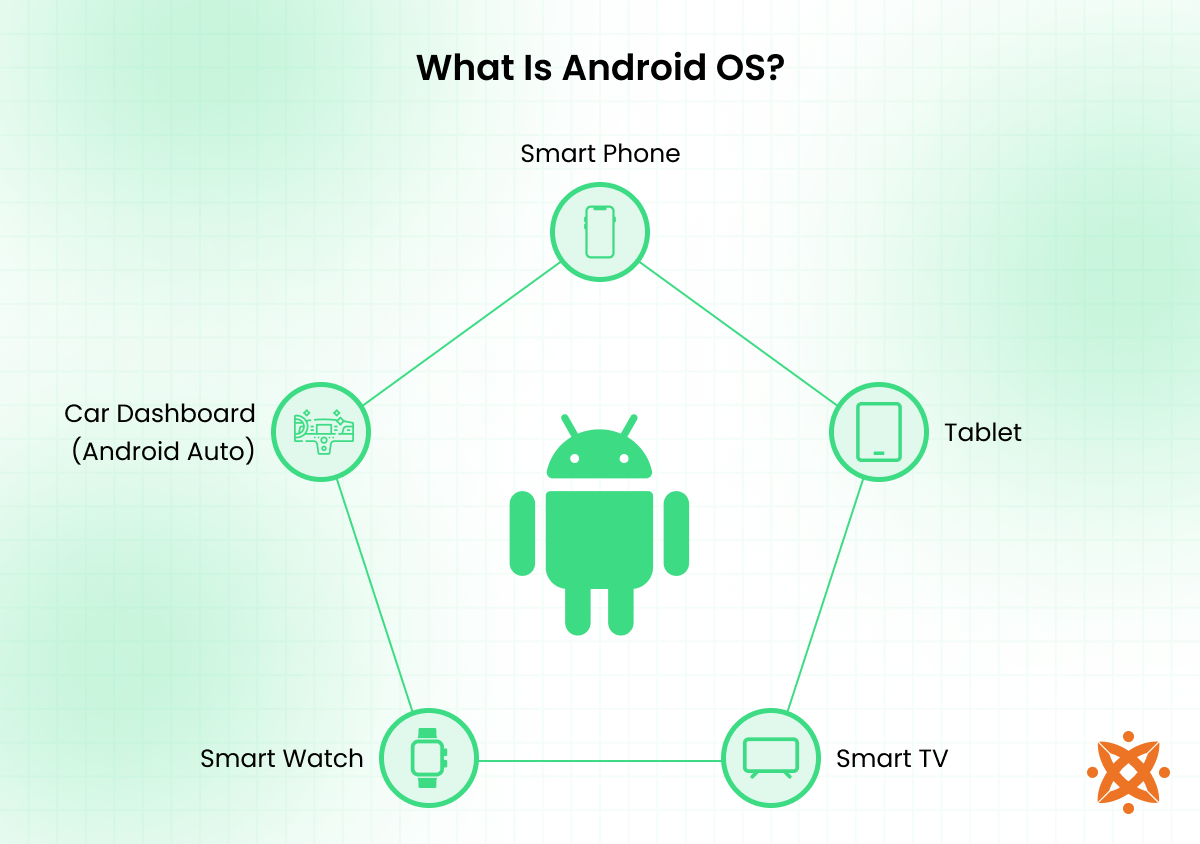
In the modern digital era, the term “Android” has become synonymous with the smartphone experience for billions of people. However, to understand what Android is within the context of an operating system (OS), one must look beyond the glass screen of a mobile device. At its core, Android is a sophisticated, Linux-based software stack designed primarily for touchscreen mobile devices such as smartphones and tablets. Since its inception, it has evolved into a versatile ecosystem powering televisions, cars, wristwatches, and smart home appliances.
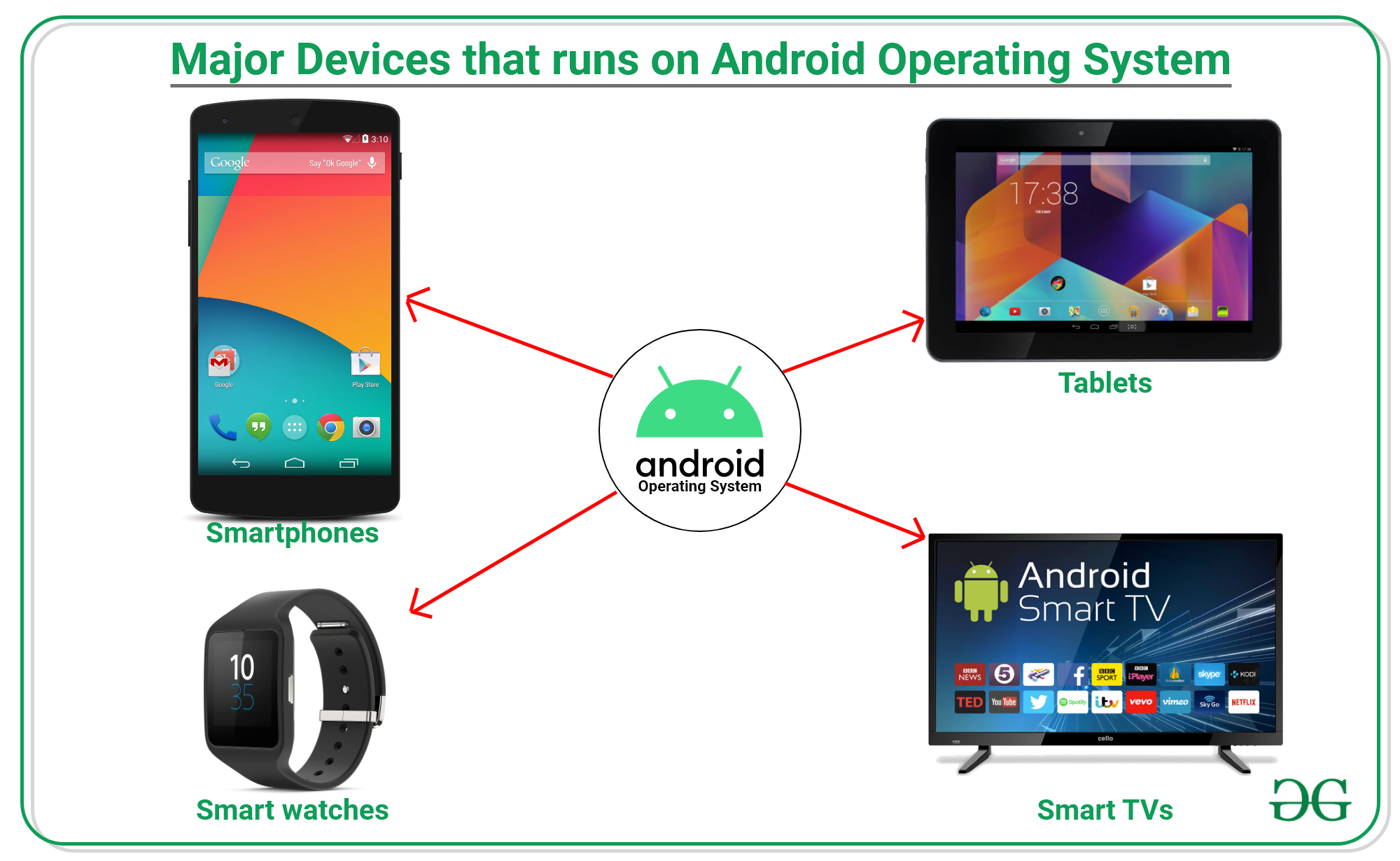
Owned and developed by Google, Android represents a paradigm shift in how software interacts with hardware. Unlike proprietary systems, Android’s open-source nature has allowed it to become the most widely installed mobile OS globally, commanding a market share that consistently towers over its competitors. To truly grasp the significance of Android, we must dissect its architectural layers, its historical evolution, and the unique open-source philosophy that fuels its dominance in the tech industry.
The Architecture of Android: Understanding the Linux Core
To answer “what is Android,” one must first understand its internal structure. Android is not a single piece of software but a complex “stack” of layers, each serving a specific purpose in translating user input into hardware action.
The Linux Kernel: The Foundation of Connectivity
At the very bottom of the Android software stack lies the Linux kernel. Android utilizes a version of the Linux kernel for its core system services such as security, memory management, process management, network stack, and driver model. The kernel acts as an abstraction layer between the hardware and the rest of the software stack. For instance, when you adjust the brightness on your phone, the kernel communicates that request to the actual screen hardware. By leveraging Linux, Google ensured that Android was built on a stable, proven, and highly secure foundation that could handle multi-tasking and complex networking.
Hardware Abstraction Layer (HAL)
Sitting directly above the kernel is the Hardware Abstraction Layer (HAL). The HAL provides standard interfaces that expose device hardware capabilities to the higher-level Java API framework. When a programmer wants to access the device’s camera or Bluetooth, they don’t need to know the specific brand or technical specifications of that hardware. Instead, the HAL provides a generic “hook” that allows the software to communicate with the hardware seamlessly, regardless of whether the device is a Samsung, a Pixel, or a Xiaomi.
The Android Runtime (ART) and Core Libraries
For an operating system to run applications efficiently, it needs a robust execution environment. Android uses the Android Runtime (ART). When you install an app, ART performs “Ahead-of-Time” (AOT) compilation, translating the app’s bytecode into machine language that the processor can understand before the app even runs. This results in faster app launches and improved battery efficiency. Accompanying ART are a set of C/C++ libraries that handle critical tasks like graphics rendering (via OpenGL), web browsing (via WebKit), and media playback.
Evolution and Version History: From Cupcake to Modern Innovation
The journey of Android is a testament to rapid technological iteration. Originally founded by Andy Rubin in 2003 to improve the operating systems of digital cameras, the company was acquired by Google in 2005. Since the release of the first commercial Android device—the T-Mobile G1—in 2008, the OS has undergone a radical transformation.
The Early Years: Establishing the Open Source Identity
In its infancy, Android was known for its “tasty” naming convention, where each major version was named after a dessert in alphabetical order (Cupcake, Donut, Eclair, etc.). These early versions focused on building the fundamentals: a functional app store (the Android Market, now Google Play), a notifications tray, and home screen widgets. Unlike its primary competitor, iOS, Android focused on giving users the ability to multitask and customize their interface, a philosophy that remains a cornerstone of the OS today.
The Material Design Era
With the release of Android 5.0 (Lollipop), Google introduced “Material Design.” This was a pivotal moment in the OS’s history, moving away from a cluttered aesthetic toward a clean, grid-based design language inspired by paper and ink. Material Design brought depth, shadows, and responsive animations to the interface, making the software feel more organic. This era also saw Android expanding beyond phones into “Android Wear” (now Wear OS) for smartwatches and “Android Auto” for vehicles, marking the beginning of a truly interconnected ecosystem.
AI Integration and Privacy-First Developments
Modern versions of Android, starting from Android 10 onwards, have shifted focus toward Artificial Intelligence (AI) and user privacy. With the integration of Google Gemini and advanced machine learning models, Android can now predict user behavior, automate battery saving through “Adaptive Battery,” and provide live captions for any media playing on the device. Furthermore, Google has introduced “scoped storage” and granular permissions, giving users unprecedented control over what data apps can access, effectively addressing long-standing criticisms regarding digital security.
Why Android Dominates: The Open Source Advantage
One cannot discuss Android without mentioning the Android Open Source Project (AOSP). While Google leads development, the core source code is available for anyone to download, modify, and distribute. This openness is the primary reason for Android’s global dominance.
Customization and User Experience (UX)
Because Android is open-source, manufacturers (Original Equipment Manufacturers or OEMs) can create their own “skins” or user interfaces. Samsung has One UI, OnePlus has OxygenOS, and Xiaomi has MIUI. This allows brands to differentiate themselves through unique software features, custom icons, and exclusive tools. For the end-user, this means a level of customization that is unavailable on “walled garden” systems. Users can change their launchers, icon packs, and even install custom ROMs if they wish to completely overhaul their device’s software.
The Google Play Ecosystem and App Development
The Google Play Store is the primary distribution engine for Android, hosting millions of applications. For developers, Android offers a flexible environment. While Google enforces security standards, the platform allows for “sideloading”—the ability to install apps from third-party sources. This flexibility has fostered a massive developer community. Moreover, the integration of Google Mobile Services (GMS)—which includes Maps, Gmail, and YouTube—ensures that the user experience is consistent and powerful across different hardware brands.
Diversity of Hardware: From Flagships to Entry-Level
The Android operating system is designed to run on a dizzying array of hardware configurations. You can find Android on $1,500 foldable devices with 12GB of RAM and on $50 entry-level phones designed for emerging markets. By keeping the hardware requirements flexible, Android has democratized internet access, bringing the power of a modern operating system to billions of people who might otherwise be priced out of the digital economy.
Security and the Future of the Android Ecosystem
As Android has grown, so too have the threats against it. However, the OS has evolved into one of the most secure platforms available, utilizing a multi-layered security approach.
Project Mainline and Regular Security Patching
In the past, Android suffered from “fragmentation,” where users had to wait months for manufacturers to push out security updates. Google solved this through “Project Mainline.” This initiative allows Google to update core system components directly through the Google Play Store, bypassing the need for a full OS update from the manufacturer. This ensures that even if a user isn’t on the latest version of Android, their device receives the latest security patches to defend against emerging vulnerabilities.
Android in the Age of AI and Foldables
The future of Android lies in its ability to adapt to new form factors and intelligent computing. With the rise of foldable phones like the Pixel Fold and Samsung Galaxy Z Fold series, Android has introduced “Android 12L” and subsequent optimizations that allow the UI to transition seamlessly between a phone screen and a tablet-sized display. Furthermore, generative AI is being baked into the OS level, allowing for real-time translation, AI-generated wallpapers, and more intuitive voice assistance.
Integrating with the Internet of Things (IoT)
Looking ahead, Android is positioned to be the “glue” that holds the smart home together. Through Matter integration and the Google Home framework, Android devices act as central hubs for controlling smart lights, thermostats, and security cameras. As we move toward a world of “ambient computing,” where technology fades into the background, the Android operating system will continue to provide the underlying intelligence that connects our digital and physical worlds.
In conclusion, Android is far more than just “the software on a phone.” It is a massive, multi-layered architectural feat built on the reliability of Linux and the spirit of open-source collaboration. By balancing the needs of hardware manufacturers, developers, and end-users, Android has created a versatile platform that continues to push the boundaries of what a mobile operating system can achieve. Whether through AI-driven insights or the democratization of mobile technology, Android remains the most influential software force in the modern tech landscape.
aViewFromTheCave is a participant in the Amazon Services LLC Associates Program, an affiliate advertising program designed to provide a means for sites to earn advertising fees by advertising and linking to Amazon.com. Amazon, the Amazon logo, AmazonSupply, and the AmazonSupply logo are trademarks of Amazon.com, Inc. or its affiliates. As an Amazon Associate we earn affiliate commissions from qualifying purchases.