
In the ever-evolving landscape of personal computing, the ability to install an operating system is a fundamental skill. While disc drives were once the standard for Windows installations, USB drives have long since taken over as the preferred, more efficient, and often the only viable method. Whether you’re building a new PC, replacing an old hard drive, upgrading from a previous Windows version, or troubleshooting a system issue, installing Windows via a USB drive offers unparalleled convenience, speed, and portability.
This comprehensive guide will walk you through every step of the process, from preparing your tools and media to configuring your system and completing the installation. We’ll delve into the necessary prerequisites, explore popular tools for creating a bootable USB, and provide detailed instructions for navigating the Windows setup. By the end of this article, you’ll have the knowledge and confidence to perform a clean Windows installation on any compatible machine, ensuring optimal performance and a fresh start.
Why Choose a USB Installation? The Modern Advantage
The shift from optical discs to USB drives for operating system installation isn’t merely a trend; it’s a practical evolution driven by technological advancements and user convenience. Understanding these benefits highlights why USB has become the industry standard.
The Era of Portability and Speed
Modern computers, particularly laptops and ultrabooks, frequently omit optical disc drives altogether. USB installation bypasses this limitation, making it compatible with virtually every contemporary PC. Beyond compatibility, USB 3.0 and newer standards offer significantly faster data transfer rates compared to DVDs, drastically reducing the time it takes to copy installation files and execute the setup process. This speed translates directly into less waiting and a more efficient workflow, a critical factor for anyone managing multiple installations or seeking to minimize downtime.
Flexibility and Durability
Unlike fragile optical discs that can scratch and become unreadable, a USB drive is robust and reusable. Once you’ve created a bootable USB, you can use it multiple times for different installations, or even repurpose it as a standard storage device after the installation is complete. This flexibility also extends to updating the installation media itself; if a new version of Windows is released or critical updates are integrated into the ISO, you can simply overwrite the old files on your USB drive with the latest ones, ensuring you always have the most current installation package readily available. This adaptability makes USB drives an indispensable tool for IT professionals, tech enthusiasts, and everyday users alike.
Essential Preparations: What You’ll Need
Before embarking on your Windows installation journey, gathering the necessary tools and understanding the prerequisites is crucial. Proper preparation ensures a smooth process and mitigates potential hiccups down the line.
A Reliable USB Flash Drive
The cornerstone of this process is a USB flash drive. It should meet the following criteria:
- Capacity: A minimum of 8GB is generally recommended for Windows 10 and 11. While some versions might fit on a 4GB drive, 8GB provides a safer margin, especially for future updates or if you plan to include additional drivers.
- Format: The drive will be formatted during the bootable media creation process, so ensure it contains no important data. If it does, back up all files to another location before proceeding.
- Speed: A USB 3.0 drive is highly recommended if your computer supports it, as it will significantly speed up the transfer and installation process compared to older USB 2.0 drives.
The Windows Installation Media (ISO File)
The Windows operating system itself comes in an ISO file format – a single file that contains an exact copy of an entire CD or DVD. You can legally obtain the Windows ISO file directly from Microsoft’s official website.
- For Windows 10: Navigate to the “Download Windows 10 Disc Image (ISO File)” page.
- For Windows 11: Go to the “Download Windows 11 Disc Image (ISO) for x64 devices” section.
Always download the ISO from the official Microsoft site to ensure you’re getting a legitimate, unadulterated version of the operating system, free from malware or unauthorized modifications.
Bootable USB Creation Software
To make your USB drive recognizable as an installation medium by your computer’s BIOS/UEFI, you’ll need specialized software. Two popular and highly effective options are:
- Microsoft’s Media Creation Tool: This is Microsoft’s official utility, designed specifically for creating Windows installation media. It’s user-friendly, handles both downloading the ISO and creating the bootable USB, and is generally the recommended choice for most users.
- Rufus: A free, open-source utility that offers more advanced options for creating bootable USB drives. Rufus is particularly useful if you already have an ISO file, need to create a bootable drive for an older system (BIOS vs. UEFI), or require specific partitioning schemes.
System Requirements and Backup Considerations
Before initiating the installation, it’s wise to quickly review the minimum system requirements for your chosen Windows version (e.g., processor speed, RAM, storage space). More importantly, if you are installing Windows on a computer that currently has an operating system and contains valuable data, perform a complete backup of all important files to an external hard drive, cloud storage, or another reliable medium. A clean installation will erase all data on the target drive, and skipping this step can lead to irreversible data loss.
Step-by-Step Guide to Creating Your Bootable USB
With your USB drive and Windows ISO (or the intention to download it) ready, the next crucial step is to transform your standard USB drive into a bootable Windows installer. We’ll cover the two most popular methods.
Method 1: Using Microsoft’s Media Creation Tool (Recommended for Most Users)
This is the simplest and most straightforward method, especially if you don’t already have the ISO file.
- Download the Tool: Go to the official Microsoft download page for Windows 10 or Windows 11 and download the Media Creation Tool for your desired version.
- Run the Tool: Double-click the downloaded
MediaCreationTool.exefile. Accept the license terms when prompted. - Choose Your Action: On the “What do you want to do?” screen, select “Create installation media (USB flash drive, DVD, or ISO file) for another PC” and click “Next.”
- Language, Edition, and Architecture: The tool will often pre-select recommended options based on your current PC. If you’re installing on a different PC or want specific options, uncheck “Use the recommended options for this PC” and choose your desired Language, Windows Edition (e.g., Windows 10 Home/Pro), and Architecture (64-bit is standard for modern PCs). Click “Next.”
- Choose Media Type: Select “USB flash drive” and click “Next.”
- Select USB Drive: The tool will display a list of connected USB drives. Carefully select the correct USB drive you intend to use (ensure it’s the one you’ve backed up and are willing to erase). Click “Next.”
- Download and Create: The tool will now download the Windows ISO and then write it to your selected USB drive, making it bootable. This process can take a significant amount of time, depending on your internet speed and USB drive performance.
- Finish: Once the process is complete, you’ll see a “Your USB flash drive is ready” message. Click “Finish.” Your bootable Windows USB is now prepared.
Method 2: Using Rufus for Advanced Control (If You Have an ISO or Need Specific Options)
Rufus is an excellent alternative, offering more customization. This method assumes you have already downloaded the Windows ISO file.
- Download Rufus: Go to the official Rufus website (
rufus.ie) and download the latest portable version (no installation required). - Insert USB Drive: Plug your USB flash drive into your computer.
- Run Rufus: Double-click the downloaded Rufus executable.
- Select Device: In Rufus, ensure your target USB drive is selected under the “Device” dropdown menu. Double-check this to avoid formatting the wrong drive.
- Select Boot Selection: Click the “SELECT” button next to “Boot selection” and browse to your downloaded Windows ISO file. Select it and click “Open.”
- Image Option: For Windows installations, leave “Standard Windows installation” selected.
- Partition Scheme and Target System: This is where Rufus offers more control.
- GPT: For newer computers with UEFI firmware (most PCs made after 2010).
- MBR: For older computers with traditional BIOS firmware, or for UEFI systems that need Legacy BIOS compatibility.
- If you’re unsure, “GPT” is usually the correct choice for modern systems. Rufus will often automatically detect and suggest the appropriate scheme based on your ISO.
- The “Target system” will automatically adjust (e.g., “UEFI (non-CSM)” for GPT, or “BIOS (or UEFI-CSM)” for MBR).
- Volume Label: You can set a custom label for your USB drive (e.g., “Win11 Installer”).
- File System: Leave this as default (usually NTFS for Windows).
- Start Creation: Click the “START” button. Rufus will warn you that all data on the USB drive will be destroyed. Confirm by clicking “OK” after ensuring you’ve backed up any essential data.
- Wait for Completion: Rufus will then write the ISO to the USB drive and make it bootable. This process typically takes several minutes.
- Close Rufus: Once the status bar shows “READY,” you can close Rufus. Your bootable USB is now ready.
Configuring Your PC for USB Boot
With your bootable USB drive prepared, the next step is to instruct your computer to boot from it instead of its internal hard drive. This usually involves accessing the system’s BIOS or UEFI settings.
Accessing BIOS/UEFI Settings
The method to enter BIOS/UEFI settings varies between computer manufacturers and models. Generally, you need to press a specific key repeatedly immediately after powering on your computer. Common keys include:
- Dell: F2, F12
- HP: F10, F2, Esc
- Lenovo: F1, F2, Fn+F2 (laptops), Enter (then F1/F2)
- Acer: F2, Del
- ASUS: Del, F2
- Microsoft Surface: Volume Up button (hold during power-on)
- Custom Builds (Motherboards): Del, F2 (most common for ASUS, Gigabyte, MSI, ASRock)
Power on your computer and immediately start tapping the appropriate key until the BIOS/UEFI setup utility appears on your screen.
Prioritizing the USB Drive in the Boot Order
Once in the BIOS/UEFI settings:
- Navigate to the Boot Section: Look for menus or tabs labeled “Boot,” “Boot Order,” “Boot Priority,” or similar.
- Identify Your USB Drive: Your USB drive should be listed among the bootable devices, often by its brand name (e.g., “Kingston DataTraveler”) or as “USB HDD,” “Removable Devices,” or similar.
- Change Boot Order: Use the on-screen instructions (usually arrow keys and +/- or F5/F6) to move your USB drive to the top of the boot priority list. This tells your computer to try booting from the USB drive before attempting to boot from your internal hard drive.
- Save and Exit: Find the “Exit” menu and select “Save Changes and Exit” or “Exit Saving Changes.” Your computer will restart.
Upon restart, if configured correctly, your computer should boot directly from the USB drive and launch the Windows Setup wizard. If it boots into your old operating system or gives a “No Boot Device Found” error, re-enter BIOS/UEFI and double-check your settings. For some systems, instead of changing the boot order permanently, you can press a “Boot Menu” key (often F12, F11, or Esc) during startup to select the USB drive for a one-time boot, which is generally safer.
The Windows Installation Process
Once your computer successfully boots from the USB drive, the Windows setup wizard will launch, guiding you through the operating system installation.

Initial Setup and Language Selection
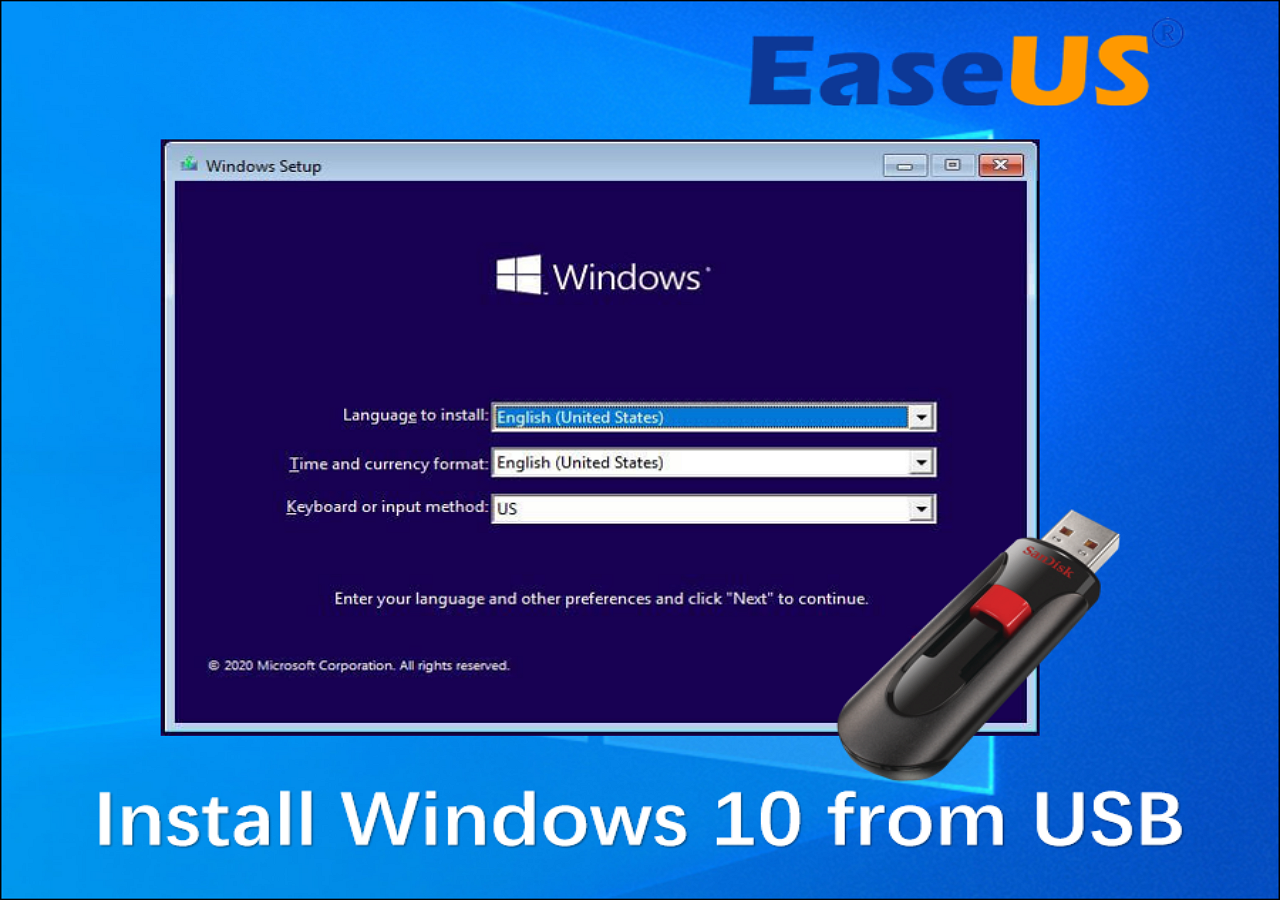
The first screen you’ll encounter is the “Windows Setup” window. Here, you’ll select:
- Language to install: Choose your preferred language.
- Time and currency format: Select your region.
- Keyboard or input method: Choose your keyboard layout.
Click “Next,” then click “Install now” to begin the process.
Entering the Product Key (or Skipping)
You’ll be prompted to enter your product key.
- If you have one, enter it now.
- If you’re reinstalling Windows on a machine that previously had an activated digital license, you can often click “I don’t have a product key” and Windows will automatically activate after installation once connected to the internet.
- You can also enter the key later after installation.
Click “Next.”
Choosing Installation Type: Upgrade vs. Custom
You’ll be presented with two installation options:
- Upgrade: Install Windows and keep files, settings, and applications: This option is for upgrading an existing Windows version while retaining your data. It’s generally not recommended for a “clean” installation.
- Custom: Install Windows only (advanced): This is the option you want for a fresh installation. It allows you to partition and format your hard drive. Select this option.
Disk Partitioning and Drive Selection
This is a critical step where you decide where Windows will be installed.
- Identify Your Drive: You’ll see a list of drives and partitions. Carefully identify the drive where you want to install Windows. It might be labeled “Drive 0” or “Drive 1.” Be very cautious here, as formatting the wrong drive will lead to data loss.
- Delete Existing Partitions (for a truly clean install): If you want to start fresh, select each partition on your target drive (e.g., “Drive 0 Partition 1,” “Drive 0 Partition 2,” etc.) and click “Delete.” This will turn the entire drive into “Unallocated Space.”
- Create New Partition (Optional but Recommended): Select the “Unallocated Space” and click “New.” Windows will usually suggest the maximum available size. Apply, and it will automatically create necessary system partitions (e.g., for recovery, EFI).
- Select Target Partition: Choose the main partition you’ve just created (or an existing one if you didn’t delete everything) and click “Next.”
Windows will now begin copying files and installing. Your computer will restart several times during this process. Do not remove the USB drive until after the first major restart when Windows has copied most files and is preparing to boot from the internal drive. It’s safe to remove it once you see the “Getting devices ready” or similar screens after the first full reboot.
Completing the Installation
After the final restarts, Windows will guide you through the initial setup screens:
- Region and Keyboard Layout: Confirm your country/region and keyboard layout.
- Network Connection: Connect to a Wi-Fi or Ethernet network.
- Microsoft Account/Local Account: Sign in with your Microsoft account or choose to create a local offline account (though Microsoft often steers you towards an online account).
- Privacy Settings: Configure your privacy settings.
- Cortana, OneDrive, etc.: Make choices about various Windows features.
Once these steps are complete, you’ll be taken to the Windows desktop. Congratulations, Windows is now installed!
Post-Installation Essentials and Optimization
Installing Windows is just the first step. To ensure your system runs smoothly, securely, and efficiently, a few crucial post-installation tasks are necessary.
Driver Installation: The Foundation of Performance
Drivers are essential software components that allow your operating system to communicate with your hardware (graphics card, motherboard chipset, network adapter, sound card, etc.). While Windows often installs generic drivers during setup, they may not offer optimal performance or full functionality.
- Check Device Manager: Right-click the Start button and select “Device Manager.” Look for any devices with a yellow exclamation mark, indicating a missing or problematic driver.
- Visit Manufacturer Websites: Go to the official websites of your PC manufacturer (Dell, HP, Lenovo, etc.) or individual component manufacturers (NVIDIA, AMD, Intel, Realtek). Download and install the latest drivers for your specific model, especially for the chipset, graphics card, network adapter (Wi-Fi/Ethernet), and audio.
- Use Manufacturer Utilities: Many manufacturers provide their own driver update utilities (e.g., Dell SupportAssist, HP Support Assistant, Lenovo Vantage). These can automate the driver installation process.
Windows Updates: Staying Secure and Current
Immediately after installing drivers, run Windows Update to ensure your operating system has the latest security patches, bug fixes, and feature enhancements.
- Access Windows Update: Go to “Settings” > “Update & Security” (Windows 10) or “Settings” > “Windows Update” (Windows 11).
- Check for Updates: Click “Check for updates” and allow Windows to download and install any available updates. This may require multiple restarts.
- Optional Updates: Periodically check for “Optional updates,” as these sometimes contain important driver updates or non-critical feature enhancements.
Keeping Windows updated is paramount for system stability, security against new threats, and compatibility with the latest software and hardware.
Software Installation and Personalization
With drivers and updates in place, you can now install your essential applications and personalize your system.
- Web Browser: Install your preferred web browser (Chrome, Firefox, Edge, etc.).
- Productivity Suite: Install office software (Microsoft Office, LibreOffice, Google Workspace apps).
- Security Software: Even with Windows Defender, consider a reputable third-party antivirus solution for an additional layer of protection, especially if you handle sensitive data.
- Utility Software: Any other tools you rely on (archivers, media players, PDF readers, etc.).
- Personalization: Customize your desktop background, themes, sound schemes, and Start menu layout to make Windows feel like your own.
Digital Security Measures
Beyond antivirus software, take these steps to enhance your system’s security:
- Strong Passwords: Use strong, unique passwords for your user accounts and any online services. Consider a password manager.
- Firewall: Ensure Windows Defender Firewall is enabled and configured correctly.
- User Account Control (UAC): Keep UAC enabled to prevent unauthorized changes to your system.
- Regular Backups: While you just performed a clean install, continue a routine backup strategy for your new data and important files.
Troubleshooting Common Issues
Even with careful preparation, unforeseen issues can arise during or after the installation. Here are solutions to some common problems.
“USB Not Recognized” or “Cannot Boot from USB”
- Check Boot Order: Re-enter BIOS/UEFI and ensure your USB drive is prioritized in the boot order or selected from the boot menu.
- Verify USB Drive: Try the USB drive in another port or on another computer. Ensure it’s not faulty.
- Recreate Bootable USB: If the drive itself seems fine, try recreating the bootable USB using the Media Creation Tool or Rufus, ensuring all steps are followed precisely.
- Partition Scheme (Rufus): If you used Rufus, double-check that you selected the correct partition scheme (GPT for UEFI, MBR for BIOS) for your computer.
- Secure Boot/Legacy Mode: In BIOS/UEFI, sometimes disabling “Secure Boot” or enabling “CSM” (Compatibility Support Module) or “Legacy Mode” can help with older hardware or specific USB configurations.
Driver Issues During Installation (“A media driver your computer needs is missing”)
This usually occurs when the Windows installer cannot find the necessary drivers for the storage controller (NVMe drives are common culprits on older ISOs) or USB ports.
- Update ISO: Try creating the bootable USB with a newer Windows ISO, which may include more updated drivers.
- Manual Driver Loading: Download the storage controller drivers for your motherboard/laptop from the manufacturer’s website onto a separate USB drive. During the Windows installation, when prompted about the missing driver, select “Load driver” and point it to the driver files on the second USB drive.

Disk Partitioning Errors (“Windows can’t be installed on this drive”)
- Incorrect Partition Scheme: This error often indicates a mismatch between your drive’s partition style (GPT/MBR) and your BIOS/UEFI boot mode (UEFI/Legacy). If your drive is MBR and your system is in UEFI boot mode, or vice-versa, you’ll see this.
- Solution 1 (Recommended): Change the boot mode in BIOS/UEFI (e.g., enable Legacy Mode for MBR drives, or ensure UEFI is enabled for GPT drives).
- Solution 2 (Data Destructive): Convert the drive. During the disk selection step, delete all partitions on the target drive to create “Unallocated Space.” Then, open Command Prompt (Shift+F10), use
diskpartcommands (select disk X,clean,convert gptorconvert mbr) to convert the drive. Then close Command Prompt and refresh the disk list.
- Damaged Drive: In rare cases, the hard drive or SSD itself might be faulty.
Installing Windows by USB is a straightforward and empowering process that gives you complete control over your operating system environment. By carefully following the steps outlined in this guide, you can confidently prepare your installation media, configure your system, and enjoy a fresh, optimized Windows experience. Remember, proper preparation and diligent troubleshooting are key to a successful installation.
aViewFromTheCave is a participant in the Amazon Services LLC Associates Program, an affiliate advertising program designed to provide a means for sites to earn advertising fees by advertising and linking to Amazon.com. Amazon, the Amazon logo, AmazonSupply, and the AmazonSupply logo are trademarks of Amazon.com, Inc. or its affiliates. As an Amazon Associate we earn affiliate commissions from qualifying purchases.