
In the world of high-stakes finance and professional gaming, the line between “gambling” and “investing” is often defined by a single factor: the quality of the decision-making process. In poker, one of the most powerful tools in a professional’s arsenal is the “3-bet.” While the term might sound like jargon to the uninitiated, for those who view poker through the lens of personal finance and online income, the 3-bet represents a sophisticated strategy for resource allocation, risk management, and ROI maximization.
At its core, a 3-bet is the third bet in a sequence during a poker hand—specifically, a re-raise against an initial raiser. To the casual observer, it is an aggressive move. To the financial strategist, it is a calculated deployment of capital designed to thin the field, seize the “pot equity,” and capitalize on the mathematical vulnerabilities of the opposition. Understanding the 3-bet is essential for anyone looking to transition from a casual player to a disciplined individual treating the game as a legitimate side hustle or investment vehicle.

1. The Mechanics of the 3-Bet: Strategic Resource Allocation
To understand the 3-bet from a financial perspective, we must first understand the sequence of capital deployment. In a standard game of No-Limit Texas Hold’em, the “1-bet” is the posting of the blinds (the mandatory starting capital). The “2-bet” is the first voluntary open-raise by a player. The “3-bet,” therefore, is the act of re-raising that initial player.
The Anatomy of the Play
In any financial transaction, the first person to set a price has the disadvantage of revealing information. When a player opens the pot (the 2-bet), they are expressing interest in an “asset” (the pot). When you 3-bet, you are essentially making a counter-offer. You are telling the market that your “hand” (your internal data) justifies a higher valuation. This forces the initial raiser to decide whether to “call” (match your price), “4-bet” (raise you back), or “fold” (liquidate their interest and lose their initial investment).
Linear vs. Polarized Ranges
Professional investors diversify their portfolios; professional poker players diversify their 3-betting ranges.
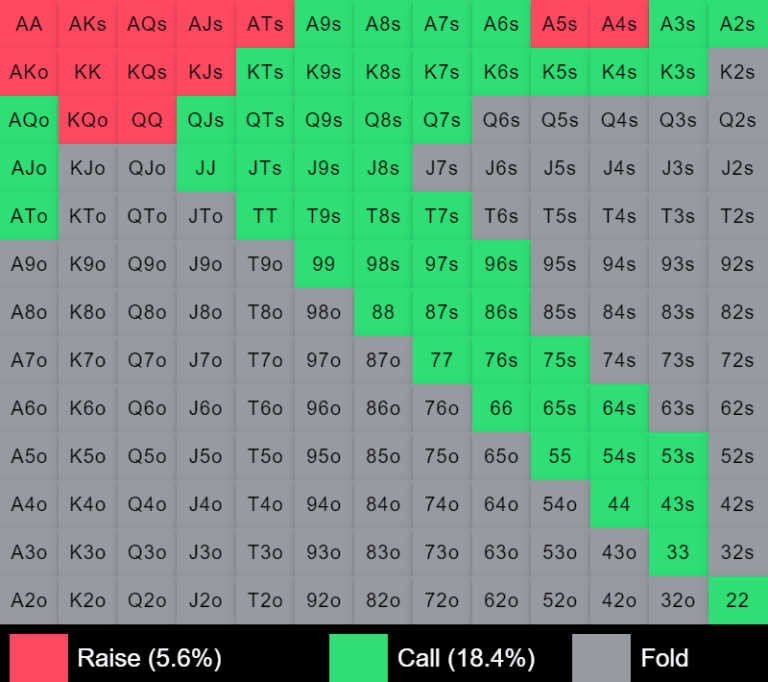
- Linear Ranges: This involves 3-betting only with high-value “blue-chip” hands like Pocket Aces or Kings. This is a low-risk, steady-growth strategy.
- Polarized Ranges: This involves 3-betting with both the top-tier hands and “speculative” hands (like suited connectors) that have high growth potential but low current value. This strategy is designed to keep opponents off-balance, much like a venture capitalist might balance a portfolio between established bonds and high-risk startups.
Positional Advantage as Market Leverage
In finance, the “first-mover advantage” is often discussed, but in poker, the “last-mover advantage” (position) is where the money is made. 3-betting “in position”—meaning you act after your opponent in subsequent rounds—is the equivalent of having superior market information. It allows you to control the size of the “investment” (the pot) and dictates the pace of the transaction.
2. The Economics of Aggression: Maximizing ROI and Fold Equity
In the context of money management, why would one choose to 3-bet rather than simply “calling” a raise? The answer lies in the concept of Expected Value (EV). A 3-bet creates two ways to win, whereas a call only creates one.
The Power of Fold Equity
“Fold equity” is a term that represents the additional value you gain when your opponent forfeits their share of the pot. When you 3-bet, you exert financial pressure. If your opponent folds, you realize 100% of the pot’s value immediately without having to see any more cards. This is the ultimate “low-risk” outcome. In business terms, this is akin to a pre-emptive strike that causes a competitor to withdraw from a niche, leaving you with the entire market share without a costly price war.
Protecting Your Equity
When multiple players enter a pot by “calling,” the value of your hand decreases. This is known as “equity dilution.” By 3-betting, you “thin the field.” You are essentially buying out the minority shareholders to ensure that if the hand goes to a showdown, you have the highest possible probability of winning. From a personal finance standpoint, this is about protecting your capital from “variance”—the statistical noise that can lead to short-term losses.
The Value 3-Bet vs. The Light 3-Bet
A “Value 3-bet” is made when you are confident your hand is superior to the opponent’s range. You are “investing” more capital because you expect a high return. A “Light 3-bet” (or a 3-bet bluff) is an opportunistic play based on the opponent’s tendency to “over-fold.” This is a form of arbitrage—exploiting an inefficiency in the opponent’s strategy to secure a profit with a sub-optimal asset.

3. Risk Management and Bankroll Preservation
Treating poker as a financial tool requires a strict adherence to bankroll management (BRM). The 3-bet is a high-variance tool; if used improperly, it can lead to “ruin.” However, when used correctly, it is a primary driver of bankroll growth.
Calculating the Risk-to-Reward Ratio
Before executing a 3-bet, a disciplined player calculates the “Alpha”—the percentage of the time an opponent must fold for the play to be immediately profitable. If you risk 9 units to win a pot of 12 units, your “breakeven” point is easily calculated. If the market (the opponent) folds more often than that mathematical threshold, the 3-bet becomes a “positive EV” investment. This is no different from a trader calculating the stop-loss and take-profit levels on a stock trade.
Mitigating Variance with Solvers and GTO
Modern poker technology uses “GTO” (Game Theory Optimal) solvers. These are essentially AI-driven financial models that tell a player the exact frequency they should 3-bet in any given scenario. By following these models, a player can remove emotion from the equation. In the same way an index fund removes the guesswork from stock picking, GTO-based 3-betting strategies provide a roadmap for long-term financial sustainability in the game.
The “Sunk Cost Fallacy” in 3-Bet Pots
One of the greatest dangers in personal finance is throwing “good money after bad.” This is the sunk cost fallacy. In a 3-bet pot, the stakes are higher and the pot is larger. A common mistake for amateur players is feeling “committed” to a pot simply because they 3-bet pre-flop. A professional recognizes when the market conditions have changed (e.g., a dangerous flop) and is willing to “cut their losses,” preserving the remainder of their bankroll for more favorable opportunities.
4. Poker as a Side Hustle: Scaling Your Financial Strategy
For many, poker serves as a viable online income stream. To scale this “business,” one must move beyond the basics of the 3-bet and understand how it integrates into a broader financial plan.
Compounding Gains through Aggressive Play
The difference between a 2% win rate and a 5% win rate often comes down to the efficiency of one’s 3-betting strategy. By successfully 3-betting, you win more pots without a showdown and you build larger pots when you have the best hand. Over thousands of hands, these small incremental gains compound, significantly increasing your hourly “wage.”
Exploitative 3-Betting: Finding Market Inefficiencies
In a “perfect” market, everyone would play GTO. However, the poker market is far from perfect. Many players “over-fold” to 3-bets because they are playing too conservatively with their capital. Identifying these “nits” allows you to 3-bet them with a very wide range, essentially “printing money” at their expense. Conversely, against “calling stations” who never fold, you adjust by only 3-betting for pure value. This is the essence of market adaptation.
Data-Driven Improvement
To treat 3-betting as a professional endeavor, one must use tracking software (like PokerTracker or Hold’em Manager). These tools provide a “3-bet percentage” stat. If your 3-bet percentage is too low (e.g., 3%), you are “under-investing” and leaving money on the table. If it is too high (e.g., 15%), you are “over-leveraged” and vulnerable to being exploited by savvy “investors” who will 4-bet you light. The goal is to find the “Goldilocks zone” of aggression that maximizes profit while minimizing risk.
Conclusion: The Professional Mindset
The 3-bet is far more than a move in a card game; it is a manifestation of an aggressive, disciplined, and mathematically-sound financial strategy. By understanding the mechanics of resource allocation, the economics of fold equity, and the rigors of risk management, a player transforms the poker table into a boardroom.
In any “Money” niche—whether it be real estate, stocks, or poker—success is predicated on the ability to take calculated risks when the odds are in your favor. Mastering the 3-bet ensures that you are not just a participant in the game, but a sophisticated operator capable of generating consistent returns and protecting your capital against the whims of chance. Whether you are looking for a side hustle or a deep dive into game theory as a financial exercise, the 3-bet remains the ultimate benchmark of a profitable player.
aViewFromTheCave is a participant in the Amazon Services LLC Associates Program, an affiliate advertising program designed to provide a means for sites to earn advertising fees by advertising and linking to Amazon.com. Amazon, the Amazon logo, AmazonSupply, and the AmazonSupply logo are trademarks of Amazon.com, Inc. or its affiliates. As an Amazon Associate we earn affiliate commissions from qualifying purchases.