
For centuries, “what happened to the moon today” was a question answered by simple observation—a glance upward to note its phase or position in the night sky. However, in the modern era, the answer to that question is driven by a sophisticated ecosystem of technology, ranging from high-resolution imaging satellites to AI-driven data analysis. Today, the moon is no longer just a distant celestial body; it is a high-tech laboratory and a digital frontier. The technology we use to monitor the moon has evolved at an exponential rate, allowing us to track lunar seismic activity, atmospheric changes, and surface impacts with millisecond precision.

The Evolution of Lunar Imaging: From Grainy Film to AI Enhancement
The most immediate way we understand what is happening to the moon today is through imaging. In the past decade, the transition from traditional optical telescopes to computational photography has revolutionized our visual data. We are no longer limited by the “seeing” conditions of Earth’s atmosphere or the hardware constraints of long-range lenses.
Computational Photography and the Moon
Modern lunar observation relies heavily on computational photography—the same technology that powers the high-end cameras in our smartphones, but scaled for astronomical distances. When a high-powered telescope captures the moon today, it isn’t just taking a single “photo.” It is capturing thousands of frames per second. Software algorithms then analyze these frames to “de-noise” the image, removing the distortion caused by Earth’s atmospheric turbulence. This process, known as “lucky imaging,” allows tech-savvy astronomers to produce ultra-sharp visuals that were once only possible for NASA-funded projects. Today’s software can stitch these images together to create 3D topological maps, allowing us to see what happened in a specific crater with stunning clarity.
Synthetic Aperture Radar (SAR) and Subsurface Discovery
Beyond the visible spectrum, we use Synthetic Aperture Radar (SAR) to see what is happening beneath the moon’s surface. Unlike traditional optical cameras, SAR sends microwave pulses to the lunar surface and measures the time it takes for them to bounce back. This tech allows us to map the moon regardless of lighting conditions—whether it is in the “dark” phase or obscured by shadows. Today, SAR technology is being used to hunt for lunar ice in the permanently shadowed regions of the south pole. By analyzing the dielectric properties of the return signals, computers can distinguish between solid rock and frozen volatiles, providing a real-time update on the moon’s potential resources.
The Infrastructure of the Modern Lunar Economy
When we ask what happened to the moon today, we are often asking about the status of human-made technology currently residing on or orbiting the lunar surface. We are currently witnessing a shift from sporadic exploration to permanent technological infrastructure.
The Role of Edge Computing on the Lunar Surface
One of the most significant tech trends affecting the moon today is the implementation of edge computing. In the early days of Apollo, every bit of data had to be sent back to Earth for processing, causing significant latency. Today’s lunar landers and rovers are equipped with powerful onboard processors that allow them to make decisions in real-time. For example, autonomous rovers use computer vision and edge AI to navigate the treacherous lunar terrain. Instead of waiting for a command from a technician in Houston, the rover’s “brain” identifies a boulder, calculates a new path, and executes the maneuver instantly. This autonomy is crucial for understanding the immediate changes on the lunar surface, such as the movement of regolith or the impact of solar radiation on hardware.
High-Bandwidth Laser Communications
Connectivity is the backbone of modern lunar tech. Traditional radio frequency (RF) communications are becoming a bottleneck as we demand more data from our lunar missions. Today, NASA and private tech firms are transitioning to Laser Communications Relay (LaserCom). By using infrared light instead of radio waves, we can transmit data at rates up to 100 times higher than previous systems. This means that “what happened to the moon today” can be transmitted in 4K video streams rather than slow-moving text files. This high-bandwidth pipe allows for the real-time monitoring of lunar environmental sensors, giving us a second-by-second account of the lunar “weather” and magnetic field fluctuations.

Automated Monitoring: How We Track Lunar Events in Real-Time
The moon is not a dead rock; it is a geologically active body that interacts with the space environment. To keep track of these events, a global network of automated sensors and software tools works tirelessly behind the scenes.
Seismometers and the Tech of “Moonquakes”
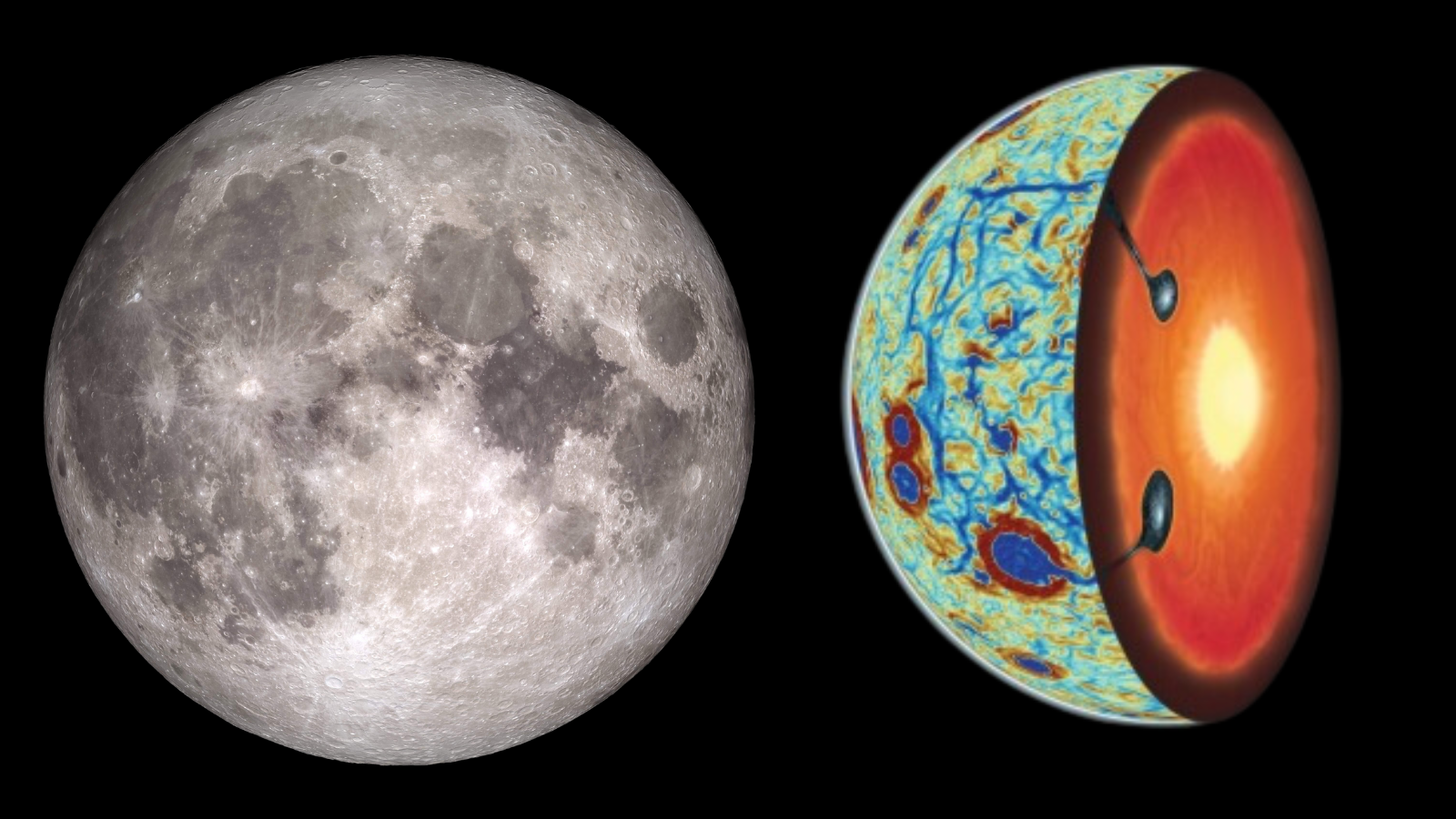
One of the most fascinating technological developments is our ability to monitor “moonquakes.” Today, advanced seismometers—some left by previous missions and others being deployed by new commercial landers—detect the faint vibrations caused by the moon’s internal cooling and the gravitational pull of the Earth. This data is fed into cloud-based platforms where machine learning models filter out “noise” from the lander’s own mechanical movements. By analyzing these seismic waves, scientists use tech to “see” the internal structure of the moon, effectively performing an ultrasound on a planetary scale to understand its current geological state.
Autonomous Impact Detection Systems
The moon is constantly bombarded by meteoroids. Because it lacks an atmosphere to burn these rocks up, every impact is a significant event. Modern monitoring involves a network of automated ground-based telescopes equipped with software that detects “transient lunar phenomena.” When a flash of light is detected on the lunar surface, the software immediately alerts other telescopes to pivot and confirm the event. Within minutes, AI algorithms can calculate the size of the impactor and the resulting crater size. This automated tech stack ensures that no “event” on the moon goes unrecorded, providing a 24/7 news feed of lunar impacts.
Consumer-Grade Tech: Bringing the Moon to Your Pocket
Perhaps the most impactful change in how we understand what happened to the moon today is the democratization of space technology. The tools once reserved for elite scientists are now available to anyone with a smartphone and an internet connection.
Augmented Reality (AR) Sky Gazing
For the average person, AR tech has changed the way we interact with the moon. Apps like SkySafari or Star Walk use the gyroscope and GPS in your phone to overlay digital data onto the physical sky. When you point your phone at the moon, you aren’t just seeing a white disk; you are seeing a digital overlay of every landing site, every named crater, and the real-time position of the Lunar Reconnaissance Orbiter (LRO). This tech bridges the gap between the distant celestial body and our daily lives, making “what happened to the moon” a tangible, interactive experience.
Predictive Modeling and Orbital Mechanics
Behind every “Moon Phase” app is a complex engine of predictive modeling. Using high-precision orbital mechanics algorithms, software can predict the exact appearance of the moon for thousands of years in the future—or reconstruct it for the past. This tech is used by photographers to plan “moon alignment” shots and by hobbyists to track upcoming lunar eclipses. The level of precision is staggering; we can now calculate the exact second the sun’s light will hit a specific mountain peak on the moon (a phenomenon known as a “Lunar X”). This predictive tech turns the moon into a scheduled, predictable clock, allowing us to plan our observations with pinpoint accuracy.
Conclusion: A New Era of Lunar Awareness
“What happened to the moon today” is no longer a question of simple curiosity; it is a data-driven inquiry supported by a massive technological framework. From the AI that enhances our photos to the laser beams that carry our data, technology has brought the moon closer than ever before. We have moved from being passive observers to active monitors of the lunar environment.
As we look toward the future, the tech will only become more integrated. We are moving toward a “Lunar Internet,” where a constellation of satellites will provide GPS and high-speed data across the entire lunar surface. When that happens, knowing what is occurring on the moon will be as instantaneous and effortless as checking the weather on Earth. The moon is the next great frontier for technology, and every day, the tools we use to understand it become faster, smarter, and more insightful. Through the lens of modern tech, the moon is no longer a mystery—it is a measurable, manageable, and magnificent world that we are just beginning to fully understand.
aViewFromTheCave is a participant in the Amazon Services LLC Associates Program, an affiliate advertising program designed to provide a means for sites to earn advertising fees by advertising and linking to Amazon.com. Amazon, the Amazon logo, AmazonSupply, and the AmazonSupply logo are trademarks of Amazon.com, Inc. or its affiliates. As an Amazon Associate we earn affiliate commissions from qualifying purchases.