
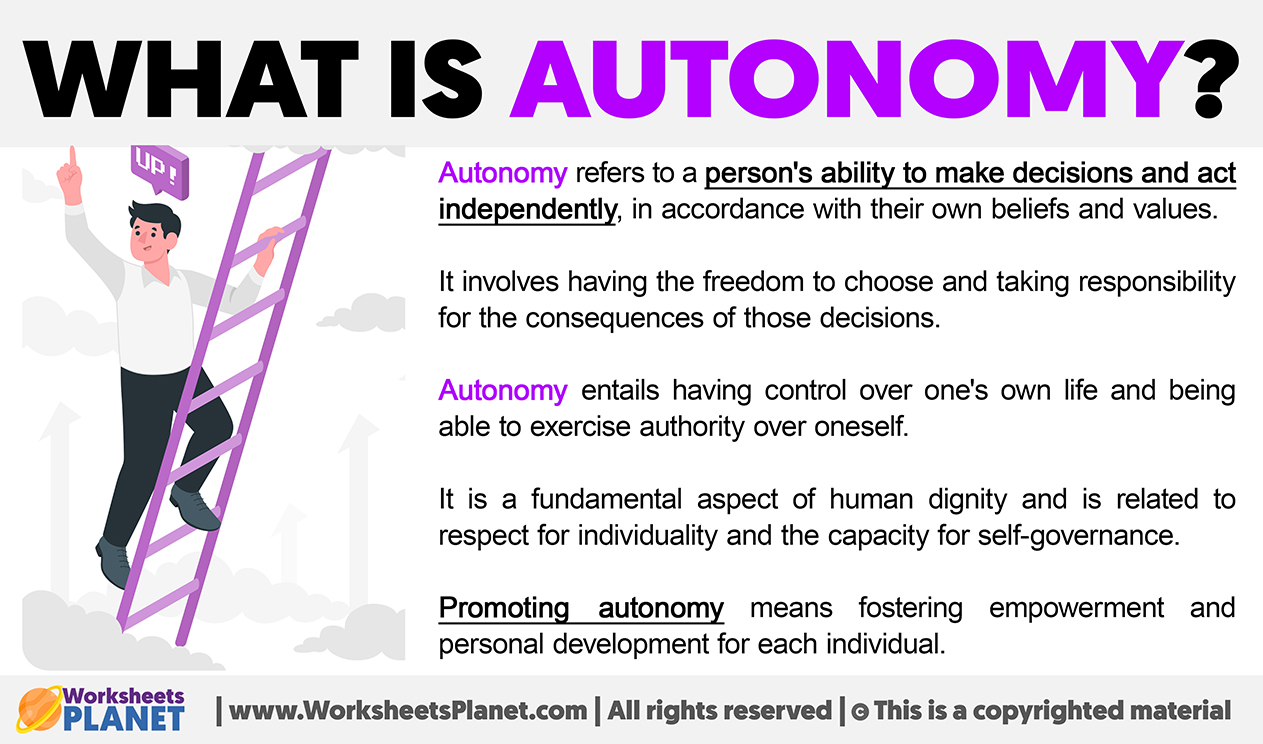
In the traditional sense, autonomy is derived from the Greek words autos (self) and nomos (law). For centuries, the term was primarily the domain of philosophy and political science, describing the capacity of a person or a state to self-govern and make independent decisions. However, as we move deeper into the 21st century, the definition of autonomy has undergone a radical transformation. In the context of modern technology, autonomy no longer refers to human willpower, but rather to the ability of hardware and software to operate, adapt, and make decisions without human intervention.

Understanding what autonomy means today requires a deep dive into how machines “think” and act. It is the bridge between simple automation—where a machine follows a rigid script—and true artificial intelligence, where a system can navigate unforeseen variables. This article explores the technological nuances of autonomy, from the algorithms driving software agents to the sensors guiding robotic hardware.
The Evolution of Autonomy: From Automation to Self-Governance
To understand autonomy in tech, one must first distinguish it from automation. While the terms are often used interchangeably in casual conversation, they represent two different stages of technological evolution.
From Human Control to Machine Independence
Historically, machines were tools that required constant human input. A hammer, a steam engine, or even an early calculator had no “agency.” Automation was the first step toward reducing human labor; it involves a system performing a repetitive task based on a pre-defined set of instructions. For example, a factory arm that moves a part from Point A to Point B is automated. It is efficient, but it is not autonomous. If the part is missing, or if Point B is blocked, the automated arm will likely continue its motion or fail because it cannot “decide” how to handle the deviation.
Autonomy introduces the element of choice. An autonomous system is equipped with sensors and logic that allow it to perceive its environment, process information, and choose a course of action to achieve a specific goal. In this context, autonomy means the delegation of decision-making authority from a human operator to a digital system.
The Spectrum of Automation vs. Autonomy
Technology exists on a spectrum of autonomy. At the lower end, we have “human-in-the-loop” systems, where the machine assists the human. At the higher end, we find “human-out-of-the-loop” systems, where the machine operates entirely on its own. The transition from one to the other is fueled by machine learning (ML). As systems are exposed to more data, they develop the ability to predict outcomes and optimize their behavior. This shift changes the role of the human from a “pilot” to an “architect” or “supervisor,” overseeing the goals rather than the individual actions.
The Rise of Autonomous AI and Software Agents
The software world is currently witnessing a revolution in “Agentic AI.” This is the pinnacle of software autonomy, where Large Language Models (LLMs) and other AI architectures are no longer just answering questions, but are acting as agents that execute complex workflows.
Large Language Models and Agentic Workflows
In the early days of generative AI, the technology was passive. A user would provide a prompt, and the AI would provide a response. Today, autonomy in AI means the creation of “agents” like AutoGPT or specialized AI assistants that can break down a high-level goal into smaller tasks.
For instance, if you ask an autonomous agent to “research a market and create a competitive analysis report,” the software doesn’t just write text. It autonomously decides to browse the web, identifies relevant sources, extracts data, synthesizes the information, and formats the final document. The autonomy lies in the software’s ability to determine the “how” after being given the “what.”
Self-Correcting Code and Automated DevOps
In the realm of software engineering, autonomy is manifesting in self-healing systems and automated DevOps. Modern cloud infrastructure is becoming increasingly autonomous through “Infrastructure as Code” (IaC). When a server fails or traffic spikes unexpectedly, autonomous orchestration tools like Kubernetes don’t wait for a human engineer to wake up and fix the issue. They detect the anomaly, spin up new containers, and redistribute traffic autonomously. This “self-healing” capability is a core pillar of modern digital resilience, allowing software ecosystems to maintain uptime through autonomous maintenance.
Autonomy on the Move: Robotics and Transportation
Perhaps the most visible application of autonomy is in the physical world, specifically within the automotive and robotics industries. Here, autonomy is a matter of safety, physics, and real-time processing.
The Levels of Driving Automation
The Society of Automotive Engineers (SAE) has defined six levels of driving automation, which serve as the industry standard for defining what autonomy means on the road.
- Levels 0-2 involve driver support features, where the human is still the primary operator.
- Level 3 (Conditional Automation) allows the vehicle to drive itself under specific conditions, but the human must be ready to take over.
- Level 4 (High Automation) enables the vehicle to operate without human intervention in defined areas or conditions.
- Level 5 (Full Automation) is the ultimate definition of autonomy: a vehicle that can go anywhere a human driver can go, in any condition, without a steering wheel or pedals.
At Level 5, the word autonomy translates to a complete replacement of human cognitive and motor skills with a suite of LiDAR, radar, cameras, and neural networks.
Drones and Industrial Robotics in Logistics
Beyond passenger cars, autonomy is transforming logistics through drones and warehouse robots. Companies like Amazon and Ocado utilize autonomous mobile robots (AMRs) that navigate massive fulfillment centers. Unlike older “automated” robots that followed magnetic strips on the floor, these autonomous units use SLAM (Simultaneous Localization and Mapping) technology. This allows them to build a map of their environment in real-time and navigate around obstacles or human workers. This level of autonomy is essential for the high-speed, high-complexity demands of modern e-commerce.
The Infrastructure of Autonomy: Edge Computing and IoT
For a device to be truly autonomous, it cannot always rely on a distant data center to tell it what to do. The delay (latency) caused by sending data to the cloud and back can be catastrophic for an autonomous drone or a robotic surgeon. This has led to the rise of “Edge Autonomy.”
Processing Data at the Source
Autonomy requires real-time intelligence. This is where Edge Computing comes in. By placing high-performance processors directly on the device (the “edge” of the network), tech companies allow machines to make autonomous decisions in milliseconds. A self-driving car, for example, processes terabytes of data locally because a split-second delay in braking could be the difference between safety and a collision. In this tech niche, autonomy means the decentralization of intelligence.
Decentralized Systems and Smart Contracts
In the world of Web3 and blockchain, autonomy takes a different form: programmatic autonomy. Smart contracts are autonomous scripts that execute automatically when certain conditions are met. There is no middleman or central authority to “approve” the transaction. This creates “Autonomous Organizations” (DAOs), where the rules of the entity are hardcoded into the software. Here, autonomy means a system that is immune to external interference, operating strictly according to its programmed logic.
Ethical Challenges and the Future of Autonomous Systems
As we grant more autonomy to machines, we face a new set of technological and ethical challenges. The more “autonomous” a system becomes, the less transparent its decision-making process often is.
The Black Box Problem and Algorithmic Accountability
Many autonomous systems rely on deep learning, a type of AI that can be incredibly accurate but difficult to interpret. This is known as the “Black Box” problem. If an autonomous vehicle makes a mistake, engineers must be able to trace the logic of the algorithm to prevent future errors. The tech industry is currently pivoting toward “Explainable AI” (XAI) to ensure that machine autonomy does not come at the cost of accountability. We are learning that for autonomy to be successful, it must be paired with observability.

Redefining the Human-in-the-Loop Framework
The future of autonomy is not necessarily the total removal of humans, but the refinement of the “Human-in-the-loop” (HITL) model. As machines take over more autonomous functions, the human role shifts toward setting ethical boundaries, defining objectives, and intervening in “edge cases” that the AI hasn’t been trained for. The goal of autonomy in tech is ultimately to augment human capability, freeing us from the mundane and the dangerous, while allowing us to focus on high-level strategy and creative problem-solving.
In conclusion, “autonomy” in the tech world is a multifaceted concept. It represents a shift from machines as static tools to machines as active, decision-making partners. Whether it is an AI agent managing a business workflow, a robot navigating a warehouse, or a smart contract executing a deal, autonomy is the engine of the next industrial revolution. As we continue to develop these self-governing systems, the challenge will be to balance their independence with our need for safety, transparency, and control.
aViewFromTheCave is a participant in the Amazon Services LLC Associates Program, an affiliate advertising program designed to provide a means for sites to earn advertising fees by advertising and linking to Amazon.com. Amazon, the Amazon logo, AmazonSupply, and the AmazonSupply logo are trademarks of Amazon.com, Inc. or its affiliates. As an Amazon Associate we earn affiliate commissions from qualifying purchases.