
While the human eye is limited to a narrow band of the electromagnetic spectrum known as visible light, the technological landscape of the 21st century is increasingly defined by what we cannot see. Among these invisible forces, ultraviolet (UV) waves stand out as one of the most versatile and critical tools in modern engineering. From the microscopic etching of silicon wafers to the high-stakes world of digital security and aerospace communication, ultraviolet waves are the “invisible architects” of the digital age.
To understand what ultraviolet waves are in a technological context, we must look beyond their biological effects and focus on their unique physical properties—short wavelengths and high photon energy—which allow them to interact with matter in ways that visible light simply cannot.
Understanding the Physics: The High-Frequency Foundation of Tech
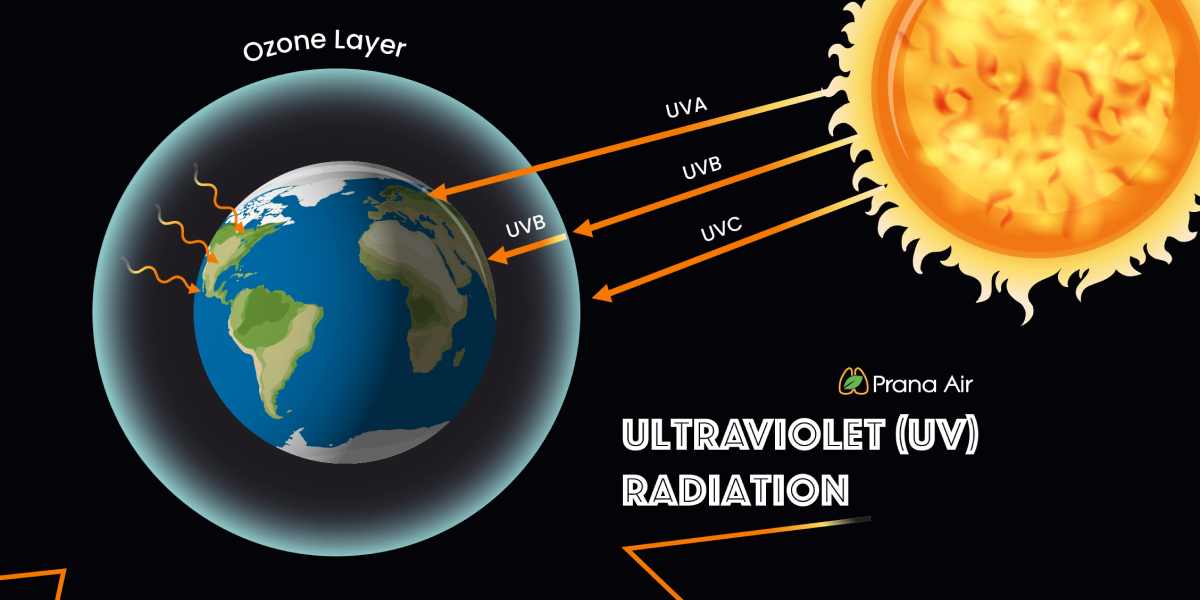
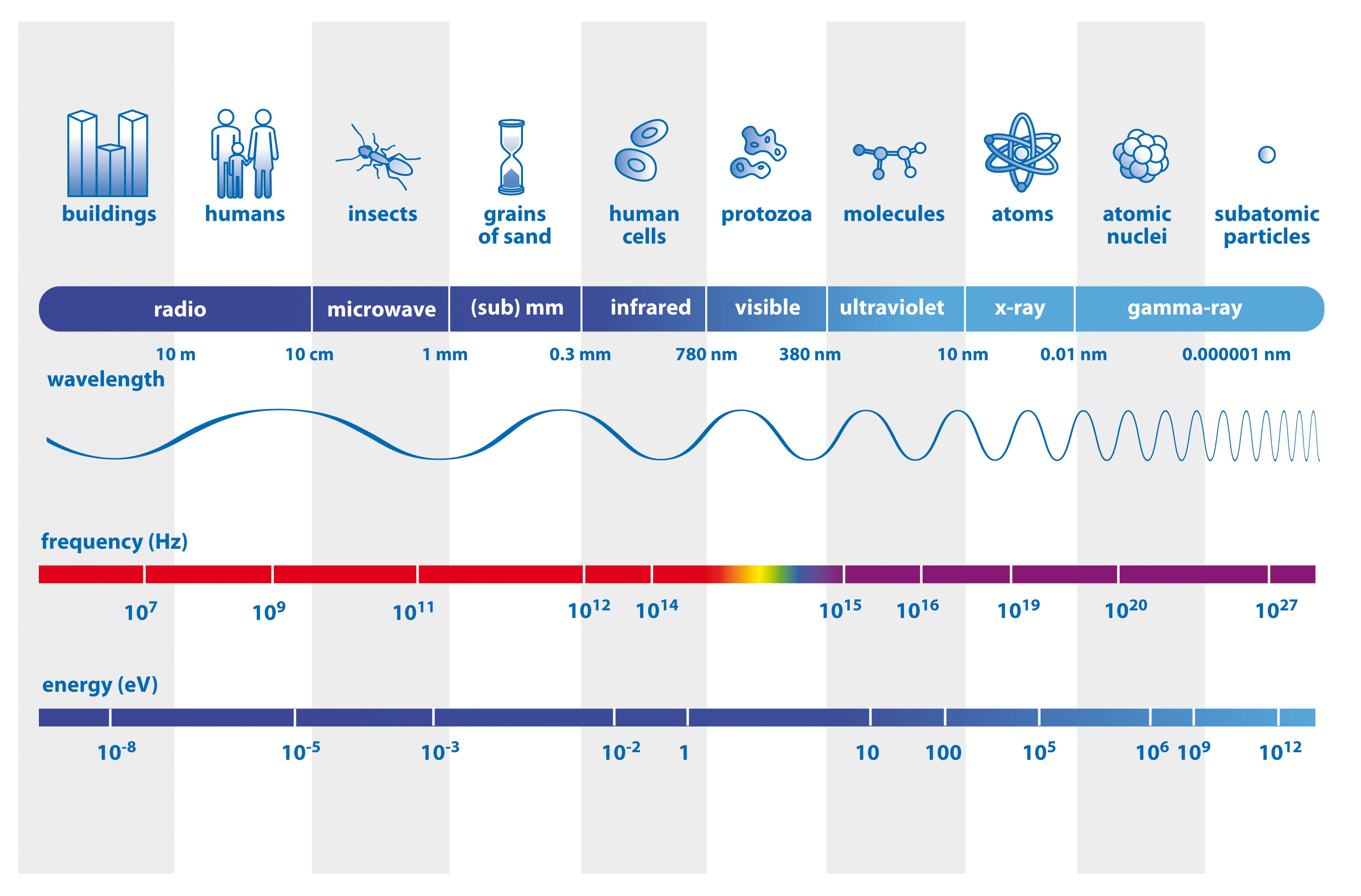
At its core, ultraviolet radiation is a form of electromagnetic energy with a wavelength shorter than that of visible violet light but longer than X-rays. In the tech industry, these waves are measured in nanometers (nm), typically spanning from 10 nm to 400 nm. Because energy is inversely proportional to wavelength, UV waves pack significantly more punch than the light used in fiber-optic cables or standard LED displays.
The Electromagnetic Spectrum and Tech Integration
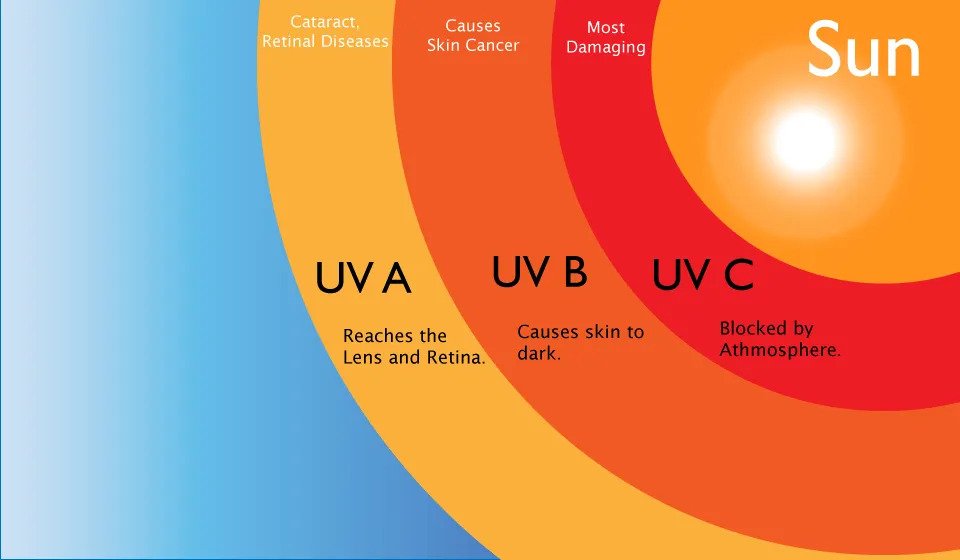
Technologists categorize UV waves into several sub-bands, each serving a distinct niche in the hardware ecosystem. UVA (315–400 nm) is frequently used in specialized printing and curing; UVB (280–315 nm) plays a role in forensic analysis and chemical sensors; and UV-C (200–280 nm) has become the gold standard for germicidal irradiation and high-precision sensors. For tech developers, the “Vacuum UV” and “Extreme UV” (EUV) ranges are the most critical, as they operate in vacuums or specialized gas environments to manipulate matter at the atomic level.
Sensors and Detection: Translating UV into Data
The ability to detect UV waves is a cornerstone of modern environmental and industrial monitoring. UV sensors, often built using wide-bandgap semiconductors like Gallium Nitride (GaN) or Silicon Carbide (SiC), allow devices to “see” in the ultraviolet spectrum. These sensors are integrated into everything from wearable health trackers that monitor solar exposure to industrial leak-detection systems that identify electrical “coronas”—unintended discharges that can signal hardware failure in power grids.
The Backbone of Modern Computing: Extreme Ultraviolet (EUV) Lithography
Perhaps the most significant application of UV waves in the tech sector is Extreme Ultraviolet (EUV) lithography. Without this specific range of the UV spectrum, the rapid advancement of Artificial Intelligence (AI) and high-performance computing would have hit a “silicon ceiling” years ago.
Shrinking the Transistor: How UV Waves Define the AI Era
The core principle of Moore’s Law—the observation that the number of transistors on a microchip doubles roughly every two years—relies on the precision of light. In traditional photolithography, deep ultraviolet (DUV) light was used to “print” circuit patterns onto silicon wafers. However, as we moved toward 7nm, 5nm, and 3nm process nodes, the wavelength of DUV (roughly 193 nm) became too “thick” to draw the incredibly fine lines required for modern processors.
Enter EUV lithography, which utilizes a wavelength of 13.5 nm. By using these much tighter ultraviolet waves, manufacturers like ASML and TSMC can etch transistors so small that tens of billions can fit on a single chip. This transition is what allows modern smartphones to possess more computing power than the supercomputers of the 1990s. EUV is the fundamental tech that enables the complex neural networks required for generative AI and high-end graphics processing.
The Geopolitics and Engineering of UV-Based Manufacturing
The mastery of ultraviolet waves is not just a scientific achievement; it is a geopolitical asset. EUV machines are among the most complex pieces of technology ever created, involving high-power CO2 lasers that strike droplets of molten tin to generate a plasma that emits UV waves. Because UV waves at this frequency are absorbed by almost everything—including air—the entire process must occur in a vacuum, using mirrors polished to an atomic level of smoothness. The control over this specific band of the UV spectrum currently dictates which nations and companies lead the global tech race.
UV Waves in Digital Security and Data Integrity
While UV waves are building our chips, they are also protecting our data and physical assets. The tech industry leverages the unique fluorescent properties of UV waves to create layers of security that are invisible to the naked eye but easily verifiable by machine vision.
Optical Security: From Hardware Authentication to Anti-Counterfeiting
In the realm of hardware security, UV-sensitive markings are used to verify the authenticity of high-value components. Counterfeit microchips are a massive problem in the global supply chain; by embedding UV-reactive signatures into the packaging or the silicon itself, manufacturers can ensure that a GPU or CPU is a genuine product. Similarly, in the financial tech (FinTech) sector, UV waves are used by automated teller machines (ATMs) and point-of-sale systems to verify the security threads and watermarks on currency and ID cards, providing a physical layer of security that complements digital encryption.
Invisible Data Encoding and UV-Sensitive Forensics
Data can also be hidden in plain sight using ultraviolet-curable inks and polymers. This “steganography” allows for the encoding of serial numbers, tracking data, or security keys on the surface of devices without affecting their aesthetic design. In digital forensics, UV light is used to inspect hardware for signs of tampering, such as microscopic scratches on a chassis or residue from unauthorized soldering, allowing security professionals to detect “evil maid” attacks or physical breaches of secure servers.
UV-C Technology: The Future of Health-Tech and Sterilization
The global events of recent years have accelerated the integration of UV-C technology into the Internet of Things (IoT) and smart infrastructure. UV-C waves, specifically those at the 254 nm and 222 nm marks, have the energy required to break the molecular bonds in the DNA and RNA of pathogens, effectively neutralizing them.
Smart Sanitation Systems and IoT Integration
Modern office buildings, data centers, and hospitals are increasingly deploying autonomous UV-C disinfection robots. These machines use LIDAR and AI to navigate spaces, bathing surfaces in ultraviolet waves to maintain sterile environments. The tech focus here is on “Far-UV-C” (222 nm), which is safe for human exposure but lethal to viruses. By integrating these UV systems with IoT sensors, facility managers can monitor disinfection cycles in real-time, creating “smart buildings” that proactively manage hygiene through light.
Safety Standards and Automation in UV Disinfection
The challenge in UV-C tech is the balance between efficacy and safety. This has birthed a new niche of “Smart UV” controllers that use motion sensors and infrared detection to ensure UV-C lamps only activate when a room is vacant. Furthermore, the development of UV-LEDs—replacing old mercury-vapor lamps—has allowed for the miniaturization of this tech, enabling portable water purification gadgets and UV-integrated HVAC systems that are more energy-efficient and environmentally friendly.
Future Frontiers: UV in Communication and Space Tech
As we exhaust the capacity of traditional radio frequency (RF) bands, tech researchers are looking to the ultraviolet spectrum for the next generation of wireless communication and deep-space exploration.
Non-Line-of-Sight (NLOS) Communication
Ultraviolet waves behave differently in the atmosphere than infrared or radio waves. Because UV light is strongly scattered by atmospheric molecules, it can be used for “Non-Line-of-Sight” (NLOS) communication. In environments where traditional signals are blocked or jammed—such as in complex industrial sites or for secure military communications—UV-based optical wireless systems can transmit data by “bouncing” UV waves off the atmosphere. This offers a low-latency, high-security alternative to Wi-Fi in specialized tech applications.
Deep Space Exploration and UV Imaging
In the world of aerospace tech, ultraviolet waves are indispensable. Telescopes like the Hubble and the upcoming class of UV-optimized satellites allow astronomers to observe high-energy phenomena, such as the birth of stars and the composition of exoplanet atmospheres. Because Earth’s atmosphere blocks most UV radiation, the technology required to capture these waves must be housed in space-hardened hardware. The advancements made in UV-sensitive CMOS sensors for space exploration often trickle down to consumer tech, improving the low-light performance and spectral range of the cameras in our pockets.
Conclusion: The Luminous Future of the Invisible
Ultraviolet waves are far more than just a component of sunlight; they are a sophisticated toolset for the modern technologist. Whether they are enabling the sub-microscopic architecture of the next AI processor, securing the global supply chain, or protecting public health through automated sanitation, UV waves are central to the progression of hardware and software.
As we continue to push the boundaries of what is possible in the semiconductor industry and wireless communication, our mastery of the ultraviolet spectrum will remain a defining characteristic of technological maturity. In the invisible dance of short wavelengths and high energy, the future of tech is being written in ultraviolet.
aViewFromTheCave is a participant in the Amazon Services LLC Associates Program, an affiliate advertising program designed to provide a means for sites to earn advertising fees by advertising and linking to Amazon.com. Amazon, the Amazon logo, AmazonSupply, and the AmazonSupply logo are trademarks of Amazon.com, Inc. or its affiliates. As an Amazon Associate we earn affiliate commissions from qualifying purchases.