
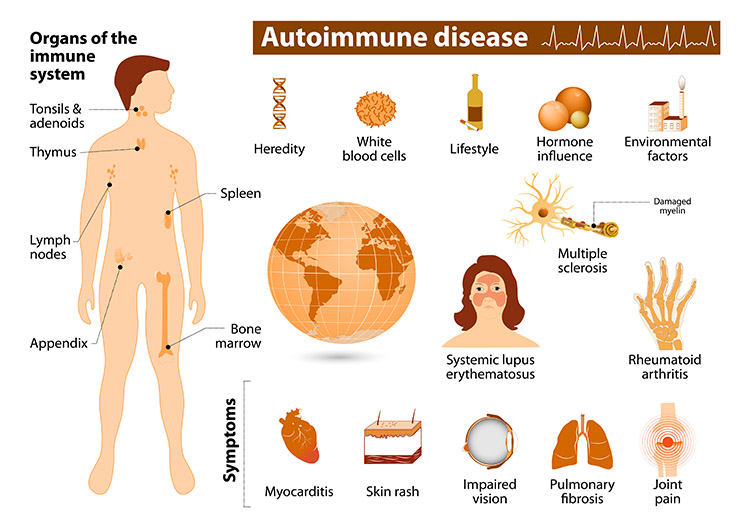
In the biological world, an autoimmune disorder occurs when the body’s immune system—the very mechanism designed to protect it—mistakenly attacks healthy cells. This internal betrayal leads to systemic failure, inflammation, and chronic instability. As our digital ecosystems become increasingly complex, interconnected, and autonomous, we are witnessing a parallel phenomenon in the realm of technology.
“Digital autoimmune disorders” are systemic failures where a tech stack’s defensive protocols, internal logic, or automated processes begin to view the system’s own healthy functions as threats. From cybersecurity tools that lock out legitimate administrators to AI models that degrade through their own recursive feedback loops, identifying these “disorders” is the first step toward building more resilient, self-healing infrastructure.
Defining Digital Autoimmunity in High-Tech Ecosystems
To understand what constitutes an autoimmune disorder in a technological context, we must look at the shift from static software to dynamic, self-governing systems. In a traditional environment, software does exactly what it is programmed to do. In a modern, AI-driven, cloud-native environment, systems are programmed to learn, adapt, and protect. It is within this “adaptive” layer that the potential for self-attack arises.
When Security Protocols Attack Legitimate Users
One of the most common tech “autoimmune” responses is found in advanced cybersecurity suites. Tools like Endpoint Detection and Response (EDR) and Managed Detection and Response (MDR) utilize behavioral heuristics to identify threats. However, when these heuristics are tuned too aggressively, the “immune system” of the network begins to identify routine administrative tasks or proprietary software updates as malicious activity.
This leads to a state of systemic paralysis. Legitimate processes are quarantined, critical servers are isolated by automated firewalls, and the business grinds to a halt not because of an external hacker, but because the security system decided the system itself was the enemy. This “false positive” crisis is the digital equivalent of an overactive immune response.
The “Cytokine Storm” of Network Traffic
In biology, a cytokine storm is a severe overreaction of the immune system that can lead to organ failure. In high-scale technology, we see a similar phenomenon in automated load balancing and auto-scaling groups. When a minor latency issue triggers an aggressive automated response, the system may begin spinning up excessive resources or rerouting traffic in a recursive loop.
This creates a feedback loop where the effort to “fix” the latency actually creates more congestion, eventually leading to a total system blackout. The technology is essentially “fighting” a ghost, consuming its own computational resources until the infrastructure collapses under the weight of its own defensive measures.
AI and Machine Learning: When Algorithms Turn on Their Creators
As Artificial Intelligence becomes the backbone of modern software, we are seeing a new class of “autoimmune disorders” related to data integrity and algorithmic logic. Because AI learns from its environment, it is susceptible to internal corruptions that can mirror chronic biological conditions.
Model Collapse and Recursive Erosion
One of the most pressing “disorders” in the AI space today is Model Collapse. This occurs when a Large Language Model (LLM) or a generative image AI is trained on data that was itself generated by an AI. As the system “consumes” its own output, the underlying data becomes homogenized. The nuances, edge cases, and “healthy” diversity of human-generated data are replaced by the artifacts and errors of previous generations.
This is a literal autoimmune response where the AI’s generative capability destroys its own intelligence. The system becomes “inbred,” losing the ability to distinguish reality from its own flawed projections. For enterprises relying on AI for decision-making, this recursive erosion can lead to catastrophic business insights based on a feedback loop of digital hallucinations.
Bias Amplification as a Systemic Malfunction
Bias in AI is often treated as a social issue, but in the context of system health, it functions as a systemic malfunction. When an algorithm is designed to optimize for a specific outcome—such as credit approval or recruitment—it may develop a “hyper-fixation.” This fixation causes the system to discard valuable, healthy data points that don’t fit its narrowed logic.
Much like an autoimmune disorder that attacks a specific organ, bias amplification attacks specific functional sectors of a business’s operations. The algorithm “attacks” the diversity of its input, leading to a rigid, fragile system that is incapable of adapting to real-world shifts, eventually resulting in regulatory failure or massive financial loss.
Software Bloat and Legacy Debt: The Chronic Conditions of Enterprise Tech
Not all autoimmune disorders in tech are sudden or violent. Some are chronic, slow-burning conditions that sap the energy and efficiency of an organization over years. These are often rooted in the “connective tissue” of the software: the APIs, dependencies, and legacy codebases.
Dependency Hell and Recursive Failures
Modern software development relies heavily on third-party libraries and open-source packages. This creates a “biological” interdependency. A “disorder” occurs when a vulnerability or an update in a minor, deeply nested dependency triggers a cascade of failures throughout the entire system.
This is often referred to as “Dependency Hell.” When a system’s internal components are no longer compatible with one another, the tech stack begins to reject its own updates. The effort required to maintain the “immune health” of the software (patching, version control, compatibility testing) eventually outweighs the value the software provides. The system becomes “auto-allergic” to innovation; every attempt to add a new feature triggers a breakdown in a seemingly unrelated part of the architecture.
The High Cost of Technical “Inflammation”
In medical terms, inflammation is the body’s response to irritation or injury. In technology, “technical inflammation” manifests as high latency, excessive logging, and redundant middleware. This is often the result of “over-engineered” solutions where developers add layer upon layer of wrappers, monitors, and “safety nets” to protect a fragile legacy system.
These layers eventually become a burden. The system spends more time processing its own internal telemetry and safety checks than it does executing user requests. This chronic “swelling” of the codebase slows down deployment cycles and increases the “heat” (costs and energy consumption) of the data center. Identifying this as a systemic disorder allows CTOs to move beyond “band-aid” fixes toward a radical “digital detox” or system-wide refactoring.
Cybersecurity Immunology: Building Resilient Digital Defenses
If we accept that tech systems are prone to autoimmune-like failures, how do we treat them? The answer lies in the burgeoning field of Digital Immunology. This approach moves away from rigid, “attack-defense” binary thinking and toward a more nuanced, adaptive model of system health.
Moving Toward a Zero-Trust Biological Model
The “Zero Trust” architecture is the closest tech equivalent to a highly evolved immune system. In a Zero Trust environment, no part of the system is automatically “trusted” simply because it is inside the perimeter. Every process, user, and data packet must be continuously verified.
By treating every internal component as a potential “pathogen,” Zero Trust ironically prevents autoimmune responses. It prevents a single compromised or malfunctioning service from triggering a system-wide defensive overreaction. It compartmentalizes the “body” of the tech stack, ensuring that if an autoimmune event occurs in one microservice, it is “quarantined” before it can cause a systemic cytokine storm.
Adaptive Response Systems and “Digital Immunosuppressants”
Advanced DevOps and Site Reliability Engineering (SRE) teams are now utilizing “Chaos Engineering” to build system resilience. By intentionally introducing small “infections” or failures into a system, they train the technology to respond proportionally rather than catastrophically.
Furthermore, we are seeing the rise of “digital immunosuppressants”—intelligent dampening systems that monitor automated defensive responses. If a security tool begins blocking traffic at an exponential rate, the dampening system intervenes, requiring human verification before the “immune response” can take down the entire network. This ensures that the system’s “reflexes” remain sharp without becoming self-destructive.
The Future of Systemic Health
As we move toward a world of autonomous vehicles, smart cities, and AI-driven economies, the “autoimmune disorders” of technology will become more complex and potentially more dangerous. A failure in a self-driving car’s sensor-fusion logic or a “flash crash” in an algorithmic trading bot are symptoms of a system that has turned on its own operational parameters.
To build the next generation of technology, we must look beyond simple uptime and downtime. We must begin to monitor for “systemic inflammation,” “algorithmic erosion,” and “defensive overreach.” By recognizing these patterns as “autoimmune disorders,” tech leaders can move from reactive troubleshooting to a holistic philosophy of digital wellness. The goal is no longer just to build a system that works, but to build one that is wise enough to know when its own protective measures have become the greatest threat of all.
aViewFromTheCave is a participant in the Amazon Services LLC Associates Program, an affiliate advertising program designed to provide a means for sites to earn advertising fees by advertising and linking to Amazon.com. Amazon, the Amazon logo, AmazonSupply, and the AmazonSupply logo are trademarks of Amazon.com, Inc. or its affiliates. As an Amazon Associate we earn affiliate commissions from qualifying purchases.