
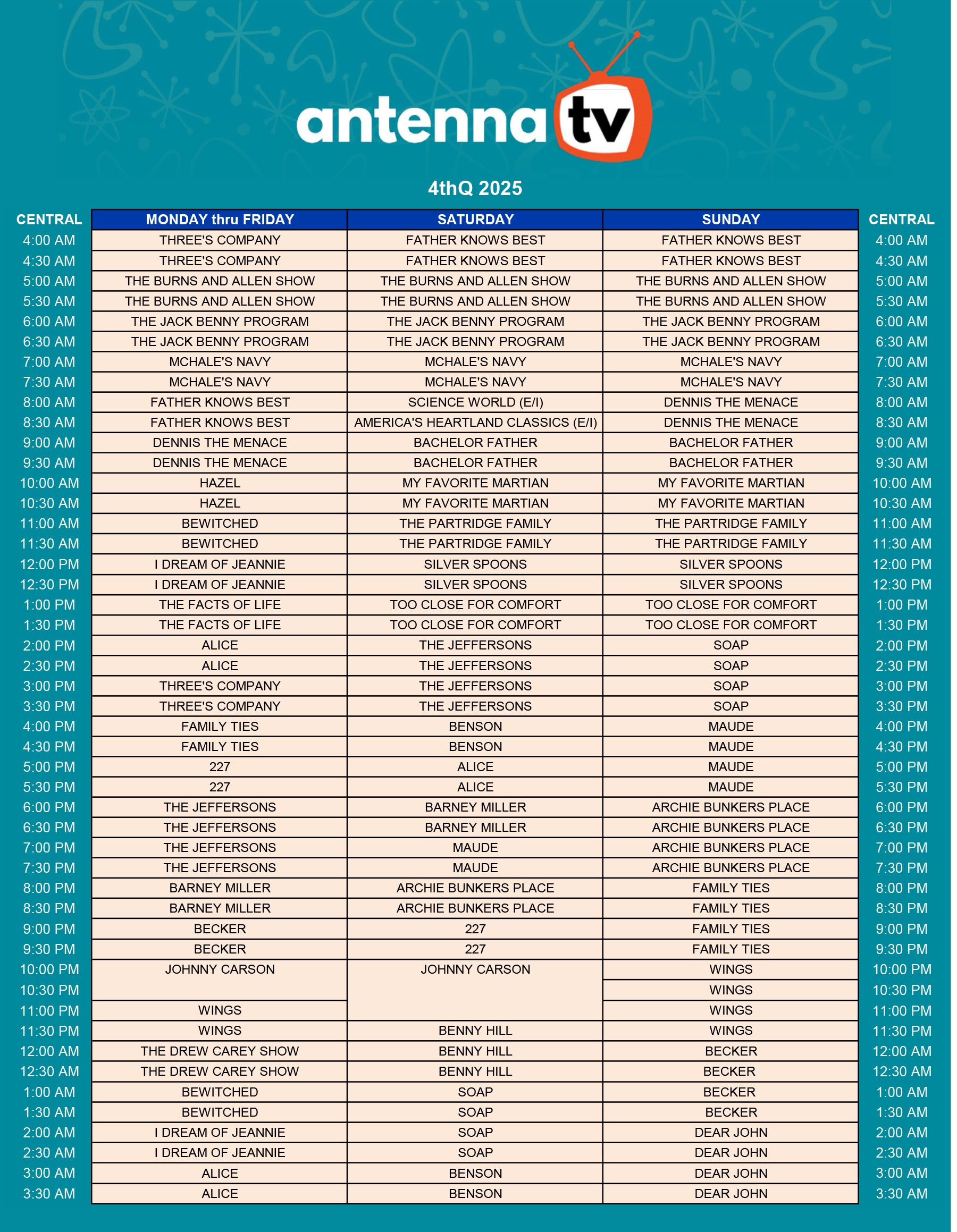
The landscape of home entertainment has undergone a radical transformation over the last decade. While the headlines are often dominated by the “streaming wars” between giants like Netflix, Disney+, and Max, a quiet technological revolution has been occurring in the realm of Over-the-Air (OTA) broadcasting. For the modern viewer asking “what’s on TV antenna tonight,” the answer is no longer limited to grainy local news and static-filled sitcoms. Thanks to advancements in digital signal processing, high-definition standards, and smart integration, the television antenna has become a sophisticated piece of technology that serves as a cornerstone of the contemporary cord-cutting ecosystem.
The Digital Renaissance: Understanding ATSC 3.0 and NextGen TV
To understand what is available on your antenna tonight, one must first understand the protocols delivering that data. The transition from analog to digital broadcasting in 2009 was only the beginning. Currently, the industry is in the midst of a secondary, even more significant shift: the transition from ATSC 1.0 to ATSC 3.0, commercially known as “NextGen TV.”
The Technical Foundations of ATSC 3.0
ATSC 3.0 is the first major overhaul of the Digital TV standard in decades. Unlike its predecessor, which was built on aging MPEG-2 compression, NextGen TV utilizes High Efficiency Video Coding (HEVC/H.265). This allows broadcasters to transmit 4K UHD resolution with High Dynamic Range (HDR) and Wide Color Gamut (WCG) directly over the air. When you check the schedule tonight, you might find that major sporting events or primetime dramas are being broadcast in a fidelity that rivals or exceeds compressed 1080p streaming services.
Robustness and Mobile Reception
Beyond resolution, the technology behind NextGen TV employs Orthogonal Frequency Division Multiplexing (OFDM), the same modulation used in 4G and 5G LTE networks. This makes the signal much more resilient to “multipath interference”—the phenomenon where signals bounce off buildings or trees, causing reception issues. For the tech-savvy consumer, this means that “what’s on” is now accessible on mobile devices and moving vehicles, not just the living room set.
Navigating the Airwaves: Electronic Program Guides (EPG) and Software Integration
One of the primary hurdles for antenna users in the past was the lack of a navigable interface. Modern technology has solved this through the implementation of sophisticated Electronic Program Guides (EPGs). When you wonder what’s on TV antenna tonight, you are no longer flipping channels blindly; you are interacting with a complex data stream.
PSIP Data and Real-Time Metadata
Every digital broadcast includes Program and System Information Protocol (PSIP) data. This is a collection of tables sent within the transport stream that tells your receiver exactly what program is playing, its duration, its rating, and a description of the episode. High-end tuners and Smart TVs ingest this metadata to build a grid-style interface that looks identical to premium cable or satellite guides.
Third-Party Aggregators and Apps
For those seeking a more robust “discovery” experience, software-as-a-service (SaaS) platforms have filled the gap. Applications like TitanTV, TV24, and the proprietary guides found in Plex or Channel Master DVRs aggregate OTA schedules with internet-based metadata. This allows for features such as “series recording,” where the software identifies a show’s unique ID in the antenna stream and triggers a recording whenever it appears on any local channel, effectively creating a personalized “Netflix” of free broadcast content.
High-Performance Hardware: Choosing the Right Tuners and Antennas
The physical hardware required to capture “what’s on tonight” has evolved from the simple “rabbit ears” of the 20th century into precision-engineered instruments. The “tech” of the antenna itself involves complex electromagnetic theory and signal amplification.

The Physics of Antenna Design
Modern antennas are categorized primarily by their frequency range: VHF (Very High Frequency) and UHF (Ultra High Frequency). As broadcasters have shifted their digital “virtual channels” across the spectrum, the design of the antenna elements has had to adapt. Fractal antenna designs and multi-directional arrays now allow for smaller footprints while maintaining high “gain”—the measure of an antenna’s ability to direct or focus radio frequency energy.
Network-Attached Tuners: The SiliconDust Revolution
Perhaps the most significant tech advancement in the OTA space is the Network-Attached Tuner, pioneered by companies like SiliconDust with their HDHomeRun line. Instead of plugging the antenna directly into the back of a single TV, the antenna plugs into a tuner connected to your home’s Wi-Fi router. This converts the raw RF (Radio Frequency) signal into an IP-based stream (MPEG-TS). This technology allows every screen in the house—tablets, smartphones, computers, and Smart TVs—to access the antenna signal simultaneously, effectively digitizing the airwaves for the entire household.
Signal Processing and Optimization: Overcoming the Challenges of Digital Reception
Even with the best content scheduled for tonight, the “what’s on” factor is irrelevant if the signal cannot be decoded. Digital signals, unlike analog, suffer from the “cliff effect”—you either have a perfect picture or no picture at all. To combat this, several technological layers are employed.
Preamplifiers and LTE Filters
In our modern wireless world, the air is crowded. One of the biggest technical threats to TV antenna reception is interference from 4G and 5G cellular towers, which operate on frequencies adjacent to TV broadcasts. Modern high-tech antenna setups now include “LTE Filters” that act as high-pass or low-pass barriers, surgically removing noise from the signal. Furthermore, low-noise preamplifiers (LNAs) are used to boost weak signals at the source (the antenna mast) before the signal travels down the coaxial cable, preserving the signal-to-noise ratio (SNR).
Signal Analysis Tools
For the enthusiast, determining what’s on and how to get it involves using signal analysis software. Tools like the “Signal GH” app or built-in diagnostic menus on digital tuners provide real-time data on signal strength and symbol quality (the purity of the data stream). This allows for “micro-aiming,” where an antenna is adjusted by degrees to find the “sweet spot” of a broadcast tower’s beam, ensuring that high-bandwidth 4K broadcasts remain stable throughout the night.
The Synergy of OTA and Network Streaming: The Hybrid Home Media Ecosystem
The ultimate goal of modern antenna technology is seamless integration. The question of “what’s on TV antenna tonight” is increasingly answered within a hybrid interface that blends local broadcasts with internet-delivered content.
The Rise of Gateway Devices
Devices like the Tablo DVR or the AirTV take the antenna signal and integrate it directly into the interface of streaming platforms like Sling TV or Roku. This represents a high level of software engineering where the user does not have to switch inputs on their television. The local NBC affiliate (via antenna) sits right next to a Netflix original (via internet) in a unified “Live Buffer.”
Targeted Advertising and Data Return
Under the ATSC 3.0 standard, the technology also moves toward “Interactive TV.” Because NextGen TV is built on the same IP-based protocols as the internet, it allows for a “return path.” While the video comes over the air, your smart TV can use its internet connection to pull in interactive features, such as localized weather alerts, on-demand replays of the show currently airing, or even targeted advertisements. This creates a bridge between traditional “one-to-many” broadcasting and the “one-to-one” personalization of the web.

Conclusion
When we ask “what’s on TV antenna tonight,” we are tapping into a massive, invisible infrastructure of digital data. The transition from simple RF reception to complex IP-integrated media consumption has transformed the antenna from a relic of the past into a high-tech tool for the future. With the rollout of ATSC 3.0, the growth of network-attached tuners, and the sophistication of EPG software, Over-the-Air television offers a level of fidelity and flexibility that was unimaginable just a decade ago. Whether you are catching a local news broadcast in crisp 1080i or watching a cinematic event in 4K HDR via NextGen TV, the technology behind your antenna ensures that “free TV” remains at the cutting edge of the digital age.
aViewFromTheCave is a participant in the Amazon Services LLC Associates Program, an affiliate advertising program designed to provide a means for sites to earn advertising fees by advertising and linking to Amazon.com. Amazon, the Amazon logo, AmazonSupply, and the AmazonSupply logo are trademarks of Amazon.com, Inc. or its affiliates. As an Amazon Associate we earn affiliate commissions from qualifying purchases.