
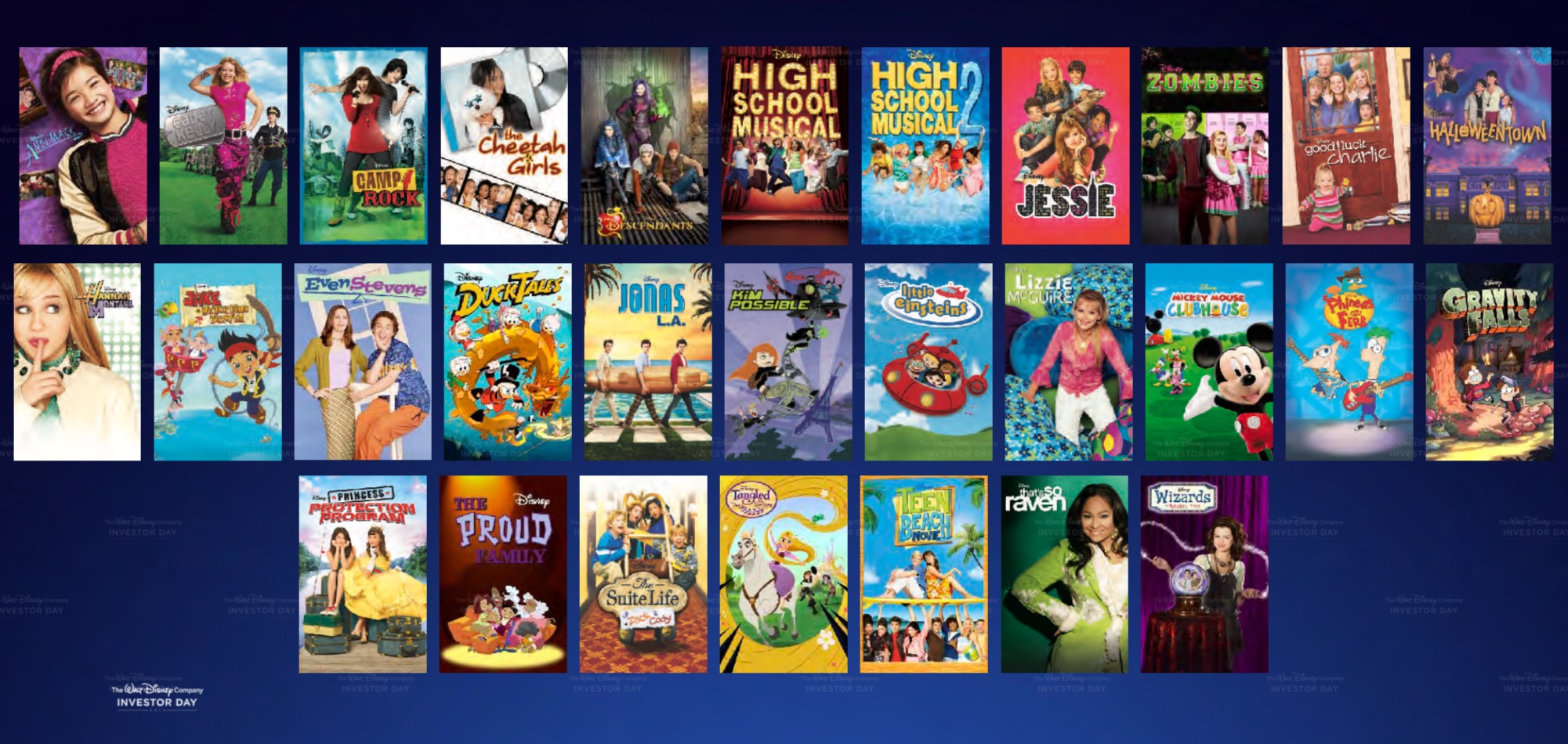
For decades, the question “What’s on Disney Channel?” was answered by a physical TV guide or a linear broadcast schedule. However, in the modern era of digital transformation, the answer is no longer just a list of shows; it is a complex intersection of cloud computing, edge delivery, and sophisticated software engineering. The transition of Disney Channel from a traditional cable network to a cornerstone of a global streaming architecture represents one of the most significant technological pivots in media history. To understand what is “on” Disney Channel today is to understand the state-of-the-art technology that delivers high-definition content to millions of devices simultaneously.
From Linear Cable to Over-the-Top (OTT) Architecture
The infrastructure supporting Disney Channel has migrated from satellite-reliant analog broadcasts to a robust, IP-based Over-the-Top (OTT) framework. This shift was necessitated by the consumer demand for “anywhere, anytime” access, requiring a total overhaul of the backend systems that manage content distribution.
The Transition to IP-Based Broadcasting
The legacy broadcast model relied on expensive satellite transponders and localized physical headends. Today, Disney uses Internet Protocol (IP) for video transport. By adopting the SMPTE ST 2110 suite of standards, the network has moved toward a virtualized environment. This allows for uncompressed video to be routed over standard IT networks, providing greater flexibility and scalability. This technical shift means that when a user “tunes in,” they are no longer just receiving a passive signal; they are initiating a data request to a server that can handle high-bandwidth, low-latency delivery.
Cloud-Native Playout Systems
One of the most significant tech advancements is the move to cloud-native playout systems. Traditionally, a “channel” was a physical room full of servers and switchers. Now, Disney Channel’s playout—the process of assembling clips, commercials, and graphics into a continuous stream—is largely handled in the cloud (predominantly utilizing AWS or private cloud instances). This allows engineers to spin up new regional sub-channels or temporary “pop-up” channels in minutes rather than months. The agility of cloud playout ensures that the content remains synchronized across various global time zones with minimal human intervention.
Personalization and Recommendation Engines: What’s “On” for You
In the digital age, “what’s on” is no longer a universal truth; it is a personalized experience. The technology behind Disney’s recommendation engines uses advanced machine learning (ML) to curate content feeds based on individual user profiles.
Machine Learning in Content Discovery
The Disney Channel experience, particularly through the Disney+ interface, is driven by proprietary algorithms that analyze billions of data points. These ML models look at viewing history, duration of engagement, and even the time of day to predict what a user wants to see next. By utilizing collaborative filtering and deep learning, the system can distinguish between a toddler watching “Mickey Mouse Clubhouse” and a teenager looking for “High School Musical: The Musical: The Series,” adjusting the interface in real-time to prioritize relevant content.
Meta-Data Tagging and User Behavior Analysis
Behind every piece of content on Disney Channel is an extensive layer of metadata. Tech teams use AI-driven tagging to catalog everything from the mood of a scene to the specific characters present. This granular data allows the recommendation engine to build “taste clusters.” When you finish an episode, the “Up Next” feature isn’t just picking a random show; it is performing a high-speed database query to find a technical match that ensures the lowest possible churn rate. This level of data science turns a simple television channel into an intelligent, responsive platform.
The Cross-Platform Experience: Engineering the Disney+ Integration
The modern iteration of Disney Channel is inseparable from the Disney+ technology stack. Engineering a seamless experience across mobile, web, and smart TVs requires a sophisticated approach to software development and API management.

API Integration and Seamless Handoff
The “Disney Channel” app and its integration within the larger Disney+ ecosystem rely on a microservices architecture. This means that different functions—such as billing, content playback, and user profiles—are handled by independent services that communicate via APIs. For the user, this results in “seamless handoff.” You can start watching a show on a tablet via a cellular network and resume it exactly where you left off on a 4K television at home. The backend synchronization of these state-changes happens in milliseconds, managed by global database instances that ensure data consistency across the globe.
Optimizing for Low-Latency Live Streaming
While much of the content is Video-on-Demand (VOD), Disney Channel still maintains a “Live” component. Delivering live video over the internet introduces the challenge of latency. To solve this, Disney employs advanced Content Delivery Networks (CDNs) and “Edge Computing.” By caching video fragments at the edge of the network—closer to the physical location of the user—the technology reduces the time it takes for data to travel. This ensures that a live premiere on Disney Channel happens simultaneously for everyone, preventing “spoiler lag” that often plagues digital broadcasts.
Digital Security and Child Safety Tech
Given that Disney Channel’s primary audience consists of minors, the technology stack must prioritize digital security and rigorous safety standards far beyond those of a standard streaming service.
Advanced Parental Controls and COPPA Compliance
The tech architecture of Disney’s digital platforms is built with “Safety by Design.” This includes robust parental control systems that allow for granular filtering. From a technical perspective, this involves complex identity and access management (IAM) protocols. These systems must also comply with the Children’s Online Privacy Protection Act (COPPA) and GDPR. Disney’s engineers have built “walled gardens” within their apps where data collection is strictly limited, and targeted advertising is disabled for child profiles, requiring a sophisticated backend that can distinguish between user types in real-time.
Watermarking and Digital Rights Management (DRM)
To protect its valuable intellectual property, Disney employs cutting-edge Digital Rights Management (DRM). Every stream delivered is encrypted using systems like Widevine, FairPlay, or PlayReady. Furthermore, “forensic watermarking” technology is often used. This embeds an invisible, unique identifier into the video stream. If a premiere episode of a Disney Channel show is leaked or pirated, the tech team can trace the source back to the specific account and device that originated the stream. This level of security is essential for maintaining the economic viability of the digital distribution model.
The Future of Disney Channel Tech: Immersive and Interactive Media
As we look toward the future, the question of “what’s on” will likely expand into the realms of augmented reality (AR) and interactive storytelling, moving beyond the two-dimensional screen.
Second-Screen Experiences and Gamification
The technology is already moving toward “second-screen” integration, where a mobile device can sync with the TV broadcast to provide interactive games or additional content. This requires high-precision audio watermarking or ACR (Automatic Content Recognition) technology. By “listening” to the TV’s audio, a tablet can trigger specific events in an app that correspond to the action on screen, turning a passive viewing experience into an active, gamified one.
Augmented Reality (AR) in Children’s Programming
Disney is heavily investing in AR research through its Disney Research Studios. In the near future, “what’s on Disney Channel” might include AR characters that appear in the viewer’s living room via a smartphone or AR glasses. This involves complex computer vision algorithms and spatial mapping technology. By integrating these tools into the Disney Channel ecosystem, the brand can bridge the gap between digital content and physical reality, creating an immersive environment that was previously the stuff of science fiction.
In conclusion, “What’s on Disney Channel” is a question that is now answered by a sophisticated web of technologies. From the cloud-native playout and AI-driven recommendations to the robust DRM and future-forward AR integrations, the network has evolved into a high-tech powerhouse. It is no longer just a channel; it is a globally distributed, data-driven, and highly secure digital experience designed to meet the demands of a new generation of digital-native viewers.
aViewFromTheCave is a participant in the Amazon Services LLC Associates Program, an affiliate advertising program designed to provide a means for sites to earn advertising fees by advertising and linking to Amazon.com. Amazon, the Amazon logo, AmazonSupply, and the AmazonSupply logo are trademarks of Amazon.com, Inc. or its affiliates. As an Amazon Associate we earn affiliate commissions from qualifying purchases.