
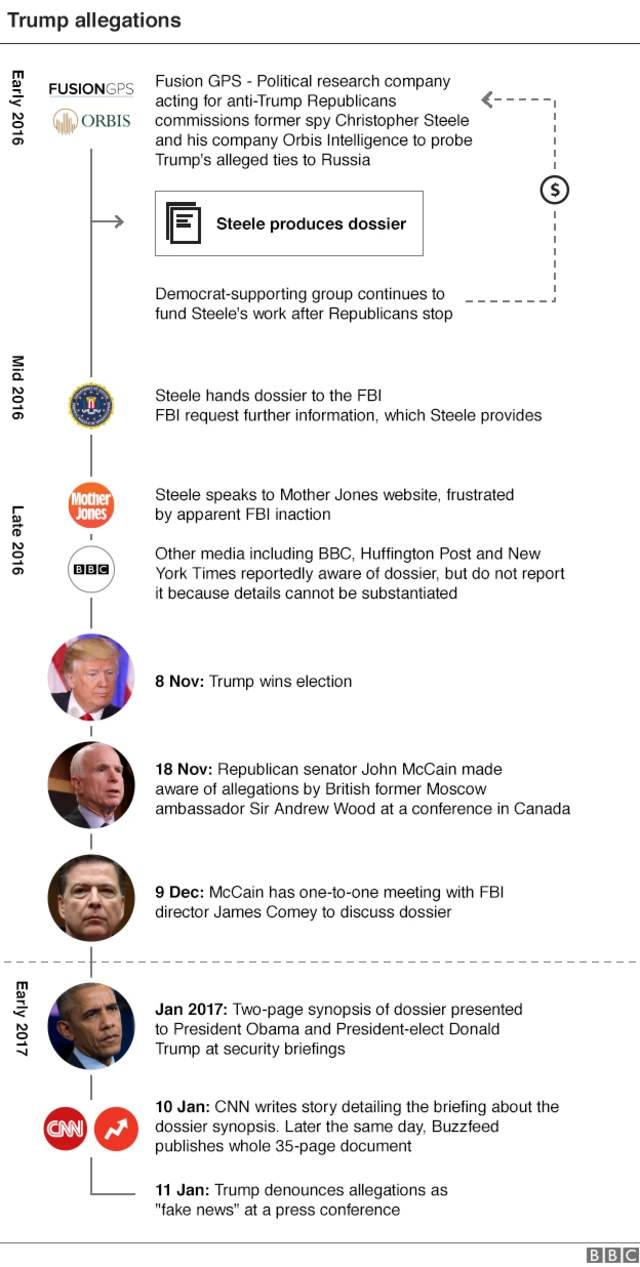
In the modern landscape of international relations and corporate security, the term “dossier” has evolved from a physical folder of paper to a complex, multi-layered digital dataset. When we examine the concept of a “Russian dossier”—whether referring to historical geopolitical documents or contemporary intelligence leaks—we are essentially looking at a masterclass in digital forensic challenges and state-level cybersecurity tactics.
The contents of such a dossier are rarely just text; they are a collection of signal intelligence (SIGINT), human intelligence (HUMINT) digitized for transmission, and often, a significant amount of metadata that tells a story far beyond the words on the page. Understanding what is in these dossiers requires a technical lens, focusing on how data is harvested, verified, and disseminated in an age of information warfare.
The Anatomy of a Digital Dossier: Structure and Extraction
A dossier in the 21st century is a curated database. It is not merely a collection of observations but a structured set of files intended to build a narrative or expose vulnerabilities. From a technical perspective, the “contents” of these dossiers are defined by how they were extracted and organized.
From Signal Intelligence to HUMINT Digitization
The primary substance of a modern dossier often begins with Signal Intelligence. This involves the interception of communications, ranging from encrypted emails to VOIP calls. When intelligence agencies or sophisticated hacking groups (often referred to as Advanced Persistent Threats or APTs) compile a dossier, they aggregate disparate data points.
The digitization of Human Intelligence (HUMINT) is equally critical. Field reports that were once hand-written are now entered into secure databases, often with geographic tags (GIS data) and timestamps. In a Russian-context dossier, you will frequently find logs of digital movement—IP addresses used by targets, login times on secure portals, and even biometric data harvested from border crossings or hacked databases.
Verifying the Source: Metadata and Digital Signatures
The most “telling” part of a dossier isn’t the body of the text, but the metadata. Metadata—the data about the data—provides the forensic breadcrumbs necessary to verify authenticity. This includes the “Author” field in a Word document, the “Camera Model” in a leaked photograph, or the “Routing Headers” in an email chain.
For cybersecurity professionals, analyzing a dossier involves looking for digital signatures and hashing algorithms (like SHA-256) that prove the files haven’t been tampered with since their extraction. If a dossier lacks a verifiable chain of custody in its metadata, it is often classified as “disinformation” rather than “intelligence.”
Cybersecurity Tactics in Modern Espionage
To understand what is in a dossier, one must understand how the information got there. Russian cyber operations are noted for their sophistication, utilizing a blend of traditional tradecraft and cutting-edge digital exploitation.
Phishing and Social Engineering as Entry Points
The “contents” of most high-profile dossiers are usually the result of successful spear-phishing campaigns. This is the surgical application of social engineering, where specific individuals are targeted with bespoke malware. Once a target clicks a malicious link, the attacker gains access to their file system.
In these dossiers, you will often see “exfiltrated directories”—entire folders lifted from a target’s cloud storage or local hard drive. This is made possible by Remote Access Trojans (RATs) that can bypass standard antivirus software by using “zero-day” vulnerabilities, which are flaws in software that the vendor is not yet aware of.
The Role of Encrypted Communication Channels
Interestingly, modern dossiers often contain logs from “secure” apps like Telegram, Signal, or WhatsApp. While these apps use end-to-end encryption (E2EE), they are not immune to “endpoint compromise.” If the device itself is infected, the dossier will contain decrypted screenshots and chat logs.
The inclusion of these logs in a dossier highlights a critical tech reality: encryption protects data in transit, but it cannot protect data at rest on a compromised device. This is why “what’s in the dossier” often includes private conversations that the participants believed were mathematically impossible to intercept.
Data Leakage and Information Warfare

A dossier is only effective if it is used. In the realm of digital security, the “dump and drip” strategy is a common method for handling the contents of a dossier to maximize psychological and operational impact.
The “Dump and Drip” Strategy of Document Releases
When a dossier is finalized, the technical challenge shifts to distribution. Rather than releasing thousands of documents at once, actors often use a “drip” method. This involves releasing small, verifiable portions of the dossier over time to keep the story in the news cycle and to force the target to react.
From a tech standpoint, this requires a secure, anonymous distribution platform—often hosted on the Dark Web (Tor network) or via “bulletproof” hosting services in jurisdictions that do not comply with international takedown requests. The dossier’s content is frequently mirrored across decentralized file systems (like IPFS) to ensure it can never be truly deleted from the internet.
Weaponizing Information through Botnets and Algorithms
What is in the dossier is often amplified by automated tech. Once a dossier is “leaked,” botnets are deployed to trend specific keywords related to the contents. These algorithms are designed to bypass the spam filters of social media platforms, ensuring that the most damaging parts of the dossier reach the widest possible audience. This is the intersection of big data and psychological operations (PsyOps), where the dossier serves as the “source code” for a broader campaign of influence.
Protecting Infrastructure Against State-Level Threats
The existence of these dossiers serves as a cautionary tale for corporate and personal digital security. If a state-level actor decides to compile a dossier on an entity, the defensive strategy must move beyond simple passwords.
Zero-Trust Architecture and Identity Management
The best way to ensure your data doesn’t end up in a dossier is through a “Zero-Trust” security model. This framework assumes that the network is always compromised. Therefore, every user and device must be continuously verified.
In a Zero-Trust environment, even if an attacker gains access to one part of the system, “micro-segmentation” prevents them from moving laterally to harvest the bulk of the data. High-value targets now use hardware security keys (like YubiKeys) because traditional SMS-based two-factor authentication (2FA) is easily intercepted by the types of agencies that compile these dossiers.
Incident Response Lessons from High-Profile Leaks
When a dossier is released, the “victim” organization must engage in rapid digital forensics. They need to identify the “patient zero”—the original point of entry. This involves analyzing server logs to see when large amounts of data were exfiltrated (a process known as “data egress monitoring”). By understanding how the dossier was built, organizations can patch the holes in their infrastructure to prevent future “volumes” from being written.
The Future of Digital Dossiers: AI and Deepfakes
As we look forward, the contents of a “Russian dossier” or any intelligence product will likely transition from stolen data to generated data. This introduces a terrifying new chapter in digital security.
Synthetic Media as the New Frontier of Disinformation
The next generation of dossiers will likely include “Deepfakes”—AI-generated audio and video that is indistinguishable from reality. Technically, this involves Generative Adversarial Networks (GANs), where one AI creates a fake image and another AI tries to detect the flaw, constantly improving the result until the “content” is perfect.
In this future, a dossier might contain a video of a CEO or a politician saying something they never actually said. The challenge for tech experts will shift from protecting real data to proving that fake data is indeed fake.
Advanced Defensive AI Tools
To combat AI-driven dossiers, we are seeing the rise of “Defensive AI.” These are tools designed to detect the subtle mathematical anomalies present in synthetic media. Furthermore, “blockchain notarization” is being explored as a way to verify the authenticity of documents. By hashing a document onto a public ledger the moment it is created, an individual can prove that any later “dossier” containing a different version of that document has been manipulated.
Conclusion: The Persistence of the Digital Shadow
Ultimately, “what’s in the Russian dossier” is a reflection of our digital footprints. In an era where every action leaves a trace, the compilation of a dossier is simply a matter of technical persistence and resources. Whether it is metadata, exfiltrated emails, or encrypted chat logs, the contents are a testament to the fact that in the digital world, nothing is ever truly private if a sophisticated actor decides otherwise.
For the tech-conscious individual or organization, the lesson is clear: security is not a product you buy, but a process you follow. By understanding the technical anatomy of these dossiers, we can better prepare for a future where information is the most powerful weapon in the global arsenal.
aViewFromTheCave is a participant in the Amazon Services LLC Associates Program, an affiliate advertising program designed to provide a means for sites to earn advertising fees by advertising and linking to Amazon.com. Amazon, the Amazon logo, AmazonSupply, and the AmazonSupply logo are trademarks of Amazon.com, Inc. or its affiliates. As an Amazon Associate we earn affiliate commissions from qualifying purchases.