
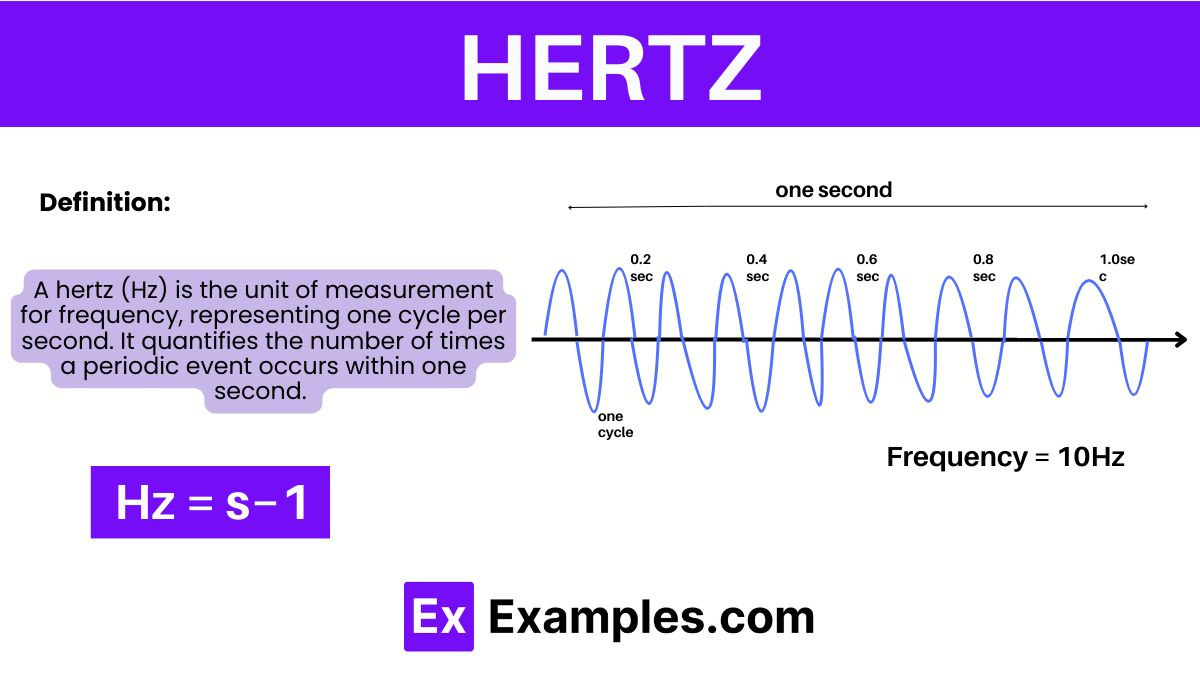
In the rapidly evolving world of technology, terms like “Gigahertz,” “144Hz,” and “5G bands” are frequently tossed around by manufacturers and enthusiasts alike. At the core of all these specifications lies a single, fundamental unit of measurement: the Hertz (Hz). Named after the German physicist Heinrich Hertz, who first proved the existence of electromagnetic waves, the Hertz is the International System of Units (SI) measure of frequency. Specifically, it represents one cycle per second.
While the definition sounds simple, its application is the heartbeat of modern computing, telecommunications, and digital media. Whether you are looking at the speed of a processor, the smoothness of a gaming monitor, or the clarity of a wireless signal, you are looking at the management of cycles. Understanding what Hertz means in a technical context is essential for navigating the complexities of hardware performance and digital efficiency.
1. The Physics of Frequency: Defining the Unit
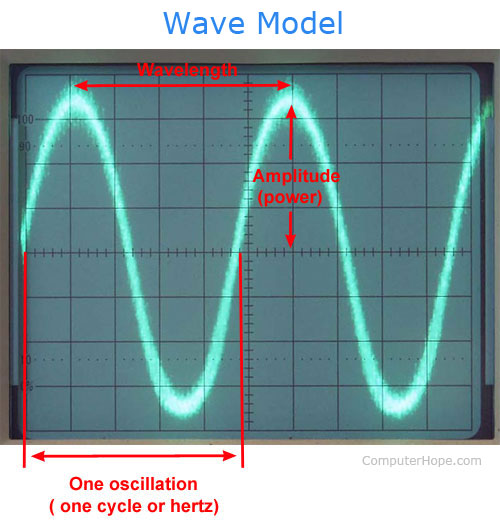
Before diving into specific gadgets, it is crucial to understand what a “cycle” actually is. In physics and electronics, a cycle refers to one complete repetition of a periodic event. If you imagine a wave moving up and down, one cycle is the journey from the peak, down to the trough, and back to the peak.
The Role of Heinrich Hertz
Heinrich Hertz’s work in the late 19th century laid the groundwork for the electronic age. By demonstrating that electromagnetic waves could be transmitted and received, he paved the way for radio, television, and eventually, the Wi-Fi and cellular networks we rely on today. When we measure something in Hertz, we are honoring this discovery by quantifying how many times an electromagnetic or electrical signal repeats itself in one second.
Scaling Frequency: From Hz to GHz
In technology, we rarely deal with single Hertz. Instead, we use metric prefixes to describe massive scales of frequency.
- Kilohertz (kHz): Thousands of cycles per second (common in audio).
- Megahertz (MHz): Millions of cycles per second (common in RAM and radio).
- Gigahertz (GHz): Billions of cycles per second (the standard for CPU clock speeds).
- Terahertz (THz): Trillions of cycles per second (the frontier of ultra-fast imaging and future data transmission).
2. Computing Power: The Significance of Clock Speed
When you shop for a laptop or build a PC, the first specification you likely encounter is the CPU clock speed, measured in Gigahertz (GHz). This is perhaps the most direct application of Hertz in the tech world.
CPU Cycles and Data Processing
A CPU (Central Processing Unit) uses an internal oscillator to synchronize its operations. Each “tick” of this clock allows the processor to execute a set of instructions. Therefore, a processor rated at 3.5 GHz can theoretically perform 3.5 billion cycles every second. In the early days of computing, a higher Hertz rating almost always meant a faster computer. If Pentium A was 200 MHz and Pentium B was 400 MHz, the latter was twice as fast.
IPC vs. Raw Hertz
However, in modern tech, Hertz isn’t the only factor in performance. We must also consider Instructions Per Cycle (IPC). Two different processors might both run at 4.0 GHz, but if one can handle more instructions during a single cycle due to a more efficient architecture, it will outperform the other. This is why a modern 3.0 GHz processor will easily outperform a 10-year-old 4.0 GHz processor. The Hertz tells you the “tempo” of the chip, but the architecture tells you how much work is being done on every beat.
The Limits of Overclocking
Tech enthusiasts often engage in “overclocking,” which involves forcing a component to run at a higher Hertz than its factory setting. While this increases performance, it follows the laws of thermodynamics: higher frequency requires more voltage, which generates more heat. Eventually, the silicon reaches a physical limit where it can no longer switch states fast enough, or the heat becomes high enough to damage the hardware.
3. Visual Fluidity: Refresh Rates in Display Technology
If you move from the internal processor to the screen in front of you, Hertz takes on a visual meaning. In the context of monitors, smartphones, and televisions, Hertz refers to the “Refresh Rate.”
The 60Hz Standard and the Shift to High Refresh
For decades, 60Hz was the gold standard for displays. This means the screen updates the image 60 times every second. While this is sufficient for basic office work and standard video, the tech industry has seen a massive shift toward “High Refresh Rate” displays, such as 120Hz, 144Hz, and even 360Hz.
When a screen refreshes more frequently, the motion appears much smoother to the human eye. This is particularly noticeable in gaming or when scrolling through a long webpage on a smartphone. A 120Hz display provides twice the visual information of a 60Hz display, reducing motion blur and making the interface feel more responsive.
Synchronizing Frames: Hz and FPS
A common point of confusion in the tech community is the difference between Frames Per Second (FPS) and Hertz (Hz).
- FPS is how many images the graphics card (GPU) can produce per second.
- Hz is how many times the monitor is capable of showing a new image.
If your GPU is pumping out 120 FPS but your monitor is only 60Hz, you are only seeing half of the frames being rendered. This can lead to “screen tearing,” where the monitor shows parts of two different frames at once. Technologies like G-Sync and FreeSync were developed to synchronize the monitor’s Hertz dynamically with the GPU’s FPS, ensuring a seamless visual experience.
Impact on Eye Strain and Professional Use
High Hertz isn’t just for gamers. For professionals who spend eight to ten hours a day staring at a screen, a higher refresh rate can significantly reduce eye fatigue. The smoother motion is more natural for the brain to process, leading to a “snappier” feeling in professional creative software like Adobe Premiere or CAD programs.
4. Invisible Waves: Hertz in Connectivity and Audio
Beyond the hardware you can touch, Hertz governs the invisible signals that connect our devices. From the music in our headphones to the 5G signals in our pockets, frequency is the medium of transport.
Audio Frequencies and the Human Ear
In audio tech, Hertz describes the pitch of a sound. The human ear can typically hear frequencies between 20 Hz (deep bass) and 20,000 Hz (20 kHz, high-pitched treble). High-fidelity (Hi-Fi) audio equipment is often rated based on its ability to reproduce these frequencies accurately without distortion. When you see a “sample rate” on a digital audio file, such as 44.1 kHz, it refers to how many times per second the sound wave was “sampled” to be converted into digital data.
Wireless Spectrums: Wi-Fi and Cellular Data
The most complex use of Hertz today is in the electromagnetic spectrum used for wireless communication.
- 2.4 GHz vs. 5 GHz Wi-Fi: Your home router likely uses these two bands. The 2.4 GHz band has a lower frequency, which allows it to travel through walls easily but at slower speeds. The 5 GHz band has a higher frequency, allowing for much faster data transfer but with a shorter range.
- 5G Technology: The leap to 5G involves using “Millimeter Wave” (mmWave) frequencies, which operate in the tens of Gigahertz. These ultra-high frequencies allow for near-instantaneous downloads, though they require a much denser network of towers because high-frequency waves are easily blocked by buildings and even trees.
5. The Future of Hertz: Terahertz and Quantum Computing
As we push the boundaries of what is possible, the tech industry is looking toward even higher frequencies and entirely new ways of utilizing cycles.
The Terahertz Gap
Researchers are currently exploring the “Terahertz gap,” a range of frequencies between microwaves and infrared light. Terahertz technology could revolutionize digital security and medical imaging, as these waves can pass through many non-conductive materials (like clothing or packaging) without the ionizing radiation risks associated with X-rays. In terms of data, Terahertz-based Wi-Fi could theoretically allow for speeds a hundred times faster than current 5G.
Frequency in the Quantum Era
In the realm of quantum computing, the concept of Hertz takes on a different dimension. Quantum bits (qubits) are often manipulated using microwave pulses at specific frequencies. The precision required to maintain “coherence” in a quantum system involves managing frequencies with a level of accuracy that was previously unimaginable. As we move away from traditional silicon, our ability to master the Hertz will determine the success of the next generation of supercomputing.

Conclusion
Hertz is more than just a metric on a spec sheet; it is the fundamental language of time and motion in the digital age. Whether it is the billions of cycles happening inside your processor, the hundreds of refreshes on your smartphone screen, or the invisible waves delivering high-speed internet to your home, the Hertz is the pulse that keeps modern technology alive. By understanding how frequency impacts performance, fluidity, and connectivity, consumers and professionals can make more informed decisions about the gadgets and systems they use every day. As we look toward the future of 6G and beyond, the mastery of the Hertz will continue to be the primary driver of technological progress.
aViewFromTheCave is a participant in the Amazon Services LLC Associates Program, an affiliate advertising program designed to provide a means for sites to earn advertising fees by advertising and linking to Amazon.com. Amazon, the Amazon logo, AmazonSupply, and the AmazonSupply logo are trademarks of Amazon.com, Inc. or its affiliates. As an Amazon Associate we earn affiliate commissions from qualifying purchases.