
When navigating the complexities of personal finance, most individuals prioritize investment portfolios, retirement accounts, and high-yield savings. However, one of the most significant variables in a person’s long-term financial health is often the most misunderstood: health insurance. Choosing between a Preferred Provider Organization (PPO) and a Health Maintenance Organization (HMO) is not merely a medical decision; it is a critical budgetary maneuver that impacts your monthly cash flow, your tax liability, and your exposure to financial risk.
In the landscape of modern money management, your health plan acts as a primary hedge against the leading cause of bankruptcy in the United States: medical debt. By understanding the structural differences between PPOs and HMOs through a financial lens, you can optimize your total compensation package and ensure that your healthcare spending aligns with your broader wealth-building goals.
The Financial Architecture of HMOs and PPOs
To make an informed financial decision, one must first understand the fundamental mechanics of how these two structures distribute costs. At their core, HMOs and PPOs represent different philosophies of risk management and resource allocation.
Health Maintenance Organizations (HMO): The Low-Cost Efficiency Model
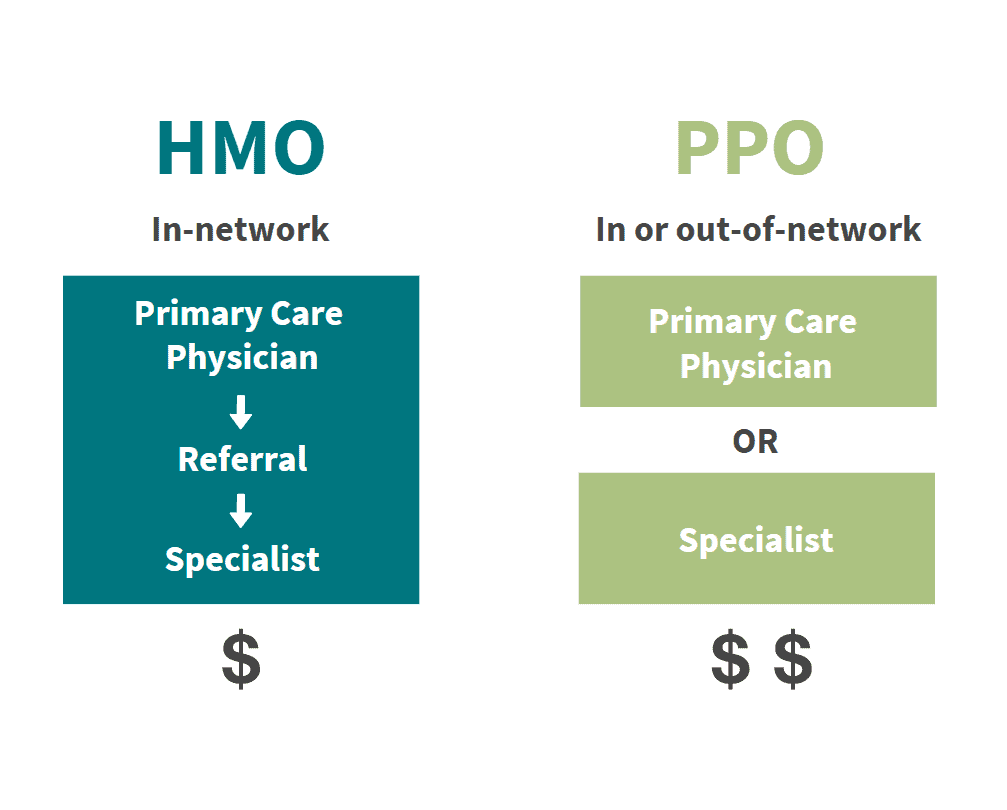
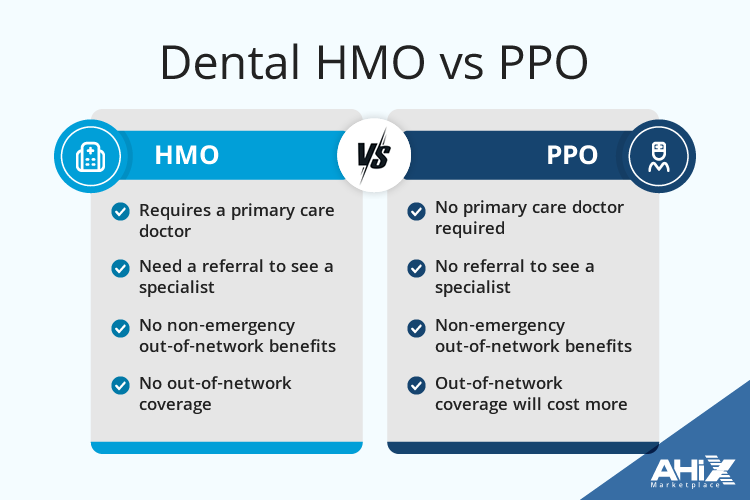
From a personal finance perspective, an HMO is the “budget-friendly” option designed for predictability. HMOs usually require you to choose a Primary Care Physician (PCP) who acts as a “gatekeeper” for your healthcare. For any specialist visit, you must first obtain a referral from your PCP.
The financial upside of an HMO is its lower monthly premiums and typically lower (or non-existent) deductibles. Because the network is tightly controlled and providers are contracted at specific rates, the out-of-pocket costs for the consumer are minimized. For a young professional or a family on a strict budget who doesn’t anticipate frequent specialized care, the HMO offers a way to cap healthcare spending at a fixed, manageable monthly rate.
Preferred Provider Organizations (PPO): The Premium for Flexibility
A PPO is the “luxury” tier of health insurance, offering maximum flexibility in exchange for higher monthly costs. Unlike an HMO, a PPO does not require you to designate a PCP, nor does it require referrals to see a specialist. Most importantly, PPOs provide coverage for out-of-network care, albeit at a higher cost-sharing rate.
From a wealth management standpoint, the PPO is an investment in time and choice. While the premiums are higher, the ability to seek immediate care from any provider in the country without administrative hurdles can be a significant advantage for high-earning individuals or those with complex health needs. It allows for “speed of execution” in health matters, which can prevent minor issues from becoming expensive, long-term financial burdens.
Calculating the Total Cost of Ownership
When evaluating these plans, many people make the mistake of looking only at the monthly premium. However, a sophisticated financial analysis requires looking at the “Total Cost of Ownership” (TCO) of a health plan, which includes premiums, deductibles, copayments, and coinsurance.
Premiums vs. Out-of-Pocket Maximums
In the world of personal finance, the premium is your fixed cost, while the deductible and coinsurance are your variable costs. HMOs prioritize low fixed costs. If you are generally healthy, the HMO allows you to keep more of your paycheck for investments or debt repayment.
However, one must also look at the “Out-of-Pocket Maximum.” This is the most you will have to pay in a given year for covered services. A PPO might have a higher out-of-pocket maximum than an HMO. If a catastrophic health event occurs, the difference between a $5,000 maximum and a $10,000 maximum is a direct hit to your emergency fund. When choosing a plan, you must ensure your liquid savings can cover the out-of-pocket maximum of your chosen plan.
The Hidden Costs of Out-of-Network Care
One of the greatest financial risks in healthcare is “surprise billing” or out-of-network expenses. Under an HMO, if you see a provider outside the network (except in emergencies), the insurance company will typically pay zero percent of the bill. You are 100% liable.

Under a PPO, the insurance company will usually cover a portion of out-of-network costs (for example, 60% instead of the 80% they might cover for in-network care). For those who travel frequently for business or live in multiple states, a PPO acts as a financial insurance policy against the exorbitant costs of out-of-network medical emergencies that an HMO wouldn’t touch.
Integrating Health Insurance into Your Tax and Investment Strategy
Smart money management doesn’t look at health insurance in a vacuum; it looks at how insurance interacts with the tax code. The choice between a PPO and an HMO often dictates your eligibility for tax-advantaged investment vehicles.
The Power of the Health Savings Account (HSA)
Many PPO plans (and some HMOs) are structured as High Deductible Health Plans (HDHPs). While “high deductible” sounds like a financial negative, it opens the door to a Health Savings Account (HSA), which is arguably the most powerful investment tool in the U.S. tax code.
An HSA offers a triple tax advantage:
- Tax-Deductible Contributions: Money goes in pre-tax, lowering your taxable income.
- Tax-Free Growth: You can invest the funds in stocks or bonds, and the gains are not taxed.
- Tax-Free Withdrawals: As long as the money is used for qualified medical expenses, it is never taxed.
If you are in a high tax bracket and choose a PPO-HDHP, you can use the HSA as a “stealth IRA,” allowing the money to grow for decades while paying for current medical expenses out of pocket (keeping your receipts for future tax-free reimbursements).
Flexible Spending Accounts (FSA) and Budgeting
For those who choose a traditional HMO or a lower-deductible PPO, the Flexible Spending Account (FSA) is the primary tax-saving tool. Unlike the HSA, an FSA is generally “use it or lose it” by the end of the year. This requires a different financial discipline—predicting your medical expenses with high accuracy to ensure you aren’t leaving money on the table. For a disciplined budgeter, using an FSA to pay for predictable costs like dental work or vision care with pre-tax dollars is an immediate “discount” on those services.
Strategic Decision Making: Which Plan Fits Your Financial Profile?
Choosing between a PPO and an HMO should be based on a cold analysis of your current balance sheet and your projected cash flow.
The “Safety Net” Strategy for Wealth Accumulators
If you are in the early stages of building wealth—prioritizing an emergency fund and paying down high-interest debt—the HMO is often the superior financial choice. The lower premiums act as an immediate “raise” in your take-home pay. By staying within a network and utilizing a PCP, you minimize the risk of unexpected medical bills that could derail your debt-repayment plan. The trade-off is a loss of convenience, but for a wealth-builder, the cash-flow benefits are often worth the administrative hurdle of getting referrals.
The “Risk Mitigation” Strategy for Established Professionals
For those with a high net worth or complex family medical needs, the PPO serves as a sophisticated risk-mitigation tool. The higher premium is a price paid for the certainty of access. If you need a world-class specialist for a specific condition, the PPO ensures you can access that care without waiting for a gatekeeper’s approval. In this bracket, the “cost” of the PPO is weighed against the “opportunity cost” of health-related downtime.
Small Business and Side Hustle Considerations
For entrepreneurs and those with side hustles, the PPO vs. HMO debate takes on a business finance dimension. Health insurance premiums for the self-employed are often 100% tax-deductible. In this scenario, the “real cost” of a PPO is subsidized by your tax savings. Entrepreneurs must also consider the administrative burden; an HMO requires more “paperwork time” (referrals, staying in-network), whereas a PPO allows a busy business owner to solve health issues quickly and return to revenue-generating activities.
Conclusion: Health Insurance as a Pillar of Financial Stability
In the final analysis, the choice between a PPO and an HMO is not about which plan is “better,” but which plan aligns with your current financial trajectory. An HMO is a tool for cost-containment and cash-flow optimization, ideal for those who value predictability and lower fixed costs. A PPO is a tool for flexibility and risk management, ideal for those who prioritize choice and can leverage the plan’s structure for tax advantages like the HSA.
By treating your health insurance selection with the same rigor you apply to your stock portfolio or your business budget, you transform a mundane HR task into a strategic financial move. Whether you choose the lean efficiency of the HMO or the broad access of the PPO, the goal remains the same: protecting your capital, minimizing your tax liability, and ensuring that a medical event never becomes a financial catastrophe. Health is wealth, but in the world of personal finance, how you pay for that health determines how much of that wealth you keep.
aViewFromTheCave is a participant in the Amazon Services LLC Associates Program, an affiliate advertising program designed to provide a means for sites to earn advertising fees by advertising and linking to Amazon.com. Amazon, the Amazon logo, AmazonSupply, and the AmazonSupply logo are trademarks of Amazon.com, Inc. or its affiliates. As an Amazon Associate we earn affiliate commissions from qualifying purchases.