
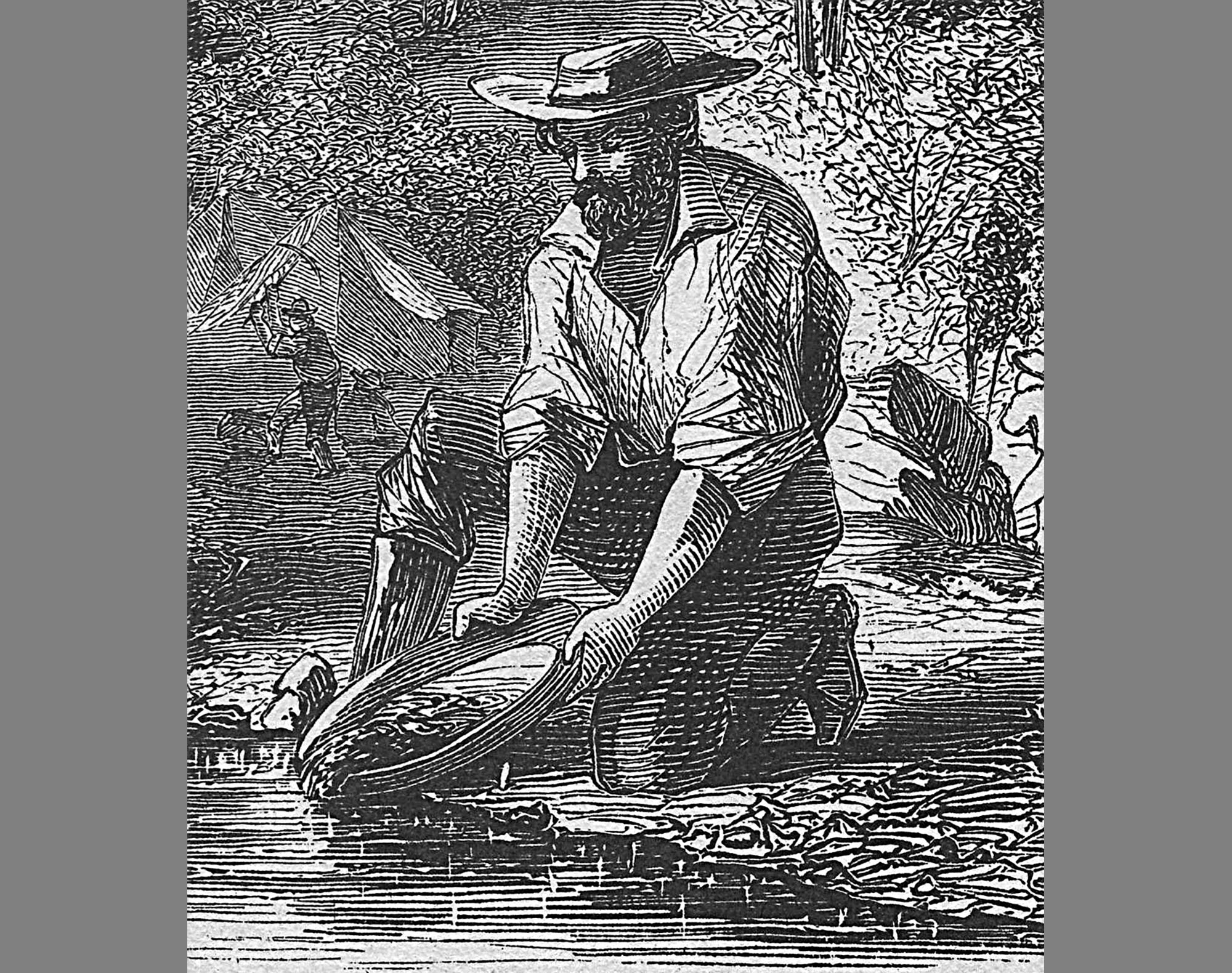
On January 24, 1848, a carpenter named James W. Marshall looked into the tailrace of a sawmill he was building for John Sutter in Coloma, California, and spotted something glimmering. That moment—the discovery of gold—did more than just change the geography of the American West; it triggered one of the most significant economic transformations in global history. While the history books often focus on the adventure and the “Forty-Niners,” the true story of 1848 is a masterclass in personal finance, business strategy, and the mechanics of market bubbles.

Understanding the year gold was discovered in California is not merely a history lesson; it is an examination of how wealth is created, lost, and sustained during times of extreme market volatility. For the modern investor or entrepreneur, the events following 1848 provide a timeless blueprint for identifying “Picks and Shovels” opportunities and navigating the high-risk, high-reward nature of emerging markets.
The 1848 Catalyst: From Discovery to Global Economic Explosion
The discovery of gold at Sutter’s Mill occurred just days before the signing of the Treaty of Guadalupe Hidalgo, which ended the Mexican-American War and ceded California to the United States. This timing was an economic miracle for a young nation. Before the news hit the mainstream, California was a remote outpost; within months, it became the epicenter of a global financial frenzy.
The Macroeconomic Shift: How Gold Fueled the Global Economy
The influx of Californian gold significantly increased the global money supply. During the mid-19th century, many nations operated on a bimetallic or silver standard. The massive injection of gold helped solidify the gold standard, providing a stable foundation for international trade. As gold flowed out of the Sierra Nevada foothills, it entered the vaults of London, Paris, and New York, fueling the industrial revolution and providing the capital necessary for massive infrastructure projects like the transcontinental railroad.
The “Forty-Niner” Mindset: High-Risk, High-Reward Investing
By 1849, the news had reached every corner of the globe, leading to the first great “side hustle” on a national scale. Farmers, lawyers, and laborers abandoned their steady incomes for the speculative allure of the gold fields. This represents the ultimate asymmetric bet: the downside was the cost of travel and time, while the upside was theoretically infinite wealth. However, like many modern speculative bubbles, the “entry fee” (the cost of migration and supplies) often exceeded the initial capital of the participants, leading to a high failure rate among the primary “investors”—the miners themselves.
Market Information Asymmetry in the 19th Century
In 1848, information traveled slowly. The delay in news created a unique market environment where those “on the ground” could consolidate claims before the masses arrived. In today’s financial terms, this is the equivalent of “early-stage seed investing.” By the time the general public (the Forty-Niners) arrived in 1849, the easiest-to-reach “low-hanging fruit” had already been harvested, proving that in any wealth-building scenario, the timing of market entry is often more critical than the effort expended.
Wealth Beyond the Pan: The Diversification of Income
One of the most enduring lessons from the 1848 discovery is that the people who made the most consistent money were rarely the ones doing the mining. While thousands of miners struggled to find a single ounce of gold, a savvy group of entrepreneurs realized that the real wealth lay in the ecosystem surrounding the discovery.
The “Picks and Shovels” Strategy: Business Finance 101
The term “Picks and Shovels” is now a staple of investment terminology, referring to the strategy of investing in the providers of essential services for an industry rather than the industry’s end product. In 1848 and 1849, Sam Brannan became California’s first millionaire not by mining, but by buying up every shovel, pick, and pan in the region and then announcing the discovery to the public. He understood supply and demand: the miners were a captive market with an inelastic demand for tools.
Real Estate and Infrastructure: The Secondary Market Boom
The Gold Rush transformed San Francisco from a village of 200 people to a city of 36,000 in just a few years. This created a massive real estate boom. Investors who purchased land or built warehouses to store the goods arriving by ship saw their net worth skyrocket. The business finance lesson here is clear: wealth is often found in the infrastructure that supports a trend. Whether it’s data centers for AI or warehouses for the Gold Rush, the “landlords” of the industry often see the most stable returns.
Levi Strauss and the Longevity of Brand-Based Wealth
Perhaps the most famous example of Gold Rush entrepreneurship is Levi Strauss. Recognizing that miners needed durable workwear that could withstand the rigors of the pits, Strauss moved to San Francisco in 1853. By innovating a product (riveted denim jeans) that solved a specific problem for a specific demographic, he built a brand that outlasted the gold veins by centuries. This highlights the importance of product-market fit and the ability to pivot a business model to meet the needs of a booming economy.
Financial Lessons from the Gold Rush for Today’s Investors
The year 1848 serves as a historical mirror to modern financial cycles. Whether we are looking at the dot-com bubble, the rise of cryptocurrency, or the current AI boom, the human psychology of the Gold Rush remains unchanged.
Recognizing “Fool’s Gold” in Modern Markets
Just as miners were often fooled by iron pyrite, modern investors are often lured by “vaporware” or speculative assets with no underlying value. The Gold Rush teaches us the importance of due diligence. Many who rushed to California in 1849 did so based on rumors rather than data. In personal finance, the “FOMO” (Fear Of Missing Out) that drove the Forty-Niners is the same impulse that leads to poor portfolio diversification today.
The Role of Liquidity and Cost of Living
During the peak of the Gold Rush, inflation in California was rampant. An egg could cost the equivalent of $30 in today’s money. Miners who found gold often spent it immediately on basic necessities, failing to account for the “burn rate” of their capital. This is a crucial lesson in liquidity and expense management. Finding “gold” (a high-paying job or a winning stock) is only half the battle; the other half is managing the cost of living and taxes to ensure that the wealth is retained.
The Power of Asymmetric Upside
Despite the risks, the Gold Rush was a rational pursuit for many. In a mid-19th-century economy with limited upward mobility, the chance to achieve generational wealth was a calculated risk. For today’s side-hustlers and entrepreneurs, the lesson is to look for opportunities where the potential gain far outweighs the measurable loss. The discovery in 1848 was the “Black Swan” event of its time, reminding us that massive wealth is often concentrated in rare, high-impact events.
The Digital Gold Rush: Parallels in Online Income and Crypto
As we look back at 1848, it is impossible not to see the parallels in the digital age. The “discovery” of blockchain technology and the “frontier” of the internet have created environments that mirror the California gold fields.
Cryptocurrency and the New 1848 Moment
The early days of Bitcoin are frequently compared to the 1848 discovery. Both were ignored by the establishment initially, both saw an explosion of “miners,” and both created a new class of millionaires overnight. The financial takeaway remains the same: the highest returns go to those who identify the value of the “mine” before it becomes common knowledge. However, as the market matures, the difficulty of “mining” (literally and figuratively) increases, requiring more capital and sophisticated strategy.
Identifying the New Infrastructure Opportunities
In the modern economy, the “picks and shovels” are the software platforms, payment processors, and cloud computing services that allow digital businesses to run. If you want to capitalize on a trend—be it e-commerce, AI, or remote work—the smartest financial move is often to provide the tools that these industries cannot live without. Instead of trying to “find gold” by launching the next viral app, many successful entrepreneurs are building the “shovels” (the APIs, the security tools, and the marketing platforms) that every app developer needs.

Risk Management in Volatile Environments
The miners who survived the Gold Rush with their wealth intact were those who knew when to exit. They didn’t keep digging until the last grain was gone; they took their earnings and invested them into stable assets like farmland or banking. This is the ultimate lesson in personal finance: wealth creation is a sprint, but wealth preservation is a marathon. Whether you are trading high-volatility assets or launching a high-growth startup, having an exit strategy and a plan for capital reallocation is essential for long-term financial security.
The year gold was discovered in California—1848—marked the beginning of a saga that defines the American economic spirit. It proved that while luck might find the gold, it is strategy, business acumen, and disciplined finance that keep it. For the modern reader, the Gold Rush is not just a story of the past; it is a living manual for navigating the riches of the future.
aViewFromTheCave is a participant in the Amazon Services LLC Associates Program, an affiliate advertising program designed to provide a means for sites to earn advertising fees by advertising and linking to Amazon.com. Amazon, the Amazon logo, AmazonSupply, and the AmazonSupply logo are trademarks of Amazon.com, Inc. or its affiliates. As an Amazon Associate we earn affiliate commissions from qualifying purchases.