
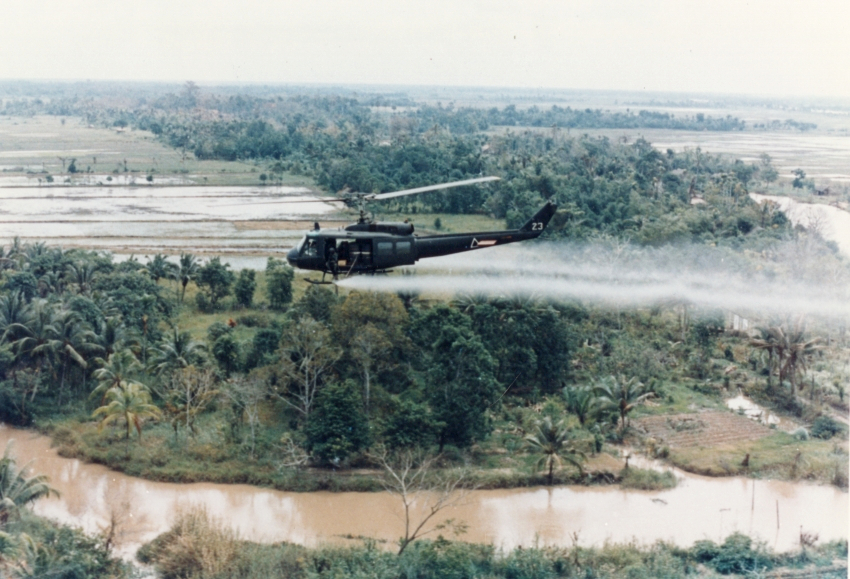
The intersection of chemical engineering and military strategy has often produced innovations that change the course of history. Few, however, carry the weight and technical notoriety of Agent Orange. Developed during a period of rapid advancement in synthetic chemistry, Agent Orange was designed as a high-efficiency defoliant, intended to strip away the dense canopy of the Vietnamese jungle to expose enemy movements. To understand what Agent Orange was made of is to explore the mid-20th-century leap in agricultural technology, the mechanics of synthetic hormones, and the catastrophic consequences of manufacturing shortcuts.
The Core Components: A Binary Chemical Formulation
At its technical essence, Agent Orange was a 50-50 mixture of two distinct synthetic herbicides. These chemicals were part of a class known as phenoxy herbicides, which were revolutionary for their ability to target broadleaf plants while leaving grasses relatively unharmed. The formulation was designed for mass application via aerial spraying, requiring a specific chemical stability that could survive being dispensed from high altitudes.
2,4-D (Dichlorophenoxyacetic acid): The Growth Regulator
The first half of the Agent Orange formula was 2,4-D. Developed in the 1940s, 2,4-D remains one of the most widely used herbicides in the world today. Its technological breakthrough lies in its mimicry of the plant hormone auxin. When applied to a plant, 2,4-D triggers uncontrolled, rapid growth. The plant’s vascular system essentially “grows itself to death,” as the cells elongate and divide so quickly that the plant cannot sustain its own nutrient transport. In the context of the Vietnam War, this component provided the rapid-action defoliation necessary for military operations.
2,4,5-T (Trichlorophenoxyacetic acid): The Defoliant Powerhouse
The second component, 2,4,5-T, was chemically similar to 2,4-D but contained an extra chlorine atom. This addition made the chemical significantly more effective against woody plants and brush, which were prevalent in the Vietnamese Highlands. While 2,4-D was effective against soft-tissue weeds, 2,4,5-T was the “heavy lifter” of the defoliation program. Together, these two chemicals created a synergistic effect that could turn a lush forest into a barren landscape within days. However, it was the synthesis process of 2,4,5-T that would eventually lead to the chemical’s infamy.
The Manufacturing Process: Accelerating Synthesis for Mass Production
The production of Agent Orange was a feat of industrial scaling. During the 1960s, the U.S. government contracted several major chemical manufacturers, including Dow Chemical and Monsanto, to produce millions of gallons of the herbicide. The technology required to produce these chemicals on such a massive scale was cutting-edge for its time, but it pushed the boundaries of chemical stability.
Industrial Scalability and Temperature Controls
In chemical engineering, the synthesis of 2,4,5-T requires the reaction of 1,2,4,5-tetrachlorobenzene with sodium hydroxide. This reaction is highly sensitive to temperature. Under ideal, slow-production laboratory conditions, the temperature is kept relatively low to ensure a pure output. However, to meet the skyrocketing demand of the military’s “Operation Ranch Hand,” manufacturers increased the temperature of the reaction vessels to speed up the process. This technological “shortcut” allowed for higher yields but introduced a fatal flaw into the chemical batch.
The Unintended Byproduct: TCDD Dioxin
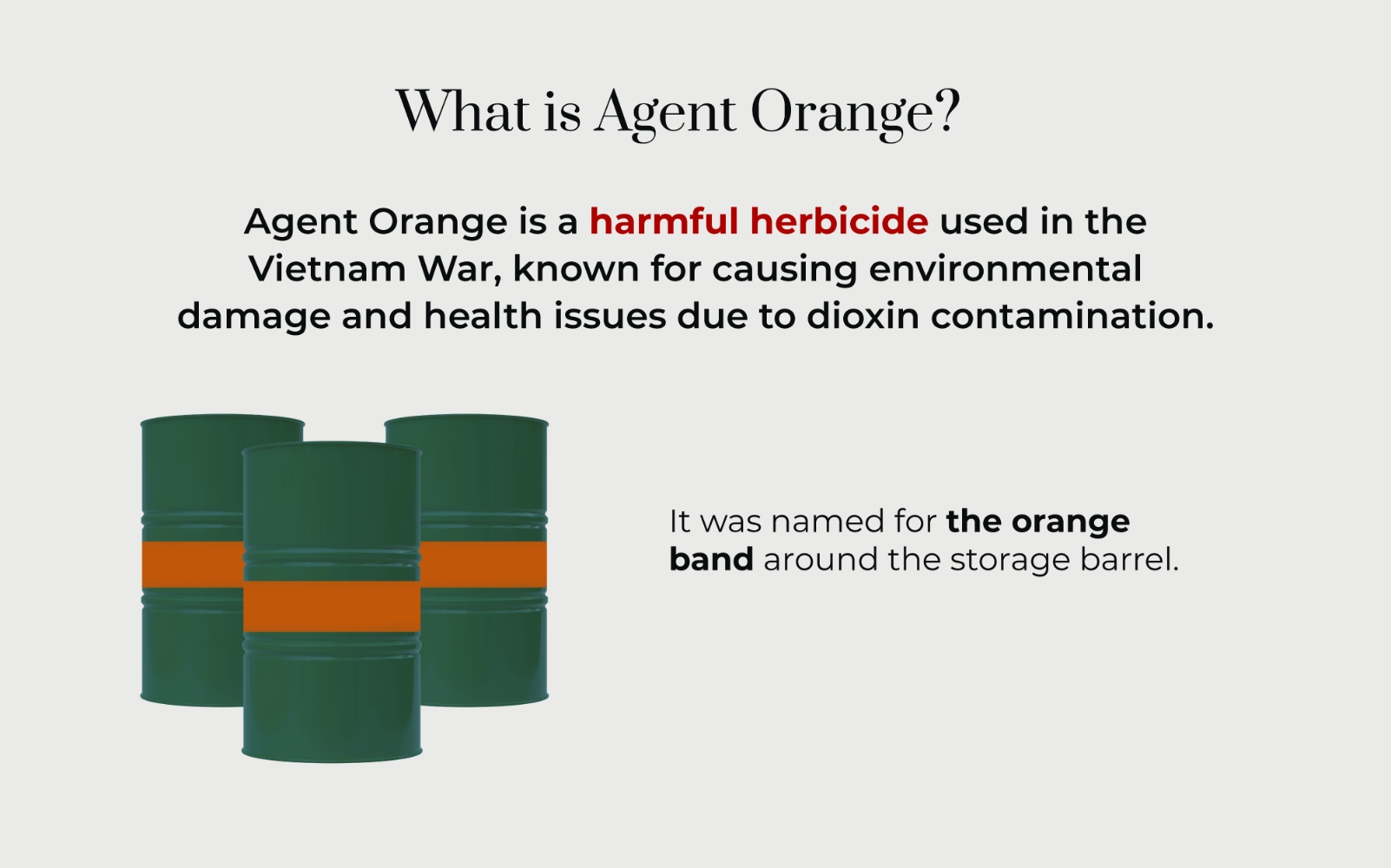
The high-heat manufacturing process triggered a secondary, unwanted chemical reaction. This reaction produced 2,3,7,8-tetrachlorodibenzo-p-dioxin, commonly known as TCDD or simply “dioxin.” Dioxin was not an intentional ingredient in Agent Orange; it was a contaminant. From a technical standpoint, TCDD is one of the most toxic substances known to science. It is chemically stable, meaning it does not break down easily in the environment or the human body. Because the military and the manufacturers prioritized the volume of production over the refinement of the chemical, the Agent Orange delivered to the field contained levels of dioxin that were hundreds of times higher than those found in domestic-grade herbicides of the time.
The Technical Legacy: How Agent Orange Changed Agricultural Science
While the humanitarian and environmental costs of Agent Orange were devastating, the technology behind its creation served as a bridge between early 20th-century chemistry and modern agricultural biotechnology. The lessons learned from the synthesis and application of Agent Orange reshaped how the world approaches pesticide regulation and chemical safety.
From Battlefield to Farm: The Transition of Synthetic Auxins
After the Vietnam War, the use of 2,4,5-T was largely phased out and eventually banned due to its dioxin content. However, 2,4-D survived and became a cornerstone of modern agri-tech. Today, 2,4-D is a primary component in many lawn care products and agricultural sprays. The technology of “synthetic auxins” has been refined to the point where farmers can apply these chemicals with surgical precision. The development of herbicide-tolerant crops—a major sector of modern biotechnology—is a direct evolution of the science that sought to manipulate plant growth hormones in the 1960s.
Regulatory Technology and Modern Safety Protocols
The Agent Orange crisis necessitated the development of more sophisticated analytical chemistry. In the 1960s, detecting impurities at the “parts per trillion” level was nearly impossible with existing technology. Today, mass spectrometry and gas chromatography allow chemists to identify contaminants with extreme accuracy. This technological advancement in testing has led to the “Maximum Contaminant Level” (MCL) standards used by the EPA and other global regulatory bodies. The failure to detect and remove dioxin from Agent Orange became a case study that paved the way for modern chemical safety protocols.
Environmental and Biological Impact: A Failure of Predictive Modeling
One of the most significant technical failures of the Agent Orange program was the lack of predictive modeling regarding its persistence in the environment. At the time of its development, the prevailing belief was that the chemicals would degrade quickly under sunlight and tropical moisture.
Soil Persistence and the Persistence of TCDD
While 2,4-D and 2,4,5-T do eventually break down in the environment, the contaminant TCDD does not. Dioxin is hydrophobic—it does not dissolve in water but binds tightly to organic matter in the soil and sediment. From a technological perspective, this created a “poisoned landscape” that lasted for decades. The dioxin entered the food chain through fish and livestock, bioaccumulating in the fatty tissues of organisms. Modern environmental tech now uses “hot spot” mapping and soil remediation technology to identify and neutralize these areas, a process that is still ongoing in parts of Southeast Asia.
Genetic Engineering and Modern Bioremediation Efforts
The legacy of Agent Orange has sparked a new frontier in biotechnology: bioremediation. Scientists are currently developing genetically modified bacteria and plants capable of “eating” or breaking down persistent organic pollutants like dioxins. This branch of tech uses the same principles of genetic manipulation that were once used to create defoliants, but applies them toward healing the environment. By engineering microbes that can target the chlorine bonds in dioxin molecules, researchers are using 21st-century technology to solve a 20th-century chemical error.

Conclusion: The Cautionary Tale of Chemical Technology
Agent Orange was more than just a chemical mixture; it was a manifestation of an era that believed industrial technology could override natural processes with few consequences. It was made of 2,4-D and 2,4,5-T—two powerful synthetic hormones—and a tragic byproduct of industrial haste: TCDD dioxin.
From a tech perspective, Agent Orange represents the dual nature of innovation. The same chemical foundations that led to the development of modern herbicides and life-saving agricultural tools were, in a different context, used to create a weapon of environmental destruction. Today, the study of Agent Orange serves as a vital reminder for the tech industry: the success of a technology is not measured merely by its immediate efficacy, but by its long-term stability and the precision of its manufacturing. As we move further into the age of CRISPR, synthetic biology, and advanced chemical engineering, the lessons of the Agent Orange formula remain more relevant than ever. Understanding the chemical makeup of the past is the only way to ensure the safety of the technologies we develop for the future.
aViewFromTheCave is a participant in the Amazon Services LLC Associates Program, an affiliate advertising program designed to provide a means for sites to earn advertising fees by advertising and linking to Amazon.com. Amazon, the Amazon logo, AmazonSupply, and the AmazonSupply logo are trademarks of Amazon.com, Inc. or its affiliates. As an Amazon Associate we earn affiliate commissions from qualifying purchases.