
The landscape of home entertainment has undergone a seismic shift over the last decade. As traditional cable subscriptions continue to dwindle, the rise of Over-The-Top (OTT) streaming services has redefined how we consume media. At the forefront of this digital revolution is Hulu + Live TV. Unlike its early iterations, which functioned primarily as a repository for next-day network television, Hulu has evolved into a sophisticated technological platform that integrates live linear broadcasting with a massive video-on-demand (VOD) library. Understanding what channels are on Hulu requires more than just a list; it requires an exploration of the platform’s technical ecosystem, its regional distribution logic, and the user interface that manages hundreds of live data streams simultaneously.
The Evolution of Cord-Cutting: How Hulu + Live TV Bridges the Gap
The transition from coaxial cable to fiber-optic and wireless streaming represents a major milestone in communication technology. Hulu + Live TV is designed to bridge the gap between the “channel-surfing” nostalgia of traditional television and the data-driven precision of modern apps.
The Shift from Linear to Digital Distribution
Traditional cable relies on a linear broadcast model where signals are pushed to a box via physical infrastructure. In contrast, Hulu utilizes Internet Protocol Television (IPTV) technology. This allows for a more dynamic delivery system where data packets are optimized for the user’s specific bandwidth. This technology enables features that were previously impossible, such as seamless switching between a live football game and a 4K HDR movie from the VOD library without changing inputs on the hardware.
Cloud DVR Technology and Interface Design
One of the most significant technological hurdles for live streaming services was the “Digital Video Recorder” (DVR). While traditional TiVo units relied on local hard drives, Hulu utilizes Cloud DVR technology. When a user “records” a program, they aren’t saving data to their device; they are flagging a specific stream on Hulu’s remote servers to be accessible to their account. This allows for unlimited storage capacity (in the current tier), a feat of server-side management that ensures users can access their recordings from a smartphone, tablet, or smart TV interchangeably.
Understanding the Hulu + Live TV Channel Ecosystem
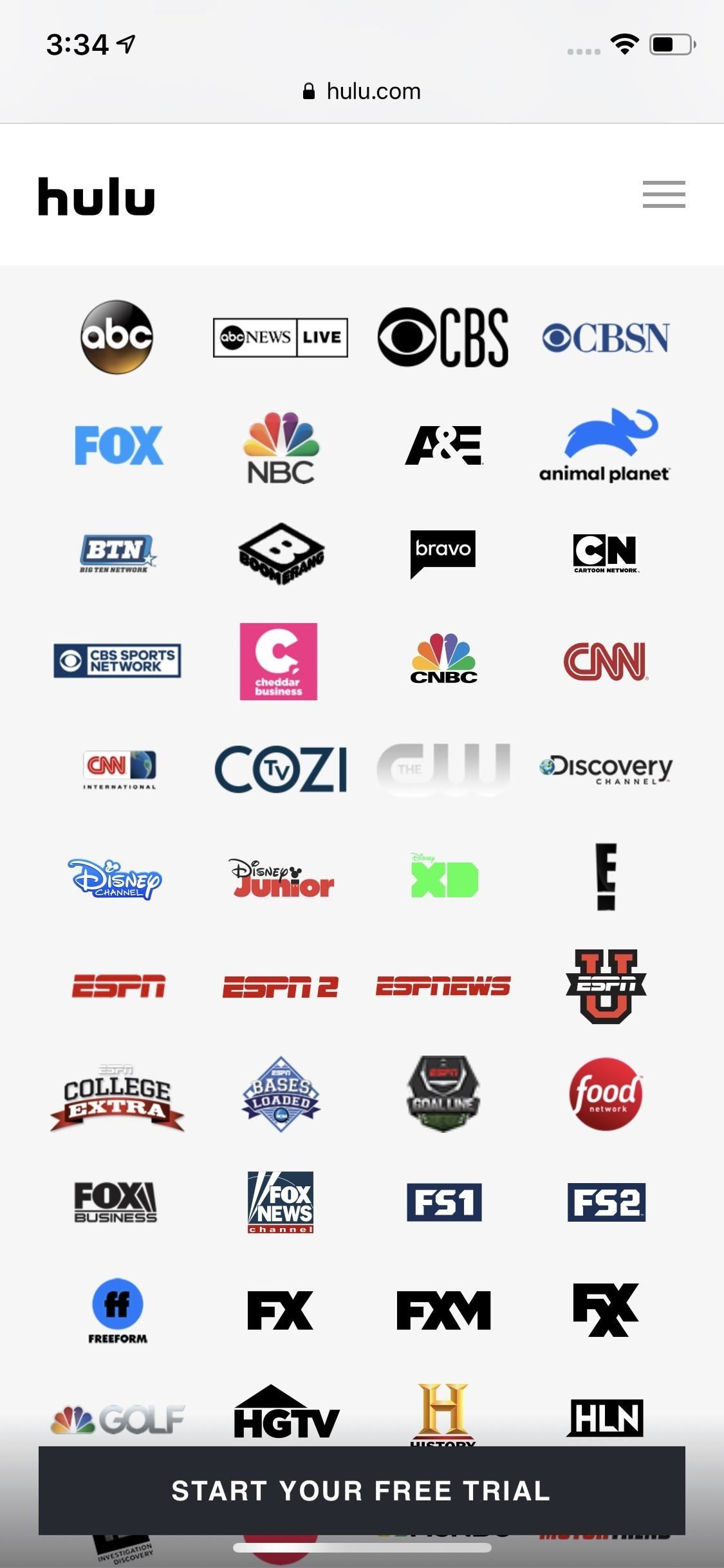
For those asking “what TV channels are on Hulu,” the answer is comprehensive. Hulu has negotiated complex licensing agreements to provide a lineup that rivals most “Gold” or “Platinum” cable packages. The service typically offers over 90 channels, though this number fluctuates based on regional availability and ongoing carriage disputes.
Local Networks and Regional Sports Coverage
The technical backbone of Hulu’s live service is its ability to geolocate the user to provide local affiliate broadcasting. This includes:
- ABC, CBS, FOX, and NBC: In most American markets, Hulu provides the local affiliate, ensuring users get local news, weather, and “must-see” network programming.
- The CW: Available in many markets for primetime scripted content.
- Telemundo and Univision: Essential for Spanish-speaking households, providing news and sports.
The technology behind this involves real-time IP-address verification to ensure that the broadcast rights comply with local licensing laws, a complex background process that occurs every time the app is launched.
Major Cable Brands: News, Entertainment, and Sports
Beyond the local affiliates, Hulu includes the “heavy hitters” of the cable world. The lineup is strategically curated to cover the most high-traffic demographics:
- News and Information: CNN, MSNBC, Fox News, CNBC, and HLN provide 24/7 global coverage.
- Sports: This is a primary driver for the Tech-savvy sports fan. The lineup includes ESPN, ESPN2, FS1, FS2, CBS Sports Network, and the Big Ten Network.
- General Entertainment: Popular staples like HGTV, Food Network, Bravo, TLC, Discovery Channel, and National Geographic are standard.
- Scripted Content: FX, FXX, AMC, USA Network, TNT, and TBS ensure that fans of prestigious dramas and live sports (like the NBA and MLB) are covered.
Specialized and Niche Programming
Hulu also caters to specific interests through its “tier two” channels. These include Disney Channel, Disney Junior, and Cartoon Network for families, as well as niche interests like the History Channel, A&E, and Vice. By integrating these into a single UI, Hulu eliminates the “app fatigue” associated with having twenty different standalone subscriptions.
The Technical Infrastructure: Devices, Quality, and User Experience

A streaming service is only as good as the hardware it runs on and the stability of its stream. Hulu has invested heavily in a multi-platform architecture that ensures a consistent experience across diverse technological environments.
Hardware Compatibility and Multi-Stream Technology
The Hulu app is engineered to run on a vast array of operating systems. This includes proprietary smart TV OSs (like Samsung’s Tizen or LG’s webOS), dedicated streaming sticks (Roku, Amazon Fire TV, Apple TV), and gaming consoles (PlayStation 5, Xbox Series X).
From a technical standpoint, one of Hulu’s strongest features is its “Unlimited Screens” add-on. Managing multiple high-definition streams on a single home network requires robust “Quality of Service” (QoS) handling from the user’s router, but on the server side, Hulu must manage the authentication and bandwidth allocation for millions of concurrent users without latency spikes.
Bitrates and Streaming Resolution Standards
While most live TV is broadcast at 720p or 1080i by the networks themselves, Hulu’s tech stack works to upscale and stabilize these signals. For VOD content, Hulu supports 4K Ultra HD and High Dynamic Range (HDR) on compatible devices. The service uses adaptive bitrate streaming, which means the app constantly monitors the user’s internet speed. If the bandwidth drops, the app automatically lowers the resolution to prevent buffering, rather than stopping the playback—a critical feature for live events like the Super Bowl or breaking news.
Customization and Add-On Packages
One of the greatest advantages of a software-based TV service over a hardware-based one is the ease of customization. Users can modify their channel lineup through the account dashboard with instant activation.
Premium Network Integration
Hulu acts as a centralized hub for premium “add-ons.” Instead of managing separate billing and apps for HBO (Max), Showtime, or STARZ, users can integrate these channels directly into the Hulu Live TV guide. This is achieved through deep API integration, allowing the metadata from these external providers to be indexed within Hulu’s search engine. When you search for a movie, Hulu’s algorithm checks your active subscriptions across all integrated add-ons to provide a “one-click” play experience.
Sports and International Add-ons
For the power user, Hulu offers specialized packages:
- Sports Add-on: Includes NFL RedZone, MAVTV, and the Outdoor Channel.
- Español Add-on: Features CNN en Español, Discovery en Español, and ESPN Deportes.
- Entertainment Add-on: Adds niche channels like Cooking Channel, DIY Network, and MTV Classic.
The technical brilliance here lies in the “dynamic guide.” Unlike a printed cable guide, Hulu’s digital guide reshapes itself in real-time based on the user’s active entitlements, ensuring they only see the content they have the “keys” to watch.
Maximizing Value: The Disney Bundle and Future Tech Trends
As we look at the broader technological landscape, Hulu’s position within the Disney ecosystem (The Disney Bundle) represents the future of media “stacks.”
The Synergy of the Disney, Hulu, and ESPN+ Ecosystem
By bundling Hulu with Disney+ and ESPN+, the parent company has created a unified data profile for the user. Technically, this allows for more sophisticated recommendation engines. If the system knows you watch “The Mandalorian” on Disney+, it can use AI-driven heuristics to suggest similar sci-fi content on the Hulu Live TV channels or highlight an upcoming live sports event on ESPN+ that aligns with your viewing habits.

The Future of Interactive Television and AI Discovery
Looking forward, the technology behind Hulu is moving toward greater interactivity. We are seeing the early stages of “shoppable TV,” where users can interact with commercials via their remote. Furthermore, as Artificial Intelligence (AI) and Machine Learning (ML) continue to evolve, the “Search” function is being replaced by “Discovery.” Hulu’s backend is increasingly capable of predicting what a user wants to watch based on time of day, device type, and even the speed at which they are scrolling through the guide.
In conclusion, the question of “what channels are on Hulu” is answered by a sophisticated blend of traditional broadcasting and cutting-edge software engineering. With over 90 channels covering news, sports, and entertainment, supported by a robust cloud infrastructure and high-definition streaming standards, Hulu + Live TV stands as a premier example of how technology has successfully digitized the living room. Whether you are a technophile looking for the best bitrate or a casual viewer wanting the comfort of a local news broadcast, the Hulu ecosystem provides a versatile, scalable, and technologically advanced solution for the modern era.
aViewFromTheCave is a participant in the Amazon Services LLC Associates Program, an affiliate advertising program designed to provide a means for sites to earn advertising fees by advertising and linking to Amazon.com. Amazon, the Amazon logo, AmazonSupply, and the AmazonSupply logo are trademarks of Amazon.com, Inc. or its affiliates. As an Amazon Associate we earn affiliate commissions from qualifying purchases.