
When evaluating a Tesla, the initial question—”how much are they?”—is merely the starting point of a complex financial journey. Unlike traditional internal combustion engine (ICE) vehicles, where pricing is relatively stable and the cost of ownership follows a predictable trajectory, Tesla operates on a high-tech software-and-hardware model that mirrors the volatility and opportunity of a financial asset. To understand the true cost of a Tesla, one must look past the sticker price and analyze the broader financial ecosystem, including federal subsidies, operating expenses, and the volatile dynamics of the used EV market.
The Base Investment: Current Market Pricing for the Tesla Fleet
Tesla’s pricing strategy is notoriously fluid, often shifting multiple times a year in response to supply chain fluctuations, interest rate changes, and competitive pressures from emerging manufacturers. For a potential buyer, understanding the current tiers of entry is the first step in personal financial planning.
Entry-Level Models: The Model 3 and Model Y
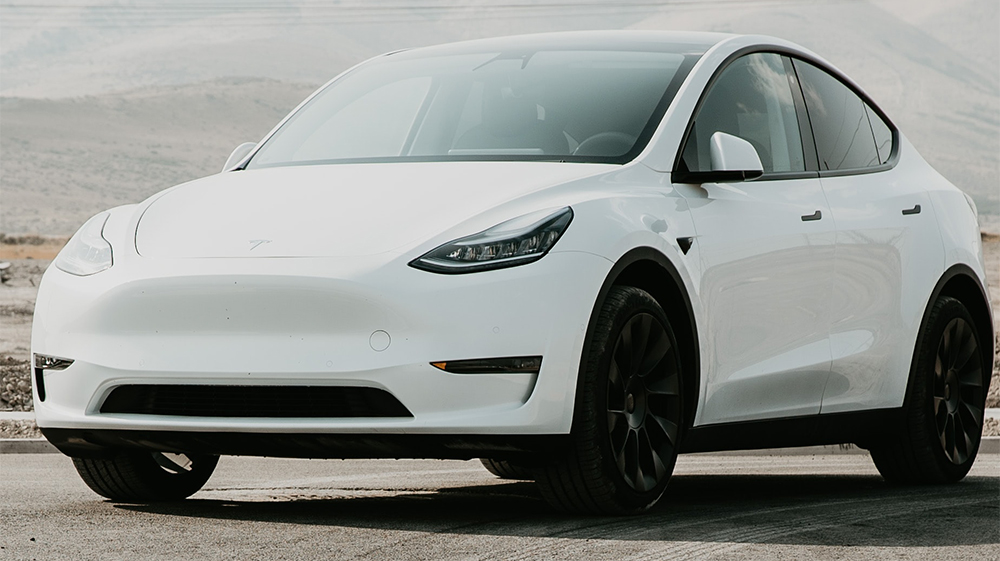
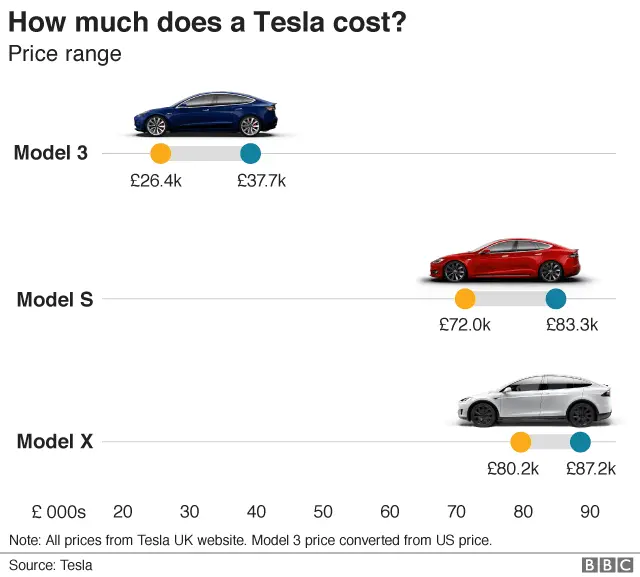
The Model 3 remains the gateway into the Tesla ecosystem. Currently, the “Rear-Wheel Drive” base model serves as the most affordable entry point, typically hovering in the low-to-mid $40,000 range. For those prioritizing utility and the most popular vehicle segment in the U.S., the Model Y—a compact SUV—is the primary driver of Tesla’s volume. The pricing for the Model Y reflects its status as the world’s best-selling vehicle, generally starting slightly higher than the Model 3. Both models offer “Long Range” and “Performance” trims, which add significant premiums—often between $5,000 and $10,000—for improved battery capacity and acceleration.
The Luxury Tier: Model S and Model X
At the top of the consumer line sit the Model S sedan and Model X SUV. These vehicles represent a significant jump in capital expenditure, often starting in the $75,000 to $80,000 range. For the “Plaid” variants, which offer supercar-level performance, prices can easily exceed $100,000. These models are geared toward high-net-worth individuals who prioritize range and prestige, but they also face steeper depreciation curves than their more affordable counterparts.
The Disruptor: The Cybertruck
The newest addition to the financial ledger is the Cybertruck. With a pricing structure that currently focuses on high-end “Foundation Series” models, the Cybertruck represents a unique asset class. Initial pricing has been north of $100,000 for early adopters, though Tesla intends to introduce lower-priced variants as production scales. For business owners, the Cybertruck’s gross vehicle weight rating (GVWR) often places it in a category eligible for specific tax advantages, which we will explore further.
Maximizing ROI: Navigating Federal Tax Credits and Local Incentives
In the “Money” niche, an investment is only as good as its tax efficiency. The federal government’s pursuit of electrification has created a unique opportunity for Tesla buyers to significantly lower their net purchase price through the Inflation Reduction Act (IRA).
The Federal Clean Vehicle Credit
For many Americans, the $7,500 federal tax credit is the single most important factor in the Tesla “how much” equation. However, this is not a universal discount. It is subject to strict MSRP caps—$55,000 for sedans (Model 3) and $80,000 for SUVs and trucks (Model Y, X, and Cybertruck). Furthermore, there are income limitations for buyers (e.g., $150,000 for single filers). Understanding whether a specific trim qualifies can mean the difference between a $40,000 car and a $47,500 car.
Point-of-Sale Rebates and State Incentives
A recent shift in policy allows the $7,500 credit to be applied directly at the point of sale, effectively acting as a down payment. This reduces the amount financed and the total interest paid over the life of the loan. Additionally, states like California, Colorado, and Massachusetts offer their own rebates, which can sometimes stack with federal credits, potentially slicing the total cost of a Model 3 or Y by over $10,000 before the first mile is even driven.
Inventory Discounts and Referral Credits
Tesla occasionally offers “inventory discounts” on vehicles already produced and sitting at delivery centers. These discounts can range from $500 to $5,000 depending on the quarter-end goals of the company. Savvy investors monitor these fluctuations closely, as buying an “existing inventory” vehicle can provide better immediate equity than ordering a custom build.
The “Total Cost of Ownership” Equation: Operation and Maintenance
The sticker price of a Tesla is a “gross” figure, but the “net” cost of ownership over five years is often lower than that of a significantly cheaper gasoline car. This is where the financial genius of the EV model reveals itself through reduced operating expenses.

Fuel Savings vs. Charging Costs
The most immediate financial relief comes from the elimination of gasoline. On average, charging a Tesla at home costs about one-third of what it costs to fuel a comparable internal combustion engine vehicle. For an individual driving 15,000 miles a year, this can result in annual savings of $1,000 to $2,000. Over a six-year ownership period, these “fuel” savings effectively act as a $10,000 rebate on the original purchase price.
Maintenance and Service Intervals
Traditional vehicles require oil changes, spark plug replacements, timing belt adjustments, and transmission services. Teslas have significantly fewer moving parts. The primary maintenance costs are tires, cabin air filters, and windshield wiper fluid. While Tesla tires can be more expensive due to the weight and torque of the vehicle, the lack of recurring engine maintenance represents a significant reduction in the “leakage” of personal capital.
The Insurance Premium Paradox
While Teslas save money on fuel and repairs, they can be more expensive to insure. Because of the high-tech sensors, aluminum castings, and specialized repair requirements, insurance premiums for Teslas are often 20% to 30% higher than the national average for luxury sedans. This is a critical line item in any budget and must be weighed against the savings in maintenance. Tesla Insurance—an in-house product available in certain states—uses real-time driving behavior to price premiums, offering a potential path to lower costs for disciplined drivers.
Depreciation and Resale: The EV Secondary Market Dynamics
For any major purchase, the residual value (resale value) determines the ultimate cost of the investment. Tesla’s resale value has historically been strong, but recent market shifts have introduced new variables for the fiscally conscious buyer.
The Impact of Price Volatility
In 2023 and 2024, Tesla aggressively cut prices on new models to capture market share. While this was great for new buyers, it caused a sharp correction in the used market. Owners who bought at the peak of the market saw their equity evaporate quickly. When calculating “how much” a Tesla is, one must consider that the secondary market is now more closely tied to the “net” price (after tax credits) rather than the original MSRP.
Software-Locked Value and FSD
A unique aspect of Tesla’s financial profile is “Full Self-Driving” (FSD) software. Tesla has experimented with different pricing for this feature, ranging from $5,000 to $15,000, or a monthly subscription. In the used market, the presence of FSD does not always recoup its full original cost, but it does provide a floor for the vehicle’s value. From a money-management perspective, many experts now suggest the subscription model over the lump-sum purchase to avoid tying up capital in a non-transferable software asset.
Battery Longevity and Residual Risk
The “fear” of a battery replacement costing $15,000 to $20,000 often weighs on used car prices. However, data shows that Tesla batteries generally retain 80-90% of their capacity even after 100,000 miles. For a buyer, this means the vehicle remains a viable asset for a much longer period than a high-mileage gasoline car, which might face catastrophic engine or transmission failure.
Strategic Acquisition: Financing, Leasing, and Business Deductions
The final pillar of the Tesla financial profile is the method of acquisition. How you pay for the car is often as important as what you pay.
To Lease or To Finance?
Leasing a Tesla has become increasingly popular because it protects the consumer from the risk of rapid depreciation or technological obsolescence. If Tesla releases a revolutionary new battery or sensor suite in three years, the lessee can simply hand back the keys. However, Tesla leases often do not allow for a “buyout” at the end of the term (specifically for Model 3 and Y), which means you cannot capture any equity if the car’s market value ends up being higher than the residual.
Section 179 Deductions for Business Owners
For entrepreneurs and small business owners, the Model X and Cybertruck offer a significant financial loophole. Because these vehicles have a GVWR over 6,000 pounds, they may qualify for a Section 179 deduction. This allows a business to deduct a significant portion (or sometimes the entirety) of the vehicle’s purchase price in the first year, provided it is used for business purposes. This can result in a tax savings worth tens of thousands of dollars, making a $90,000 Model X “cheaper” than a $50,000 Model 3 on a net basis.
Conclusion: The Holistic View of “How Much”
So, how much are Teslas? The answer is not a single number on a website. It is a calculation that involves the purchase price minus federal and state incentives, plus insurance premiums, minus five years of gasoline and maintenance savings, and finally, adjusted for the projected resale value.
For the financially savvy, a Tesla is rarely just a car; it is a leveraged bet on energy efficiency and software-driven hardware. While the upfront costs remain higher than entry-level economy cars, the “Money” perspective reveals a vehicle that offers a competitive—and often superior—total cost of ownership for those who understand how to navigate the available incentives and operational savings.
aViewFromTheCave is a participant in the Amazon Services LLC Associates Program, an affiliate advertising program designed to provide a means for sites to earn advertising fees by advertising and linking to Amazon.com. Amazon, the Amazon logo, AmazonSupply, and the AmazonSupply logo are trademarks of Amazon.com, Inc. or its affiliates. As an Amazon Associate we earn affiliate commissions from qualifying purchases.