
In the modern financial landscape, your credit report is perhaps the most influential document you own. Often described as a “financial resume,” it serves as a detailed record of your borrowing history and repayment behavior. Whether you are applying for a mortgage, seeking a low-interest auto loan, or even applying for a high-level job, lenders and institutions use this document to gauge your level of risk.
Understanding exactly what shows up on a credit report is the first step toward mastering your personal finances. This data is compiled by the three major credit bureaus—Equifax, Experian, and TransUnion—and while their formats may differ slightly, the core information remains consistent. This guide breaks down the essential components of a credit report, ensuring you know exactly what lenders see when they pull your file.
Personally Identifiable Information: The Foundation of Your File
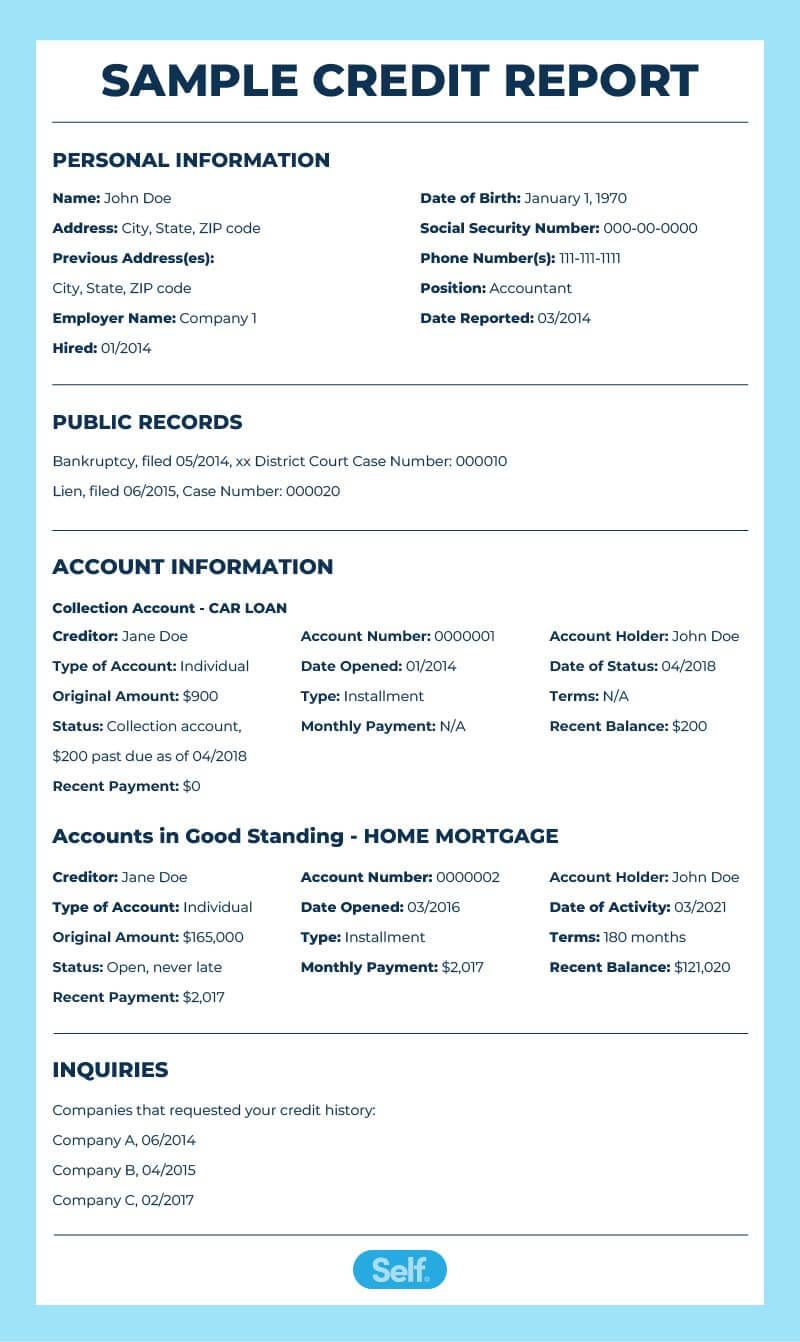
The first section of any credit report is dedicated to identifying who you are. While this data does not directly impact your credit score, its accuracy is paramount. Errors in this section can lead to “mixed files,” where your information is merged with someone else’s, potentially damaging your credit standing through no fault of your own.
Name and Known Aliases
Your full legal name, including suffixes (like Jr. or Sr.), is the primary identifier. The report will also list any aliases or maiden names you have used when applying for credit in the past. If you have recently married or changed your name, you might see several variations of your name listed here.
Address History and Social Security Number
A credit report maintains a chronological list of your residential history. This typically includes your current address and any previous addresses where you resided while holding active credit accounts. Alongside these addresses, a truncated or encrypted version of your Social Security Number (SSN) and your Date of Birth (DOB) are recorded to ensure the data belongs specifically to you.
Employment Information
Lenders often report the employer information you provide on credit applications. It is important to note that this section is rarely a complete work history. It simply reflects the employers you listed when you last applied for a loan or credit card. If you haven’t applied for credit in several years, this section might appear outdated, which is generally not a cause for concern as it is not used for scoring purposes.
Credit Account Details: The Core of Your Financial History
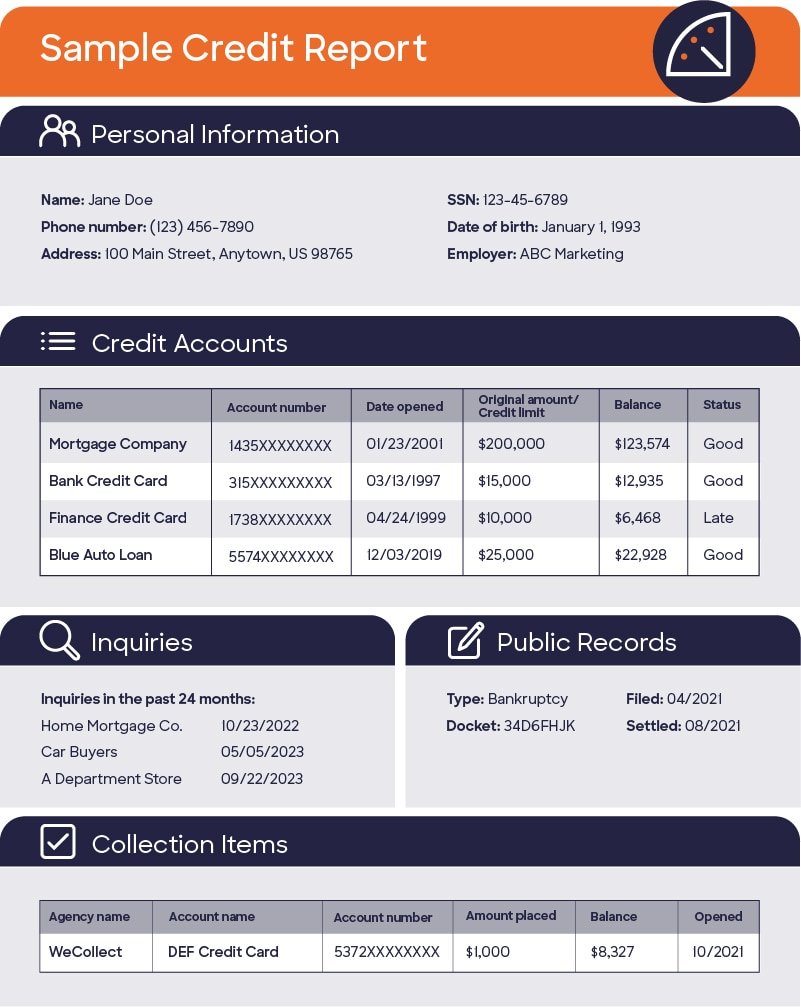
The “Trade Lines” or account history section is the most significant portion of your credit report. This is where the math happens. Every time you use a credit card or take out a loan, the lender reports the specifics of that relationship to the bureaus. This data determines roughly 35% to 40% of your credit score.
Types of Credit Accounts
Your report distinguishes between different types of credit. Revolving accounts include credit cards and lines of credit, where the balance fluctuates and you have a set limit. Installment accounts are loans with a fixed end date and set monthly payments, such as mortgages, student loans, and auto loans. Having a healthy mix of both shows lenders that you can manage various types of debt responsibly.
Payment History and Account Status
For every account, the report shows a month-by-month grid of your payment behavior. You will see markers for “Paid as Agreed” or codes indicating how many days a payment was late (e.g., 30, 60, or 90 days). This section also notes the current status of the account: is it open, closed, or “charged off”? A charge-off occurs when a creditor gives up on collecting a debt after several months of non-payment, which is a severe negative mark.
Credit Limits and Current Balances
For revolving accounts, the report lists your total credit limit and your “high balance” (the most you have ever charged on that card). Crucially, it shows your current balance as of the last reporting cycle. This information is used to calculate your credit utilization ratio—the percentage of available credit you are using. Financial experts recommend keeping this ratio below 30% to maintain a strong score.
Public Records and Collections: The Red Flags
While the account history shows your active management of debt, the public records and collections sections highlight instances where the financial relationship has broken down. These entries are often referred to as “negative items” and can stay on your report for seven to ten years.
Bankruptcies
Bankruptcies are the most significant public records that appear on a credit report. A Chapter 7 bankruptcy, which discharges most debts, stays on your report for 10 years from the filing date. A Chapter 13 bankruptcy, which involves a repayment plan, typically stays for seven years. These entries signal to lenders that you have had extreme difficulty managing debt in the past.
Collection Accounts
If you fail to pay a debt—such as a medical bill, utility payment, or credit card balance—the original creditor may sell that debt to a third-party collection agency. Once the agency reports this, a “Collection” entry appears. Even if you eventually pay the collection, the record of the account being sent to collections remains on your report for seven years from the date the original account first became delinquent.
The Absence of Civil Judgments and Tax Liens
In a significant shift for consumer protection, as of 2017 and 2018, the three major bureaus removed almost all civil judgments and tax liens from credit reports. This change occurred because the data was often inaccurate or lacked sufficient identifying information (like SSNs). While these items may still show up in specialized background checks for mortgages or employment, they no longer appear on standard credit reports or impact your FICO score.
Credit Inquiries: The Footprints of Your Activity
Every time someone requests to see your credit report, a record of that request, known as an “inquiry,” is created. Not all inquiries are created equal, and it is vital to understand the difference between those that affect your score and those that do not.
Hard Inquiries
A “Hard Inquiry” (or hard pull) occurs when you apply for credit and a lender reviews your report to make a lending decision. This might happen when you apply for a new credit card, a mortgage, or a personal loan. Hard inquiries generally stay on your report for two years, though they usually only impact your credit score for the first 12 months. Too many hard inquiries in a short period can suggest to lenders that you are “credit hungry” or in financial distress.
Soft Inquiries
“Soft Inquiries” occur when your credit report is checked for reasons not initiated by a formal credit application. This includes when you check your own credit score, when an employer conducts a background check (with your permission), or when a credit card company checks your file to send you “pre-approved” offers. Soft inquiries are only visible to you; lenders cannot see them, and they have absolutely no impact on your credit score.
Rate Shopping Logic
Modern credit scoring models are designed to be fair to consumers who are “rate shopping.” If you are looking for a mortgage or an auto loan, multiple hard inquiries for the same type of loan within a short window (usually 14 to 45 days) are often treated as a single inquiry. This allows you to find the best interest rate without severely penalizing your credit score.
What Does Not Appear on a Credit Report
To truly understand your credit report, you must also know what is excluded. There are several pieces of financial and personal information that have no place in a credit file, despite common misconceptions.
Personal Assets and Income
Perhaps the most common myth is that your salary appears on your credit report. It does not. Your bank account balances (checking and savings), 401(k) totals, and investment portfolios are also absent. While a lender will ask for your income on an application, they are getting that information from you or your pay stubs, not from the credit bureaus.
Demographic and Lifestyle Information
Under the Equal Credit Opportunity Act, certain information is strictly prohibited from being used in credit scoring and does not appear on your report. This includes your race, religion, national origin, gender, and marital status. Additionally, your medical history (beyond unpaid medical bills in collections) and criminal record do not appear on a standard credit report.
Non-Credit Monthly Expenses
Traditionally, your monthly rent, cell phone bill, and utility payments did not show up on a credit report because they are not considered “debt.” However, this is changing with the advent of tools like “Experian Boost” or “UltraFICO,” which allow consumers to voluntarily opt-in to having these positive payment histories reported to improve their scores. Unless you explicitly use these services, these routine bills typically only appear if they go to collections.
Conclusion: Taking Control of Your Financial Narrative
Your credit report is more than just a list of numbers; it is a narrative of your financial responsibility. By understanding the nuances of personally identifiable information, account trade lines, public records, and inquiries, you can take a proactive approach to managing your wealth.
Regularly monitoring your report allows you to spot inaccuracies early and understand how your daily financial decisions—like carrying a high balance or missing a payment by a few days—ripple through your entire financial life. In a world where credit determines your access to capital, knowing exactly what shows up on your report is the ultimate form of financial empowerment.
aViewFromTheCave is a participant in the Amazon Services LLC Associates Program, an affiliate advertising program designed to provide a means for sites to earn advertising fees by advertising and linking to Amazon.com. Amazon, the Amazon logo, AmazonSupply, and the AmazonSupply logo are trademarks of Amazon.com, Inc. or its affiliates. As an Amazon Associate we earn affiliate commissions from qualifying purchases.