
In the world of global finance and macroeconomics, data is the primary currency. Investors, policymakers, and business leaders constantly scrutinize figures related to GDP growth, inflation, and interest rates. However, one of the most fundamental data points—the biological composition of the human species—is often overlooked in casual financial discourse. When we ask, “What percentage of humans are men?” we are not just asking a biological question; we are querying a demographic reality that dictates labor markets, consumption patterns, and the long-term viability of national economies.
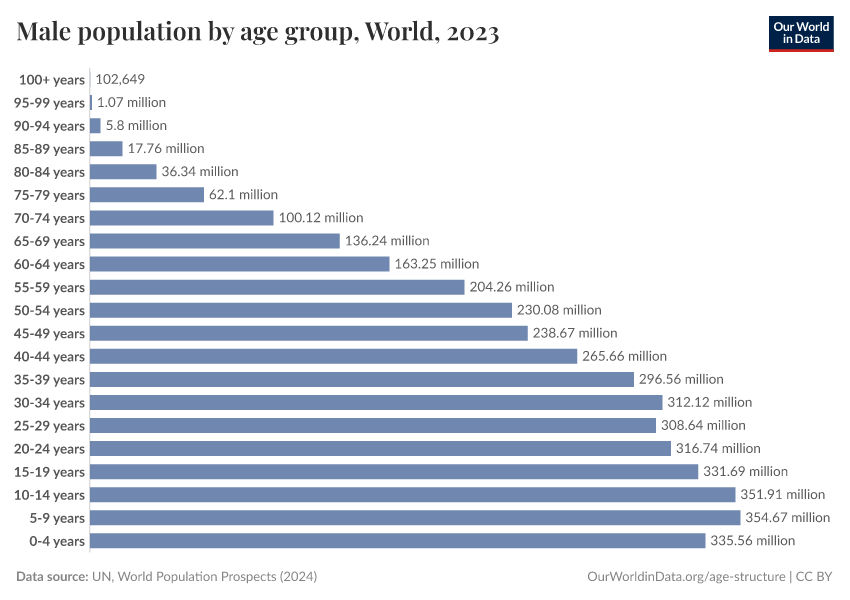
Current global estimates from the United Nations and the World Bank indicate that men make up approximately 50.4% of the global population, while women account for 49.6%. While this slight skew toward a male majority may seem statistically negligible, the financial implications are profound. From the “Bachelor Economy” in East Asia to the multi-trillion-dollar wealth transfer expected in the West, the gender ratio is a critical lever in the machinery of global money.
Understanding the Ratio: The Macroeconomics of the Human Population
At the core of demographic economics is the sex ratio at birth. Biologically, nature favors a slight majority of males; approximately 105 to 106 boys are born for every 100 girls. This biological “buffer” exists because males historically have higher mortality rates throughout childhood and young adulthood.
The Statistics of 101: Why Men Outnumber Women Globally
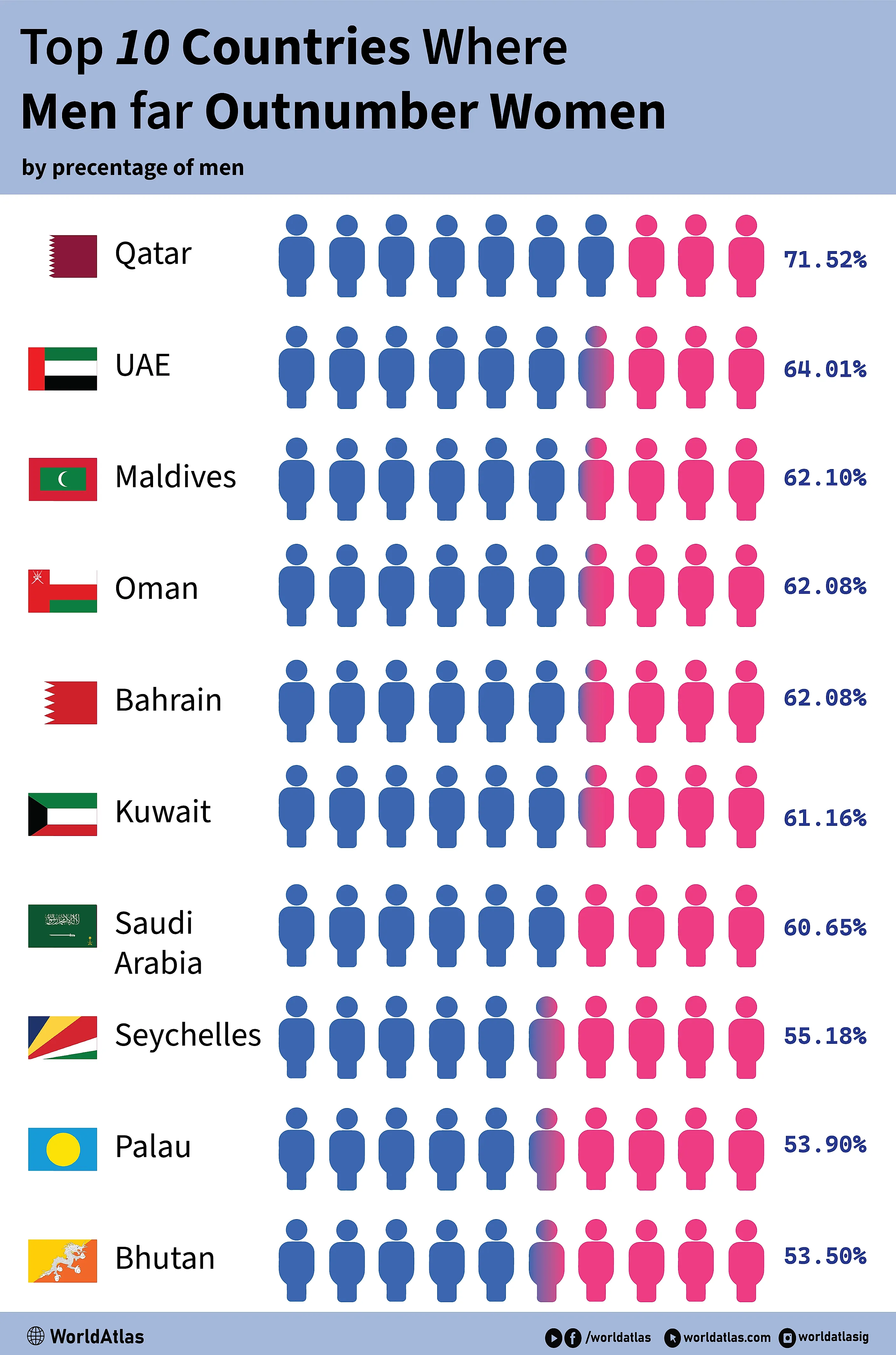
The current global ratio stands at roughly 101 men for every 100 women. From a financial perspective, this ratio is the foundation of the global labor supply. In a perfectly balanced economy, this ratio ensures a steady replacement rate for the workforce. However, the world is rarely balanced. In countries like the United Arab Emirates or Qatar, the percentage of men skyrockets due to the influx of male migrant labor in construction and energy sectors. Conversely, in many Western nations, women outnumber men due to higher life expectancy.
For the astute investor, these deviations from the 50.4% average are signals. A surplus of men in a developing economy often correlates with high infrastructure spending and industrial growth, whereas a female-majority demographic in a developed nation may signal a robust healthcare and service-based economy.
Regional Disparities and Emerging Market Stability
The macro-financial health of a nation is often tied to its demographic stability. In parts of Asia, specifically China and India, historical cultural preferences have led to a significant gender imbalance. In China, there are roughly 30 to 40 million “surplus” men.
This is not just a social issue; it is an economic risk factor. A high percentage of unmarried men can lead to “bare branches”—men who will not start families, reducing future consumer demand for housing, education, and household goods. For businesses looking at 20-year horizons, these skewed percentages suggest a contraction in internal consumer markets, forcing a reliance on exports or a pivot toward technology-driven productivity to offset a shrinking future workforce.
The Labor Force Dynamics: Men’s Role in Global Productivity
While the population is nearly split 50/50, the distribution of economic participation remains heavily skewed. Understanding the percentage of humans who are men—and how they engage with the economy—is essential for analyzing global productivity and the “Gender Dividend.”
Industrial Allocation and the Wealth Creation Cycle
Globally, men represent a higher percentage of the formal labor force, particularly in high-output industrial sectors. In industries such as manufacturing, mining, logistics, and technology, the male participation rate remains dominant. This has historically placed the bulk of immediate wealth creation and “hard” asset management in male hands.
From a business finance perspective, this means that the “male” side of the human percentage currently drives the majority of global capital expenditure (CapEx). When men dominate the sectors that build the world’s physical and digital infrastructure, the flow of money into these industries is influenced by male-centric career trajectories and risk tolerances. However, as the global economy shifts from “brawn” to “brain,” the economic value of this male majority is being re-evaluated in the context of automation and AI.
Bridging the Wage Gap: A Multi-Trillion Dollar Opportunity
Economists often discuss the “Gender Gap,” but for the financial world, this represents an “Opportunity Gap.” If women (the 49.6%) participated in the economy at the same rate and wage level as men (the 50.4%), global GDP could increase by an estimated $12 trillion to $28 trillion by 2025.
For personal finance and institutional investors, the “men vs. women” percentage is a gauge of market efficiency. An economy that relies too heavily on its 50.4% male population is essentially running on half its cylinders. Forward-thinking companies that optimize for the female demographic—both as employees and consumers—frequently outperform the market, turning the “men-heavy” status quo into a competitive disadvantage for laggards.
Investment Strategies Based on Gender Demographics
The slight male majority in the human population creates specific niche markets that savvy investors can exploit. Consumption habits differ significantly between genders, and these differences dictate the success of various asset classes.
Targeting the “Bachelors’ Economy” in Asia
As mentioned, the surplus of men in several major economies has birthed the “Bachelors’ Economy.” In China, this demographic of single men drives massive revenue in sectors like gaming, luxury automotive, spirits, and personal electronics. Because these men do not have the financial burden of supporting a nuclear family, their “disposable income per capita” is often higher than their married counterparts.
Investment funds focusing on “lonely heart” demographics look for companies that provide entertainment, digital companionship, and solo-living solutions (such as micro-apartments and single-serve food delivery). This is a direct financial result of the human percentage leaning male in specific high-growth regions.
Consumer Spending Patterns: Male vs. Female Economic Drivers
While men make up a slight majority of the population, women are responsible for approximately 70-80% of all consumer purchasing decisions globally. This creates a fascinating financial paradox: men hold the majority of the world’s wealth and formal jobs, but women control the flow of money through the economy.
For a Brand or a Money Manager, ignoring this reality is fatal. Professional investors often look at “Male-Driven” sectors (Defense, Aerospace, FinTech) for long-term growth and “Female-Influenced” sectors (Healthcare, Education, Consumer Staples) for stability and consistent dividends. Understanding that the human population is 50.4% male helps in balancing a portfolio between these two distinct economic engines.
Financial Risks and Opportunities in an Aging Population
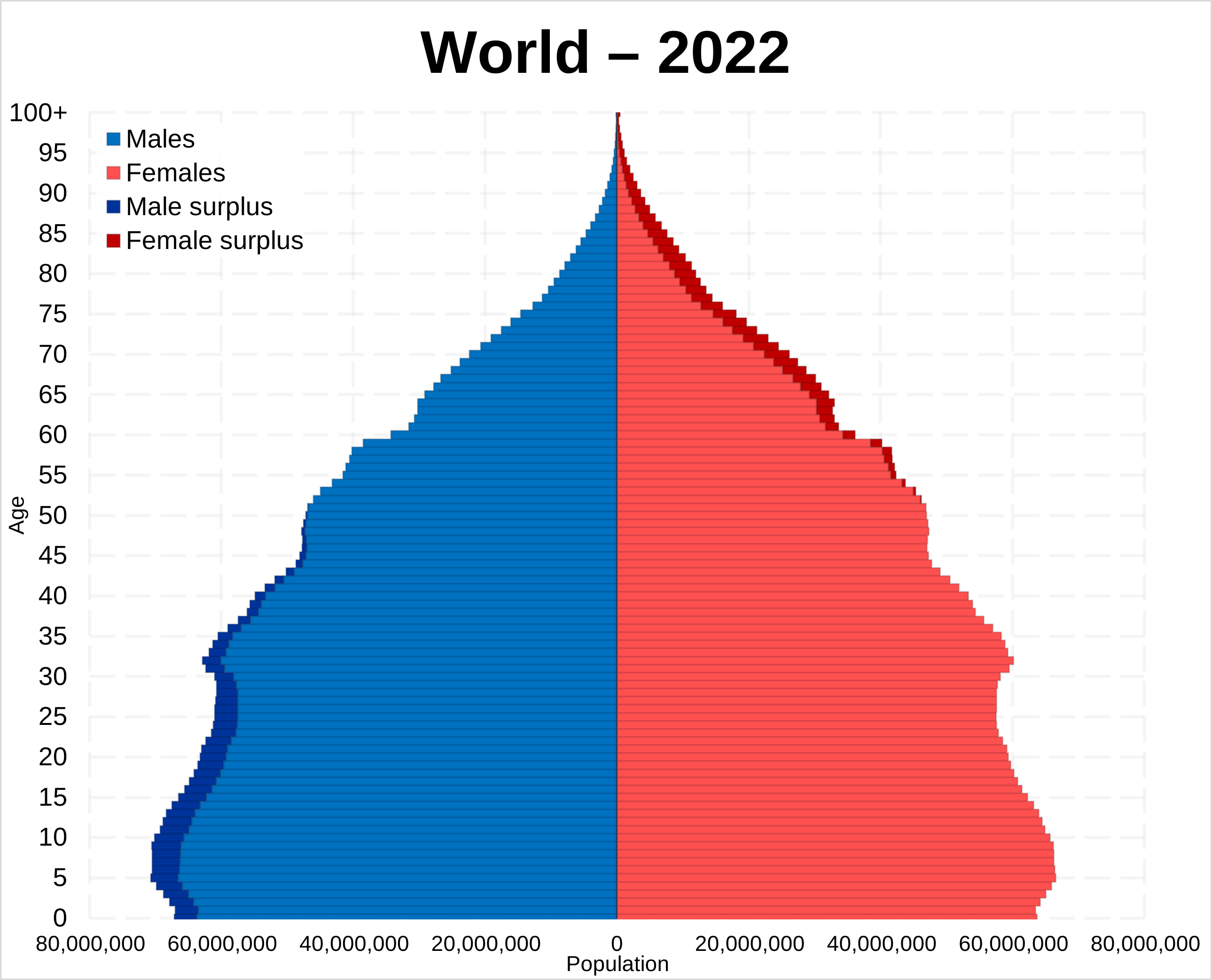
Perhaps the most critical intersection of gender percentages and money is found in the study of longevity. While more boys are born, women consistently live longer. This biological fact creates a massive shift in wealth as populations age.
The Longevity Gap and Wealth Transfer
By age 65, the percentage of humans who are men drops significantly. By age 85, women outnumber men by nearly two to one in many developed nations. This is leading to what economists call the “Great Wealth Transfer.” Over the next two decades, trillions of dollars will pass from the hands of the male-headed “Baby Boomer” generation into the hands of their widows and daughters.
For the financial services industry, this is a seismic shift. Financial advisors who historically marketed to men are having to pivot their strategies to retain assets as they transition to female heirs. This demographic reality means that the “money” of the 50.4% male population eventually becomes the “money” of the 49.6% female population, with different priorities regarding ESG (Environmental, Social, and Governance) investing and risk mitigation.
Future-Proofing Portfolios Against Demographic Shifts
Investors must look beyond the static question of “what percentage of humans are men” and look at the trend. In many developed nations, the birth rate is falling, and the male-to-female ratio is evening out or flipping earlier in life due to lifestyle factors.
A portfolio that is “future-proofed” takes into account the shrinking male workforce in certain regions and the rising economic power of the female demographic. This includes investing in automation (to replace the lost manual labor of the male workforce) and healthcare (to support the aging female majority).
Conclusion: The Bottom Line on Gender Demographics
The answer to “what percentage of humans are men” is roughly 50.4%, but the financial story behind that number is far more complex. This slight majority shapes the labor force, dictates the flow of consumer spending, and creates unique investment opportunities in the form of the “Bachelor Economy” and the “Great Wealth Transfer.”
For those in the world of money—be it personal finance, corporate strategy, or global investing—the gender ratio is a vital metric. It is a predictor of market stability, a map of consumer demand, and a guide to the future of global wealth. By understanding the economic nuances of our biological divide, we can better navigate a financial landscape that is constantly shifting beneath our feet. Success in the modern economy requires an appreciation for the data of humanity, ensuring that capital is deployed where it can most effectively serve the 100% of the population, regardless of which side of the 50.4% they fall on.
aViewFromTheCave is a participant in the Amazon Services LLC Associates Program, an affiliate advertising program designed to provide a means for sites to earn advertising fees by advertising and linking to Amazon.com. Amazon, the Amazon logo, AmazonSupply, and the AmazonSupply logo are trademarks of Amazon.com, Inc. or its affiliates. As an Amazon Associate we earn affiliate commissions from qualifying purchases.