
In the modern economic landscape, the pursuit of higher education is often framed as the ultimate investment in one’s “human capital.” For decades, a bachelor’s degree was the gold standard for entry into the middle class. However, as the global labor market becomes increasingly competitive and specialized, the master’s degree has emerged as the new benchmark for professional advancement and increased earning potential.
But exactly what percent of people have a master’s degree, and more importantly, does the financial outlay required to obtain one yield a justifiable return on investment (ROI)? From a personal finance and business perspective, a master’s degree is more than just a certificate of academic achievement; it is a high-stakes financial decision that involves significant capital, debt management, and opportunity cost.

The Current Landscape: Understanding the Statistics of Advanced Degrees
To understand the value of a master’s degree, we must first look at its prevalence in the population. Over the last two decades, the number of individuals holding advanced degrees has seen a meteoric rise, a trend often referred to as “degree inflation.”
Global vs. National Trends in Higher Education
In the United States, data from the Census Bureau indicates that approximately 13% to 14% of the adult population (aged 25 and older) holds a master’s degree. This is a significant increase from the year 2000, when that figure hovered around 8%. Globally, the numbers vary wildly. In many OECD countries, the percentage of the population with a master’s degree is rising as economies transition from manufacturing-based models to knowledge-based services.
This statistical growth suggests that while a master’s degree is more common than it used to be, it still places an individual in a relatively elite bracket of the workforce. From a financial perspective, this scarcity—though diminishing—still commands a premium in the labor market.
The “Credential Inflation” Phenomenon
As the percentage of people with master’s degrees increases, the “barrier to entry” for high-paying roles also rises. In many sectors, such as data science, healthcare administration, and corporate finance, a master’s degree is no longer a “bonus” but a prerequisite. For the individual investor (the student), this means the cost of not having the degree could be a lifetime of lower earnings, even if the upfront cost of the degree is substantial.
The Cost-Benefit Analysis: Is a Master’s Degree a Sound Investment?
In the world of finance, every investment must be scrutinized through a cost-benefit analysis. A master’s degree is unique because it is both an expensive purchase and a long-term asset. To determine if the degree is “worth it,” one must look beyond the sticker price.
Evaluating Tuition Costs and Student Loan Debt
The average cost of a master’s degree can range anywhere from $30,000 to over $120,000, depending on the institution and the field of study. For many, this necessitates taking on student loan debt. When analyzing this from a personal finance standpoint, one must consider the interest rates and the repayment term.
A $60,000 loan at a 6% interest rate over 10 years results in a monthly payment of roughly $666. To justify this expense, the degree must provide a monthly salary increase that significantly exceeds this payment, while also accounting for the taxes on that additional income.
Calculating the Opportunity Cost of Post-Graduate Study
One of the most overlooked aspects of the “master’s degree math” is the opportunity cost. If a student spends two years in full-time study, they are not only paying tuition; they are also forfeiting two years of salary, benefits, and 401(k) contributions.
For a professional earning $60,000 a year, the opportunity cost of a two-year master’s program is $120,000 in lost wages. When added to a $50,000 tuition bill, the “true cost” of the degree is $170,000. For the investment to break even, the post-degree salary bump must be substantial enough to recoup that $170,000 within a reasonable timeframe, usually 5 to 10 years.
Career Progression and Earning Potential
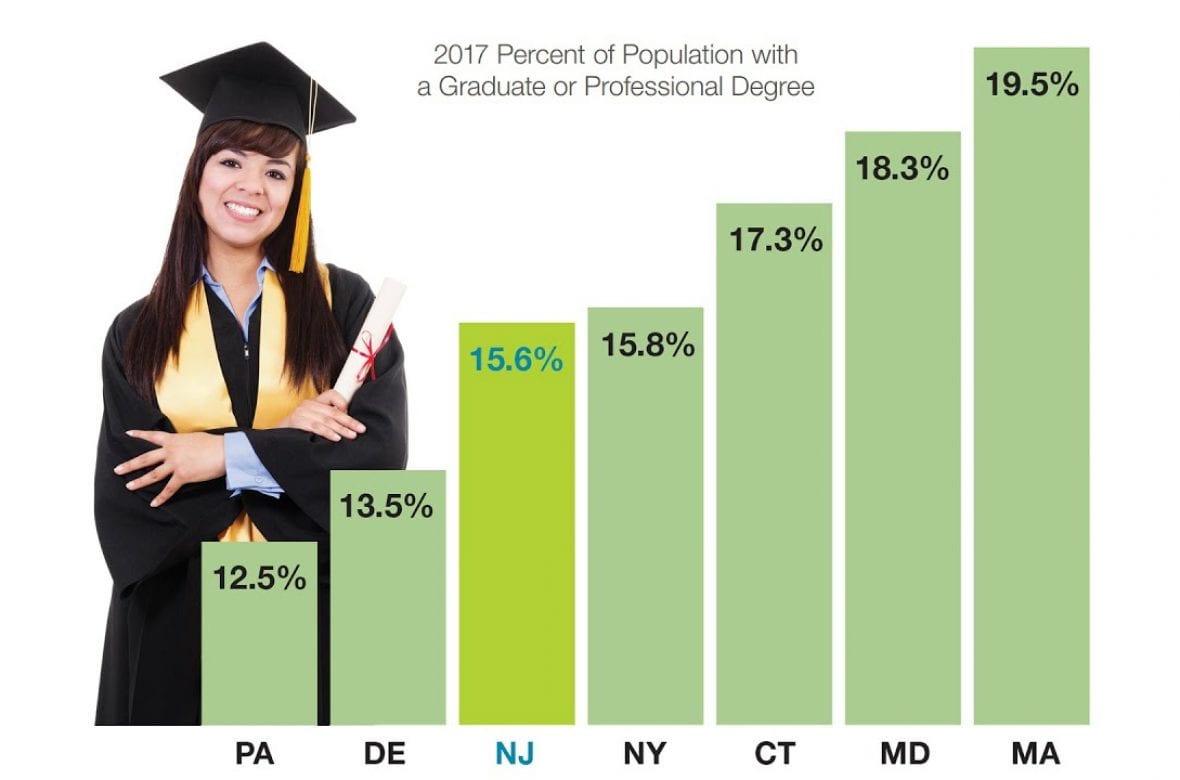
While the costs are high, the data consistently shows that higher education correlates with higher lifetime earnings and lower unemployment rates. The financial “floor” for master’s degree holders is generally much higher than for those with only a bachelor’s degree.
Average Salary Premia for Master’s Degree Holders
According to the Bureau of Labor Statistics (BLS), the median weekly earnings for a person with a master’s degree are roughly 20% higher than for those with a bachelor’s degree. Over a 30-year career, this “master’s premium” can translate into an additional $400,000 to $1 million in lifetime earnings.
From a wealth-building perspective, this extra income is “engine room” capital. If invested wisely in diversified index funds or real estate, the delta between a bachelor’s salary and a master’s salary can be the difference between a standard retirement and early financial independence.
High-ROI Fields: Where the Master’s Pays Off Most
Not all master’s degrees are created equal in the eyes of the market. The financial ROI is heavily dependent on the niche:
- MBA (Master of Business Administration): Often yields the highest immediate salary jump, particularly in consulting, investment banking, and executive leadership.
- STEM Degrees: Master’s degrees in Nurse Anesthesia, Physician Assistant Studies, or Cybersecurity often see a “break-even” point within 3 to 5 years due to high starting salaries.
- Education and Social Work: While these degrees are often required for career progression, the salary ceiling is lower, making the ROI slower to realize. In these cases, seeking public service loan forgiveness (PSLF) or employer tuition reimbursement is a critical financial strategy.
Alternative Financial Strategies for Career Advancement
Given the rising costs of traditional academia, many professionals are looking for “leaner” ways to increase their market value without the six-figure price tag of a master’s degree.
Certification Programs vs. Traditional Master’s Degrees
In sectors like technology and finance, specific certifications (like a CFA for finance or a PMP for project management) can sometimes offer a better ROI than a full master’s degree. These programs often cost a fraction of a university degree—usually between $1,000 and $5,000—and can lead to immediate five-figure salary increases. From a “cash-on-cash” return perspective, certifications often outperform degrees in the short term.
Employer-Sponsored Education and Tax Advantages
Smart financial planning involves using other people’s money (OPM). Many corporations offer tuition reimbursement programs, where they pay for a portion—or all—of a master’s degree in exchange for a commitment to stay with the company for a set period.
Additionally, in the U.S., the IRS allows employers to provide up to $5,250 in tax-free educational assistance per year. Utilizing these benefits effectively reduces the “cost” side of the ROI equation to nearly zero, making the pursuit of a master’s degree an absolute “no-brainer” for the employee’s personal balance sheet.
Making the Decision: A Financial Roadmap for Future Graduates
If you are part of the population considering joining the roughly 13% of people with a master’s degree, you must treat the decision with the same rigor you would use for a real estate investment or a business acquisition.
Setting a Break-Even Point for Your Education
Before enrolling, perform a “Net Present Value” (NPV) calculation on your degree. Estimate your total costs (tuition plus lost wages) and your projected salary increase. Use a conservative growth rate and determine how many years it will take for your “New Salary” minus “Old Salary” to cover the “Total Cost.” If the break-even point is more than 10 years away, you may need to reconsider the institution, the field of study, or the timing of your enrollment.

Diversifying Your Income Potential
Ultimately, a master’s degree is a tool to increase your “earned income.” However, the most successful financial strategies involve using that earned income to build “passive income.” A master’s degree provides the cash flow necessary to fund brokerage accounts, invest in side hustles, or pay down high-interest debt.
When you look at the percentage of people who have a master’s degree, don’t just see a statistic about education. See a group of individuals who, statistically, have a higher capacity to generate capital. The key to financial success is not just getting the degree, but the disciplined management of the surplus income that the degree provides.
In conclusion, while only a small percentage of the population holds a master’s degree, those who do generally enjoy a significant financial advantage—provided they navigate the costs with a professional, money-focused mindset. By viewing education through the lens of investment and ROI, you can ensure that your master’s degree is a bridge to wealth rather than a mountain of debt.
aViewFromTheCave is a participant in the Amazon Services LLC Associates Program, an affiliate advertising program designed to provide a means for sites to earn advertising fees by advertising and linking to Amazon.com. Amazon, the Amazon logo, AmazonSupply, and the AmazonSupply logo are trademarks of Amazon.com, Inc. or its affiliates. As an Amazon Associate we earn affiliate commissions from qualifying purchases.