
In the traditional discourse surrounding career satisfaction, the “least stressful job” is often depicted as a role with minimal responsibility, low stakes, and a slow pace. However, from a financial and wealth-building perspective, this definition is fundamentally flawed. In the world of money, personal finance, and online income, the least stressful job is not necessarily the one where you do the least; it is the one that offers the highest degree of financial autonomy, scalability, and decoupling of time from income.
True stress in the professional world rarely stems from the work itself; it stems from the financial insecurity of a single-income stream, the lack of control over one’s schedule, and the diminishing returns of trading hours for dollars. To find the least stressful path, one must look toward roles and systems that prioritize capital efficiency and financial freedom.
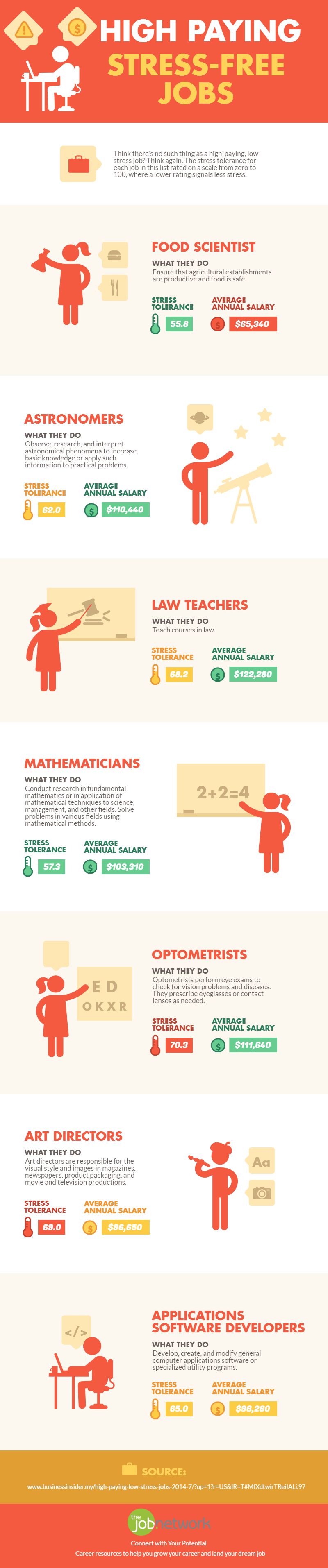
Redefining Stress Through the Lens of Financial Independence
To identify the least stressful jobs, we must first analyze the anatomy of workplace anxiety. For most, stress is a byproduct of “economic fragility”—the state of being one paycheck away from a crisis. Therefore, the least stressful roles are those situated within the niche of wealth management, digital leverage, and high-margin consulting.
The Correlation Between Income Stability and Occupational Pressure
Occupational stress is inversely correlated with financial liquidly. A job that pays $50,000 a year but requires 60 hours of high-stakes physical presence is infinitely more stressful than a digital asset that generates $3,000 a month passively. When we view “jobs” through a financial lens, the least stressful roles are those that allow for “asymmetric risk.” This means the potential for financial upside far outweighs the time or capital invested. In this context, being a solo-capitalist or a niche investor ranks as the lowest-stress “job” because the primary labor is cognitive rather than manual or emotional.
High-Margin, Low-Maintenance: The Appeal of Digital Assets
The modern economy has birthed a new category of “jobs” that reside in the realm of online income. Creating digital products—such as e-books, online courses, or proprietary spreadsheets—functions as a low-stress career because the “work” is front-loaded. Once the asset is created, the marginal cost of selling it to another customer is near zero. This financial model eliminates the stress of “billable hours” and allows the individual to operate in a state of flow rather than a state of constant urgency.
Top Low-Stress Roles in Personal Finance and Wealth Management
When we look at the traditional financial sector, certain roles stand out for their ability to generate significant wealth with relatively low day-to-day volatility. These roles focus on long-term growth rather than the high-adrenaline environment of day trading or corporate law.
Index Fund Management and Passive Investing
While many consider investing to be a high-stress endeavor, the shift toward passive management has created a niche for “Low-Stress Wealth Architects.” Professionals who focus on long-term capital allocation and index fund strategies bypass the noise of market volatility. For an individual, managing one’s own portfolio using a Boglehead-style approach (focusing on low-cost index funds) is essentially a “job” that pays in dividends and compound interest. It requires perhaps four hours of “work” per year to rebalance, yet it provides the most stable financial future possible.
Dividend Growth Strategy Architect
A Dividend Growth Investor is someone whose “job” is to identify and purchase shares in companies that consistently increase their dividend payouts. This is a role defined by patience and analytical rigor rather than stress. The goal is to build a “money machine” that covers living expenses. Once the dividend yield exceeds the cost of living, the “job” becomes one of the least stressful in existence because the financial pressure of survival has been permanently removed.
Scaling Side Hustles into Stress-Free Income Streams

Many people start side hustles to make extra money, but the most successful transitions occur when these hustles are engineered to be low-stress. The key is automation and niche selection.
Niche Content Arbitrage and Affiliate Marketing
Affiliate marketing, when done with a focus on high-ticket financial products or software, is a premier low-stress online income stream. By creating content that solves specific problems (e.g., “Best Financial Tools for Small Businesses”), an individual can earn commissions without ever having to handle customer service, shipping, or inventory. The “stress” of traditional business ownership—managing employees and overhead—is replaced by the “creative challenge” of content optimization. This is a purely digital endeavor that can be managed from anywhere in the world, offering unparalleled geographic and temporal freedom.
Automated E-commerce and Print-on-Demand
Traditional retail is a logistical nightmare. However, the modern “Money” niche has evolved to include models like Print-on-Demand (POD) and Amazon FBA (Fulfilled by Amazon). In these models, the heavy lifting of logistics is outsourced to third-party giants. A business owner focuses solely on design and marketing. When a system is truly automated, the “job” of the owner is to monitor the dashboard and optimize the ad spend. The lack of physical inventory removes the financial risk of “dead stock,” making it a significantly lower-stress entry point into entrepreneurship.
Professional Services with High Financial Efficiency
For those who prefer a more active professional life, the secret to a low-stress career lies in specialized consulting and software. This is about moving from a “generalist” to a “specialist” whose time is valued at a premium.
Specialized Consulting: High Hourly Rates, Low Volume
Stress often comes from having too many clients or too many deadlines. The financially savvy professional solves this by increasing their “unit price.” A consultant who specializes in a high-stakes niche—such as Tax Optimization for High Net Worth Individuals or Digital Security for Fintech Startups—can earn a full-time income by working with only two or three clients a year. By reducing the volume of work and increasing the value of each hour, the professional eliminates the “hamster wheel” effect of a standard 9-to-5, creating a high-income, low-stress lifestyle.
SaaS (Software as a Service) Ownership
Owning a “Micro-SaaS” is perhaps the ultimate “Money” niche job. A Micro-SaaS is a software tool that solves a very specific, small problem for a specific group of people (e.g., a plugin that helps Shopify store owners calculate their local taxes). Because the software is automated, the owner doesn’t need a large staff. The recurring monthly revenue (MRR) provides a financial cushion that most employees never experience. The stress of “finding the next sale” is replaced by the stability of a subscription-based income model.
Building a Financial Moat to Eliminate Workplace Stress
Ultimately, the least stressful job is the one you do because you want to, not because you have to. This level of professional serenity is only possible when backed by a robust financial strategy.
The Concept of “F-You Money” and Career Leverage
In personal finance circles, “F-You Money” refers to a specific amount of savings that allows an individual to walk away from any job or situation without financial ruin. When you have this moat, your “stress” levels drop to near zero, regardless of your job title. You gain the power to negotiate, the power to set boundaries, and the power to decline tasks that do not align with your values. The “job” of building this fund is the most important career move any professional can make.

Long-term Financial Planning as a Stress Mitigator
The least stressful job is supported by a diversified portfolio. If your income comes from a combination of a high-value consulting gig, a portfolio of dividend stocks, and a small automated online business, no single point of failure can destroy your peace of mind. This “portfolio career” approach is the hallmark of the modern financially-literate professional. By diversifying income streams, you ensure that the “stress” of the market or the economy is distributed across multiple channels, making it manageable and, eventually, negligible.
In conclusion, when searching for the least stressful job, stop looking at the task list and start looking at the balance sheet. The roles that provide the most peace are those that offer high financial returns for every unit of energy expended. Whether it is through digital leverage, automated income, or specialized consulting, the goal is the same: to achieve a state where money works for you, rather than you working for money. That is the ultimate definition of a low-stress career.
aViewFromTheCave is a participant in the Amazon Services LLC Associates Program, an affiliate advertising program designed to provide a means for sites to earn advertising fees by advertising and linking to Amazon.com. Amazon, the Amazon logo, AmazonSupply, and the AmazonSupply logo are trademarks of Amazon.com, Inc. or its affiliates. As an Amazon Associate we earn affiliate commissions from qualifying purchases.