
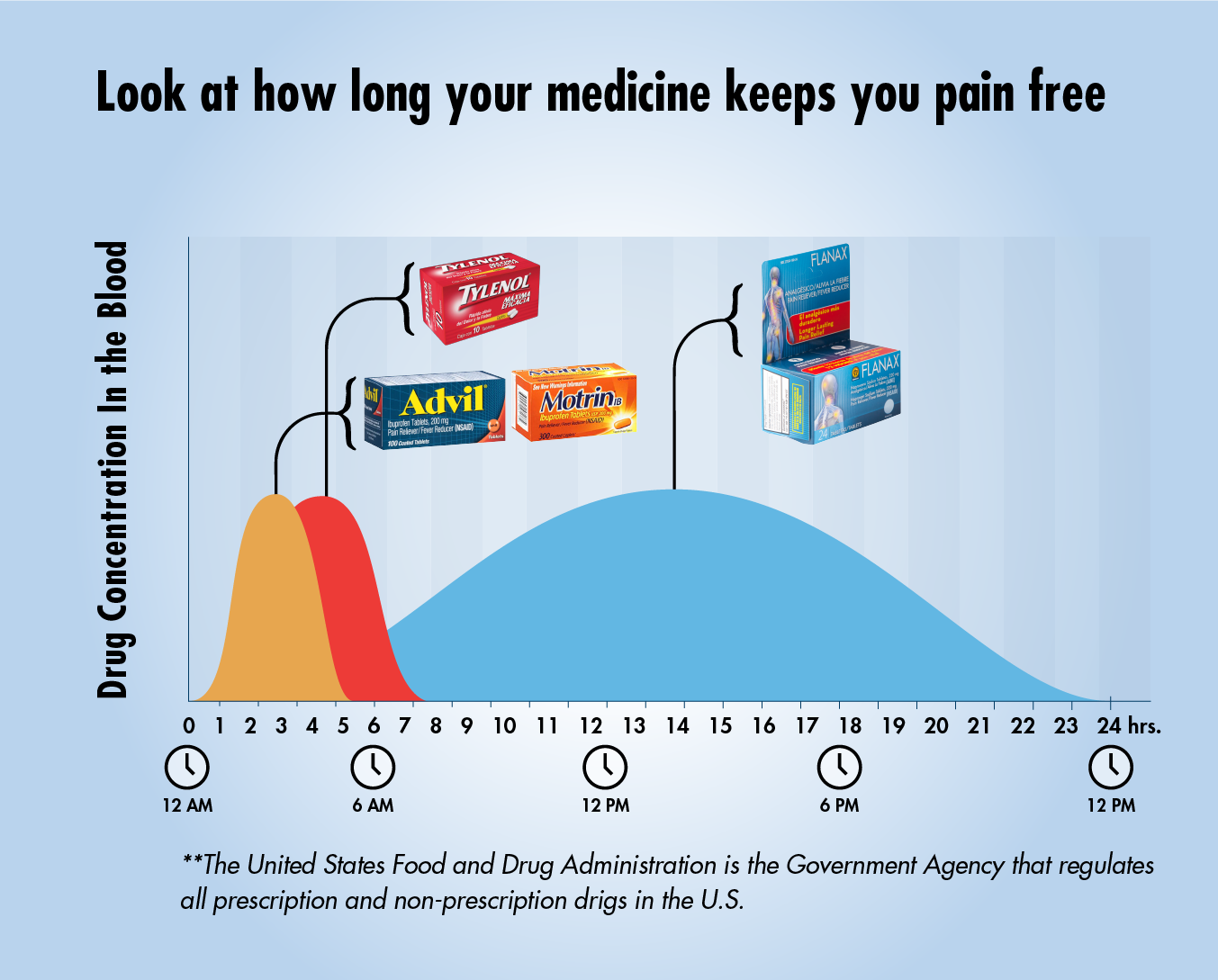
In pharmacology, the term “half-life” refers to the time it takes for the concentration of a substance, such as ibuprofen, to reduce by half in the human body. It is a measure of duration, effectiveness, and eventual disappearance. In the realm of personal finance and investing, your capital is subject to a strikingly similar phenomenon. Whether it is the eroding power of inflation on a stagnant savings account or the rapid depreciation of a physical asset, every dollar you own possesses a financial “half-life.”
Understanding the rate at which your wealth loses its potency is the cornerstone of sophisticated wealth management. If you do not actively counteract the natural “metabolism” of the economy—driven by inflation, taxes, and obsolescence—your net worth will inevitably diminish. This article explores the mechanics of financial half-life and how to pivot your strategy from passive holding to active preservation and growth.

The Ibuprofen Analogy: Why Your Cash Has an Expiration Date
Just as a 200mg dose of ibuprofen loses its efficacy over several hours, a $200,000 balance in a traditional savings account loses its purchasing power over several years. This is not due to the number of dollars decreasing, but rather the value of what those dollars can acquire. To a financial strategist, cash is a melting ice cube; it is a medium of exchange that is constantly being “metabolized” by the macroeconomy.
Inflation as the Biological Metabolism of Money
Inflation is the most direct parallel to a drug’s half-life. It is the systemic rate at which your currency loses its strength. When central banks target a 2% inflation rate, they are essentially setting a “decay schedule” for your liquid assets. At a steady 2% inflation rate, the purchasing power of your money has a half-life of approximately 35 years. If inflation spikes to 7% or 8%, that half-life shrinks dramatically to less than a decade.
For the individual investor, failing to account for this metabolic rate is a silent portfolio killer. If your “treatment plan”—your investment strategy—doesn’t outpace this decay, you are effectively losing wealth even if your bank statement shows a static balance.
The Real Value vs. Nominal Value Trap
The danger for many personal finance enthusiasts lies in focusing on nominal value (the number on the screen) rather than real value (what that money buys). In the same way that a patient might feel the temporary relief of medicine while the underlying cause persists, an investor might feel secure seeing a “stable” cash reserve.
However, when we adjust for the cost of living—housing, healthcare, and education—the half-life of that cash becomes even shorter. Identifying the “real” half-life of your money requires looking past the face value and calculating the “Effective Yield,” which subtracts inflation and taxes from your gross returns.
Depreciation: The Half-Life of Tangible Assets
While cash erodes through inflation, physical assets erode through depreciation. Every piece of equipment, vehicle, or technology you purchase for your business or personal life begins its journey toward zero the moment it is acquired. Understanding the specific half-life of different asset classes allows for better capital allocation and “Money” management.
The “Drive-Off-The-Lot” Effect
Automobiles are perhaps the most cited example of rapid financial decay. A new luxury vehicle can lose 20% of its value in the first year and has a financial half-life of roughly four to five years. In the context of “Money” strategy, treating a high-depreciation asset as an “investment” is a categorical error.
Sophisticated earners analyze the “Total Cost of Ownership” (TCO) by projecting the asset’s half-life. By purchasing “pre-depreciated” assets—those that have already cleared their steepest curve of value loss—you effectively extend the half-life of your capital. This is a primary strategy in corporate finance and personal wealth building alike: never let your capital get trapped in an asset with a high metabolic rate of decay unless it is generating significant cash flow to offset the loss.
Maintenance Costs and the Diminishing Returns Curve
As an asset nears its technological or physical half-life, the cost to maintain it often begins to exceed the value it provides. In business finance, this is known as the “Replacement Cycle.” Whether it is a rental property needing a new roof or a fleet of delivery vans, there is a mathematical point where the asset transitions from a wealth-builder to a liability. Mapping out these cycles is essential for maintaining a healthy balance sheet.
Strategic Reinvestment: Counteracting Financial Half-Life

If the natural state of money is decay, the only solution is growth. To maintain the “potency” of your wealth, you must employ strategies that reset the clock, much like taking a second dose of medication to maintain a therapeutic level in the bloodstream.
Compounding as the Antidote to Decay
While inflation and depreciation work to halve your wealth, compound interest works to double it. The “Rule of 72” is the inverse of the half-life calculation. By dividing 72 by your annual rate of return, you can determine how long it will take for your money to double.
If you are invested in a diversified index fund returning 7% annually, your money has a “doubling-life” of roughly 10 years. When you weigh this against a 3% inflation rate, you are effectively winning the race against decay. The goal of any robust “Money” strategy is to ensure your doubling-life is significantly shorter than your half-life.
Diversification Across Asset Lifespans
A professional portfolio should be a mix of assets with varying half-lives.
- Short-term liquidity (Cash/High-Yield Savings): High decay, but high utility.
- Medium-term assets (Bonds/Real Estate): Moderate decay (or appreciation), providing stability.
- Long-term growth (Equities/Alternative Investments): These assets are designed to resist the half-life of currency by capturing the productivity of the global economy.
By diversifying, you ensure that even as some assets (like your car or your tech gadgets) lose value, the aggregate value of your “Money” ecosystem continues to expand.
The Economic Half-Life of Skills and Income Streams
In the modern “Money” landscape, we must also consider the half-life of our earning potential. Just as a patent for a new drug eventually expires, the skills that generate your primary income have a shelf life.
Modern Professional Obsolescence
In the 1960s, the half-life of a college degree’s utility was estimated at 30 years. Today, particularly in finance and tech-adjacent sectors, that half-life has shrunk to approximately five years. If you are a professional or a business owner, your “Human Capital” is an asset that is constantly depreciating.
To maintain your “Personal Brand Value” and your income-earning potential, you must reinvest in your own education. This is a “Capital Expenditure” on yourself. Failing to upgrade your skills is the financial equivalent of holding onto a depreciating asset until it reaches zero value.
Passive Income and the Longevity of Cash Flow
The ultimate goal of many personal finance enthusiasts is to transition from active income (which has a high decay rate if you stop working) to passive income. A well-structured portfolio of dividend-paying stocks or rental properties has a theoretical “infinite half-life” as long as the underlying entities remain productive.
Generating cash flow that is untethered to your time is the most effective way to beat the financial half-life. It creates a self-sustaining loop where the “dose” of income is automatically replenished, ensuring that your financial health remains optimal regardless of the external economic climate.
Conclusion: Mastering the Financial Metabolism
“What is the half-life of ibuprofen?” is a question about how long a benefit lasts before it fades away. In the world of “Money,” you must ask the same question about every dollar you earn, save, and invest.
Your wealth is under constant attack from invisible forces. Inflation erodes your cash; depreciation eats your hardware; and market shifts can render your skills obsolete. However, by understanding these cycles, you can move from a position of vulnerability to one of strategic advantage. By prioritizing assets with a long doubling-life, minimizing exposure to high-decay liabilities, and constantly reinvesting in your earning potential, you can ensure that your financial potency doesn’t just last—it thrives.
In the final analysis, wealth management is not just about accumulation; it is about managing the rate of decay. Those who master the “half-life” of their money are the ones who ultimately achieve true financial independence.
aViewFromTheCave is a participant in the Amazon Services LLC Associates Program, an affiliate advertising program designed to provide a means for sites to earn advertising fees by advertising and linking to Amazon.com. Amazon, the Amazon logo, AmazonSupply, and the AmazonSupply logo are trademarks of Amazon.com, Inc. or its affiliates. As an Amazon Associate we earn affiliate commissions from qualifying purchases.