
In the realm of modern technology, “the boiling temperature” is no longer a concept confined to laboratory chemistry or culinary arts. It has become a critical benchmark in the design of semiconductors, the operation of massive data centers, and the development of next-generation hardware. As we push the boundaries of Moore’s Law, the heat generated by transistors packed into increasingly microscopic spaces has turned thermal management into the primary frontier of technological innovation.
Understanding the boiling temperature—both the literal thermal limits of hardware and the metaphorical “boiling point” of industry trends—is essential for understanding where technology is headed. This article explores the physical constraints of silicon, the revolutionary shift toward liquid immersion cooling, and the strategic implications of thermal thresholds in the tech sector.

The Physics of Performance: Understanding Silicon Thermal Thresholds
Every processor, whether it is the CPU in your laptop or the GPU powering a generative AI model, operates within a narrow window of thermal safety. When we discuss the “boiling temperature” of a computer chip, we are usually referring to its critical junction temperature, or the point at which the silicon begins to lose structural integrity or operational stability.
Critical TJunction (TjMax) Explained
In technical specifications, the most important metric regarding heat is “Tjunction Max” or TjMax. This represents the maximum temperature the internal silicon junctions of a processor can reach before internal safety protocols take over. For most modern consumer processors, this “boiling point” sits between 100°C and 105°C.
Reaching this temperature is a significant event in the lifecycle of a hardware component. Beyond this threshold, electrons can begin to jump across the insulating layers of the transistor, a phenomenon known as leakage, which leads to erratic behavior, data corruption, and eventually, permanent hardware failure. Engineers spend years designing heat spreaders and architectural layouts specifically to keep the core of the chip as far away from this “boiling point” as possible.
Thermal Throttling: The Defensive Mechanism of Modern CPUs
To prevent a processor from literally reaching its boiling point, hardware manufacturers implement a process known as thermal throttling. When the internal sensors detect that the temperature is approaching the TjMax, the system automatically reduces the clock speed (the frequency at which the processor operates) and lowers the voltage.
While thermal throttling protects the hardware, it creates a performance ceiling. In the tech industry, “leaving performance on the table” due to heat is considered a failure of design. This has led to a massive surge in the “Cooling Tech” sub-sector, where the goal is to extract heat as quickly as it is generated, allowing chips to run at “boiling” workloads without reaching “boiling” temperatures.
Liquid Immersion Cooling: When Computing Reaches the Boiling Point
As high-performance computing (HPC) and AI training become more resource-intensive, traditional air cooling—using fans to push air over heat sinks—is reaching its physical limit. The tech industry is now turning to a radical solution that brings us back to the literal definition of the boiling temperature: Two-Phase Immersion Cooling.
Two-Phase Immersion Cooling Systems
In a two-phase immersion cooling system, entire server racks are submerged in a specially engineered dielectric fluid. This fluid has a very low boiling point—often around 50°C (122°F), which is significantly lower than water. As the heat-generating components (the CPUs and GPUs) run, they heat the fluid until it reaches its boiling temperature.
The fluid boils, turning into vapor. This phase change—from liquid to gas—is an incredibly efficient way to carry heat away from the hardware. The vapor then rises, hits a condenser coil at the top of the tank, cools back into a liquid, and falls back into the tank. This “boiling” cycle allows data centers to operate without the massive, energy-hungry fans and air conditioning units that typically consume up to 40% of a facility’s electricity.
Why Phase Change is the Future of Data Center Efficiency
The adoption of “boiling-based” cooling is a response to the sustainability crisis in the tech industry. Traditional data centers use millions of gallons of water for evaporative cooling. By using closed-loop immersion systems where the boiling temperature is manipulated through chemistry, tech giants like Microsoft and Google are finding they can pack more computing power into smaller spaces.
This technology allows for “overclocking” at a massive scale. When the risk of reaching the silicon’s boiling point is mitigated by the literal boiling of a cooling fluid, the hardware can be pushed to its absolute performance limit. This is the “boiling point” of the infrastructure revolution: moving away from air and toward fluids to sustain the AI era.
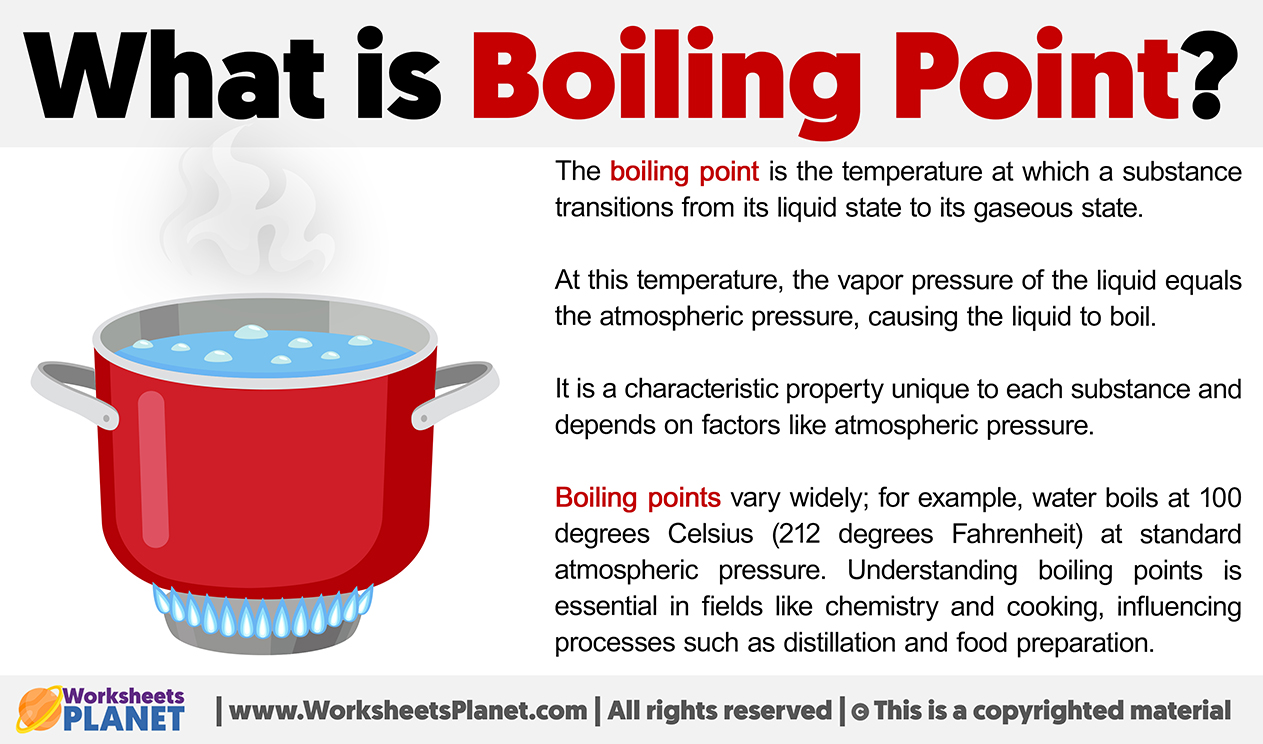
Beyond the Hardware: The Economic Boiling Point of the Tech Sector
The concept of a boiling temperature also serves as a potent metaphor for the current state of the technology market. Just as water transforms into steam when it reaches 100°C, the tech industry undergoes “phase shifts” when certain pressures—investment, innovation, and competition—reach a critical threshold.
Scalability and the Heat of Hyper-growth
In the world of Software as a Service (SaaS) and AI startups, “boiling” often refers to the rate of burn and growth. A company reaches its boiling point when its user base grows faster than its infrastructure can support. This is often seen in the launch of viral AI tools; if the “thermal management” of the cloud backend isn’t prepared for the heat of millions of concurrent users, the service crashes.
Technologists must manage this metaphorical heat by ensuring that their software architecture is “thermally efficient.” This involves optimizing code to reduce CPU cycles, which in turn reduces the physical heat generated in the data center and the financial “heat” of cloud computing bills. Efficiency in code is, in a very real sense, a way of lowering the boiling temperature of a business model.
Innovation Saturation and Market Volatility
The tech industry is currently at a boiling point regarding Artificial Intelligence. The “temperature” of investment is at an all-time high, with billions of dollars pouring into Large Language Models (LLMs). There is a growing concern that we are approaching a “bubble” or a phase change where the hype must either solidify into sustainable value or evaporate.
Just as a liquid becomes volatile as it approaches its boiling point, the tech market becomes volatile when innovation outpaces regulation and consumer adoption. We are seeing this volatility in the hardware supply chain, where the demand for NVIDIA’s H100 chips has created a “boiling” market with skyrocketing prices and geopolitical friction.
Strategies for Heat Mitigation in the Consumer Tech Landscape
While enterprise-level cooling involves boiling fluids and massive heat exchangers, the “boiling temperature” is an equally vital concern for consumer gadgets. From the smartphone in your pocket to the VR headset on your face, managing the heat-to-performance ratio is the hallmark of premium tech design.
Passive vs. Active Cooling in Mobile Devices
Modern smartphones are marvels of thermal engineering because they generally lack fans (active cooling). Instead, they rely on passive cooling and sophisticated software. Manufacturers use vapor chambers—tiny, flattened tubes containing a small amount of liquid. Just like the data center immersion systems, this liquid reaches its boiling temperature, turns to vapor, moves to a cooler part of the phone, and condenses.
When you play a high-end game on your phone and it starts to feel hot, you are feeling the device’s struggle to stay below its internal boiling point. If the device fails to dissipate that heat, the software will dim the screen and slow down the processor—a direct consumer impact of thermal physics.
Software Optimization as a Thermal Management Tool
One of the most significant trends in tech today is “thermal-aware programming.” Developers are no longer just writing code for functionality; they are writing code to minimize the “thermal footprint” of an application. By reducing the number of times a background app wakes up the processor, developers can prevent a device from reaching a temperature that would trigger throttling.
This is especially critical in the era of wearable tech. A smartwatch or an AR glass sits directly against human skin. Here, the “boiling temperature” isn’t 100°C; the comfort limit is much lower. Tech companies must innovate at the intersection of biology and physics to ensure that the “heat” of AI processing doesn’t become a literal burden for the user.

Conclusion: Mastering the Heat
The question “what is the boiling temperature?” yields different answers depending on where you look in the tech ecosystem. At the component level, it is the 100°C threshold where silicon begins to fail. At the infrastructure level, it is the 50°C flashpoint of dielectric fluids that enable the next generation of AI. At the industry level, it is the peak of an innovation cycle that threatens to transform the global economy.
As we look toward the future, the winners in the tech space will be those who can best manage these temperatures. Whether it is through the chemistry of two-phase immersion cooling, the architecture of thermally efficient code, or the strategic navigation of a boiling market, mastering the heat is the only way to avoid being burned by the limits of the possible. Technology, it seems, is always a matter of how much heat you can handle before you reach the boiling point.
aViewFromTheCave is a participant in the Amazon Services LLC Associates Program, an affiliate advertising program designed to provide a means for sites to earn advertising fees by advertising and linking to Amazon.com. Amazon, the Amazon logo, AmazonSupply, and the AmazonSupply logo are trademarks of Amazon.com, Inc. or its affiliates. As an Amazon Associate we earn affiliate commissions from qualifying purchases.