
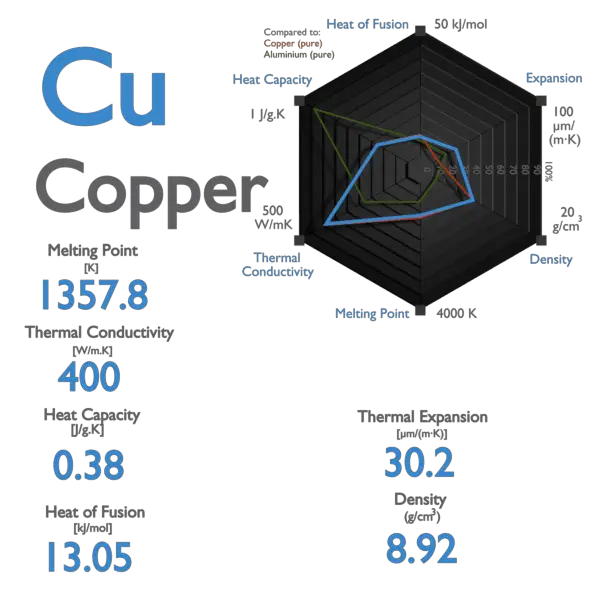
In the landscape of material science, few elements carry as much weight in the advancement of human civilization as copper. From the dawn of the Bronze Age to the intricate circuitry of the latest AI-driven processors, copper has remained a foundational pillar of progress. While most are familiar with its conductivity and malleability, the more extreme physical properties of this transition metal—specifically the boiling point of copper—serve as critical benchmarks in the fields of high-tech manufacturing, semiconductor engineering, and thermal management.
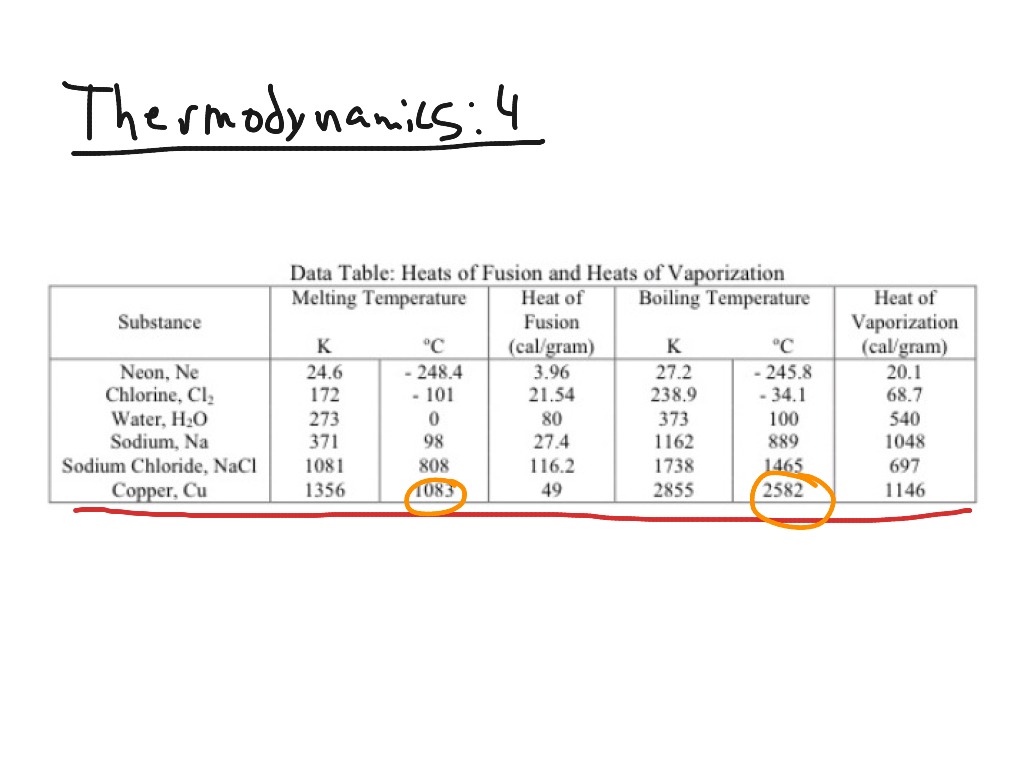
At a staggering 2,562 degrees Celsius (4,643.6 degrees Fahrenheit), the boiling point of copper represents more than just a data point in a chemistry textbook. In the tech industry, this threshold defines the limits of vapor deposition, the challenges of laser-based additive manufacturing, and the future of high-performance cooling solutions. As we push the boundaries of what hardware can achieve, understanding the phase transitions of copper becomes essential for the next generation of technological innovation.
Thermal Management and the Physical Limits of Silicon Cooling
As the density of transistors on silicon chips continues to follow the trajectory of Moore’s Law, heat has become the primary adversary of performance. Modern data centers and high-performance computing (HPC) environments generate immense amounts of thermal energy. Copper, with its exceptional thermal conductivity, is the industry standard for heat sinks and thermal spreaders. However, as we approach the physical limits of air and liquid cooling, the thermal properties of copper are being re-examined through the lens of phase-change technology.
Heat Dissipation in High-Performance Computing (HPC)
In the realm of enterprise-grade hardware, the ability to move heat away from a processor quickly is the difference between a stable system and catastrophic thermal throttling. Copper’s role here is traditionally passive, but engineers are increasingly looking at how copper behaves at near-boiling temperatures in specialized environments. While we rarely reach 2,562°C in a consumer laptop, the principles of copper’s state changes are utilized in “vapor chambers.” These are vacuum-sealed copper units containing a small amount of liquid. As the chip heats up, the liquid evaporates, carrying heat to the cooler edges where it condenses. This technology is a direct application of understanding copper’s phase transitions to solve the “heat wall” in modern tech.
Copper Vapor and Phase-Change Cooling Systems
Advanced research into two-phase immersion cooling is currently exploring materials that can handle extreme shifts in state. While the boiling point of the coolant is usually low, the copper housing must maintain structural integrity and high surface area performance even as temperatures fluctuate. Understanding the vaporization point of the copper itself is vital for specialized industrial tech, such as copper-vapor lasers (CVLs). These lasers utilize copper in its gaseous state—achieved by heating the metal to its boiling point—to produce high-repetition-rate pulses used in precision machining and even in the enrichment of isotopes. This represents the pinnacle of copper tech, where the metal is not just a conductor, but the active medium for light generation.
Copper in Semiconductor Manufacturing: The Physics of Deposition
The transition from liquid to gas is a critical phase in the fabrication of the microchips that power our smartphones, AI models, and autonomous vehicles. In the cleanrooms of semiconductor giants, the boiling point of copper is a variable that must be precisely controlled during the metallization process.
Understanding Physical Vapor Deposition (PVD)
One of the most common methods for applying copper interconnects onto a silicon wafer is Physical Vapor Deposition. In this high-tech process, copper is heated until it reaches a state where atoms can be “ejected” and then condensed onto a substrate in a thin, uniform film. To achieve this, manufacturing equipment must reach temperatures that approach or facilitate the vaporization of copper. By understanding the exact boiling point and the vapor pressure of copper at high temperatures, engineers can ensure that the copper wiring on a 3nm or 5nm chip is pure, consistent, and free of defects.
Precision Engineering at Extreme Temperatures
The move from aluminum to copper interconnects in the late 1990s revolutionized CPU clock speeds because copper has lower electrical resistance. However, copper is harder to etch than aluminum. This led to the development of the “Damascene process,” where copper is deposited into pre-etched trenches. During advanced variations of this process involving sputtering or thermal evaporation, the thermal limits of copper are tested. If the temperature control is off by even a fraction of a percent relative to the metal’s boiling and melting points, the resulting thin film can suffer from grain boundary issues, leading to “electromigration”—a phenomenon where the copper atoms actually move over time, eventually causing the circuit to fail.

The Material Science of Next-Generation Conductors
As we look toward the future of technology—specifically in the sectors of renewable energy hardware, electric vehicles (EVs), and aerospace—the demands on copper are changing. We are no longer just looking for “pure” copper; we are looking for copper alloys and composites that can withstand extreme environments without reaching their “boiling” or melting points.
Beyond Traditional Wiring: High-Temp Copper Alloys
In aerospace tech, electrical systems are often subjected to massive thermal loads. Standard copper wiring can become soft as it approaches its melting point, and in extreme failure scenarios, it can vaporize. Tech innovators are currently developing copper-niobium and copper-silver alloys. These materials aim to maintain the high conductivity of copper while raising the “effective” thermal ceiling of the component. By studying the vaporization dynamics of these alloys, engineers can create fail-safe systems for the high-voltage environments found in electric aviation and space exploration.
Copper’s Role in the Energy Transition and EV Infrastructure
The tech behind EV fast-charging is essentially a battle against heat. Charging a vehicle at 350kW requires massive copper cables. To keep these cables manageable in size, they are often liquid-cooled. The design of these cooling systems requires a deep understanding of the thermal limits of the copper core. If the copper were to reach a point of structural degradation (long before it hits its boiling point), the charging interface would fail. However, the boiling point remains the “North Star” for material scientists defining the absolute limits of the material’s thermal envelope in extreme-stress scenarios.
Scaling Challenges: Why the Boiling Point Matters for Future Gadgets
The miniaturization of gadgets presents a unique paradox: as devices get smaller, the relative heat density increases. This is leading to a revolution in how we think about the “boiling point” of materials in a metaphorical and literal sense within consumer tech.
Miniaturization and Thermal Throttling
In modern smartphones, we are seeing the integration of increasingly complex copper heat pipes. The efficiency of these pipes depends on the internal pressure and the delta between the ambient temperature and the boiling point of the working fluid within the copper. If the copper itself had a lower boiling point, it would be useless as a container for these high-energy exchanges. The stability of copper at the 2,562°C mark ensures that even in the most extreme industrial applications, the copper housing of our tech remains inert and structurally sound.
Sustainable Sourcing and Tech Longevity
Finally, the “boiling point” is relevant to the technology of recycling. As the tech industry moves toward a circular economy, the process of recovering copper from “e-waste” involves smelting and refining. To separate copper from other precious metals like gold and silver, or from impurities like lead, recyclers use the specific boiling and melting points of each element. Advanced plasma-arc recycling technology can heat e-waste to temperatures that vaporize certain components while leaving others liquid. This precision allows for the recovery of 99.9% pure copper, which is then fed back into the supply chain to create the next generation of hardware.
Conclusion: The Indispensable Element
While the average tech consumer may never see copper reach its boiling point, this physical constant is the invisible guardrail of the digital age. It dictates how our chips are made, how our high-end PCs are cooled, and how we will eventually recycle the mountains of hardware we produce.
The 2,562°C threshold is a testament to the resilience of copper. In a world of “soft” tech—software, AI, and cloud computing—it is the “hard” properties of elements like copper that provide the foundation. As we continue to push for faster processing speeds and more powerful energy systems, our mastery over the phase transitions and thermal limits of copper will remain a defining factor in the success of future technological frontiers. Understanding the boiling point of copper is not just a lesson in metallurgy; it is a fundamental requirement for engineering the future.
aViewFromTheCave is a participant in the Amazon Services LLC Associates Program, an affiliate advertising program designed to provide a means for sites to earn advertising fees by advertising and linking to Amazon.com. Amazon, the Amazon logo, AmazonSupply, and the AmazonSupply logo are trademarks of Amazon.com, Inc. or its affiliates. As an Amazon Associate we earn affiliate commissions from qualifying purchases.