
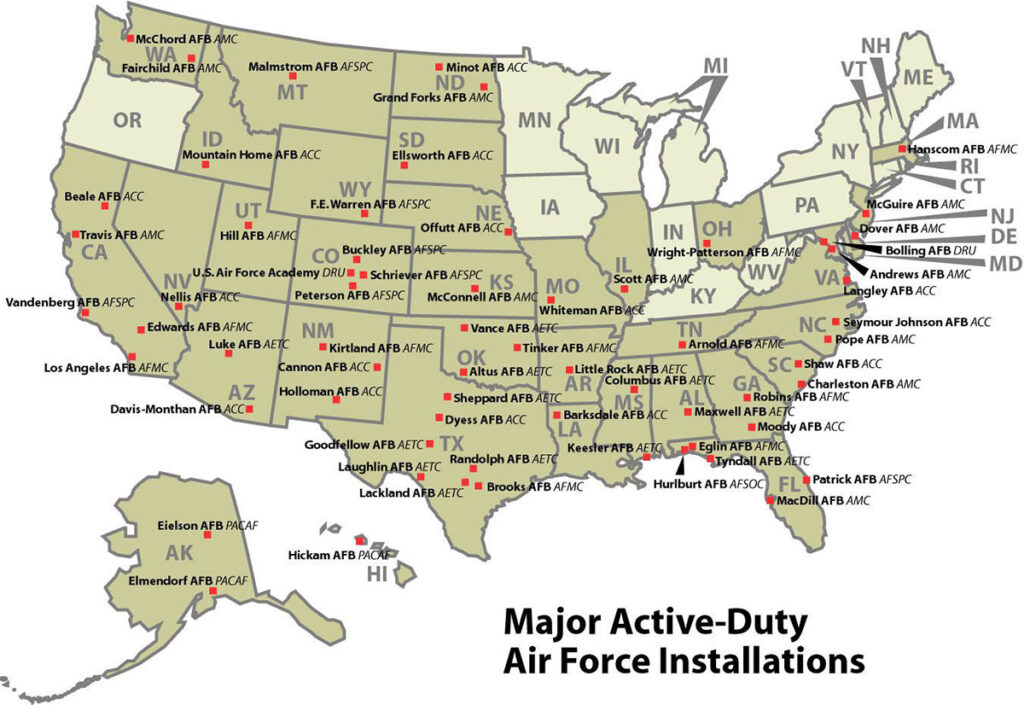
When discussing the “biggest” Air Force base in the United States, the conversation typically begins with geography. Eglin Air Force Base in the Florida Panhandle holds the title for the largest land area, sprawling across approximately 463,000 acres (about 724 square miles). However, in the modern era of defense, “size” is increasingly defined by more than just acreage; it is measured by technological throughput, digital infrastructure, and the capacity for research and development.
In this deep dive, we explore the technological ecosystem of the US Air Force’s largest installations, focusing on how these massive physical footprints serve as the testing grounds for the next generation of artificial intelligence, cybersecurity, and aerospace engineering.
Eglin Air Force Base: The World’s Premier Testing Ground for Advanced Munitions and AI
Eglin Air Force Base is not merely a collection of runways and barracks; it is a high-tech laboratory where the future of kinetic and non-kinetic warfare is coded and tested. Because of its vast range, Eglin serves as the primary site for the Air Force Materiel Command (AFMC), specifically the Air Force Armament Center.
The Digital Proving Ground: Virtualizing Aerial Combat
One of the most significant tech trends at Eglin is the integration of Digital Twin technology. Before a single piece of hardware is manufactured, engineers create high-fidelity digital replicas of weapons systems and aircraft. This software-driven approach allows for millions of flight hours to be simulated in a virtual environment, identifying potential software bugs or aerodynamic flaws at a fraction of the cost of physical testing.
These simulations utilize massive data sets processed through High-Performance Computing (HPC) centers located on-base. By leveraging AI-driven analytics, the Air Force can predict how new materials will react to supersonic speeds or how electronic warfare (EW) suites will perform in contested environments.
Smart Weaponry and Autonomous Systems Development
Eglin is the epicenter for the “Golden Horde” initiative, a project focused on “swarming” technology. This involves creating networked munitions that can communicate with one another in real-time. The technology relies heavily on edge computing—processing data locally on the munition rather than sending it back to a central server—allowing the weapons to change targets or flight paths autonomously based on the battlefield’s evolving digital landscape.
The transition from “dumb” bombs to “collaborative” systems represents a massive shift in software architecture. It requires robust, unhackable communication protocols and machine learning algorithms that can distinguish between civilian infrastructure and military targets with unprecedented precision.
Cybersecurity and Satellite Tech at the Nation’s Strategic Hubs
While Eglin dominates in physical size, other large bases like Nellis (Nevada) and Buckley (Colorado) serve as the backbone for the Air Force’s digital and space-based technological superiority. The “biggest” bases are increasingly those that house the most significant data processing power.
Securing the Global Positioning System (GPS)
The technology behind GPS, which powers everything from consumer smartphones to global logistics, is managed through a complex network of ground stations and satellite arrays. The technological infrastructure required to maintain this system is staggering. It involves atomic clock synchronization, cryptographic security to prevent “spoofing” (the sending of false signals), and the continuous deployment of new software patches to orbiting satellites.
Digital security is the primary concern here. Large Air Force installations operate under a “Zero Trust” architecture, a security model that requires continuous verification of every user and device attempting to access the network. This technology is critical because a breach in the satellite control network could have catastrophic effects on global commerce and national security.
Integration of Cloud Computing in High-Altitude Reconnaissance
The modern Air Force generates petabytes of data every hour from sensors mounted on drones (UAVs) and manned aircraft. The challenge is no longer just collecting data, but processing it. The Air Force’s “Cloud One” initiative is a massive enterprise cloud environment designed to provide developers with a secure platform to host applications and data.
Large bases are being outfitted with local “cloud nodes” that allow for rapid data processing. For instance, when a Global Hawk drone returns from a mission, the terabytes of high-resolution imagery it has captured are instantly uploaded to a secure cloud where AI algorithms scan the footage for anomalies. This tech reduces the time from “sensor to shooter,” turning raw data into actionable intelligence in seconds.

The Evolution of Stealth and Avionics: Engineering the Future of Flight
The physical size of bases like Edwards Air Force Base in California is essential because it provides the isolation needed to test sensitive stealth technologies and advanced avionics. Here, the focus is on the intersection of material science and software-defined hardware.
Material Science and Radar-Evading Software
Stealth is often thought of as just the shape of the plane, but modern stealth relies heavily on Radar Absorbent Material (RAM) and the software that manages the aircraft’s “electronic signature.” Modern fighter jets, such as the F-35 Lightning II, are essentially flying supercomputers.
The software running an F-35 consists of over 8 million lines of code. This code manages everything from the fly-by-wire systems to the Sensor Fusion engine, which gathers data from various onboard and offboard sensors to present the pilot with a single, unified picture of the battlespace. At bases like Edwards, engineers are constantly pushing “Over-the-Air” (OTA) updates to these aircraft, much like a Tesla or an iPhone, to improve performance and patch vulnerabilities.
The Next Generation of Pilot Interface: VR and AR in the Cockpit
One of the most exciting gadgets in the Air Force tech arsenal is the Augmented Reality (AR) helmet used by F-35 pilots. This $400,000 piece of technology allows pilots to “look through” the floor of their plane. Cameras mounted around the aircraft feed video directly to the helmet’s visor, synchronized with the pilot’s head movements.
The development of these interfaces happens at large-scale tech hubs within the bases. Beyond the cockpit, Virtual Reality (VR) is revolutionizing maintenance. Technicians at large bases now use VR goggles to walk through a 3D model of an engine before they ever touch a wrench. This “Digital Maintenance” reduces errors and speeds up the training process for complex mechanical systems.
Sustainable Tech and Energy Innovation at Scale
As the Air Force manages its largest installations, it is also becoming a leader in “Green Tech” and energy resiliency. A base the size of Eglin or Nellis consumes as much power as a small city, making energy security a top priority.
Microgrids and Energy Resiliency in Massive Installations
The “tech” of the base itself is evolving toward the Smart City model. The Air Force is investing heavily in microgrid technology—local energy grids that can disconnect from the main utility grid and operate autonomously. These grids are powered by massive solar arrays (often spanning hundreds of acres on these large bases) and backed up by large-scale battery storage systems.
This isn’t just about sustainability; it’s about digital security. If a cyber-attack targets the national power grid, these bases must remain operational. The software controlling these microgrids uses AI to balance loads and prioritize power to mission-critical facilities like command centers and hospitals.
Transitioning to Unmanned Aerial Systems (UAS)
The future of the “biggest” bases will likely see a decrease in manned flight operations and an increase in autonomous “loyal wingman” drones. This shift requires a massive overhaul of base infrastructure. We are seeing the development of “Smart Hangars” equipped with IoT (Internet of Things) sensors that monitor the health of a drone’s battery and software status automatically.
These autonomous systems require a different kind of “base”—one focused on high-bandwidth data links and automated recharging stations. As we look at the geography of these installations, we see more space being dedicated to satellite uplinks and data centers, marking a transition from a fossil-fuel-dependent force to a data-driven one.

Conclusion: The New Definition of “Big”
While Eglin Air Force Base remains the largest by land area, the definition of the “biggest” base is shifting toward those with the most significant technological footprint. The sprawling acres of Florida and Nevada are no longer just buffer zones for loud engines; they are the physical barriers protecting some of the world’s most advanced computing clusters, AI laboratories, and cybersecurity hubs.
From the 8 million lines of code in a stealth fighter to the autonomous microgrids powering the runways, the US Air Force’s largest bases are at the absolute cutting edge of global technology. They are the sites where the digital and physical worlds collide, ensuring that the future of defense is written in code as much as it is forged in steel. For tech enthusiasts and professionals alike, these bases represent a massive, overlooked sector of the “Big Tech” world, operating at a scale that few private companies can match.
aViewFromTheCave is a participant in the Amazon Services LLC Associates Program, an affiliate advertising program designed to provide a means for sites to earn advertising fees by advertising and linking to Amazon.com. Amazon, the Amazon logo, AmazonSupply, and the AmazonSupply logo are trademarks of Amazon.com, Inc. or its affiliates. As an Amazon Associate we earn affiliate commissions from qualifying purchases.