
In the realm of biological engineering, the human body is often viewed as the ultimate machine—a complex, self-sustaining system of inputs, outputs, and intricate processing units. When we ask, “What is the basic unit of a kidney?” the biological answer is the nephron. However, in the context of modern technology, the nephron is no longer just a microscopic structure of cells; it has become the master blueprint for a multi-billion dollar sector of MedTech.
The kidney is a sophisticated filtration plant, processing approximately 200 quarts of blood daily to sift out waste and extra water. The nephron—the functional unit responsible for this—is a marvel of microfluidics and chemical engineering. As we stand on the brink of a new era in healthcare technology, understanding the “basic unit” of the kidney is essential for developers, engineers, and tech innovators who are racing to replicate its functions through artificial intelligence, 3D bio-printing, and wearable hardware.
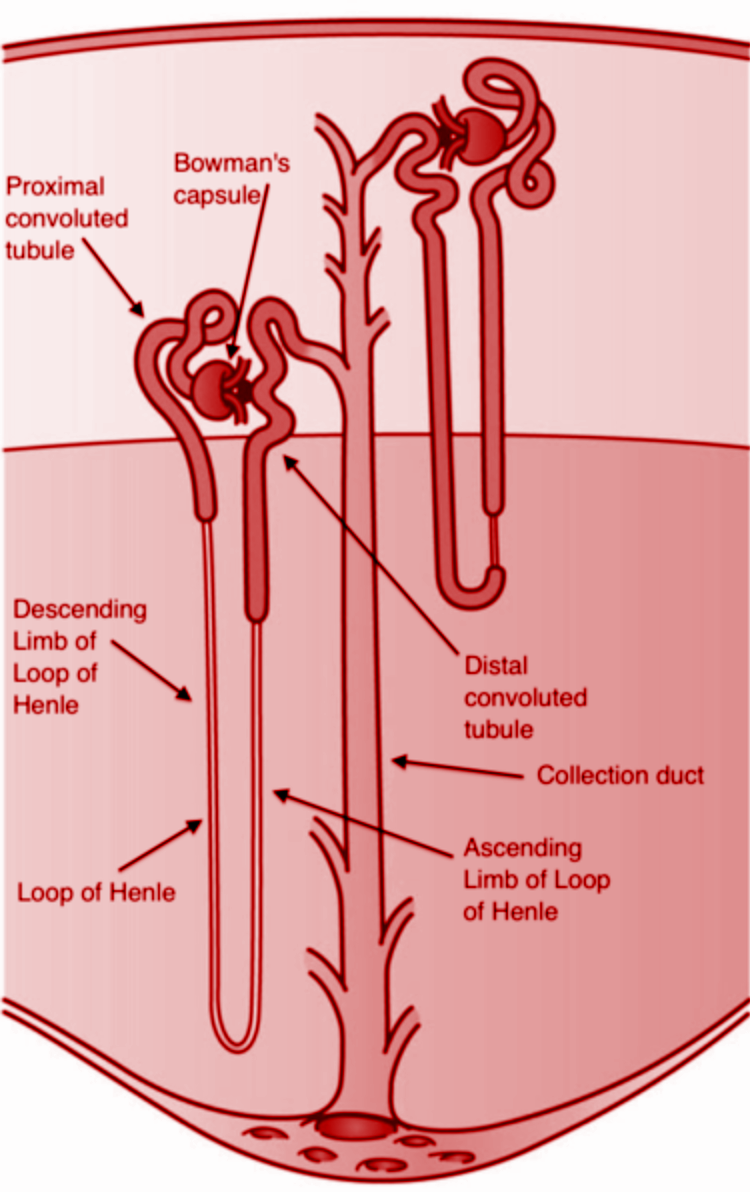
1. The Biological Micro-Processor: Understanding the Nephron as a Technical Standard
To appreciate the technology being developed today, one must first understand the technical specifications of the biological nephron. Each human kidney contains roughly one million of these units. From a tech perspective, the nephron functions as a modular micro-processor. It consists of two primary components: the glomerulus (the filter) and the tubule (the processor).
The Architecture of Filtration
The glomerulus acts as the high-throughput intake valve. It allows fluid and waste products to pass through while keeping essential blood cells and large proteins within the “system.” In engineering terms, this is a semi-permeable membrane with a precision that current synthetic filters struggle to match.
Data Processing and Reabsorption
The tubule is where the “logic” happens. As the filtered fluid moves through the tubule, the nephron performs a complex series of calculations, reclaiming necessary minerals and water while discarding toxins. This real-time adjustment of chemical balance is what bio-engineers refer to as a “smart feedback loop.” Modern medical devices, such as smart dialysis machines, are currently attempting to replicate this autonomous decision-making process using advanced sensors and algorithmic controls.
The Scaling Challenge
The primary challenge for technology has always been scale. While a single nephron is microscopic, the collective power of two million nephrons provides a level of redundancy and efficiency that current mechanical systems cannot achieve without being the size of a household refrigerator. The “Tech” race is currently focused on miniaturizing these processes to create more portable, efficient, and integrated solutions.
2. Mimicking Nature: The Rise of Wearable Artificial Kidneys and Microfluidics
For decades, the standard technology for kidney failure has been the dialysis machine—a bulky, stationary piece of equipment that is both energy-intensive and restrictive. However, the focus of the tech industry has shifted toward the “Wearable Artificial Kidney” (WAK). By studying the basic unit of the kidney, engineers are utilizing microfluidics to shrink a room-sized process into a belt-worn device.
Microfluidic Chips: The Silicon Nephron
The most exciting development in this niche is the “kidney-on-a-chip.” These are microfluidic devices that mimic the environment of a human nephron using synthetic membranes and live human cells. By creating a digital and physical hybrid, researchers can test how drugs interact with the “basic unit” of the kidney without human trials. This technology is a cornerstone of “Organs-on-Chips” (OoC), a field that combines semiconductor manufacturing techniques with molecular biology.
Advancements in Membrane Technology
At the heart of any artificial kidney unit is the filtration membrane. Traditional dialysis uses cellulose or polymer membranes, but the next generation of tech is looking toward nanomaterials. Graphene and carbon nanotubes are being engineered to mimic the glomerular basement membrane of the nephron. These materials allow for higher flux (faster filtration) and better selectivity, potentially reducing the time required for treatment from hours to minutes.
Powering the Miniature Unit
A significant hurdle in kidney technology is the power source. Biological nephrons are powered by ATP at the cellular level. For a wearable tech device to succeed, it requires high-density battery technology or innovative energy-harvesting methods that can sustain a constant filtration cycle. This has led to a cross-pollination between the MedTech and EV (Electric Vehicle) battery industries, searching for lightweight, long-lasting power solutions.
3. 3D Bio-Printing: Replicating the Basic Unit Atom by Atom
If the nephron is the basic unit of the kidney, then 3D bio-printing is the manufacturing process aiming to build it from scratch. This is not merely 3D printing with plastic; it involves “bio-inks”—materials composed of living cells and synthetic hydrogels.

Scaffolding and Cellular Alignment
The nephron’s structure is highly organized. To replicate it, bio-printers must be capable of extreme precision, placing specific cell types (podocytes, endothelial cells, and tubular cells) in a three-dimensional matrix. Advanced CAD (Computer-Aided Design) software is now used to map the complex vasculature of the kidney, creating a digital blueprint that the printer follows.
The Software Behind the Biology
The “Tech” in bio-printing isn’t just the hardware of the printer; it is the computational fluid dynamics (CFD) software used to simulate blood flow through the printed unit. Before a single cell is printed, AI models simulate how the “basic unit” will handle pressure and filtration. If the digital twin fails the simulation, the parameters are adjusted. This iterative design process is identical to how aerospace engineers design turbine blades.
The Path to Full Organ Replacement
While we are not yet at the stage of printing a full, functional kidney for transplant, the tech industry has successfully printed “organoids”—miniature, simplified versions of the kidney’s basic units. These organoids are used in pharmaceutical research, significantly reducing the “Time to Market” for new drugs by providing high-fidelity data on renal toxicity at a fraction of the cost of animal testing.
4. AI and Machine Learning: Managing the Data of Millions of Units
The functionality of the kidney is not just about physical filtration; it is about information management. The kidney constantly monitors blood pressure, pH levels, and electrolyte concentrations. In the tech landscape, this translates to Big Data and Artificial Intelligence.
Predictive Analytics in Renal Care
AI algorithms are now being integrated into dialysis tech to predict complications before they happen. By analyzing data points from the “basic unit” of treatment—the dialysis session—AI can predict drops in blood pressure or the buildup of specific toxins with 95% accuracy. This shift from reactive to predictive maintenance is a hallmark of “Health 4.0.”
Digital Twins of the Nephron
A “Digital Twin” is a virtual representation of a physical object. In nephrology, tech companies are creating digital twins of a patient’s specific kidney function. By modeling how the basic units of a specific individual are performing, doctors can use “Precision Medicine” to tailor treatments. This involves processing massive datasets, including genomic information, lifestyle metrics from wearables (like Apple Watch or Oura), and real-time blood chemistry.
The Role of Edge Computing
Because the kidney functions in real-time, its technological counterpart must also process data instantaneously. Edge computing—where data is processed on the device rather than in the cloud—is vital for future artificial kidneys. If a wearable device detects a spike in a specific toxin, it must adjust its filtration rate immediately, much like the biological nephron’s auto-regulation mechanism.
5. The Future of Renal Tech: Beyond the Biological Unit
As we look toward the future, the definition of the “basic unit” of the kidney may evolve. We are moving beyond simple replication toward enhancement.
CRISPR and Genetic Engineering
Using CRISPR-Cas9 technology, scientists are looking at “editing” the basic units of kidneys in donor animals (xenotransplantation) to make them compatible with humans. This involves using gene-editing software to remove the “code” that causes organ rejection. In this context, the nephron becomes a programmable unit of biological hardware.
Smart Stents and IoT Integration
The future of kidney tech also includes the Internet of Things (IoT). Imagine smart stents implanted within the renal artery that monitor the health of the kidney units and beam that data directly to a smartphone. This integration of internal biological monitoring with external digital interfaces represents the ultimate convergence of biology and technology.
Cyber-Security in Bio-Tech
As kidney units become more “connected,” the issue of digital security becomes paramount. If an artificial kidney is controlled by software, it is theoretically vulnerable to hacking. The “basic unit” of kidney care in the future will necessarily include robust encryption and blockchain-based data logging to ensure that these life-sustaining devices remain secure from external interference.

Conclusion
The question “What is the basic unit of a kidney?” yields a biological answer—the nephron—but its implications in the tech world are vast and transformative. From the microfluidic “Silicon Nephron” to AI-driven predictive analytics and 3D bio-printing, the tech industry is using the kidney’s fundamental architecture to redefine the future of medicine.
We are moving away from a world where organ failure is a terminal diagnosis and toward a world where the “basic unit” of our most vital organs can be monitored, repaired, or even manufactured using cutting-edge technology. The synergy between biological understanding and engineering prowess is not just creating better gadgets; it is engineering a future where the human machine can be upgraded and maintained with the same precision as a high-end server farm.
aViewFromTheCave is a participant in the Amazon Services LLC Associates Program, an affiliate advertising program designed to provide a means for sites to earn advertising fees by advertising and linking to Amazon.com. Amazon, the Amazon logo, AmazonSupply, and the AmazonSupply logo are trademarks of Amazon.com, Inc. or its affiliates. As an Amazon Associate we earn affiliate commissions from qualifying purchases.