
In the rapidly evolving landscape of health technology, the quantification of the human body has moved far beyond the simple measurement of weight or Body Mass Index (BMI). As we transition into an era of precision medicine and personalized wellness, “Total Body Water” (TBW) has emerged as one of the most critical metrics in body composition analysis. While it sounds like a purely biological term, TBW is fundamentally a triumph of digital sensor technology, complex algorithms, and data science.
For tech enthusiasts, developers, and hardware engineers, understanding TBW isn’t just about hydration; it’s about understanding how bioelectrical impedance analysis (BIA) and smart sensors translate physiological resistance into actionable digital insights. This article explores the technological architecture behind TBW measurement, the software ecosystems that interpret this data, and the future of hydration-tracking hardware.

The Science of Measurement: Bioelectrical Impedance Analysis (BIA)
At the heart of any consumer or professional device measuring TBW lies Bioelectrical Impedance Analysis (BIA). This technology operates on the principle that biological tissues provide different levels of electrical resistance. Water, being an excellent conductor of electricity due to its dissolved electrolytes, offers low resistance. In contrast, adipose tissue (fat) acts as an insulator, offering high resistance.
Multi-Frequency vs. Single-Frequency Tech
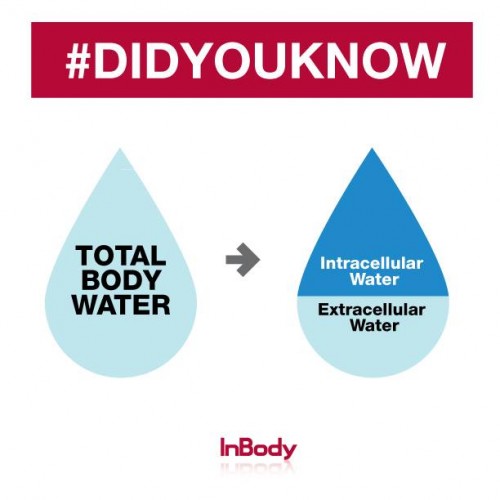
Early iterations of body composition tech used single-frequency BIA, typically operating at 50 kHz. This was a significant limitation because low-frequency currents primarily flow through extracellular water (ECW) and struggle to penetrate cell membranes. To provide a comprehensive TBW reading, modern high-end devices—ranging from medical-grade InBody systems to premium smart scales—utilize Multi-Frequency BIA (MF-BIA).
MF-BIA uses a spectrum of frequencies, ranging from 1 kHz to 1000 kHz. High frequencies can penetrate the cell membrane, allowing the device to measure Intracellular Water (ICW). By aggregating ICW and ECW, the hardware can provide a highly accurate TBW calculation. This technological leap allows for the differentiation between “water weight” caused by inflammation or edema and actual cellular hydration levels.
From Lab-Grade Hardware to Consumer Gadgets
The miniaturization of BIA sensors has been a cornerstone of the wearable tech revolution. A decade ago, measuring TBW required bulky equipment with gel electrodes. Today, the integration of Indium Tin Oxide (ITO) coatings on glass surfaces and stainless-steel electrodes on smartwatches allows for dry-electrode BIA measurement.
The hardware challenge in consumer devices is managing “contact impedance.” Tech developers must account for the moisture level of the user’s skin and the pressure applied to the sensors. Advanced firmware now includes error-correction protocols that detect poor contact or environmental interference, ensuring that the raw electrical signal being sent to the processing unit is as clean as possible.
Data Interpretation: The Role of AI and Predictive Modeling
Raw impedance data is effectively useless without a robust software layer to interpret it. The journey from an electrical signal to a TBW percentage on a smartphone screen involves sophisticated algorithmic processing and machine learning models.
The Role of Predictive Modeling and Regression
Once the device measures resistance and reactance, the software applies regression equations. These equations are not static; they are calibrated against “gold standard” methods like Deuterium Dilution or Dual-energy X-ray Absorptiometry (DXA).
For tech developers in the health space, the “secret sauce” lies in the proprietary algorithms that adjust raw data based on demographic variables such as age, biological sex, and ethnicity. Modern health platforms utilize AI to refine these models over time. By analyzing millions of anonymized data points, these platforms can identify patterns in TBW fluctuations, allowing the software to provide “contextual health insights” rather than just a raw number.
Cloud Integration and Long-term Data Tracking
TBW is a dynamic metric, shifting based on exercise, diet, and circadian rhythms. Consequently, the value of a single measurement is low. The real power lies in the Internet of Things (IoT) ecosystem. Smart scales and wearables sync TBW data to cloud-based dashboards via Wi-Fi or Bluetooth Low Energy (BLE).
In this cloud-integrated model, TBW data is processed alongside other telemetry like heart rate variability (HRV) and sleep stages. This creates a multi-dimensional view of a user’s health. For instance, an AI-driven app might correlate a drop in TBW with a spike in resting heart rate to alert a user of impending dehydration or overtraining syndrome. This transformation of “dumb data” into “proactive intelligence” is the hallmark of modern digital health software.

The Future of Hydration Tech: Wearables and Real-Time Monitoring
The next frontier for TBW is the transition from “point-in-time” measurement (standing on a scale) to “continuous monitoring” via wearables. This shift presents significant engineering hurdles but offers massive potential for the tech industry.
Non-Invasive Biosensors and Optical Hydration Tracking
While BIA is the current standard, new technological players are entering the field. Optical sensors, utilizing Near-Infrared (NIR) spectroscopy, are being developed to measure water content in the skin and underlying tissue. This technology functions similarly to a pulse oximeter, using light absorption patterns to estimate fluid levels.
Furthermore, “sweat-sensing” wearables are on the horizon. These microfluidic devices analyze the composition of a user’s sweat in real-time to determine electrolyte loss and TBW depletion. For software engineers, the challenge here is the “signal-to-noise ratio.” Designing algorithms that can filter out the movement of a running athlete while maintaining high-fidelity sensor readings is one of the most exciting challenges in current sensor fusion technology.
Integration with Smart Ecosystems and Home Automation
We are approaching a point where TBW data will no longer live in a siloed health app. Through API integrations, your hydration status could communicate with your broader tech ecosystem. Imagine a smart refrigerator that suggests a specific electrolyte-enhanced beverage because your wearable detected a 2% drop in TBW, or a smart water bottle that adjusts its glowing reminders based on your real-time biometrics.
This level of integration requires a standardized protocol for health data exchange. Tech giants are already pushing for this through frameworks like Apple HealthKit, Google Fit, and the Matter protocol. As TBW becomes a standard metric in these ecosystems, we will see a surge in “Hydration-as-a-Service” (HaaS) software models, where personalized hydration plans are delivered via subscription.
Security and Data Privacy in Health Metrics
As TBW and other body composition metrics become more prevalent in the digital sphere, the conversation must pivot to the security of this highly sensitive biometric data. Unlike a password, you cannot change your biological profile if it is leaked.
Biometric Data Protection and Encryption
TBW data, when combined with other body composition metrics, constitutes a unique biological “fingerprint.” For tech companies, this necessitates the implementation of end-to-end encryption for all data transmissions between the sensor and the cloud.
Modern health-tech architecture is increasingly moving toward “Edge Computing.” Instead of sending raw electrical data to the cloud for processing, the computation happens on the device itself (at the edge). This minimizes the amount of sensitive data in transit. Only the final result—the TBW percentage—is synced, and even then, it is often stored in encrypted vaults with strict access controls.
AI Ethics and Diagnostic Responsibility
As TBW algorithms become more “intelligent,” a tech-ethics question arises: When does a wellness tool become a medical device? Software that monitors TBW can potentially detect signs of kidney failure or congestive heart failure (marked by extreme fluid retention).
Tech companies must navigate the fine line between providing insightful data and making unauthorized medical diagnoses. This involves building “guardrails” within the software—disclaimers, data-sharing protocols with healthcare providers, and compliance with regulations like HIPAA in the US or GDPR in Europe. The future of TBW tech is not just about better sensors; it’s about building a trustworthy digital infrastructure that respects user privacy while maximizing health outcomes.
Conclusion: The Digitalization of the Human Body
Total Body Water is far more than a biological statistic; it is a digital window into the human body’s most fundamental component. Through the lens of technology, TBW measurement represents the perfect harmony of hardware engineering, algorithmic sophistication, and IoT connectivity.
As BIA sensors continue to shrink and AI models become more predictive, the tracking of TBW will move from the periphery of health tech to its core. For the developers and innovators of tomorrow, the challenge lies in making this data more accurate, more continuous, and more secure. We are moving toward a future where our devices know our bodies better than we do—and in that future, TBW will be the most vital stream of data we track.
aViewFromTheCave is a participant in the Amazon Services LLC Associates Program, an affiliate advertising program designed to provide a means for sites to earn advertising fees by advertising and linking to Amazon.com. Amazon, the Amazon logo, AmazonSupply, and the AmazonSupply logo are trademarks of Amazon.com, Inc. or its affiliates. As an Amazon Associate we earn affiliate commissions from qualifying purchases.