
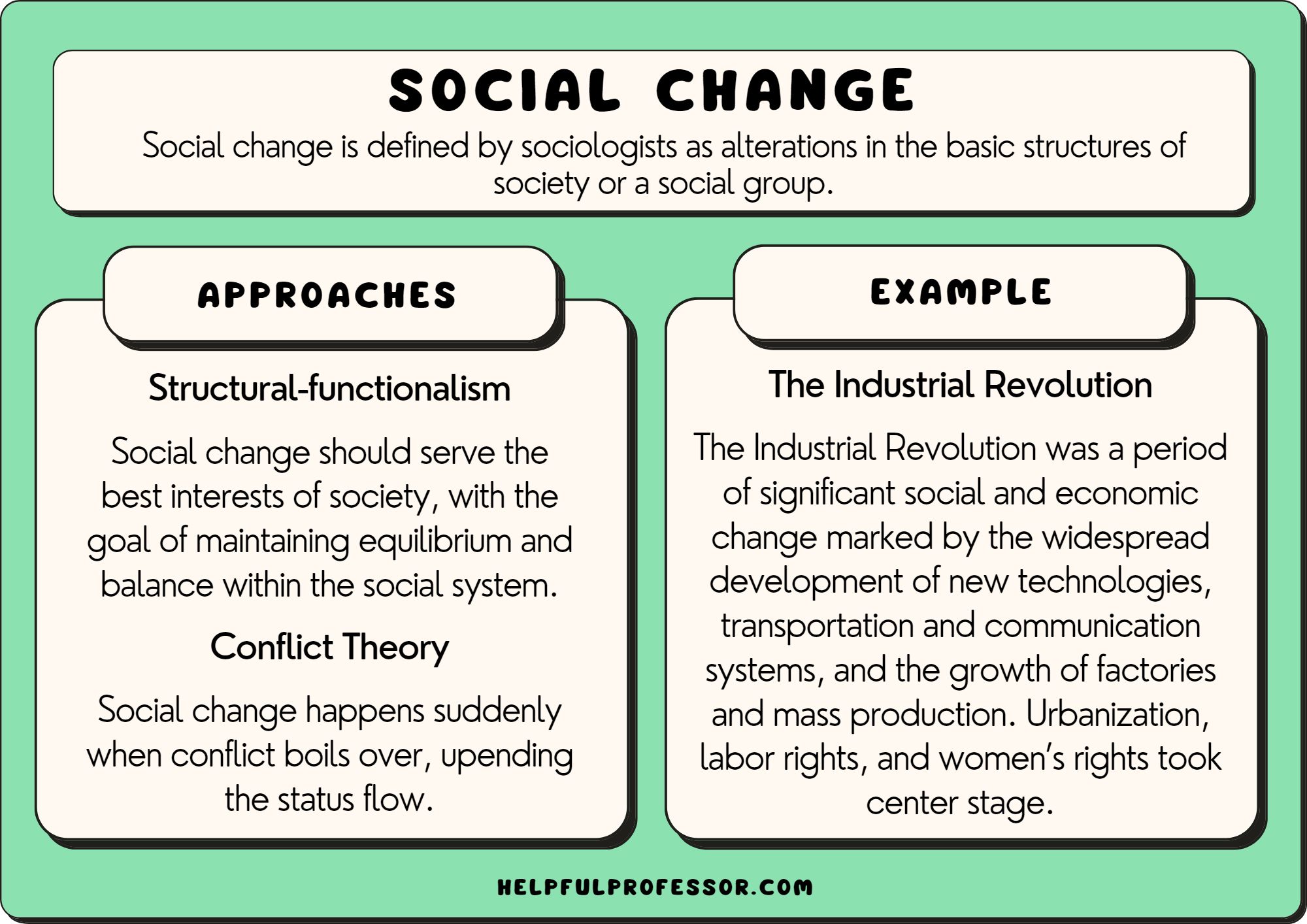
Sociological change is traditionally defined as the significant alteration of social structures, patterns of behavior, and cultural norms over time. While historically these shifts were driven by environmental changes, political revolutions, or religious movements, the modern era has introduced a new, dominant catalyst: technology. In the 21st century, sociological change is inextricably linked to the rapid evolution of digital tools, artificial intelligence, and global connectivity.
To understand sociological change today, one must look through the lens of technology. It is no longer just about how we live, but how the tools we create fundamentally redefine what it means to be a member of society. This article explores the intersection of sociological shifts and technological advancement, examining how our digital landscape is rewriting the social contract.
The Definition of Sociological Change through a Technological Lens
At its core, sociological change refers to the way human interactions and social institutions transform. When we apply a technological perspective, we see that these changes are now occurring at an exponential rate. In the past, a shift in social norms might take centuries; today, a single software update or a new social media platform can alter the behavior of billions in a matter of months.
From Industrial to Digital: A Paradigm Shift
The transition from the Industrial Age to the Information Age represents one of the most profound sociological changes in human history. During the Industrial Revolution, social structures were built around the factory and the physical office. This led to urbanization and the creation of the traditional nuclear family schedule.
However, the “Digital Revolution” has decoupled location from productivity. As technology allows for remote work and asynchronous communication, the sociological structure of the “city” and the “workday” is dissolving. We are witnessing a shift where physical proximity is no longer a requirement for social or professional cohesion, leading to a more fragmented yet globally integrated society.
The Role of Disruptive Innovation
Disruptive technology acts as a primary driver of sociological change by making old habits obsolete. Consider the impact of the smartphone. It did not just change how we communicate; it changed the sociology of “public space.” Before the smartphone, a bus stop or a waiting room was a place of potential social interaction with strangers. Today, these are spaces of digital isolation, where individuals are physically present but sociologically engaged in distant digital networks. This disruption of local social patterns is a hallmark of technologically driven sociological change.
AI and the Automation of Social Structures
Artificial Intelligence (AI) is perhaps the most potent engine of sociological change in the current decade. It is moving beyond a simple tool to becoming an active participant in our social fabric. As AI begins to handle tasks once reserved for human intellect, the way we define value, labor, and even human identity is shifting.
The Redefinition of Labor and Identity
For centuries, a person’s social identity was closely tied to their profession. As AI and automation take over routine and even complex cognitive tasks, the sociological concept of “work” is being challenged. If AI can perform the functions of an accountant, a coder, or a graphic designer, society must find new ways to assign value and status to individuals.
This leads to a sociological shift toward the “creative economy” or “human-centric services,” where emotional intelligence and empathy become the new social currency. The potential for a Universal Basic Income (UBI) or shortened work weeks are not just economic discussions; they are sociological responses to a technologically altered reality where labor is no longer the central pillar of human existence.
Algorithmic Influence on Social Norms
We often think of social norms as something that develops organically within a community. However, in the tech-driven era, algorithms are increasingly responsible for shaping these norms. Recommendation engines on platforms like YouTube, TikTok, and X (formerly Twitter) decide what information we consume, which ideas are amplified, and which behaviors are rewarded.
This “algorithmic sociology” can lead to the formation of echo chambers and polarized social groups. When an algorithm prioritizes engagement over accuracy, it changes the way society perceives truth and consensus. This is a profound sociological change where the “common ground” of society is replaced by personalized realities dictated by code.
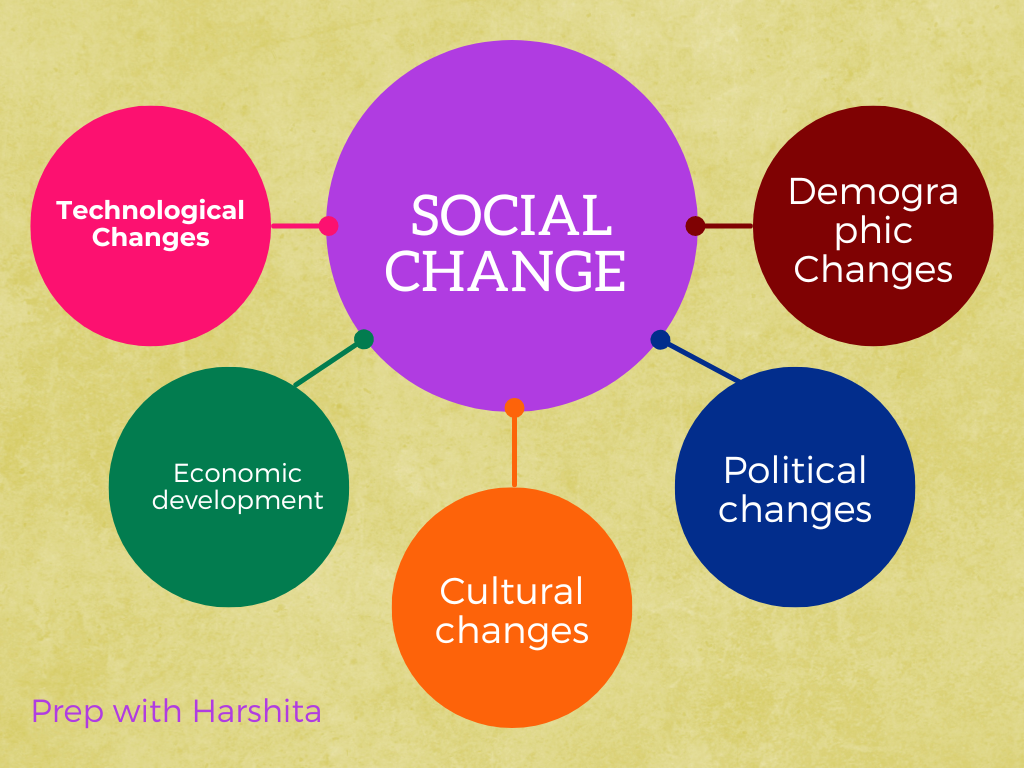
Digital Connectivity and the Evolution of Community
The traditional definition of a community was based on geography—the people you lived near were your tribe. Technology has completely inverted this concept, giving rise to “networked individualism” and virtual societies that transcend borders.
The Rise of Virtual Societies
Sociological change is evident in the way we form bonds. Today, a person might feel a stronger sense of belonging to a global community of open-source developers or a niche gaming group than to their physical neighbors. These virtual societies have their own hierarchies, languages, and codes of conduct.
The tech that facilitates these connections—high-speed internet, VR/AR, and collaborative platforms—is creating a “Global Village.” However, this change also brings challenges. Virtual communities can be transient and lack the deep-rooted support systems of physical neighborhoods. The sociological impact is a society that is more connected than ever but also more prone to feelings of individual loneliness.
The Erosion of Traditional Boundaries
Technology has eroded the boundaries between the public and private spheres. In the past, what happened at home stayed at home. Today, through social media and “always-on” gadgets, our private lives are curated and broadcasted for public consumption. This change has altered the sociological concept of privacy.
Younger generations, raised with “digital-first” mentalities, view privacy differently than their predecessors. This shift affects everything from how we date (apps vs. organic meetings) to how we mourn and celebrate. The sociological change here is the “normalization of surveillance”—we have become comfortable with being watched, both by our peers and by the tech companies that provide our platforms.
Ethics, Security, and the Social Contract of the Future
As technology drives sociological change, it forces us to renegotiate the social contract. The relationship between the individual, the state, and the technology corporation is being redefined, particularly regarding digital security and the ethics of data.
Privacy as a Sociological Construct
Privacy is no longer just a legal right; it is a sociological construct that is being re-evaluated. In a world of IoT (Internet of Things) devices and biometric security, our bodies and movements have become data points. This leads to a sociological change where “anonymity” is becoming a luxury rather than a standard.
The social impact of this is profound. When people know they are being monitored—whether by a smart home assistant or a facial recognition camera in a public square—their behavior changes. This “Panopticon effect” leads to a more self-regulated, perhaps more compliant, society, which is a significant shift from the liberal ideals of the 20th century.
Bridging the Digital Divide
Sociological change is rarely uniform. One of the greatest risks of tech-driven change is the widening of the digital divide. As society moves toward digital-only banking, remote education, and AI-driven healthcare, those without access to high-end tech or high-speed connectivity are socially marginalized.
This creates a new form of social stratification. The “haves” and “have-nots” are no longer just divided by wealth, but by “technological fluency” and “digital access.” For sociological change to be positive, the tech industry must focus on inclusive design and accessibility. If the tools of the future are only available to the elite, the resulting sociological shift will be one of increased inequality and social unrest.

Conclusion: Navigating a Tech-Driven Society
Sociological change is an inevitable part of the human journey, but the current velocity of change—driven by technology—is unprecedented. From the way we work and identify ourselves to the way we form communities and perceive privacy, every aspect of our social structure is being recalibrated by the digital tools at our disposal.
As we look toward the future, the challenge lies in ensuring that technology serves to enhance human flourishing rather than diminish it. Understanding the “sociology of technology” allows us to be more intentional about the tools we build and the digital habits we adopt. By recognizing that every software update and every AI model carries the potential to change our social fabric, we can better navigate the complexities of life in the digital age, ensuring that sociological change leads toward a more connected, equitable, and insightful world.
aViewFromTheCave is a participant in the Amazon Services LLC Associates Program, an affiliate advertising program designed to provide a means for sites to earn advertising fees by advertising and linking to Amazon.com. Amazon, the Amazon logo, AmazonSupply, and the AmazonSupply logo are trademarks of Amazon.com, Inc. or its affiliates. As an Amazon Associate we earn affiliate commissions from qualifying purchases.