
In the rapidly evolving world of technology, from the development of generative AI to the intricacies of blockchain architecture, communication is the bridge between a theoretical breakthrough and a functional product. Scientific writing is that bridge. While often associated with lab coats and academic journals, scientific writing in the 21st century has become the lifeblood of the tech industry. It is the formal method of communicating technical information, research findings, and systematic observations to a specific audience of peers, stakeholders, and engineers.
At its core, scientific writing in the tech niche is defined by its pursuit of clarity, objectivity, and reproducibility. Whether it is a whitepaper detailing a new cryptographic protocol or a research paper on neural network optimization, the goal remains the same: to transmit complex technical truths without ambiguity.
The Foundation of Technological Advancement: Defining Scientific Writing
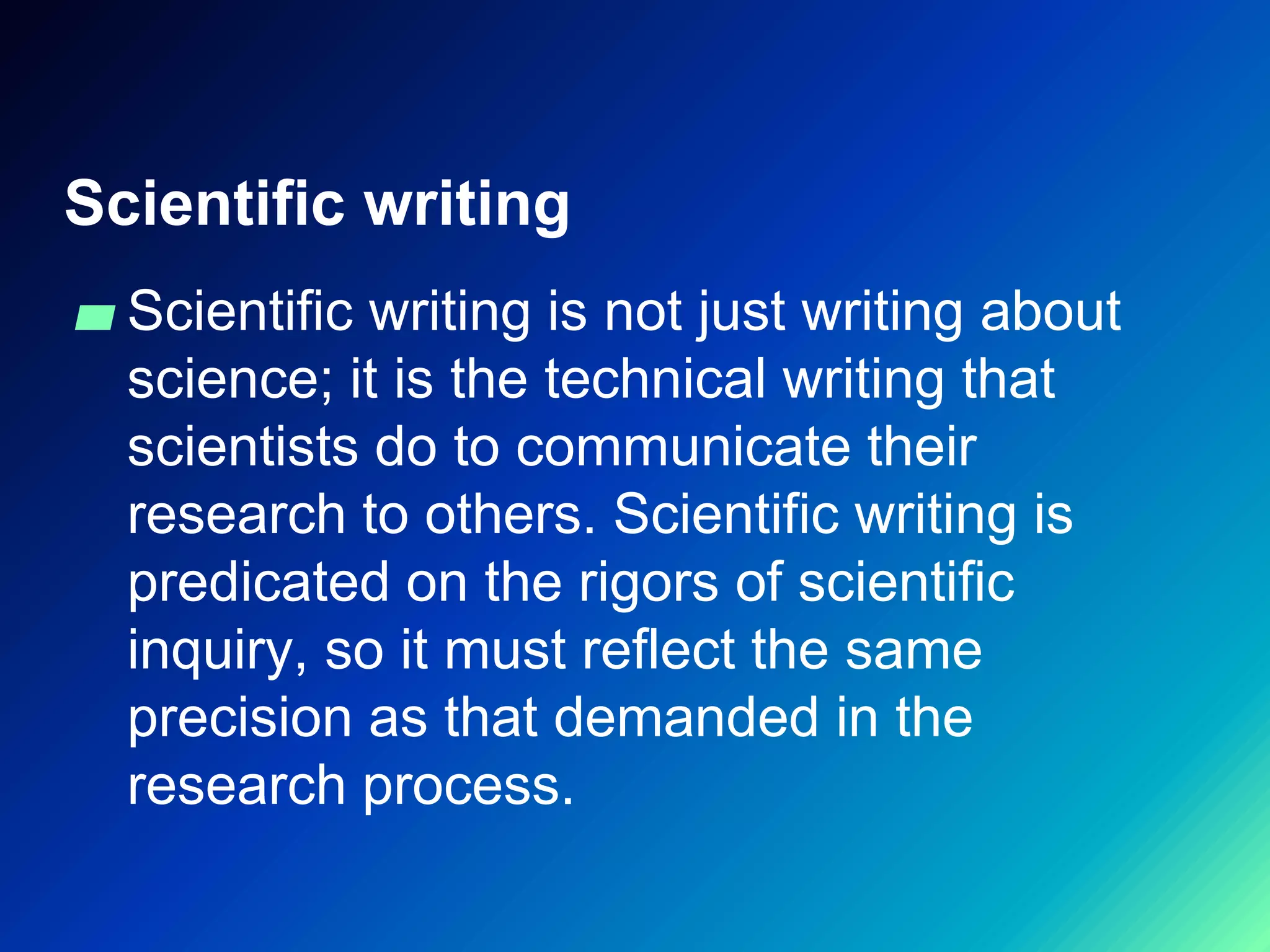
Scientific writing is not merely “writing about science”; it is a disciplined methodology of documentation. In the tech sector, where billions of dollars are invested based on the viability of a concept, the precision of this writing style is paramount. Unlike marketing copy or editorial content, which may use emotive language to persuade, scientific writing relies on evidence, data, and logical structure to inform.
Precision and Clarity: The Core Tenets
The most critical attribute of scientific writing in technology is precision. In software engineering or hardware development, a single misunderstood word can lead to catastrophic system failures. For instance, when documenting an API or a new software framework, the writer must use terms that have universal meanings within the tech community. Clarity ensures that the reader—often another developer or a researcher—can grasp the “how” and “why” of a technology without having to guess the author’s intent.
Scientific writing avoids “fluff.” It eschews metaphors and flowery adjectives in favor of direct, active verbs and quantifiable data. Instead of saying “the algorithm runs very fast,” a scientific document would state, “the algorithm achieved a 15% reduction in latency compared to the baseline model.”
Objective Reporting vs. Subjective Interpretation
In the tech world, subjectivity is a liability. Scientific writing demands an objective stance. This means the author must distance themselves from the results to ensure that the data speaks for itself. This objectivity is often maintained through a third-person perspective and a focus on the methodology. In a tech-centric whitepaper, the emphasis is placed on the experiment’s parameters and the resulting metrics, rather than the developer’s personal feelings about the project. This allows other tech professionals to evaluate the software or hardware based on its merits rather than the brand’s hype.
The Role of Scientific Writing in AI and Machine Learning
The current explosion of Artificial Intelligence (AI) is a testament to the power of scientific writing. Every major advancement we see in tools like ChatGPT, Midjourney, or autonomous driving systems began as a peer-reviewed scientific paper. In this niche, writing serves as the primary vehicle for open-source collaboration and rapid innovation.
Peer-Reviewed Research as the Engine of Innovation
Platforms like ArXiv have become the central hubs for tech trends. When a tech giant like Google or Meta develops a new Large Language Model (LLM), they publish a scientific paper detailing the architecture (such as the Transformer model). This writing follows a strict format: abstract, introduction, related work, methodology, experiments, and conclusion. This standardized structure allows global researchers to quickly digest the technical specifications and build upon them. Without this rigorous form of scientific writing, the tech industry would be siloed, with companies reinventing the wheel in isolation rather than standing on the shoulders of giants.
From Whitepapers to Production: Bridging the Gap
Whitepapers are a unique hybrid of scientific writing and strategic technical documentation. In the world of blockchain and decentralized tech, the whitepaper is the founding document of a project. It explains the scientific logic behind the consensus mechanism or the smart contract logic. For a tech project to gain credibility among developers and “tech-savvy” investors, the writing must be scientifically sound. It must address potential edge cases, security vulnerabilities, and scalability issues through a scientific lens, proving that the technology is not just a concept, but a reproducible reality.

Technical Documentation: The Scientific Writing of Software
While we often think of scientific writing as something found in journals, it permeates the very software we use daily through technical documentation. For a software product to be successful, its documentation must adhere to the principles of scientific writing.
Structural Integrity in API Documentation
An API (Application Programming Interface) is only as good as its documentation. Writing for APIs is a specialized form of scientific writing where the “experiment” is the code execution. The documentation must be structured logically, providing the “inputs” (parameters), the “method” (the endpoint), and the “expected results” (the response). This mirrors the IMRaD (Introduction, Methods, Results, and Discussion) structure of classical scientific papers. If the documentation lacks scientific rigor, developers will find the tool “unusable,” leading to the failure of the software in the competitive tech market.
Reproducibility in Data Science Reports
In data science and analytics, scientific writing is used to report findings from big data. A data scientist must write in a way that allows another data scientist to take the same dataset, apply the same code, and reach the same conclusion. This concept of reproducibility is the cornerstone of the scientific method. In a corporate tech environment, this ensures that business decisions—such as shifting a product roadmap or investing in new server infrastructure—are based on verifiable, scientifically documented data rather than intuition.
Essential Tools for Modern Scientific and Technical Authors
As technology evolves, so do the tools used to produce scientific writing. The modern tech writer or researcher no longer relies on simple word processors but uses a suite of specialized tools designed to maintain the integrity and formatting of complex data.
AI Writing Assistants and Ethics
The rise of AI tools like Jasper, Grammarly, and even specialized LLMs has changed the landscape of scientific writing. These tools help in refining grammar, ensuring consistency in technical terminology, and even summarizing vast amounts of data. However, in the niche of tech and science, the ethical use of AI is a major discussion point. Scientific writing requires a high degree of accountability. While AI can assist in the “writing,” the “scientific” part—the verification of facts and the logical flow of the argument—remains a human responsibility. The tech industry is currently developing “AI watermarking” and better peer-review protocols to ensure that scientific documentation remains trustworthy in an era of automated content.
Collaborative Platforms: The Evolution of LaTeX and Markdown
For tech-heavy scientific writing, standard tools like Microsoft Word often fall short, especially when dealing with complex mathematical formulas or code snippets. Tools like LaTeX have long been the gold standard for scientific papers due to their ability to handle technical typesetting. Similarly, Markdown has become the standard for software documentation on platforms like GitHub. These tools allow writers to treat documentation like code, using version control (Git) to track changes in scientific arguments or technical specs. This “Docs as Code” movement is a direct evolution of scientific writing principles applied to the modern software development lifecycle.
The Future of Communication in a Data-Driven Tech World
As we look toward the future, the importance of scientific writing in the tech industry will only grow. We are entering an era of “Deep Tech”—quantum computing, biotech, and advanced robotics—where the complexity of the products exceeds the understanding of the general public.
Scientific writing will play a crucial role in “translation.” Tech journalists and technical writers must take the dense, scientific data produced by researchers and translate it into high-level technical overviews that can guide policy, investment, and consumer behavior. However, this translation must never lose the core of the scientific method: the commitment to truth and the reliance on evidence.
In conclusion, scientific writing is the quiet engine behind every gadget, app, and software update we encounter. It is the disciplined practice of documenting the “how” of our digital world. By maintaining high standards of clarity, objectivity, and reproducibility, scientific writers ensure that the rapid pace of technological trend-setting is matched by a robust and reliable foundation of knowledge. Whether you are a developer documenting a new library or a researcher publishing the next breakthrough in AI, mastering scientific writing is the key to turning a fleeting tech trend into a lasting technological legacy.
aViewFromTheCave is a participant in the Amazon Services LLC Associates Program, an affiliate advertising program designed to provide a means for sites to earn advertising fees by advertising and linking to Amazon.com. Amazon, the Amazon logo, AmazonSupply, and the AmazonSupply logo are trademarks of Amazon.com, Inc. or its affiliates. As an Amazon Associate we earn affiliate commissions from qualifying purchases.