
In an era dominated by high-definition digital displays and pixel-perfect vector graphics, a decades-old printing technology has staged an unlikely comeback, becoming a cornerstone of contemporary brand identity and avant-garde design. The Risograph—a Japanese “stencil duplicator” originally intended for high-volume office tasks—has been reclaimed by the creative industry. For brand strategists, marketers, and designers, Risograph (or “Riso”) is no longer just a piece of hardware; it is a visual language that communicates authenticity, sustainability, and a rebellious departure from the clinical perfection of the digital age.
The Mechanics of Authenticity: Understanding Risograph Printing
To understand why Risograph has become a vital tool in brand strategy, one must first understand its unique mechanical DNA. Developed by the Riso Kagaku Corporation in Japan in the 1980s, the Risograph was designed as a bridge between a standard photocopier and a professional offset press. It was intended for schools, churches, and small businesses that needed to print hundreds of copies cheaply and quickly.
The Evolution from Office Tool to Creative Staple
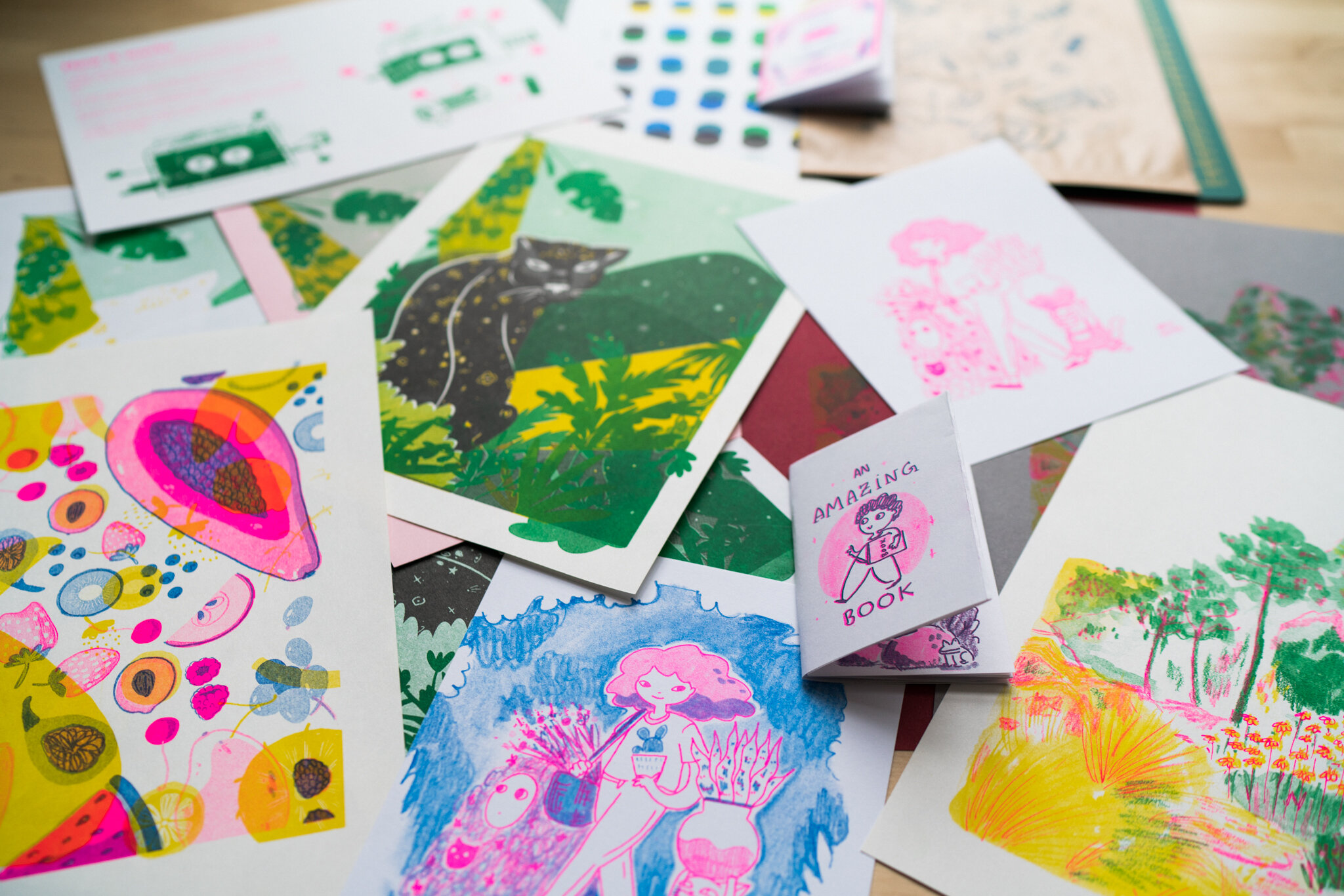
For decades, the Risograph lived a quiet life in administrative offices. However, as digital printing became the global standard, artists and boutique design agencies noticed something the corporate world had ignored: the Riso’s inherent “soul.” Unlike laser printers that use heat to fuse toner to paper, the Riso uses a cold process with vibrant, soy-based inks. This creates a texture and depth that digital counterparts simply cannot replicate. Today, what was once a budget-saving office tool is the centerpiece of high-end design studios from London to Tokyo, used to craft limited-edition brand assets that feel more like fine art than marketing collateral.
The Process: Spot Colors and Stencil Duplication
The Risograph operates on a principle similar to screen printing. When a document is scanned or sent to the machine, it creates a “master” (a thermal stencil) that is wrapped around a drum filled with ink. The drum rotates at high speeds, forcing ink through the stencil and onto the paper.
What makes this critical for branding is the use of “spot colors.” Instead of the standard CMYK (Cyan, Magenta, Yellow, Black) mix used in most commercial printing, Riso uses specific, pre-mixed ink drums. This allows brands to utilize incredibly vivid colors—including fluorescents, metallics, and neons—that are physically impossible to achieve on a standard digital printer. Each color requires a separate pass through the machine, leading to the overlapping hues and “happy accidents” that define the Riso aesthetic.
Building Brand Identity Through Imperfection
In the world of corporate identity, there is a growing movement toward “human-centric” design. As AI-generated imagery and hyper-polished digital ads saturate the market, consumers are increasingly drawn to brands that feel tangible and “real.” This is where Risograph printing offers a strategic advantage.
Embracing the “Wabi-Sabi” of Design
The Risograph is famous for its “imperfections.” Because the paper is fed through the machine multiple times for different colors, the registration (the alignment of colors) is rarely 100% perfect. You might see slight overlaps, “ghosting,” or an uneven distribution of ink known as “graininess.”
In a traditional marketing context, these might be seen as flaws. However, in modern brand strategy, these characteristics are a deliberate choice. They embody the Japanese philosophy of Wabi-Sabi—finding beauty in imperfection. When a brand uses Riso-style aesthetics, it signals to the consumer that there is a human hand behind the work. It breaks the “uncanny valley” of digital marketing, offering a textured, lo-fi charm that feels approachable and trustworthy.
Creating a Tactile Connection in a Digital World
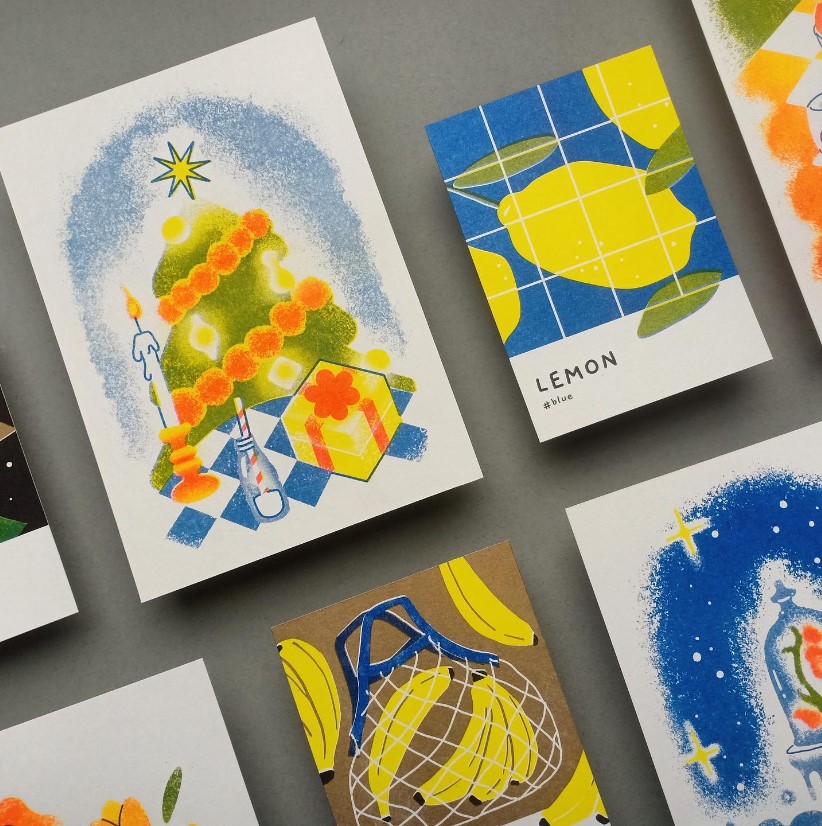
Brand strategy is as much about touch as it is about sight. Risograph ink is soy-based and never fully “dries” in the way traditional toner does; it sits on the surface of the paper, creating a matte, slightly chalky texture. When a customer holds a Riso-printed business card, lookbook, or product insert, the physical sensation is distinct. This tactile feedback creates a stronger psychological anchor to the brand. In an age where most brand interactions happen behind a glass screen, the physical grit of a Riso print provides a memorable, sensory experience that reinforces brand recall.
Risograph as a Strategic Marketing Tool
Beyond its aesthetic appeal, the Risograph offers practical advantages for brands looking to execute high-impact, localized marketing campaigns. It occupies a “sweet spot” in the production hierarchy: more affordable than screen printing for medium runs, but more unique and vibrant than digital printing.
Cost-Efficiency for High-Volume Campaigns
For a brand looking to produce 50 to 5,000 copies of a poster, zine, or flyer, the Risograph is incredibly cost-effective. Because the machine is energy-efficient and the “per-page” cost drops significantly as volume increases, it allows brands to produce high-end, artistic marketing materials without the exorbitant costs of traditional lithography. This makes it an ideal choice for “guerrilla marketing” tactics, where a brand might want to plaster an urban area with high-vibrancy posters that stand out against the duller colors of standard street advertisements.
Sustainable Branding: The Eco-Friendly Edge
Sustainability is no longer a “nice-to-have” in brand strategy; it is a consumer expectation. The Risograph is inherently one of the most eco-friendly printing methods available.
- Soy-Based Inks: Unlike petroleum-based inks, Riso inks are made from soy or rice bran oil, making them biodegradable and easier to recycle.
- Low Energy Consumption: The “cold” printing process means the machine doesn’t require heat to fuse toner, drastically reducing electricity usage.
- Minimal Waste: The stencils (masters) are made from hemp or banana leaf fibers.
By utilizing Risograph for their physical collateral, brands can authentically claim a commitment to sustainable practices. It is a “green” printing solution that doesn’t sacrifice visual impact, allowing a brand’s environmental ethics to be visible in the very ink on the page.
Integrating Risograph into Modern Digital Workflows
While the Risograph is a physical machine, its influence has permeated the digital landscape. Many of the world’s leading tech and lifestyle brands are now integrating “Riso-inspired” visuals into their digital UI/UX, social media content, and global advertising campaigns.
Mimicking the Riso Look in Digital Assets
Designers are increasingly using “Riso brushes” and texture overlays in software like Adobe Photoshop and Procreate to simulate the grainy, overprinted look of a physical Risograph. This allows a brand to maintain a consistent visual identity across both physical and digital touchpoints. The “digital Riso” look—characterized by halftone dots, vibrant color overlays, and simulated misregistration—helps digital interfaces feel warmer and less “corporate.” Brands like Dropbox and Mailchimp have famously used illustrative styles that evoke this hand-printed feel to simplify complex tech concepts and appear more user-friendly.
Case Studies: Brands Redefining Cool with Risography
Consider the rise of independent fashion labels and craft beverage companies. Many of these brands use Risograph for their packaging inserts or seasonal lookbooks. By doing so, they align themselves with “indie” culture and artistic communities.
- The “Zine” Culture: Brands are moving away from traditional brochures and toward “zines”—small, Riso-printed booklets that feel like collectibles. This turns marketing material into something a customer wants to keep and display, rather than discard.
- Event Branding: For pop-up shops or product launches, Riso-printed invitations and menus provide an “exclusive” feel. The slight variations between each print mean that every guest receives a unique piece of the brand.

Conclusion: The Future of Tangible Branding
The Risograph represents a fascinating paradox in modern branding: a vintage technology that feels more futuristic and relevant than the latest digital innovations. As we move deeper into a world of AI-generated content and virtual realities, the value of the “analog” will only continue to rise.
For a brand, choosing Risograph is a strategic statement. It says that the brand values craftsmanship over mass production, character over perfection, and sustainability over convenience. Whether it is through the literal use of the machine for physical collateral or the adoption of its grainy, high-contrast aesthetic for digital platforms, Risography offers a powerful way to cut through the noise. It is a reminder that in the high-speed world of marketing, sometimes the best way to move forward is to embrace the beautiful, textured, and colorful imperfections of the past.
aViewFromTheCave is a participant in the Amazon Services LLC Associates Program, an affiliate advertising program designed to provide a means for sites to earn advertising fees by advertising and linking to Amazon.com. Amazon, the Amazon logo, AmazonSupply, and the AmazonSupply logo are trademarks of Amazon.com, Inc. or its affiliates. As an Amazon Associate we earn affiliate commissions from qualifying purchases.