
In the competitive landscape of fast-casual dining, a single product launch can represent far more than a simple menu addition; it can be a pivotal moment of brand redemption. When discussing “What is Queso Blanco at Chipotle,” we are not merely looking at a blend of Monterey Jack and white cheddar. From a brand strategy perspective, Queso Blanco represents one of the most successful corporate pivots in recent food history. It is the physical manifestation of Chipotle’s “Food with Integrity” promise, a response to a significant brand crisis, and a case study in how a multi-billion-dollar entity listens to its consumers to drive long-term loyalty.
The Strategic Pivot: From Brand Failure to Queso Blanco
To understand the branding behind Queso Blanco, one must first examine the shadow cast by its predecessor. In 2017, Chipotle launched its original queso, a move intended to satisfy the number one request from its customer base. However, the launch was widely considered a brand disaster.
Learning from Brand Failure
The 2017 queso launch faced immediate backlash. Because Chipotle is committed to using only “real” ingredients—avoiding the artificial stabilizers and gums found in most commercial cheese dips—the original texture was described by critics and customers as “gritty” or “grainy.” In the world of branding, this created a massive disconnect. The brand promised high quality, but the product delivery failed to meet the sensory expectations of the consumer. This failure threatened the brand’s identity as a leader in culinary excellence within the fast-casual space.
Rebuilding Trust through Product Reformulation
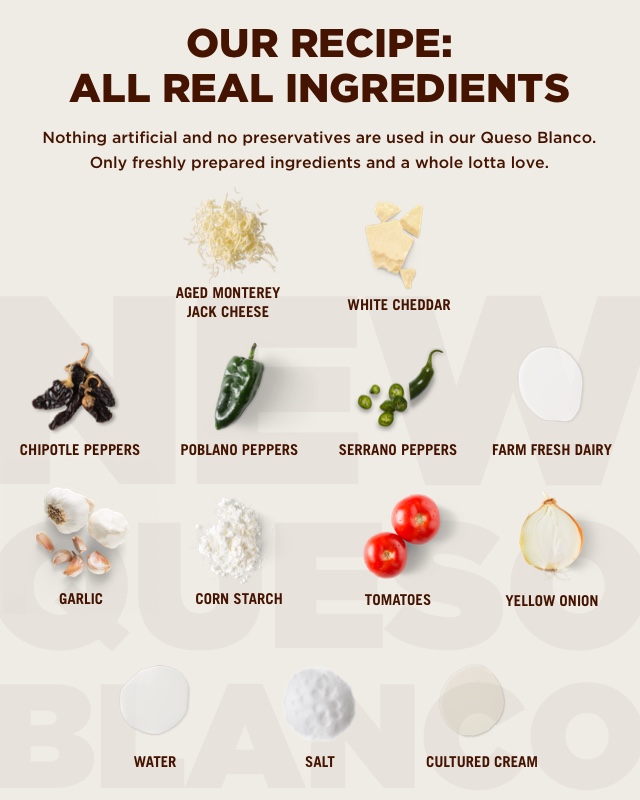
The transition to Queso Blanco in 2020 was not just a recipe change; it was a calculated brand recovery mission. Chipotle’s leadership understood that to maintain their corporate identity, they could not compromise on their “no additives” rule, but they had to solve the texture problem. Queso Blanco was engineered using a blend of 13 real ingredients, including serrano, poblano, and chipotle peppers. By successfully launching a smooth, premium product that adhered to their strict ingredient statement, Chipotle turned a brand liability into a flagship asset, proving that they could innovate within their self-imposed “clean label” constraints.
Authenticity as a Brand Pillar
Chipotle’s brand is built on the foundation of transparency and “real” food. Queso Blanco serves as a primary marketing tool to reinforce these values in an industry often criticized for high processing and hidden chemicals.
The “Real Food” Promise
In corporate branding, consistency is king. If Chipotle had used sodium citrate or artificial thickeners to fix their queso, they would have diluted their brand equity. By opting for a complex blend of real cheeses and peppers, Queso Blanco becomes a proof point for their marketing claims. It tells the story of a company that would rather spend years in R&D than take a shortcut that contradicts its mission statement. This authenticity resonates with Gen Z and Millennial consumers, who prioritize ingredient transparency and corporate ethics in their purchasing decisions.
Translating Culinary Tradition into Corporate Strategy
Queso Blanco is positioned as an “authentic” Mexican-inspired dip rather than a processed “nacho cheese.” This distinction is vital for Chipotle’s brand positioning. By using traditional peppers like the poblano and serrano, the brand elevates its menu from “fast food” to “culinary-driven fast casual.” This strategy allows Chipotle to command a premium price point, as consumers are not just paying for cheese; they are paying for a brand experience that values heritage and high-quality sourcing.
The Marketing of a Menu Staple
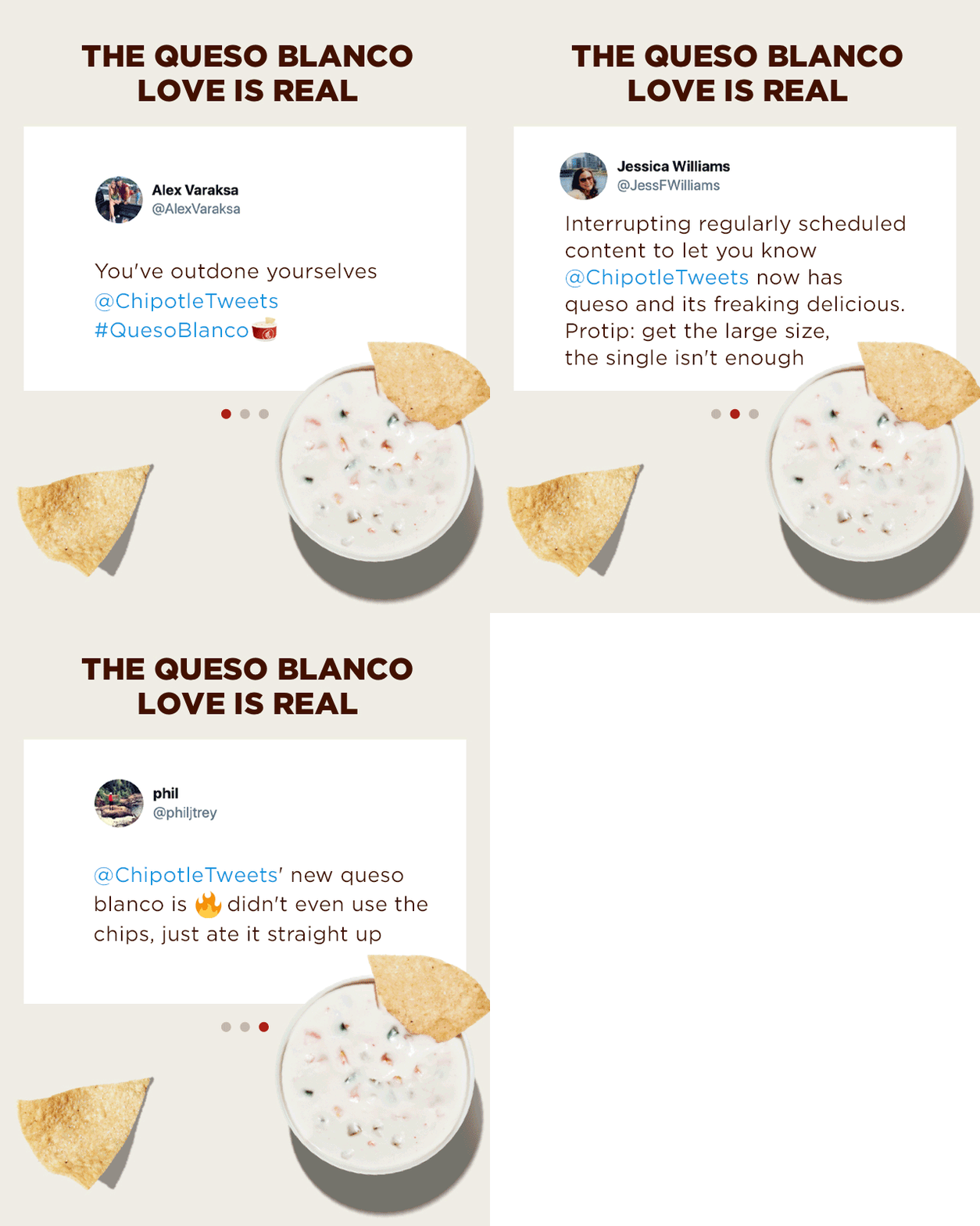
The rollout and sustained popularity of Queso Blanco provide insights into how Chipotle utilizes menu innovation to drive digital engagement and brand awareness.
Driving Engagement through the Stage-Gate Process
Chipotle does not launch products on a whim. The brand utilizes a rigorous “Stage-Gate” process, where new items are tested in select markets, analyzed for operational impact and customer satisfaction, and then iterated upon before a national rollout. Queso Blanco was one of the most successful products to move through this pipeline. This disciplined approach ensures that by the time a product reaches the national stage, it already has the “social proof” needed to succeed. From a brand management perspective, this reduces the risk of another 2017-style failure and builds anticipation through localized “hype” marketing.
Digital Brand Voice and Multi-Channel Communication
The launch of Queso Blanco coincided with Chipotle’s aggressive push into digital sales and its rewards program. The brand used Queso Blanco as a “hook” for digital-only offers, incentivizing downloads of the Chipotle app. By offering “free queso” rewards, they successfully converted casual diners into data-rich loyalty members. The brand voice used in these campaigns—witty, transparent, and responsive—further solidified Chipotle’s image as a modern, tech-forward company that understands the digital landscape as well as it understands the kitchen.
Measuring the Brand Impact and Market Positioning
The ultimate test of any branding strategy is its impact on the company’s market share and consumer sentiment. Queso Blanco has done more than just increase the average check size; it has fortified Chipotle’s competitive moat.
Consumer Sentiment and Social Proof
Before Queso Blanco, the “queso conversation” on social media regarding Chipotle was largely negative. Today, the sentiment has shifted dramatically. By monitoring social listening tools and responding to customer feedback in real-time, Chipotle transformed Queso Blanco into a “fan favorite.” This positive social proof is invaluable for a brand, as it turns customers into brand advocates. When influencers and everyday users post about their “queso hack,” they are providing free high-conversion marketing that traditional advertising cannot buy.
Competitive Positioning in the Fast-Casual Market
In the fast-casual Mexican sector, competitors like Qdoba and Moe’s Southwest Grill have long used queso as a primary differentiator (often offering it for free). Chipotle’s move to perfect Queso Blanco was a direct strike at this competitive advantage. However, rather than competing on price (by making it free), Chipotle competed on brand value. By positioning their Queso Blanco as the “cleaner,” more “authentic” version, they successfully neutralized a competitor’s strength without devaluing their own premium brand status.
Conclusion: The Legacy of Queso Blanco in Brand Strategy
“What is Queso Blanco at Chipotle?” It is more than a side dish; it is a symbol of a brand that knows how to listen, pivot, and execute with precision. For brand strategists and marketers, the story of Queso Blanco offers several key takeaways:
- Acknowledge and Correct: When a brand fails to meet consumer expectations, the best path forward is a transparent and high-quality correction, not an abandonment of core values.
- Stick to Your Identity: Chipotle’s refusal to use artificial stabilizers, despite the difficulty it caused, ultimately strengthened the brand’s “Food with Integrity” pillar.
- Use Innovation to Drive Digital Growth: New products are the perfect catalysts for moving customers into digital ecosystems and loyalty programs.
- Quality as a Differentiator: In a crowded market, doubling down on quality and authenticity can neutralize competitors who compete solely on price or convenience.
Through the lens of brand strategy, Queso Blanco is a triumphant example of how a company can turn a public failure into a cornerstone of its corporate identity. It reminds us that in the world of branding, the ingredients of the product are just as important as the story you tell about them. Chipotle told a story of improvement, integrity, and taste—and the market responded with overwhelming loyalty.
aViewFromTheCave is a participant in the Amazon Services LLC Associates Program, an affiliate advertising program designed to provide a means for sites to earn advertising fees by advertising and linking to Amazon.com. Amazon, the Amazon logo, AmazonSupply, and the AmazonSupply logo are trademarks of Amazon.com, Inc. or its affiliates. As an Amazon Associate we earn affiliate commissions from qualifying purchases.