
In the contemporary digital landscape, the bridge between the physical world and the digital realm is often a small, pixelated square known as a QR code. While most individuals interact with these codes daily—whether menus at a restaurant, boarding passes at an airport, or two-factor authentication prompts on a laptop—the underlying technology of the QR barcode scanner is a sophisticated feat of optical engineering and software processing.
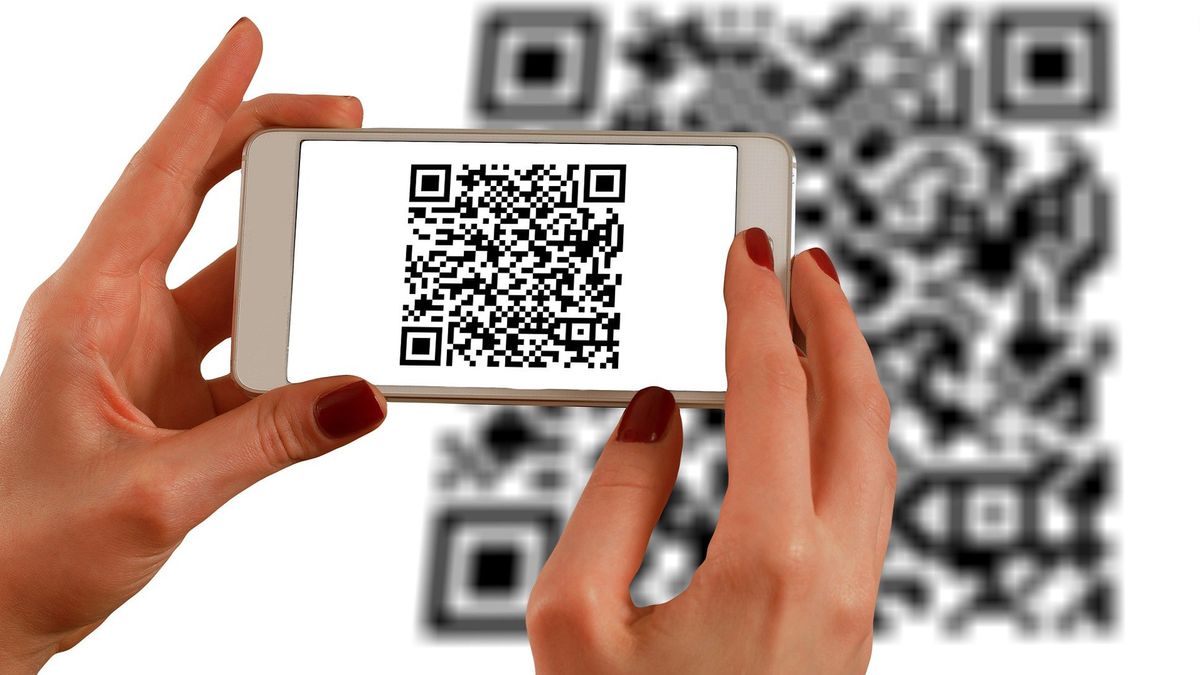
A QR barcode scanner is an electronic device or a software application designed to read and interpret Quick Response (QR) codes. Unlike traditional linear barcodes, which represent data in one dimension, QR scanners deal with two-dimensional matrices, allowing for a significantly higher density of information. This article explores the technical architecture, the operational mechanics, and the evolving ecosystem of QR scanning technology within the tech industry.
Understanding the Fundamentals: QR Codes vs. Traditional Barcodes
To understand the scanner, one must first understand the “target.” The evolution from the traditional 1D barcode to the 2D QR code represents a monumental shift in how data is stored and retrieved in physical environments.
The Anatomy of a QR Code
A QR code is a matrix barcode first designed in 1994 by the Japanese corporation Denso Wave. At its core, the code consists of black squares arranged in a square grid on a white background. The technical brilliance lies in its “Finder Patterns”—the three large squares located at the corners. These patterns allow the scanner to recognize the orientation and structure of the code, enabling it to be read from any angle (360-degree readability).
Behind these patterns are several layers of data, including version information, format information, and the data payload itself. Because it is a 2D symbology, it can store up to 7,089 numeric characters or 4,296 alphanumeric characters, which is a massive upgrade over the 20-30 character limit of a standard UPC barcode.
How Linear Barcodes Differ from 2D Matrices
Traditional barcodes, such as the Universal Product Code (UPC) seen on grocery items, are linear. They use varying widths of parallel lines and spaces to represent data. A standard 1D scanner uses a laser beam to measure the light reflected back from these lines.
In contrast, a QR barcode scanner functions more like a digital camera. It captures a two-dimensional image of the entire matrix rather than just a linear slice. This allows for redundancy and error correction. Even if a portion of a QR code is damaged or obscured, the scanner’s internal logic can often reconstruct the missing data—a feature known as Reed-Solomon Error Correction.
How QR Barcode Scanners Work: The Technology Behind the Lens
The process of scanning a QR code is a multi-stage technical operation that occurs in milliseconds. It involves a synergy between hardware optics and complex decoding algorithms.
Hardware Components: From Laser Scanners to CMOS Sensors
Modern QR scanners generally fall into two hardware categories: LED/Laser-based scanners and Imaging-based scanners.
- Laser Scanners: Primarily used for 1D codes, these use a laser beam as the light source and a reciprocating mirror to scan the beam back and forth across the barcode.
- Area Imagers (CMOS Sensors): This is the gold standard for QR scanning. These scanners use an array of hundreds of tiny light sensors to capture an image of the code. This is exactly how your smartphone camera functions. The sensor converts light into digital signals, which are then passed to a microprocessor for analysis.
The Software Logic: Decoding the Matrix
Once the hardware captures the image, the software takes over. The decoding process involves several sophisticated steps:
- Image Pre-processing: The software adjusts the contrast and brightness to ensure the black and white modules are clearly distinguishable.
- Localization: The algorithm searches for the three large squares (finder patterns) to determine the code’s boundaries and orientation.
- Binarization: The image is converted into a binary map of 1s (black pixels) and 0s (white pixels).
- Decoding: The software reads the version and format information to understand how the data is encoded (e.g., numeric, alphanumeric, or binary). It then extracts the payload and applies error correction to ensure accuracy.
Error Correction and Reed-Solomon Logic
One of the most impressive technical aspects of a QR scanner is its ability to read “dirty” or “damaged” data. Using the Reed-Solomon mathematical algorithm, QR codes are generated with built-in redundancy levels (Low, Medium, Quartile, and High). A scanner equipped with high-level error correction can successfully decode a QR code even if up to 30% of the symbol is destroyed or missing. This makes QR scanners incredibly reliable in industrial environments where codes might be scratched or covered in debris.

The Evolution of Scanning Hardware and Software Apps
QR scanning technology has transitioned from specialized industrial tools to ubiquitous consumer software. This democratization has changed the way developers build applications and how enterprises manage logistics.
Dedicated Industrial Scanners
In warehouses and manufacturing plants, dedicated handheld QR scanners are the workhorses of the supply chain. These devices are built for speed and durability. Unlike a smartphone, which might take a second to focus, industrial scanners use global shutter sensors that can capture and decode codes in motion. They often feature “aiming patterns”—visible laser crosses or dots—to help the operator align the device with the target in low-light conditions.
Mobile Applications and Built-in OS Integration
The most significant leap in QR technology occurred when mobile operating systems (iOS and Android) integrated scanning capabilities directly into their native camera apps.
- iOS Integration: Since iOS 11, Apple’s camera app uses machine learning to automatically detect QR codes in the viewfinder without the user needing to toggle a specific mode.
- Android/Google Lens: Google utilizes its “Google Lens” AI to not only scan the code but to provide contextual actions, such as “Join Wi-Fi Network” or “Add Contact.”
This integration eliminated the “app friction” that previously hindered QR code adoption, making the technology a standard interface for mobile interaction.
Web-Based Scanners and APIs
In the world of software development, the “scanner” is often an API (Application Programming Interface). Developers can use libraries like OpenCV, ZBar, or specialized SDKs (Software Development Kits) to build scanning capabilities into web apps or custom enterprise software. This allows a browser-based application to access a device’s webcam, capture a frame, and decode a QR code in real-time using JavaScript or Python.
Security Implications and Best Practices for Digital Scanning
As with any technology that handles data transfer, QR barcode scanners are a frontier for cybersecurity. Because a QR code is not human-readable, a user cannot tell where a code leads until the scanner processes it.
The Rise of “Quishing” (QR Phishing)
“Quishing” is a modern social engineering attack where malicious actors replace legitimate QR codes (like those on parking meters) with fraudulent ones. When a user scans the code, the scanner directs the mobile browser to a phishing site designed to steal credentials or download malware. Tech-savvy users must understand that the scanner is merely a delivery mechanism; the destination is where the risk lies.
Protecting Personal Data During the Scan
Advanced QR scanning apps now include security layers. Instead of automatically opening a URL, a secure scanner will:
- Preview the Link: Display the full URL to the user before navigating.
- Sandbox the Content: Use a secure in-app browser to check the site against a database of known malicious domains.
- Encrypted Payloads: In high-security environments, such as digital identity verification, the QR code payload is encrypted, requiring the scanner to possess a specific cryptographic key to decode the information.
Verifying Destination URLs
From a technical standpoint, the best scanners are those that offer transparency. Users should look for scanning software that identifies the “type” of data (e.g., vCard, URL, Text, or Wi-Fi settings) before executing any action. This “Look-Before-You-Leap” approach is essential in maintaining digital hygiene in a world where physical-to-digital triggers are everywhere.
The Future of Optical Recognition: Beyond the QR Code
The future of the QR barcode scanner is not just about reading pixels; it is about total visual intelligence. We are moving toward a period where the “scanner” becomes an “observer.”
Augmented Reality (AR) Integration
The next generation of QR scanners will be deeply integrated with Augmented Reality (AR). Instead of just redirecting a user to a website, a scan might trigger a 3D overlay on the user’s screen. For example, scanning a QR code on a piece of machinery could cause the scanner app to overlay a 3D instructional video directly on top of the physical object, showing exactly which parts to repair.

Dynamic QR Codes and Blockchain Verification
Technological trends are shifting toward “Dynamic” QR codes. Unlike static codes, dynamic codes use a redirect URL, allowing the owner to change the destination even after the code is printed. When paired with blockchain technology, a QR scanner can act as a verification tool for luxury goods or pharmaceuticals. By scanning a unique code on a product’s packaging, the scanner can query a blockchain ledger to verify the item’s authenticity and trace its entire supply chain history.
In conclusion, the QR barcode scanner is far more than a simple camera tool. It is a sophisticated piece of digital infrastructure that utilizes complex optics, binary decoding, and error-correction mathematics to facilitate instant data transfer. As the technology continues to evolve with AI and AR, the QR scanner will remain a pivotal tool in the ongoing digital transformation of our physical world.
aViewFromTheCave is a participant in the Amazon Services LLC Associates Program, an affiliate advertising program designed to provide a means for sites to earn advertising fees by advertising and linking to Amazon.com. Amazon, the Amazon logo, AmazonSupply, and the AmazonSupply logo are trademarks of Amazon.com, Inc. or its affiliates. As an Amazon Associate we earn affiliate commissions from qualifying purchases.