
In the modern marketplace, where consumer attention is the most valuable currency, how a brand chooses to deliver its message can determine its long-term survival. The concepts of “Push” and “Pull” marketing represent the two fundamental pillars of brand strategy. While they are often viewed as opposing forces—one aggressive and outbound, the other magnetic and inbound—the most successful global brands understand that they are two sides of the same coin.
Understanding the mechanics of push and pull marketing is essential for building a brand that not only captures attention but also fosters enduring loyalty. This exploration delves into the nuances of these strategies, how they shape corporate identity, and the methods for integrating them into a cohesive brand evolution.

Decoding Push Marketing: The Outbound Strategy for Immediate Visibility
Push marketing, often referred to as “outbound marketing,” is a proactive strategy where a brand “pushes” its products or messages directly in front of the consumer. The primary objective is to create immediate awareness and drive short-term sales by ensuring the product is visible at the point of purchase or during the consumer’s daily routine.
Direct Response and Aggressive Reach
At its core, push marketing is about demand creation. It assumes that the consumer may not be actively looking for a product, so the brand must take the initiative to introduce it. In a branding context, this is often achieved through high-impact visual communication and direct messaging. Common tactics include television and radio advertisements, display banners on websites, cold outreach, and prominent “end-cap” displays in retail environments.
From a brand strategy perspective, push marketing is highly effective for establishing a baseline of “brand salience”—the degree to which your brand is noticed or thought of in buying situations. When a consumer sees a well-executed push campaign, the brand is attempting to bypass the research phase and move directly to the transaction phase.
When to Use Push Tactics: Product Launches and Short-term Sales
Push marketing is the “heavy lifter” of the brand world during specific phases of the business lifecycle. For instance, when a company launches a new product line or enters a new geographical market, pull marketing (organic interest) simply does not exist yet. There is no search volume for a product people don’t know exists.
Strategic push tactics are essential for:
- New Product Introductions: Generating “buzz” and ensuring the market is aware of a new solution.
- Inventory Clearance: Using promotional discounts and aggressive advertising to move stock quickly.
- Competitive Positioning: Directly challenging a competitor’s market share by offering immediate alternatives through targeted ads.
While push marketing is effective for speed and scale, it carries the risk of being perceived as intrusive. If a brand relies solely on push tactics without building an underlying identity, it risks becoming a “commodity” brand—one that people buy because it was in front of them, not because they feel a connection to it.
Mastering Pull Marketing: The Inbound Strategy for Long-Term Brand Equity
Pull marketing, or “inbound marketing,” is the art of creating such a compelling brand identity and value proposition that customers are naturally drawn to you. Instead of chasing the consumer, the brand focuses on being “findable” when the consumer begins their journey of discovery or problem-solving.
Content Marketing and SEO as Pull Drivers
In the digital age, pull marketing is heavily reliant on visibility in search engines and social media. When a consumer has a problem, they turn to Google or YouTube. If your brand provides the answer through high-quality blog posts, instructional videos, or insightful whitepapers, you are engaging in pull marketing.
This strategy builds brand authority. By positioning the brand as an expert or a thought leader, you are not just selling a product; you are providing a service before a transaction even takes place. This creates a psychological “halo effect” where the consumer associates your brand with expertise, reliability, and helpfulness. The goal is to build a brand that lives in the consumer’s “consideration set” long before they are ready to swipe their credit card.
Building Loyalty and Trust through Value
The hallmark of pull marketing is its focus on the long-term relationship. Because pull marketing relies on the consumer choosing to engage, the resulting relationship is often deeper and more resilient than one forged through push tactics.
Strategies that define pull marketing include:
- Search Engine Optimization (SEO): Optimizing brand assets so they appear naturally when consumers search for relevant keywords.
- Social Media Community Building: Creating a space where fans of the brand can interact, share experiences, and feel part of a corporate identity.
- Word-of-Mouth and Referrals: Encouraging satisfied customers to act as brand ambassadors, which is the ultimate form of “pulling” new customers into the ecosystem.
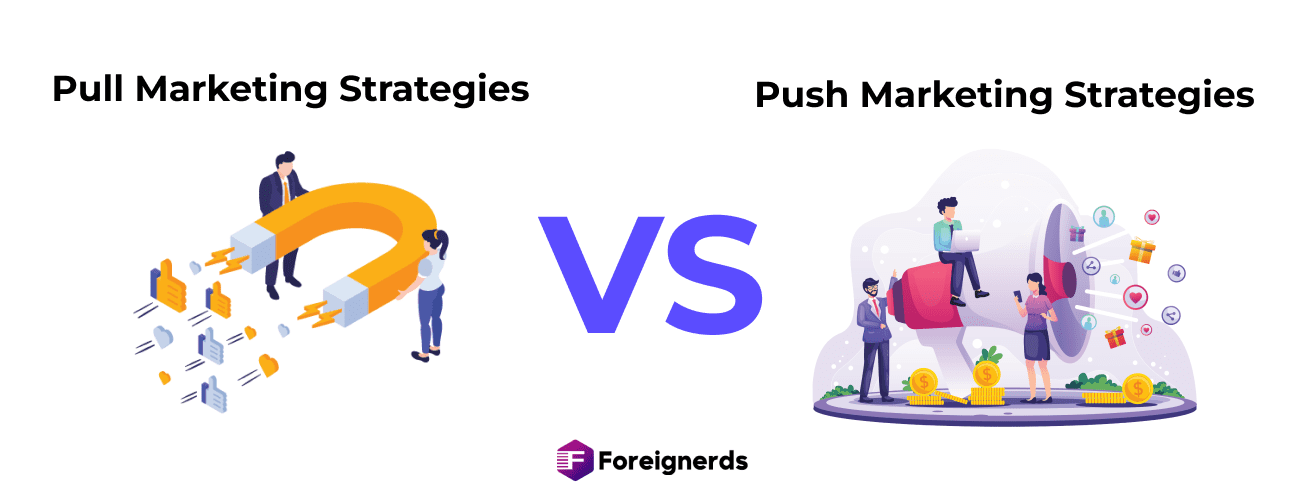
Pull marketing requires patience and consistency. It is about building “Brand Equity”—the intangible value that allows a company like Starbucks to charge five times more for coffee than a local deli. Customers “pull” themselves toward Starbucks because of the brand’s promise of consistency, atmosphere, and identity, not necessarily because they saw a flyer for it that morning.
Integrating Push and Pull for a Cohesive Brand Strategy
The most sophisticated brand strategies do not choose between push and pull; they harmonize them. A brand that only “pushes” becomes noise; a brand that only “pulls” may never reach the critical mass required for market dominance. The integration of these two forces creates a marketing funnel that is both wide at the top and deep at the bottom.
The Hybrid Approach: Finding the Right Balance
Finding the “Golden Ratio” of push and pull depends on the industry, the price point, and the target demographic. For high-end luxury brands, pull marketing usually dominates. Brands like Rolex or Hermès rarely use aggressive push tactics because exclusivity is part of their brand identity. They want the customer to feel the “pull” of the prestige.
Conversely, fast-moving consumer goods (FMCG), such as soft drinks or snacks, rely heavily on push marketing. Because the purchase decision is often impulsive and low-stakes, being “pushed” into the consumer’s line of sight at a grocery store checkout is vital.
However, even these brands use a hybrid model. A snack brand might use push tactics (coupons and shelf placement) to drive immediate sales while using pull tactics (engaging TikTok campaigns and lifestyle branding) to ensure the brand stays relevant to younger generations.
Case Study: The Symbiotic Marketing Ecosystem of Tech Giants
Consider how a company like Apple utilizes this balance. When a new iPhone is released, Apple engages in a massive Push campaign: billboards in every major city, keynote presentations streamed to millions, and prominent placement in retail stores. They are ensuring that everyone, everywhere, knows the new product exists.
Simultaneously, Apple has spent decades perfecting its Pull strategy. Their brand identity is so strong that customers wait in line overnight for products. Their ecosystem (iCloud, iMessage, App Store) creates a natural pull that makes it difficult for consumers to leave. They don’t need to “push” a current iPhone user to buy the next one as aggressively as they need to push a non-user; the brand loyalty and integrated experience do the “pulling” automatically.
Measuring Success: KPIs for Brand Evolution
To refine a brand strategy, one must be able to measure the efficacy of both push and pull efforts. Because these strategies have different goals—one for immediacy and one for longevity—they require different Key Performance Indicators (KPIs).
Quantitative vs. Qualitative Metrics
Push Marketing Metrics are typically quantitative and transaction-oriented. They include:
- Click-Through Rate (CTR): How many people engaged with an advertisement?
- Conversion Rate: How many people who saw the “push” actually made a purchase?
- Cost Per Acquisition (CPA): How much did it cost to “buy” that customer’s attention and conversion?
Pull Marketing Metrics are often more qualitative and focused on brand health. They include:
- Organic Search Traffic: How many people are finding the brand without an ad?
- Brand Sentiment: What is the tone of the conversation around the brand on social media?
- Customer Lifetime Value (CLV): How long does a customer stay with the brand after their initial discovery?
Adapting to the Digital-First Consumer
The line between push and pull is blurring in the digital age. For example, an Instagram ad (Push) that looks like organic content and provides genuine value (Pull) is a hybrid of both. This is known as “native advertising.”
Brands must adapt to a consumer who is increasingly skeptical of traditional “push” tactics. With the rise of ad-blockers and “skip” buttons, the “push” must be more creative and less intrusive than ever before. Meanwhile, the “pull” must be more authentic. Consumers can see through “forced” pull marketing—such as disingenuous social media posts—from a mile away.
Authenticity is the bridge between push and pull. Whether you are pushing an ad or pulling a lead through a blog post, the brand voice must be consistent, professional, and aligned with the corporate identity. If the push says “We are affordable” but the pull (the content and experience) says “We are premium,” the resulting cognitive dissonance will erode brand trust.
In conclusion, push and pull marketing are not competing philosophies but complementary tools. Push provides the spark and the initial visibility required to enter the market, while pull provides the fuel and the long-term magnetism required to build a lasting legacy. By strategically balancing these two forces, a brand can navigate the complexities of the modern economy, ensuring they are seen when it matters and sought after when it counts.
aViewFromTheCave is a participant in the Amazon Services LLC Associates Program, an affiliate advertising program designed to provide a means for sites to earn advertising fees by advertising and linking to Amazon.com. Amazon, the Amazon logo, AmazonSupply, and the AmazonSupply logo are trademarks of Amazon.com, Inc. or its affiliates. As an Amazon Associate we earn affiliate commissions from qualifying purchases.