
In the modern landscape of wealth management, the definition of a “portfolio” has expanded far beyond the traditional confines of stocks, bonds, and real estate. As investors seek to hedge against inflation and market volatility, alternative assets have surged to the forefront of financial strategy. Among these, graded collectibles—ranging from vintage sports cards to rare Pokémon cards—have emerged as a high-growth asset class. At the heart of this billion-dollar industry lies PSA (Professional Sports Authenticator) grading.
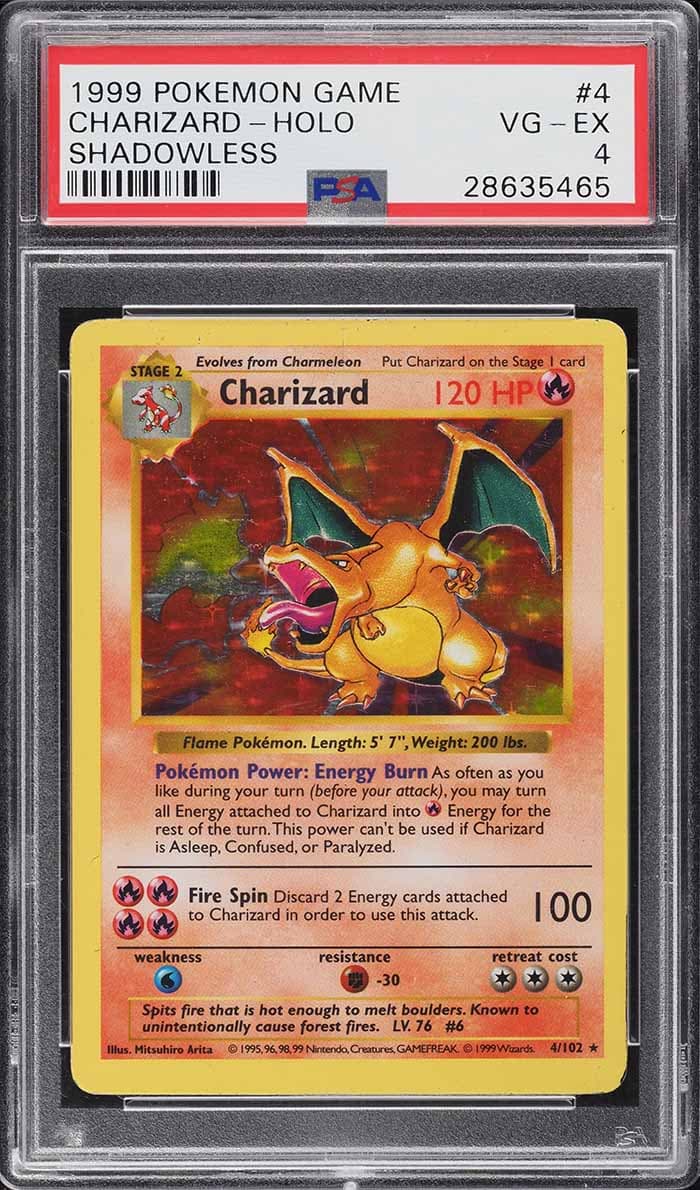
But what is PSA grading from a financial perspective? It is more than just a label on a plastic slab; it is a standardized valuation system that provides liquidity, authenticity, and a massive value multiplier to physical assets. For the modern investor, understanding PSA grading is essential for navigating the lucrative world of high-end collectibles.

The Financial Mechanics of PSA Grading
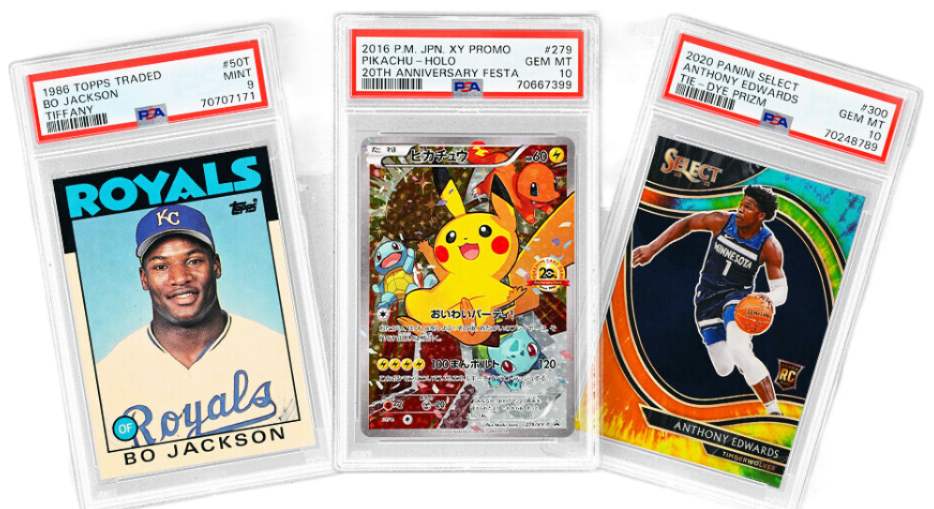
PSA grading is the process of having a third-party expert evaluate the condition and authenticity of a collectible. Once inspected, the item is assigned a grade on a scale of 1 to 10 and encapsulated in a tamper-evident “slab.” In the world of finance, this process serves two primary functions: standardization and risk mitigation.
The 10-Point Scale: A Multiplier for ROI
The most critical aspect of PSA grading is the numerical grade. A PSA 10 (Gem Mint) represents a virtually perfect specimen. From an investment standpoint, the difference between a PSA 9 and a PSA 10 can be exponential. For example, a card that sells for $500 in a PSA 9 holder might command $5,000 or more as a PSA 10. This creates a high-stakes environment where the “grading yield”—the percentage of items that receive a top-tier grade—directly dictates the return on investment (ROI). Investors treat these grades as a quality assurance metric, much like credit ratings for corporate bonds.
Authenticity as Risk Management
In any high-value market, the risk of counterfeits is a primary concern. PSA grading acts as a safeguard for capital. By verifying that an item is genuine and has not been altered (such as “trimming” edges to make them look sharper), PSA provides a layer of security that allows large sums of money to move confidently through the market. For a portfolio manager or a high-net-worth individual, a PSA-certified asset represents a “verified” position, significantly reducing the “junk” risk associated with unauthenticated raw goods.
PSA Grading as an Investment Strategy
The rise of the “investor-collector” has transformed PSA grading from a hobbyist’s pursuit into a sophisticated financial strategy. By converting a “raw” (ungraded) item into a graded one, an investor is essentially performing a value-added service that increases the asset’s marketability.
Collectibles vs. Traditional Equities
While stocks represent equity in a company, a PSA-graded card represents a piece of cultural history with a fixed supply. Unlike corporations, which can issue more shares, a 1952 Mickey Mantle card has a finite supply that decreases over time as items are lost or damaged. PSA grading quantifies this scarcity. Investors often view these assets as “digital gold” in physical form—a tangible store of value that does not always correlate with the fluctuations of the S&P 500, providing an excellent tool for portfolio diversification.
The “Pop Report”: Understanding Scarcity and Supply
PSA maintains a “Population Report,” a public database showing exactly how many copies of a specific card have been graded at each level. This is the “Bloomberg Terminal” of the collectibles world. If an investor sees that a specific card has only five PSA 10s in existence, they are looking at a supply-constrained asset with high price elasticity. Understanding the “Pop Report” allows investors to identify undervalued assets where the demand significantly outweighs the known supply, leading to long-term capital appreciation.
Maximizing Returns: The Cost-Benefit Analysis of Grading
Not every collectible is worth grading. To treat PSA grading as a business or a serious side hustle, one must conduct a rigorous cost-benefit analysis. This involves calculating the “spread” between the price of a raw item and its projected graded value, minus the costs of the grading service itself.
Calculating the Break-Even Point
PSA grading is not free; it involves tiered fees based on the value of the item, shipping costs, and insurance. An investor must determine if the likely grade will increase the item’s value enough to cover these overheads and provide a profit margin. For low-value items, the grading fee might exceed the potential price bump, leading to a “negative carry.” Conversely, for “blue-chip” items, the cost of grading is a negligible fraction of the total value, making it an essential step in preparing the asset for sale.
Navigating Grading Tiers and Turnaround Times
In finance, the “time value of money” is a core concept. PSA offers various service levels with different turnaround times, ranging from a few weeks to several months. Choosing a slower, cheaper tier might save on initial costs but ties up capital for a longer period, preventing the investor from liquidating the asset to reinvest elsewhere. Professional flippers and investors must balance the urgency of market trends—such as a player’s performance during a championship season—against the costs of expedited grading to maximize their “velocity of capital.”
The Secondary Market and Exit Strategies
The ultimate goal of any investment is a profitable exit. PSA-graded items are the gold standard for liquidity in the collectibles market. Major auction houses like Heritage Auctions, Goldin, and Sotheby’s primarily deal in PSA-certified assets because they are easy to value and sell to a global audience.
Value Retention in Economic Downturns
Historical data suggests that high-grade PSA collectibles—particularly “blue-chip” icons like Michael Jordan or rare Pokémon Charizards—hold their value remarkably well during economic contractions. While speculative “ultra-modern” cards may see volatility, the PSA 10 vintage market often acts as a flight-to-safety for capital. The standardized nature of the grade makes these items easy to use as collateral; some fintech platforms now even allow investors to take out loans against their PSA-graded portfolios, treating them as liquid financial instruments.
Leveraging Graded Assets for Capital
As the “financialization” of collectibles continues, we are seeing the emergence of fractional ownership and asset-backed tokens. PSA grading is the prerequisite for these financial products. A card must be graded to be appraised accurately for insurance, fractionalization, or inclusion in a dedicated collectibles fund. This evolution allows investors to gain exposure to $100,000 assets for a fraction of the cost, with the PSA grade serving as the bedrock of the asset’s valuation.
Conclusion: The Future of Graded Assets
PSA grading has revolutionized the way we perceive and trade physical collectibles, turning a fragmented market of hobbyists into a structured financial ecosystem. By providing a universal language of quality and authenticity, PSA has unlocked the latent value in alternative assets, allowing them to be traded with the same precision as traditional securities.
For the money-conscious individual, PSA grading is not merely about the aesthetics of a card; it is about the rigorous application of market data, risk management, and capital appreciation. As the world moves toward a more diverse understanding of “wealth,” the ability to identify, grade, and hold high-quality physical assets will remain a powerful tool for long-term financial success. Whether you are looking for a hedge against inflation or a high-alpha side hustle, the “slab” is no longer just a protector of cardboard—it is a cornerstone of modern finance.
aViewFromTheCave is a participant in the Amazon Services LLC Associates Program, an affiliate advertising program designed to provide a means for sites to earn advertising fees by advertising and linking to Amazon.com. Amazon, the Amazon logo, AmazonSupply, and the AmazonSupply logo are trademarks of Amazon.com, Inc. or its affiliates. As an Amazon Associate we earn affiliate commissions from qualifying purchases.