
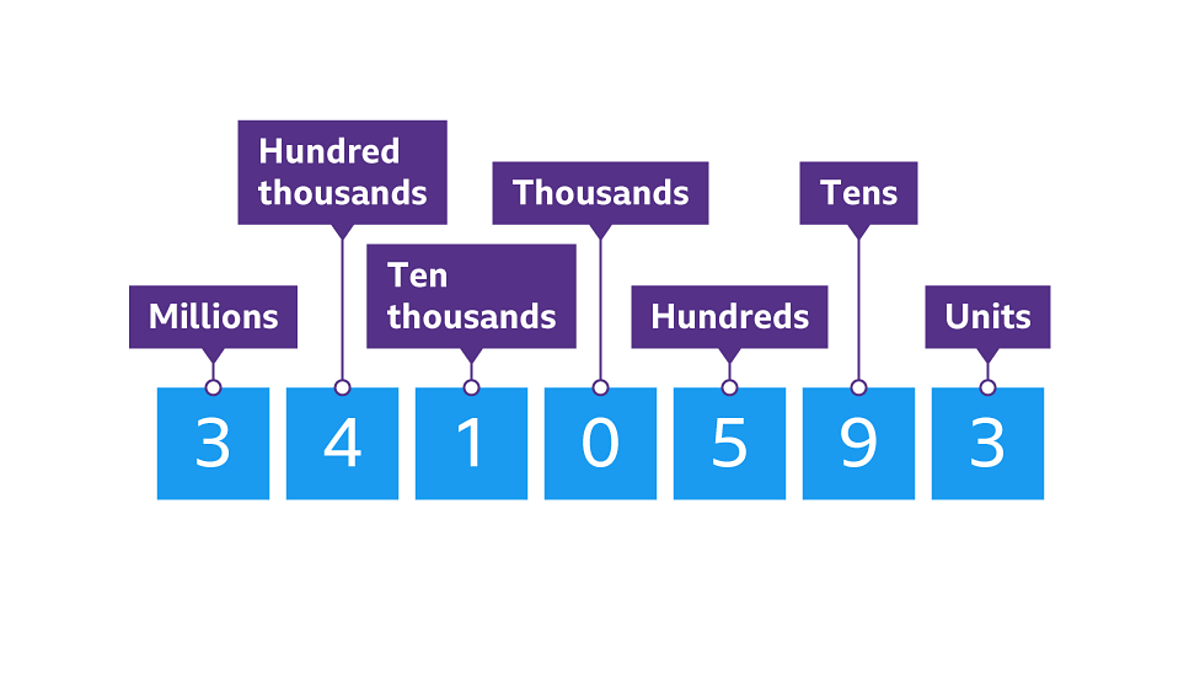
In the world of mathematics, the concepts of “place” and “value” are taught to children using colorful blocks and decimal grids. We learn that in the number 542, the “5” occupies the hundreds place, giving it a value of 500. While this seems like an elementary building block of arithmetic, it is actually the architectural blueprint for the entire digital revolution. In the technology sector, the way we define, assign, and manipulate “place” and “value” is what allows a smartphone to process billions of instructions per second, enables a blockchain to secure global assets, and permits an Artificial Intelligence to recognize a human face.

To understand modern technology—from the hardware in our pockets to the algorithms in the cloud—we must first understand how these mathematical principles were translated into the language of machines.
The Binary Revolution: How Base-2 Place Value Built the Digital Age
The most significant shift in the history of technology occurred when engineers moved away from the human-centric base-10 (decimal) system and embraced the base-2 (binary) system. In decimal math, “place” is determined by powers of ten. In the tech world, everything is built on a “place” system determined by powers of two.
Understanding the Bit: The Smallest Place in Computing
In digital technology, the “place” is a bit—a binary digit. Unlike the decimal system, which has ten possible values for each place (0 through 9), a binary place has only two: 0 or 1. This simplicity is intentional. It corresponds directly to the physical state of a transistor: either “off” (0) or “on” (1).
When we string these bits together, the “place” of each bit determines its contribution to the total value. In an 8-bit byte, the rightmost place represents $2^0$ (1), the next represents $2^1$ (2), the next $2^2$ (4), and so on, up to $2^7$ (128). This mathematical structure allows computers to represent any complex data—whether it is a pixel in a high-definition photo or a character in a text message—as a series of placed values.
From Transistors to Logic Gates: Physics Meets Place Value
The brilliance of place and value in tech lies in how hardware interprets these concepts. CPUs (Central Processing Units) use logic gates to compare the values in specific places. When you perform a calculation in a spreadsheet, the computer isn’t “thinking” about the numbers; it is using electrical pulses to shift values across different places in its registers.
By mastering the “place” (the memory address) and the “value” (the data stored), software engineers can dictate how hardware behaves. This is the essence of low-level programming: ensuring that the right value is in the right place at the right nanosecond.
Floating-Point Arithmetic: Precision and Value in Software Engineering
While binary is perfect for whole numbers, technology requires the ability to handle incredibly small and incredibly large numbers simultaneously. This is where the mathematical concept of “place” becomes more complex through a system known as floating-point arithmetic.
The Challenge of the Decimal: Why Software Struggles with Fractions
In standard math, the decimal point has a fixed “place.” In software, however, storing a number like $0.0000000000001$ alongside $1,000,000,000$ would be highly inefficient if the decimal point were fixed. To solve this, computer scientists use the IEEE 754 standard, which “floats” the decimal point.
In this system, a number is represented by a sign, an exponent (which determines the “place”), and a significand (which represents the “value”). This allows software to maintain high precision across a massive range of scales. However, this tech-specific application of place and value comes with a catch: rounding errors. Because binary cannot perfectly represent certain decimal fractions (like 0.1), software engineers must constantly account for “floating-point drift.”
Financial Tech and the “Rounding Error” Risk
In the Fintech (Financial Technology) sector, the stakes of place and value are exceptionally high. A rounding error in the tenth decimal place might seem irrelevant in a single transaction, but in a high-frequency trading algorithm processing millions of trades, those values accumulate.
This is why specialized software libraries are used in banking apps to handle “BigDecimals.” These tools bypass standard floating-point math to ensure that every “place” is accounted for with absolute mathematical certainty. In this niche, the “value” isn’t just a number; it is a literal representation of capital, and its “place” must be immutable.
Cryptography and Place Value: Protecting Data with Large Prime Structures
Digital security is perhaps the most sophisticated application of place and value in existence. When you send an encrypted message on WhatsApp or log into your bank, your security depends on the mathematical difficulty of determining the “value” of factors within specific “places.”
The Mathematics of Encryption: Place Value in RSA and ECC
Modern encryption, such as RSA (Rivest–Shamir–Adleman), relies on the properties of prime numbers and modular arithmetic. In these systems, we work with numbers that are hundreds of digits long. The “place” of a digit in a 2048-bit encryption key is what makes it computationally impossible for a hacker to guess.
The “value” of the key is derived from the product of two massive prime numbers. Because of the way place value works in exponents, a computer can easily multiply these numbers to encrypt data, but it would take a billion years for a supercomputer to do the reverse (factorize them) to decrypt it. This “asymmetry” is the bedrock of digital privacy.
Digital Security and the Value of Entropy
In the tech world, “value” also refers to entropy—the randomness of data. For an encryption key to be secure, the values in each “place” must be truly random. If there is a pattern in the way values are assigned to places, a cryptographic attack can exploit that regularity. Tech professionals use hardware-based random number generators to ensure that the “value” in every “place” of a security token is unpredictable, thereby maintaining the integrity of the system.
Artificial Intelligence: How Value Distributions Power Machine Learning
The current boom in Artificial Intelligence (AI) and Machine Learning (ML) is essentially a massive exercise in adjusting “values” within a complex grid of “places.” When we talk about a Large Language Model (LLM) having 175 billion parameters, we are talking about 175 billion specific “places” that hold a numerical “value.”
Weighting the System: Value in Neural Networks
In an artificial neural network, each “neuron” is a mathematical function. It receives an input, multiplies it by a “weight” (a value), and passes it to the next layer (a place). During the training process, the AI doesn’t “learn” in the human sense; instead, it uses an algorithm called backpropagation to slightly adjust the value in each place until the output is correct.
If you are using an AI to generate an image, the AI is calculating the optimal “value” for the color and intensity of a pixel at a specific “place” (coordinate) on the screen. The intelligence is not in the machine itself, but in the precise distribution of these values across a multi-dimensional mathematical space.
Data Integrity: Why Mathematical Positioning Matters for Big Data
For AI to be effective, the data it consumes must be structured correctly. In “Big Data” analytics, data architects spend a significant amount of time on “data normalization.” This ensures that the values being fed into an algorithm are in the correct place and scale. If one value is in the “ones” place and another is in the “millions” place without proper scaling, the AI’s “value weights” will become skewed, leading to biased or nonsensical results. This is the technical reality behind the phrase “garbage in, garbage out.”

Conclusion: The Invisible Math Driving the Future
While we often think of technology as a collection of glass, silicon, and wireless signals, it is more accurately described as a physical manifestation of mathematics. “Place” and “value” are not just concepts for the classroom; they are the fundamental laws of the digital universe.
From the binary bits that define our hardware to the floating-point precision of our software, and from the cryptographic keys that protect our identity to the neural networks that are reshaping society, the placement and valuation of numbers remain the most powerful tools in the tech industry. As we move into the era of quantum computing—where a “place” can hold multiple “values” simultaneously through superposition—our understanding of these concepts will only deepen, paving the way for the next great leap in technological innovation. Whether you are coding a simple app or architecting a global cloud network, you are ultimately a master of place and value.
aViewFromTheCave is a participant in the Amazon Services LLC Associates Program, an affiliate advertising program designed to provide a means for sites to earn advertising fees by advertising and linking to Amazon.com. Amazon, the Amazon logo, AmazonSupply, and the AmazonSupply logo are trademarks of Amazon.com, Inc. or its affiliates. As an Amazon Associate we earn affiliate commissions from qualifying purchases.